

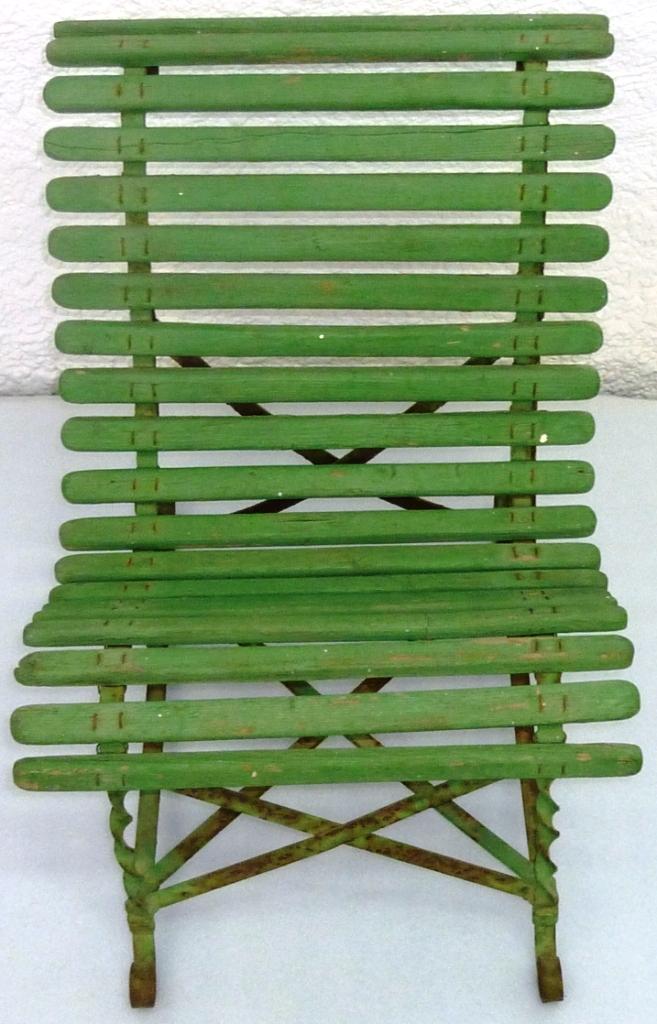
garden chair for child
1933 - 1940The chair is 470 mm high, and features a wrought iron frame and legs, painted medium green. The ends of the front and back legs and top of the back rest frame are curled over into circular shapes. The front and back legs are twisted into vertical spirals. The seat and back rest are formed from rectangular wooden slats each with 15mm gaps between.
This small green garden chair was made by prisoners for David Jones, superintendent at Fremantle Prison during the period 1933 to 1940. It is likely it belonged to Jones’ daughter Peggy, a child at this time. The Superintendent’s family lived at Number 10 the Terrace during the 1930s. Number 10 the Terrace was one of the first houses built in the 1850s to accommodate Convict Establishment staff. The chair was kept in the Jones family until Peggy passed away in 1999, when it was passed to the donor, who recollects visiting Peggy’s room at the house as a child.
Details
Details
The object is connected to prison industries carried out by inmates, specifically carpentry. From the 1870 to the 1890, the bulk of Government furniture was made in the prison’s Carpenters’ Shop under the guidance of Master Carpenter, George Ralston. Prison industries functioned as a form of connection between prisoners and the wider community, and a way of learning a new skill while giving back to the community. A number of items handmade by prisoners were donated to hospitals and children’s charities in the mid to late 20th century, and a pram repair workshop was carried out onsite. Carpentry continued to be carried out at the prison on and off until into the late 20th century.
From c.1911 to the 1940s, reports mention a tinsmith workshop in addition to the carpentry and blacksmiths’ shops. A visitor to Fremantle Gaol in 1924 reported the work in the Carpenters’ Shop included general carpentry and cabinet making. The men in this workshop produced “good work but only worked at half pace” so as not to compete with private enterprise’.
Inmates had the opportunity to learn new skills, marking a progression towards the idea of the prison as a place of reform and rehabilitation. The chair is a tangible example of the way prison industries served to offer inmates avenues to reform though learning a skill, giving a sense of accomplishment, and an avenue to employment post prison.
Historical records indicate that there were children onsite, namely the families of warders and staff; but physical evidence of their presence and any indication of what their lives were like is unknown. Objects such as this chair help to inform us about what their lives were like in the past. Also there are few items in the prison collection from the early 20th century time period adding to the rarity value for the object.
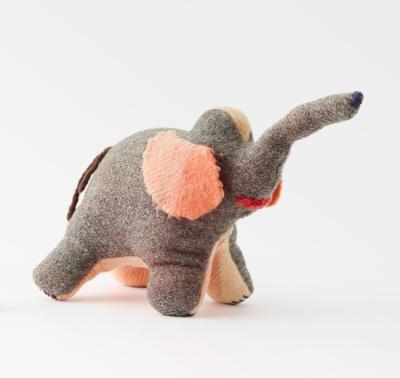
Relatively little is known about the lives of children connected with Fremantle Prison. Objects such as this chair offer valuable insights into their experiences and help broaden our understanding of daily life for those who lived on the fringes of the Prison community. Other items in the prison collection connected to the theme of children include toys and cradles constructed by prisoners for purchase and use in the general community. For example, Toy Elephant (2024.65), Cradle (2019.8a-c) and Trolley containing blocks (1999.306.1-26). Almost all of these examples date to the late 20th century, making the chair rare as an example from the early 20th century.
Other items by Fremantle Prison
More items like this
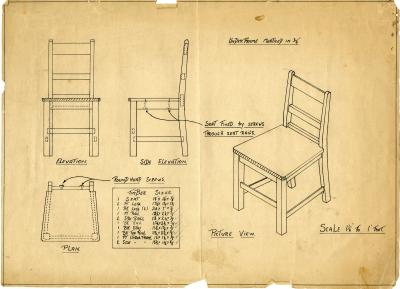
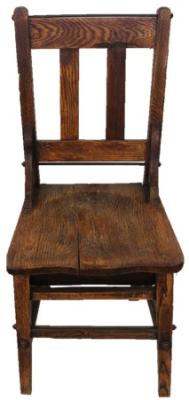
Other items from Fremantle Prison
Scan this QR code to open this page on your phone ->
