Illicit prisoner rings
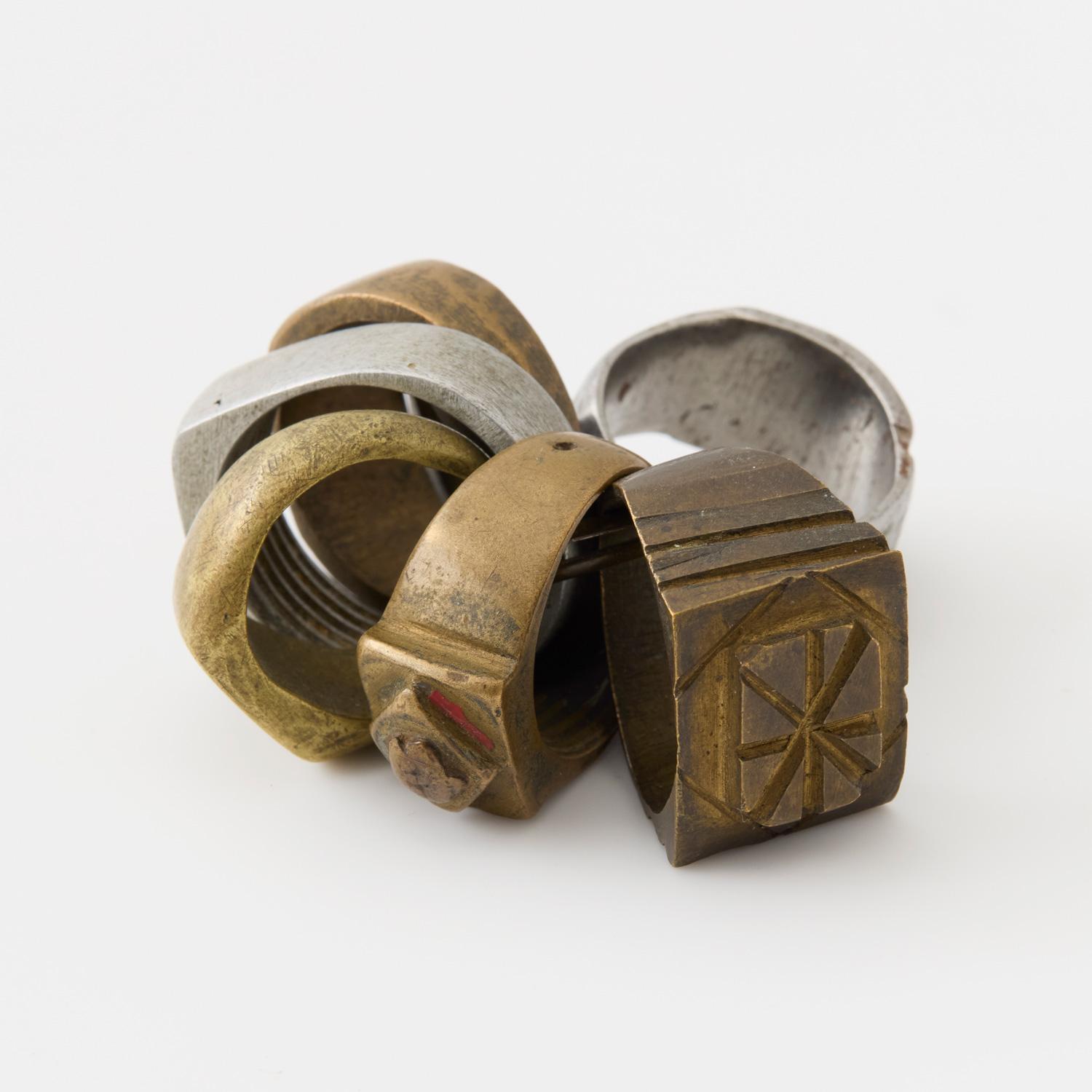
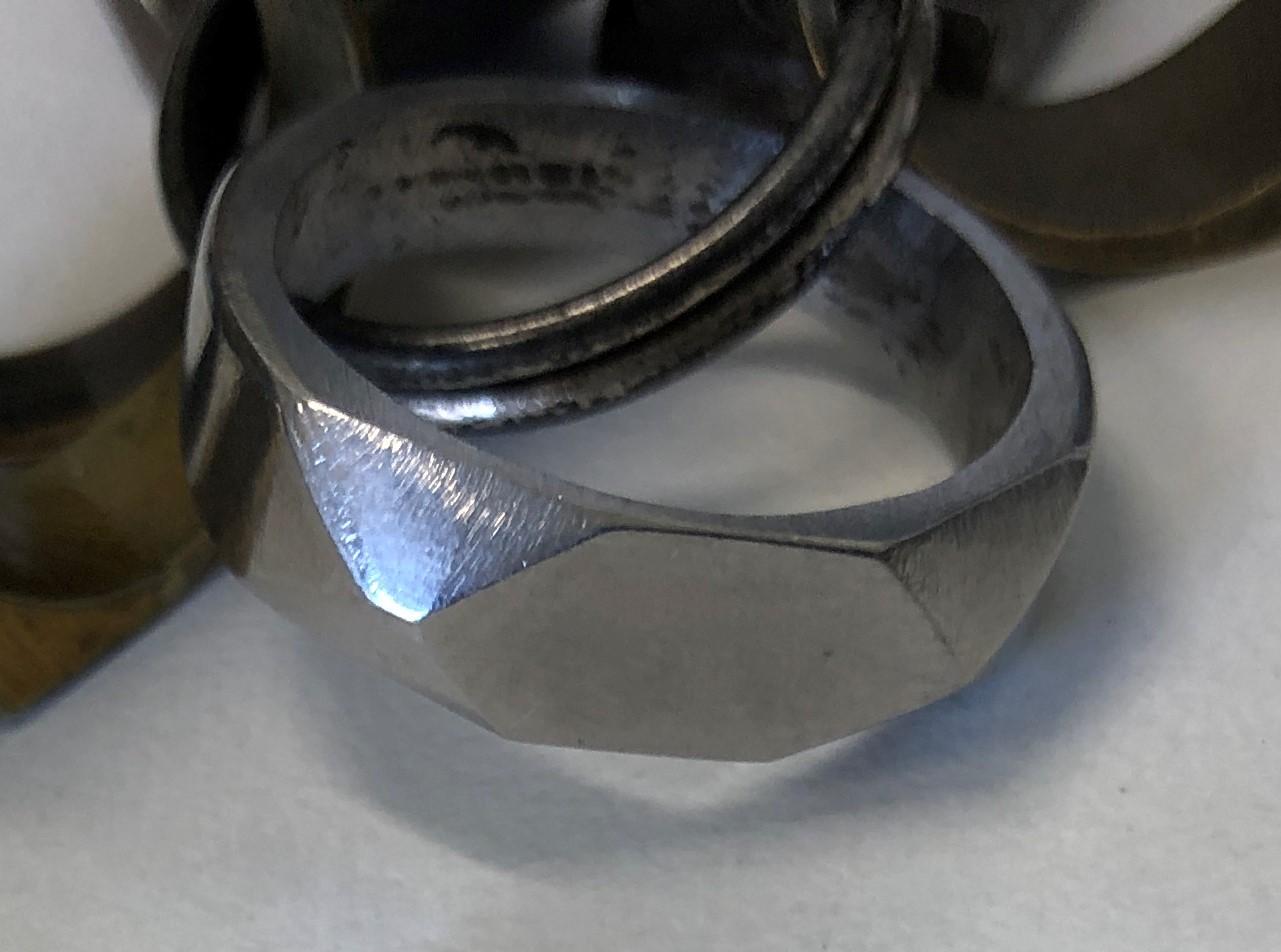
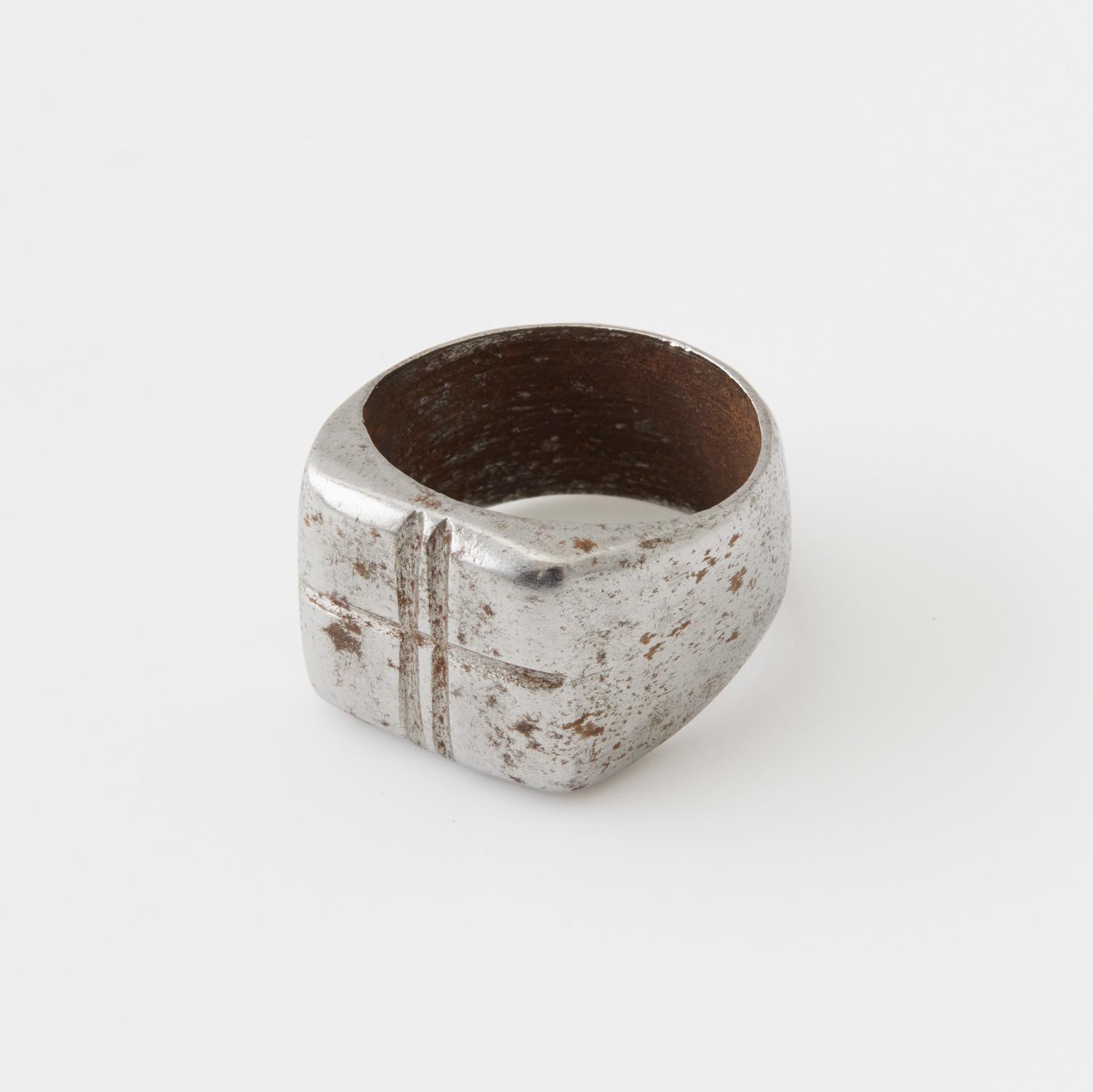
c. 196023 circular finger rings, made using found materials available at Fremantle Prison. Materials appear to be variously silver and gold coloured non precious base metals; including copper and brass alloys. One example has been made using a yellow plastic acetate material, fitted with a rhinestone, others have been made simply by rounding the corners off of nuts, bolts and pipe fittings. Some are unadorned, while others have patterns and designs incised, such as a heart (2021.115.9), pentagon (2021.115.14) and a diamond with circle (2021.115.8). All rings are of a large size to suit a male hand. Some metal corrosion is apparent but otherwise all are in good condition.
The rings belonged to the donor's father, Raymond George Hay, who passed away in 2013. Raymond was a prison officer at Fremantle Prison from 1963 to 1966, during which time he confiscated the 23 rings from various prisoners during routine searches and when he found them making rings in the workshops.
Details
Details
Patterns and designs incised variously consist of a flat signet, heart, pentagon, cross, and a diamond with circle.
The rings were crafted by prisoners, onsite in the metal workshop at Fremantle Prison. It is unknown if the rings were crafted purely with a symbolic purpose in mind; perhaps to convey status to the wearer or to identify a group within the prison system, or if they a practical use as a weapon, perhaps as a form of attack or defence in physical altercations between prisoners. Further research may confirm their exact purpose and their makers. Further research may also identify what found materials were utilised, and what machines, tools and techniques were used to craft them from found and discarded materials.
Prisoner rings have been identified in other Australian and overseas prison museum contexts, crafted from found materials such as metal, plastic and metal however these examples are unique in the Fremantle Prison collection, where artworks, sculpture and furniture made by prisoners are far more common.
The confiscation of these rings would have reinforced the power-structure of the prison system, which prohibited individualisation. The rings reflect the theme of the individual in the prison system, and the lengths people will go to and creativity they will employ to create jewellery and artwork out of found materials in a prison environment.
Other items by Fremantle Prison
Other items from Fremantle Prison
-
framed landscape painting

-
Landscape Painting

-
Tower of London Shotgun
-
Bill of Sale - 13/02/1877
-
Alternative Logbook for the Catalpa
-
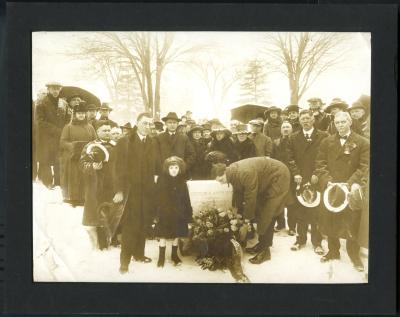
Photograph at the grave of Captain George Anthony
-
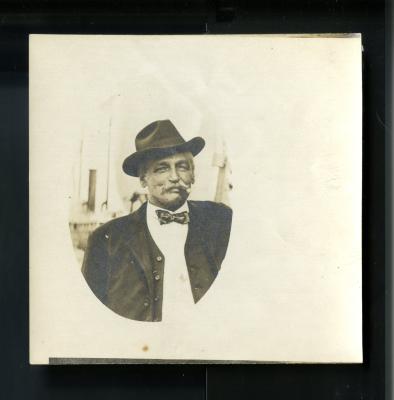
Photograph of Captain George Anthony
-
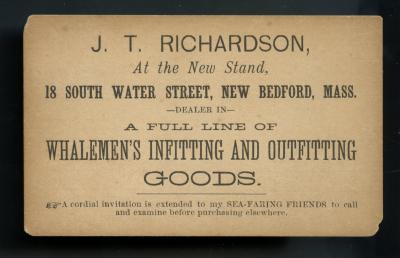
Business Card for J. T. Richardson
-
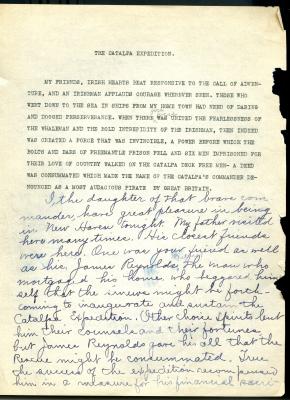
Printed Manuscript with Handwritten Annotations
-
Mathematical Workbook
-
Photograph at the grave of Captain George Anthony
-
Bill of Sale - 19/10/1872