

Keeping the City of Armadale safe for 80 years
City of Armadale
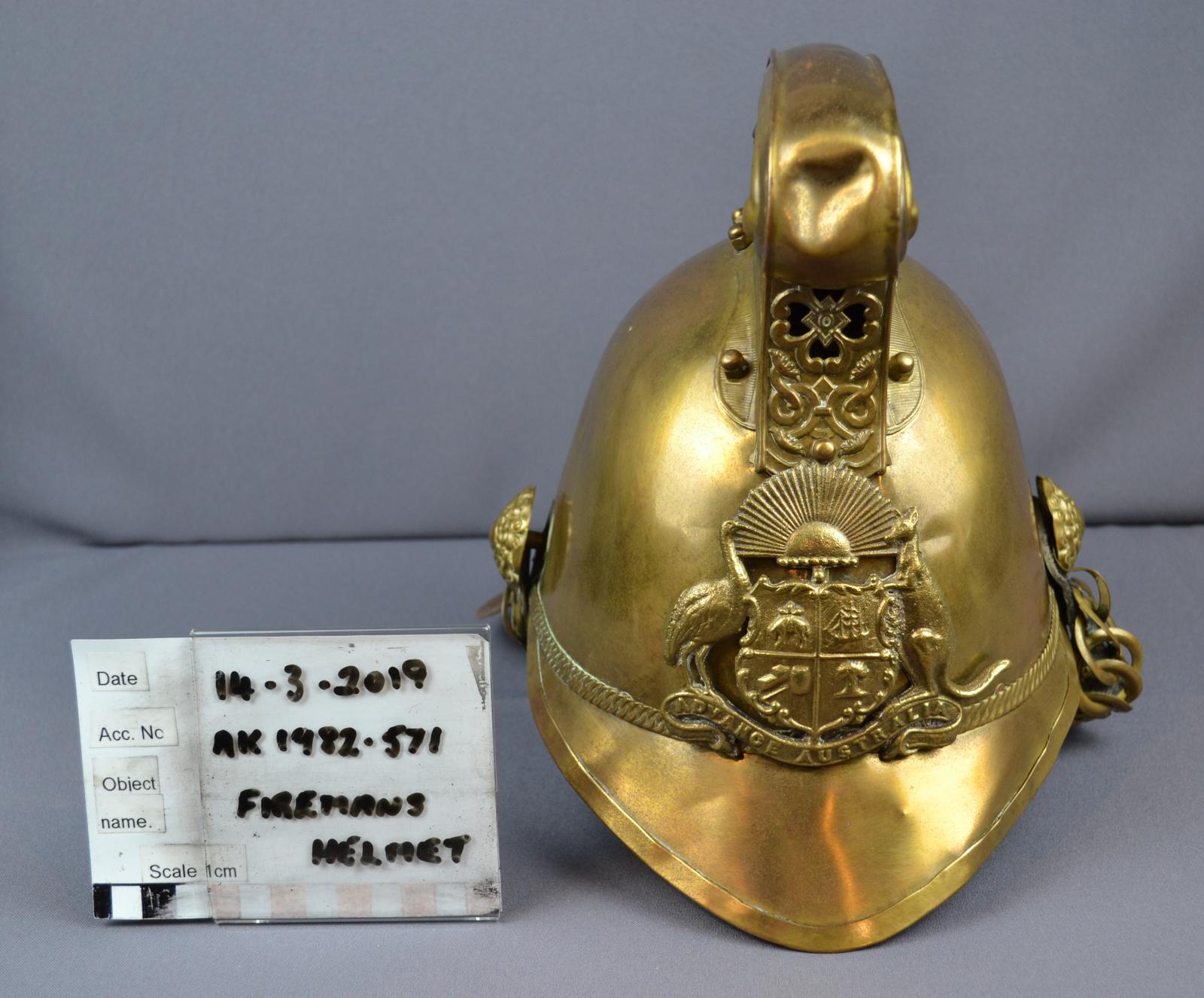
Ryder & Bell brass fireman's helmet, used by a member of the Armadale Volunteer Fire Brigade c1961-1964.
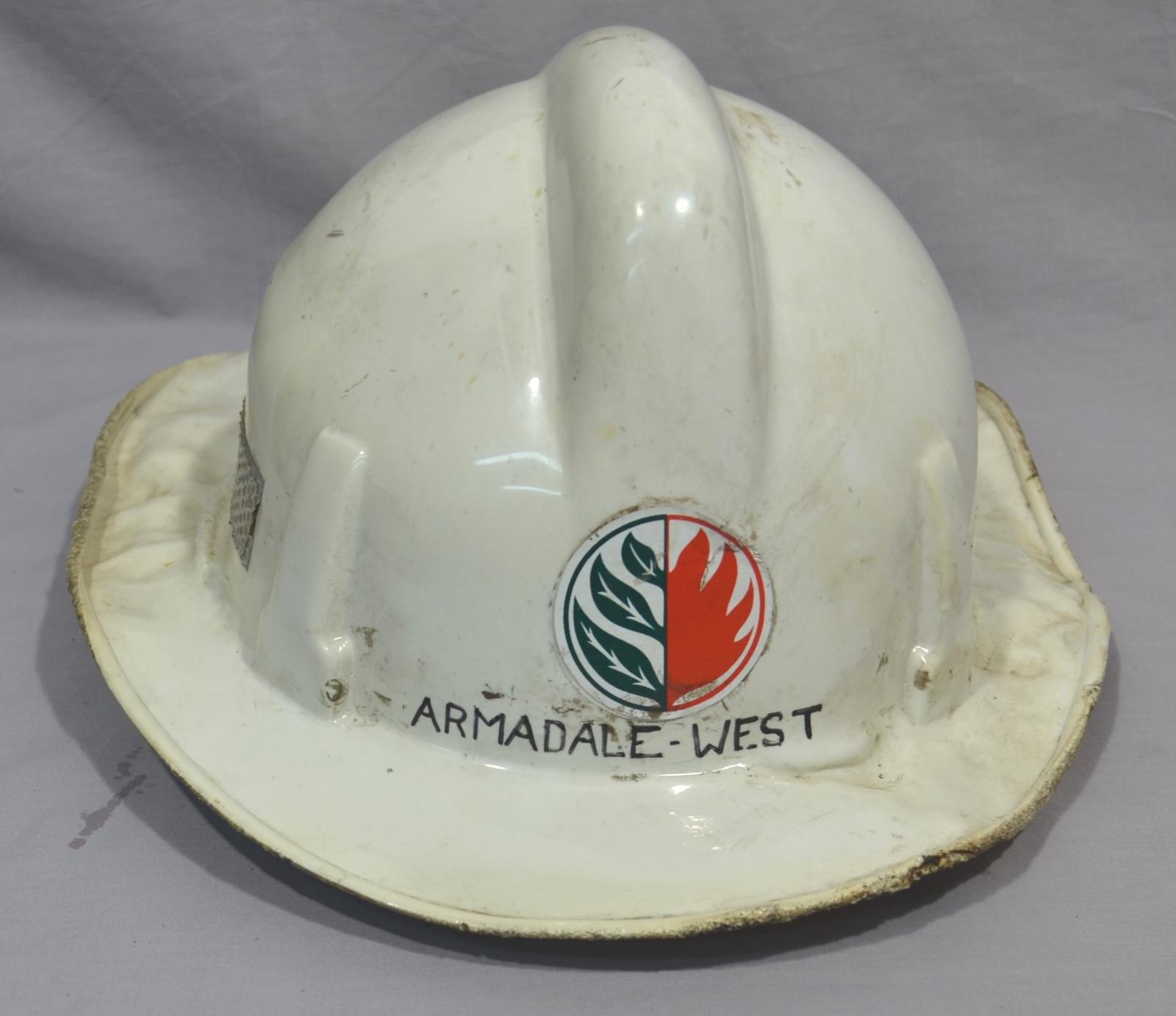
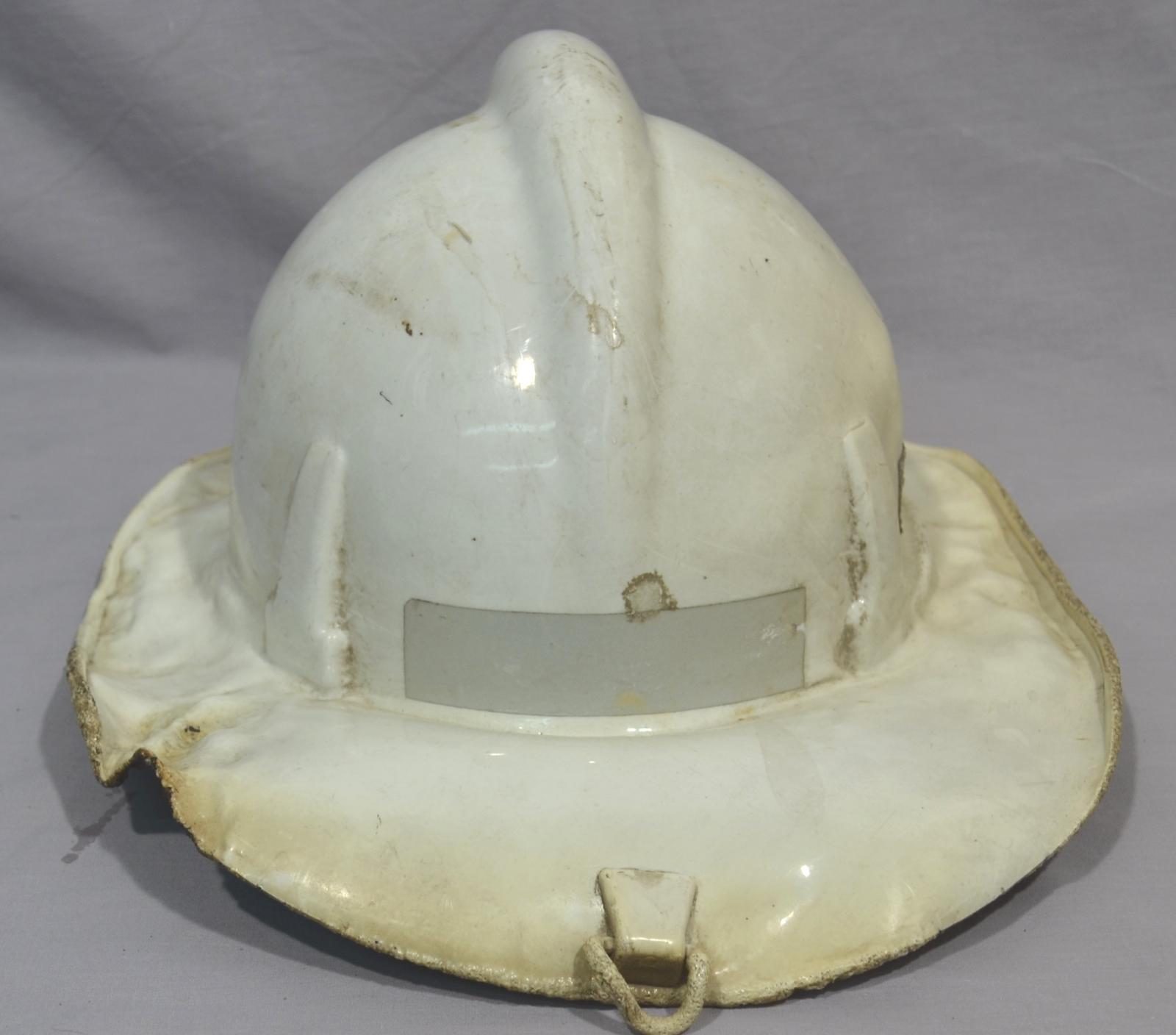
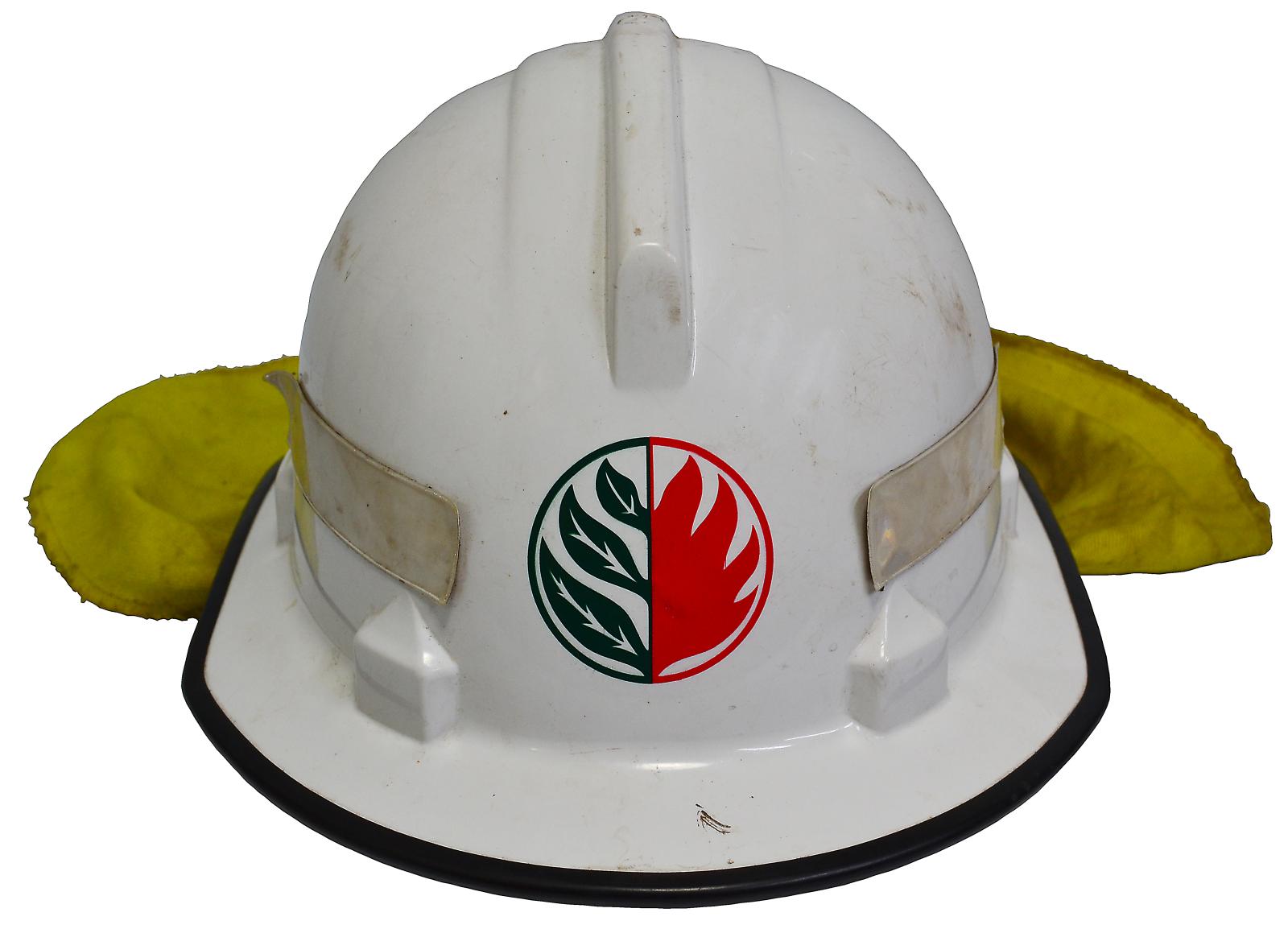
Mine Safety Appliances polycarbonate helmet, used by member of the Armadale West Volunteer Bushfire Brigade, c1990s
Brass helmets were used by fire brigades across Australia from the 1880s through to 1940. The helmets were originally imported from Great Britain but restrictions during World War II saw the start of the helmets being made in Australia by Ryder & Bell.
In 1964 the W.A. Fire Brigades Board ordered that all permanent and volunteer brigades were to use the new helmets from the United States made from combinations of plastic, fibreglass and polycarbonate. The new helmets, after extensive testing, had been found to be lighter, more comfortable, safer (they didn’t conduct heat or electricity) and required far less polishing.
Donated by the City of Armadale and Armadale West Volunteer Bushfire Brigade
Early Fire
For tens of thousands of years, fire has been a part of life when living in what is today the City of Armadale. Noongar families used fire to manage the bush during the Birak season (December to January). These fires cleared the underbrush, created patchy habits for local wildlife and reduced the risk of larger fires devastating the landscape.
When Kelmscott was established in 1830, the newly arrived British colonists did not understand the landscape, saw the fires as a threat and stopped the practice. The Kelmscott Resident Magistrate, Theophilus Tighe Ellis, describes one such incident in early February 1831 that had a tragic ending.
On Sunday morning a party of about thirty passed near Mr Wright’s and in a few
hours afterwards the country appeared on fire in several places burning a large
circle around Kelmscott and Mr Wright’s and if we had not taken the precaution to clean round the different buildings they must have been totally consumed, as the fire
raged with malice all night, burning large trees in its progress.
Excerpt from a letter to Colonial Secretary of the Swan Colony Peter Broun from Captain Theophilus Tighe Ellis, 7 February 1831.
The next day Ellis and a party of soldiers went looking for those who had started the fires to drive them from the area. The party then encountered a small group which resulted in a spear being thrown at Ellis, who returned fire killing Noongar Elder Dencil.
As more settlers arrived, Noongar families were pushed out of their traditional lands and the burning of the bush stopped, but not the threat of fire.
The start of Volunteer Bush Fire Fighting Brigades
The first official volunteer firefighting brigade in Western Australia was formed in Fremantle in 1885. Informal volunteer bush fire brigades started in the early 1900s as more land was cleared for agriculture. Locally, fires threatening agricultural land were fought with equipment owned by the farmers or orchardists and the Armadale Kelmscott Road Board lent their one water tanker when needed.
The 1937 Bush Fire Act gave Road Boards the power to instruct landowners to provide fire breaks, appoint fire control officers and registered bush fire brigades, who could now legally enter private properties to fight fires.
The first locally registered bush fire brigade was in 1943 with the formation of the Westfield Volunteer Bush Fire Brigade, followed by the Canns Road, Byford, Oakford, Bedfordale, Forrestdale, Kelmscott, Oldbury, Roleystone, and Wungong brigades.
Though some equipment, knapsack sprayers, and rakes, were provided by the Road Board, vehicles, boots, protective clothing or a helmet had to be provided by the brigade members. When not fighting bush fires, brigades were tasked with burning off area to reduce the risk of larger fires, checking fire breaks and helping to notify the community about fire bans.
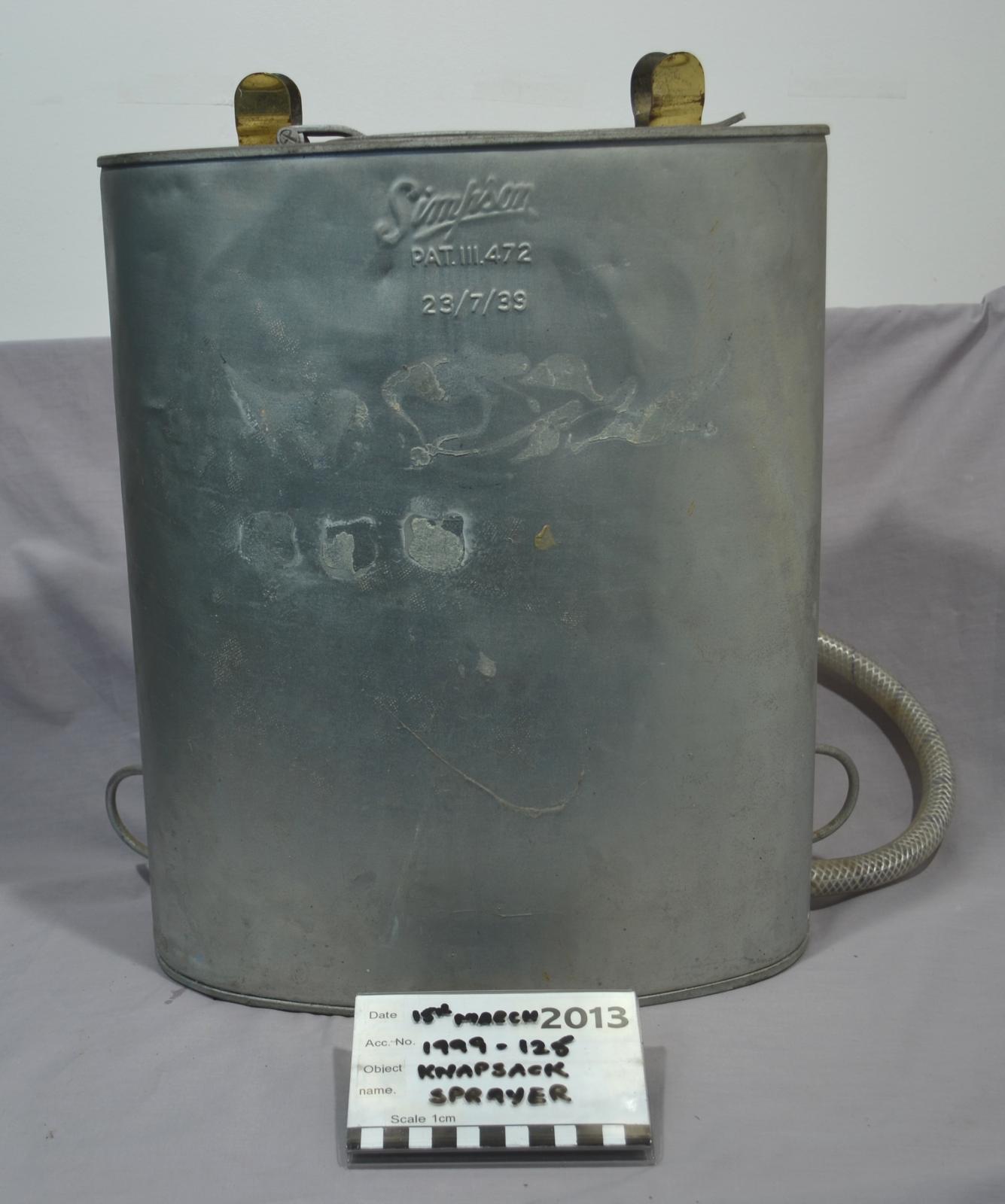
Simpson knapsack sprayer used by Armadale West Volunteer Bushfire Brigade, 1990s.
This sprayer was primarily used to combat small spot fires.
Donated by Armadale West Volunteer Bushfire Brigade
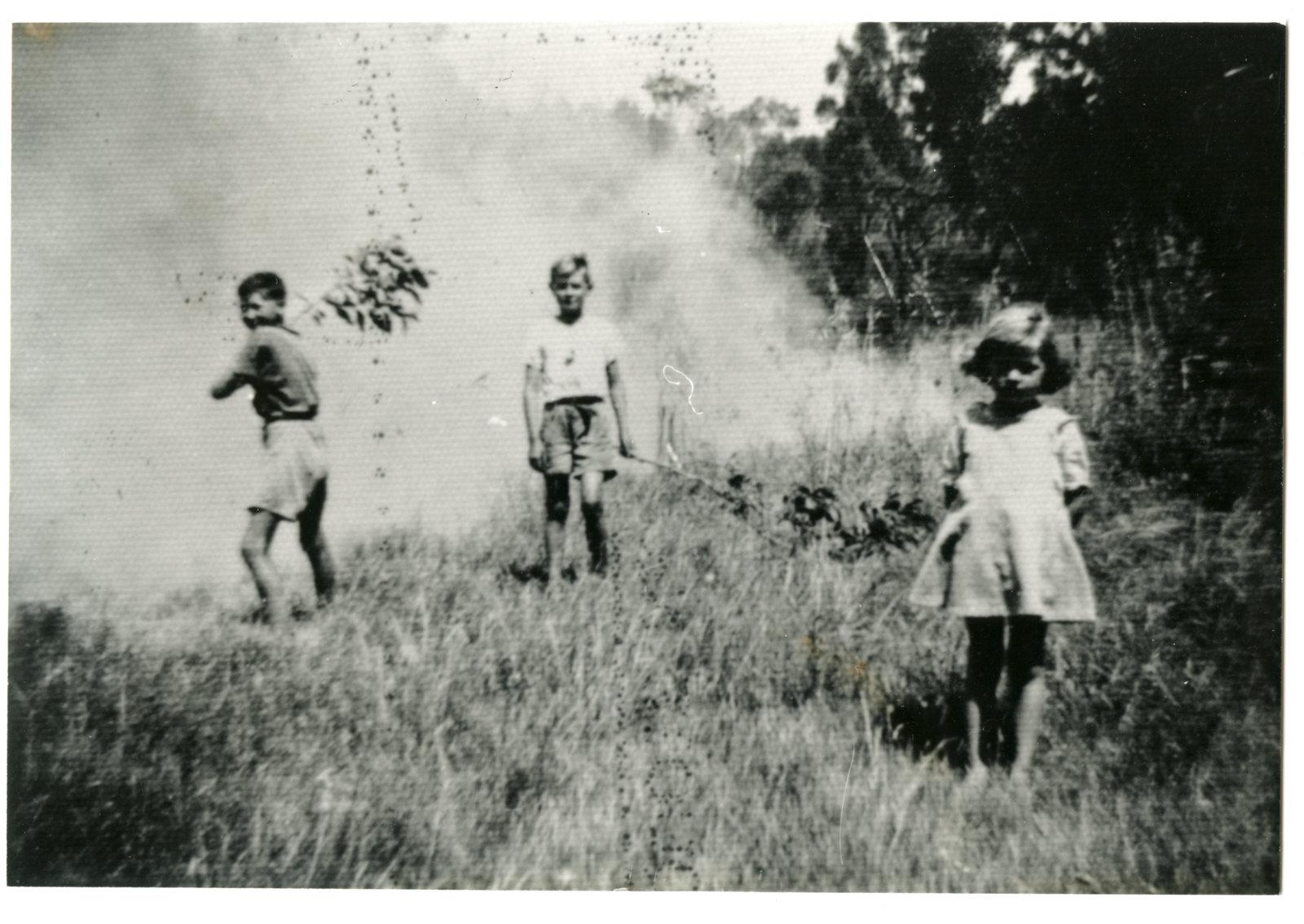
Children at a Group Settlement in Byford helping to putting out a grass fire, 1930.
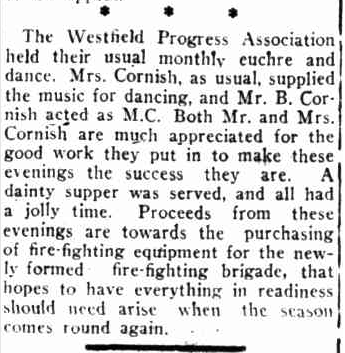
Westfield Progress Society reported to be raising money for the newly formed Westfield Bush Fire Brigade.
South Western Advertiser, 16 April 1943, p1
1950s-60s
The 1950s saw the formation of the Carradine Road (52), North West Armadale (53), Westfield (54) and Roleystone (57) Bushfire Brigades. The Carradine and Canns Road Brigades amalgamated in 1954 as they bordered the 348 hectares Settlers Common which was mostly native bush and a constant fire hazard.
One of the biggest threats during the summer months were the steam trains using the Perth to Bunbury and the Armadale to Fremantle Lines. For years sparks from the trains were starting fires on properties neighbouring the lines. In 1954 the 12:35pm train to Perth started a fire north of the Armadale townsite that burnt out 120 acres of farm and bushland.
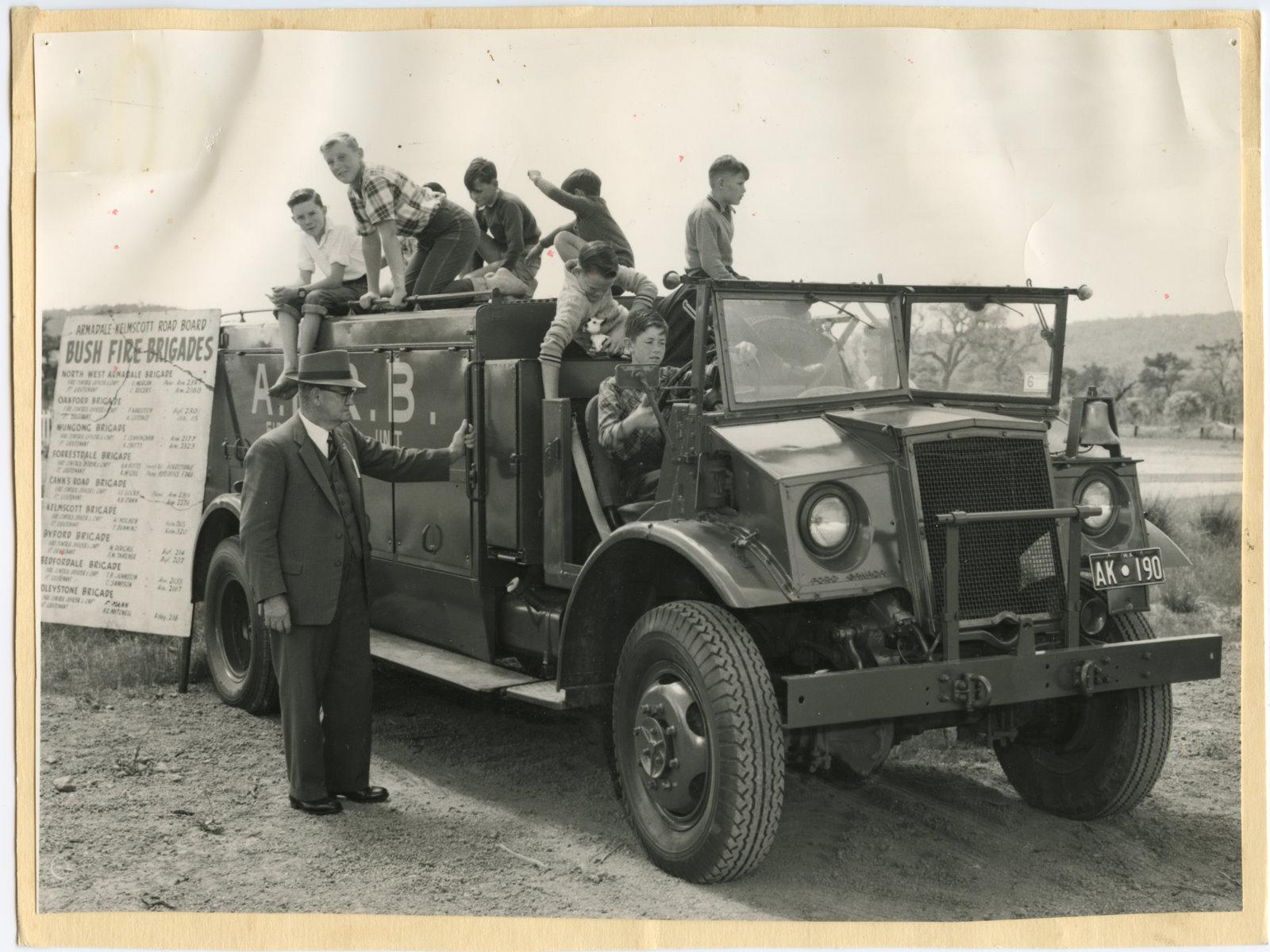
The bush fire brigades listed on the board include North West Armadale, Oakford, Wungong, Canns Road, Kelmscott, Byford, Bedfordale and Roleystone.
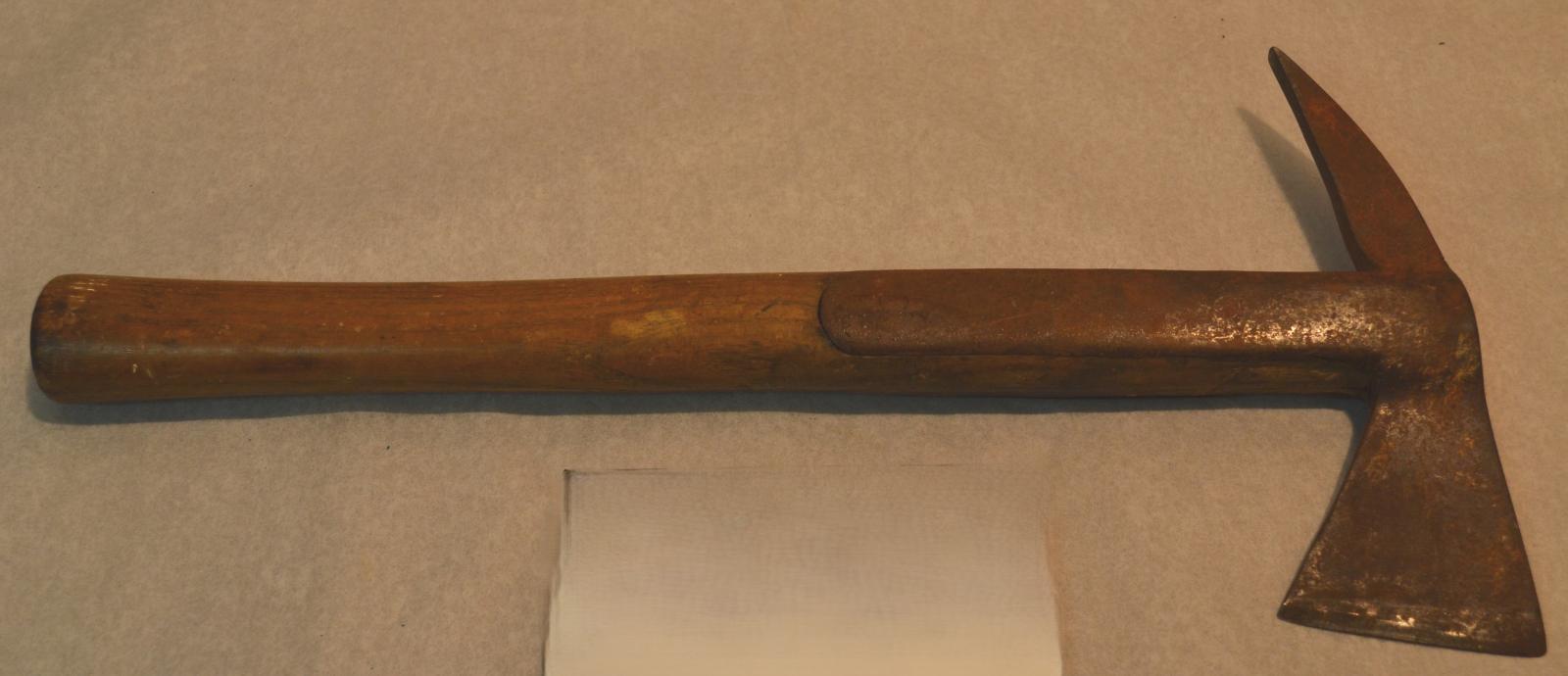
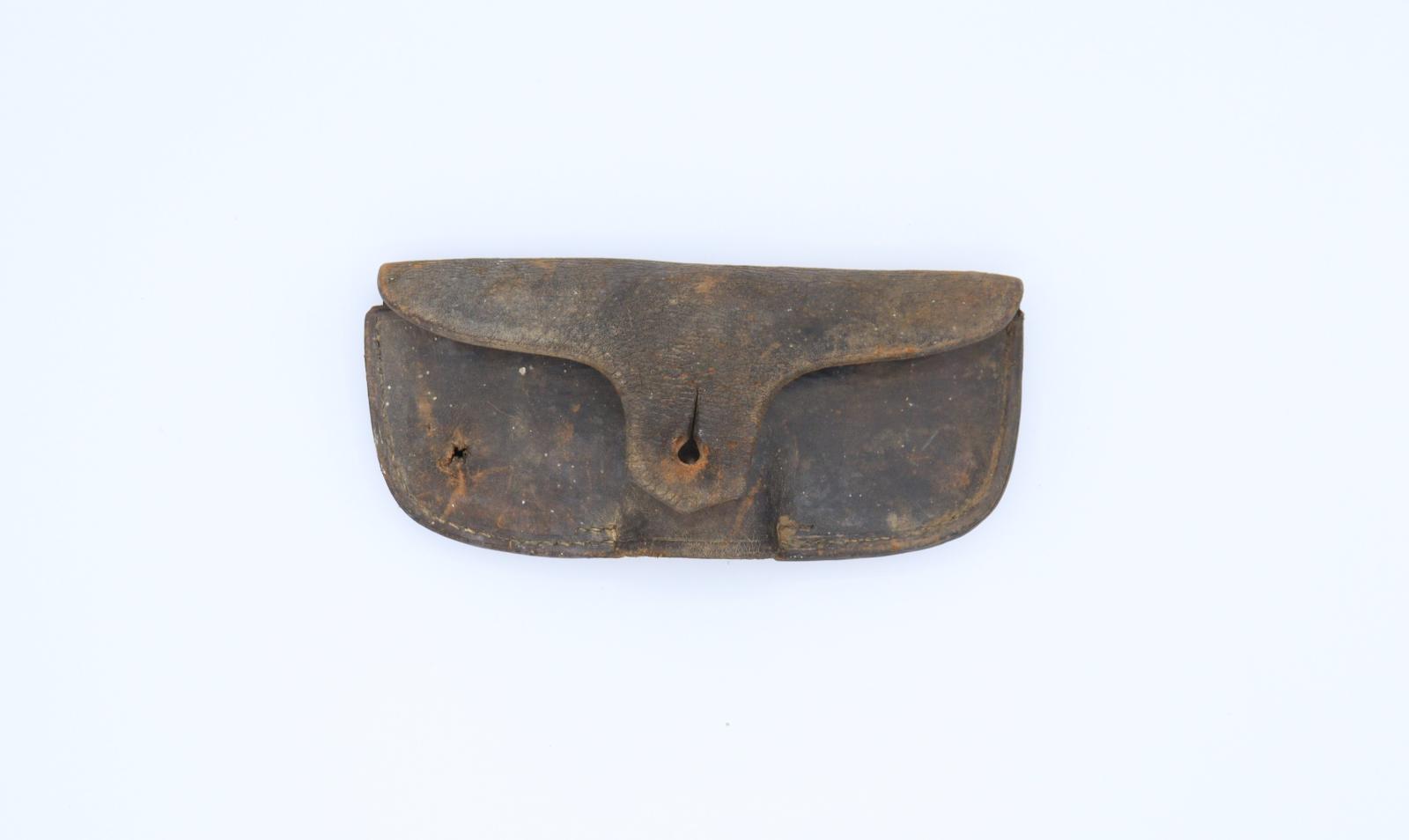
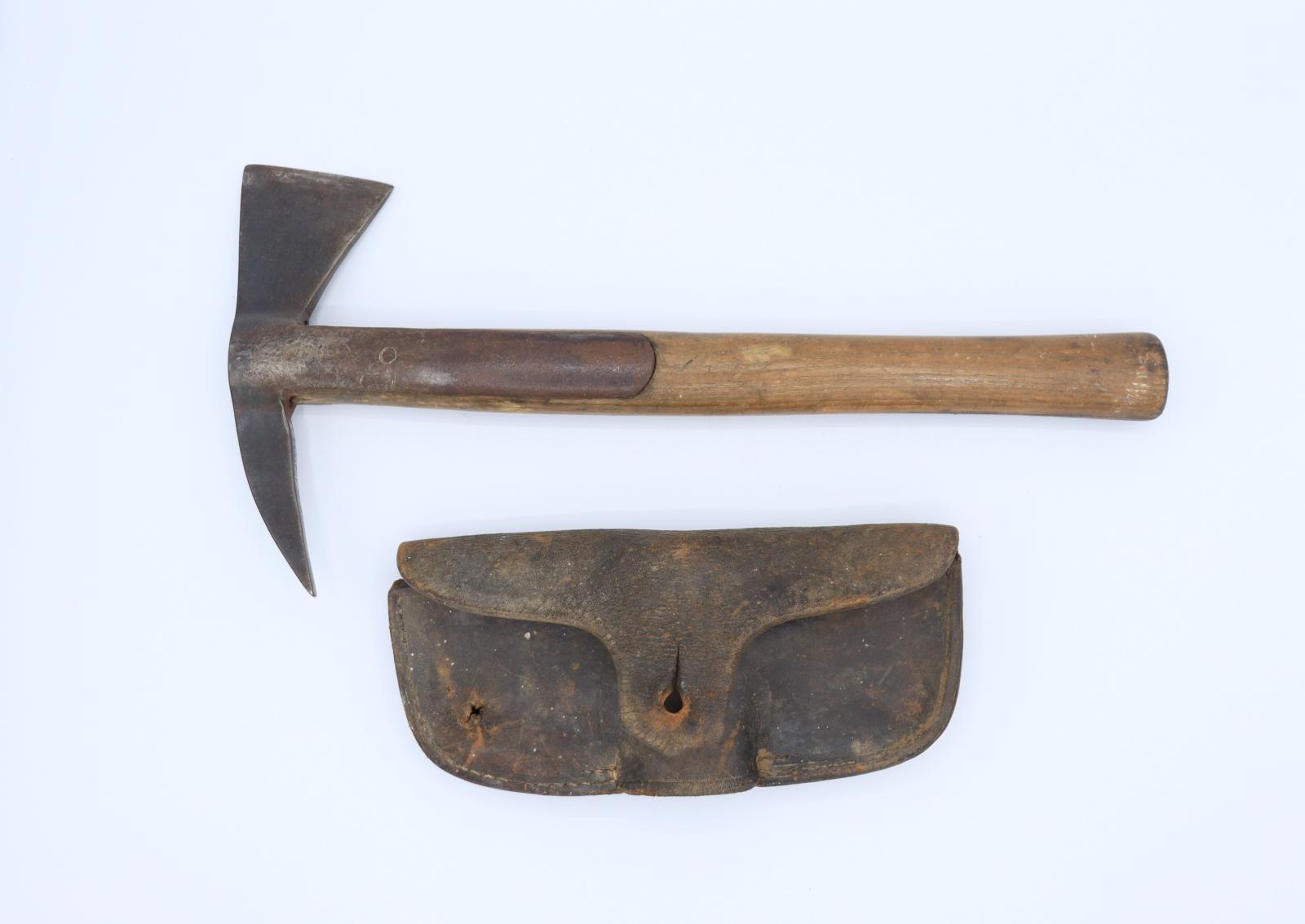
Fireman’s hatchet, used by Sidney ‘Syd’ Withnell, c1930-1950s.
In 1929 Syd joined the Maylands Fire Brigade where he was issued this axe. He served with the Maylands Brigade until 1950 when he and his wife Violet moved to Byford and Syd joined the Westfield Volunteer Bushfire Brigade, bringing the axe with him. Syd served with the brigade for a number of years. In the 1980s Syd’s health deteriorated and he and Violet moved to Nedlands where he passed away in 1987 age 89.
1970s
The 1970s started with a number of large bushfires across the district. All Brigades requested more resources, including vehicles to help them fight the fires. In 1971 the Kelmscott Bushfire Brigade received its first fire fighting vehicle, jointly purchased by the Council and the brigade, a Toyota four-wheel drive with a tank and pump on the back.
The 1960s and 70s also saw the land between Kelmscott and Armadale became more urban, filled in with retail, housing and light industrial developments. The Brigades were no longer just dealing with bush and scrub fires. In 1976 the Kelmscott Brigade along with brigades from the Metropolitan Fire service attended the fire that destroyed the Kelmscott Village Shopping Centre on Albany Highway.
In 1977 the ward of Byford transferred from the Shire of Armadale Kelmscott to the Shire of Serpentine-Jarrahdale meaning the Byford, Cardup, Oakford and Oldbury Brigades now came under the management of the Shire of Serpentine -Jarrahdale.
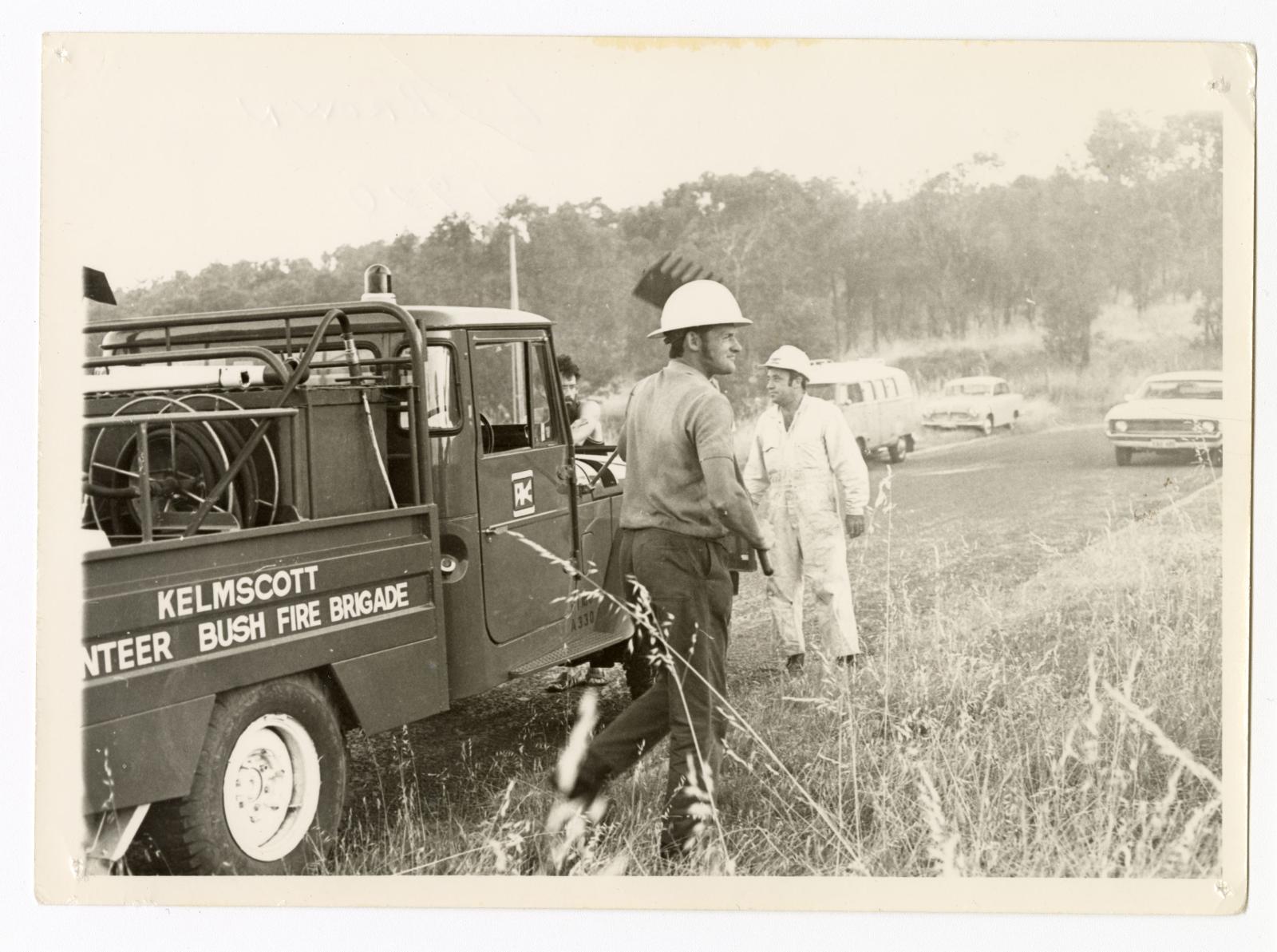
Neville Voysey (right) and Lionel Brown (holding rake) from the Kelmscott Volunteer Bushfire Brigade attending a burn off with the first Kelmscott Unit vehicle, c1974.
Courtesy Birtwistle Local Studies Library
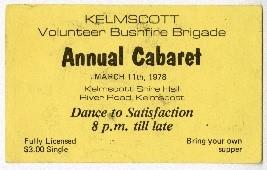
This event was the Brigade’s big annual fundraiser, often raising over $500 on the night. The money collected through fundraising along with the occasional donation and grant were used by the brigade to maintain their vehicles and purchase equipment not supplied by the Council.
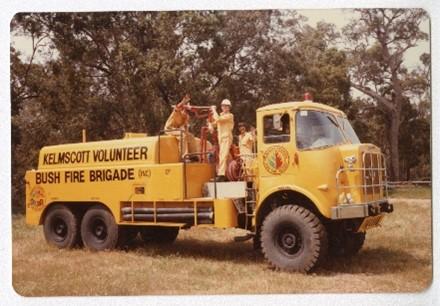
The Kelmscott Volunteer Bush Fire Brigade Atkinson fire truck, 1985.
1980s-90s
As the urban spread continued so did the pressure on the volunteer bushfire brigades. Though bushfires continued to threaten homes, there was a growing number of building fires and arson attacks, including ones on the Challis, Armadale and Kelmscott primary schools, which the Bushfire brigades were not equipped to handle.
The 1990s saw the closure of the Kelmscott brigade in 1993, and the Armadale West Brigade, which had formed in 1993 when the Forrestdale and Westfield brigades amalgamated, in 1999. Despite vocal community opposition, Council decided to no longer support the Armadale West Brigade as they did not believe they had the capacity to deal with any potential fires in the increasingly urban environment which would soon include the new Forrestdale light industrial area. Instead, fires would now be handled by the Armadale Fire and Emergency Services Unit.
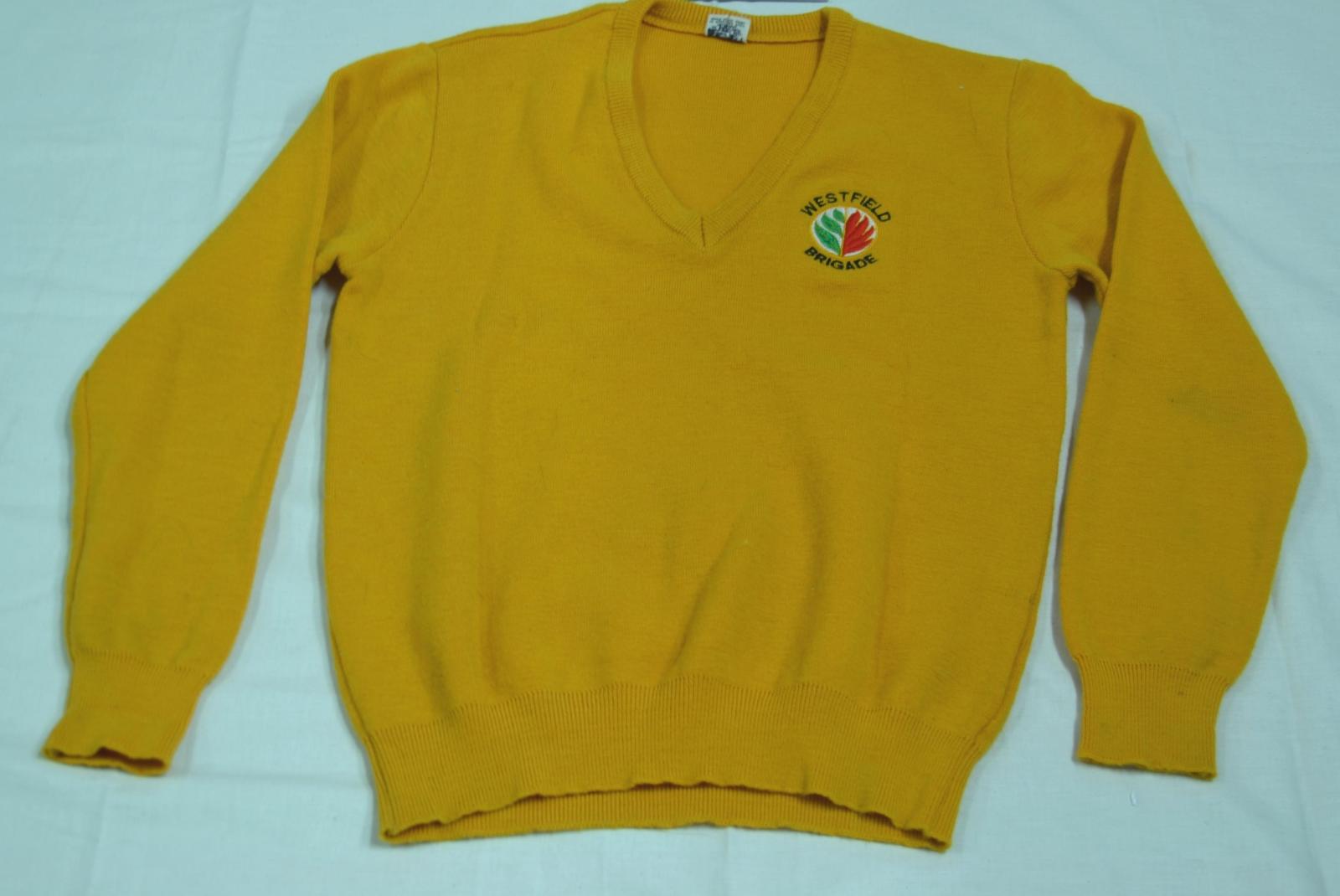
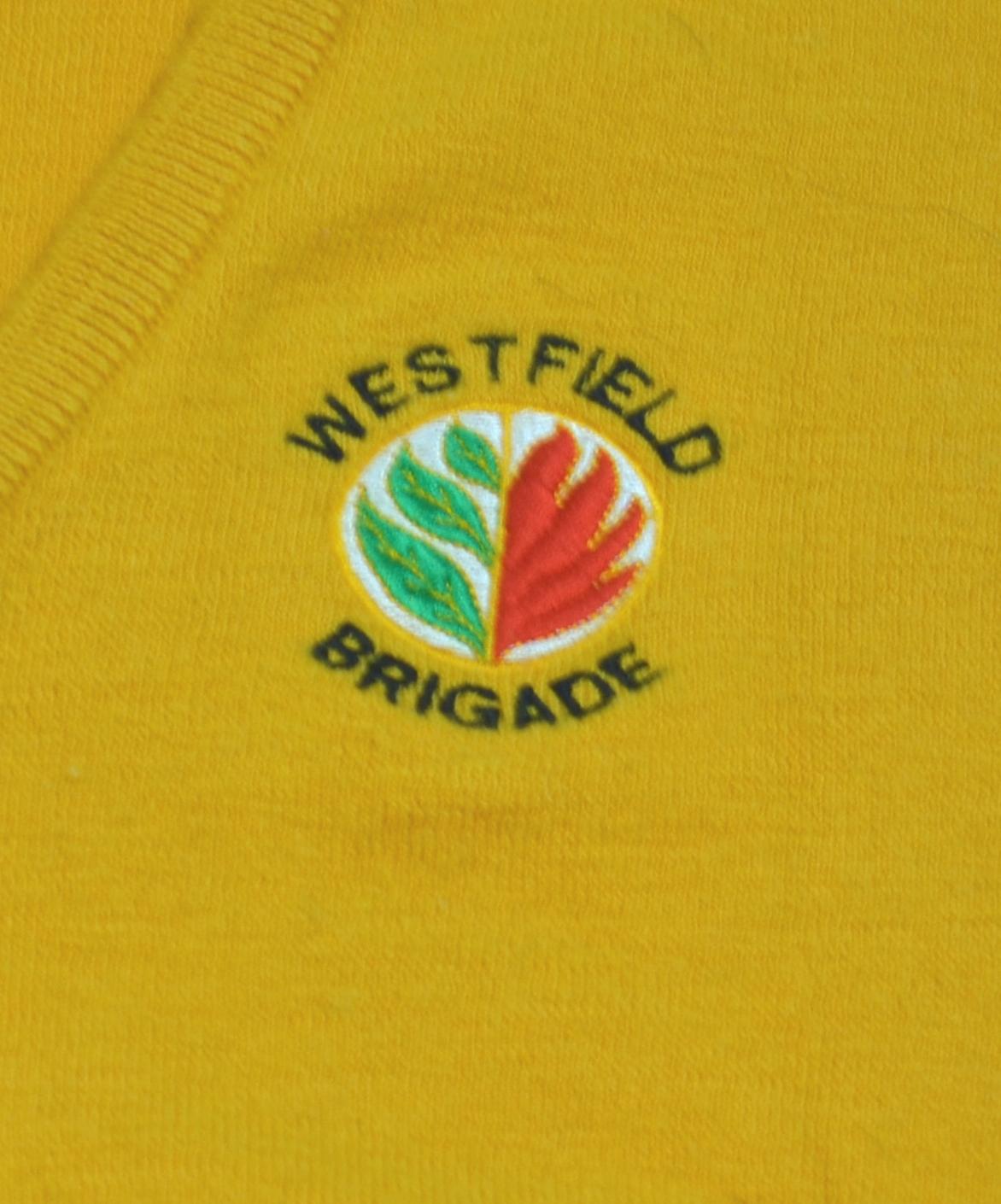
Westfield Volunteer Bushfire Brigade jumper, c1980s
Plaque commemorating the opening of the Forrestdale Volunteer Bushfire Brigade headquarters, 19 October 1982.
Like many volunteer brigades fire fighting equipment and vehicles were often stored on members property. In the 1980s a more was made to establish brigade headquarters on Council land to provide greater certainty for the Brigades as members came and went. The Forrestdale headquarters were located on Brigade Road and closed on 9 June 1999 when the West Armadale Volunteer Bush Fire Brigade disbanded. The site of the headquarters is now part of the Forrestdale Light Industrial area.
Swan Region Bushfire Competition, 3rd place, won by West Armadale Bush Fire Brigade, 1994.
Up to the 2020s volunteer brigades would often participate in competition against each other to test their firefighting and teamwork skills. Awards were presented for individual events as well as accumulated points from the days competition.
Swan Regional Bushfire Competition trophy, Engineering Safety Award, 1995.
Won by the Armadale West Volunteer Bushfire Brigade.
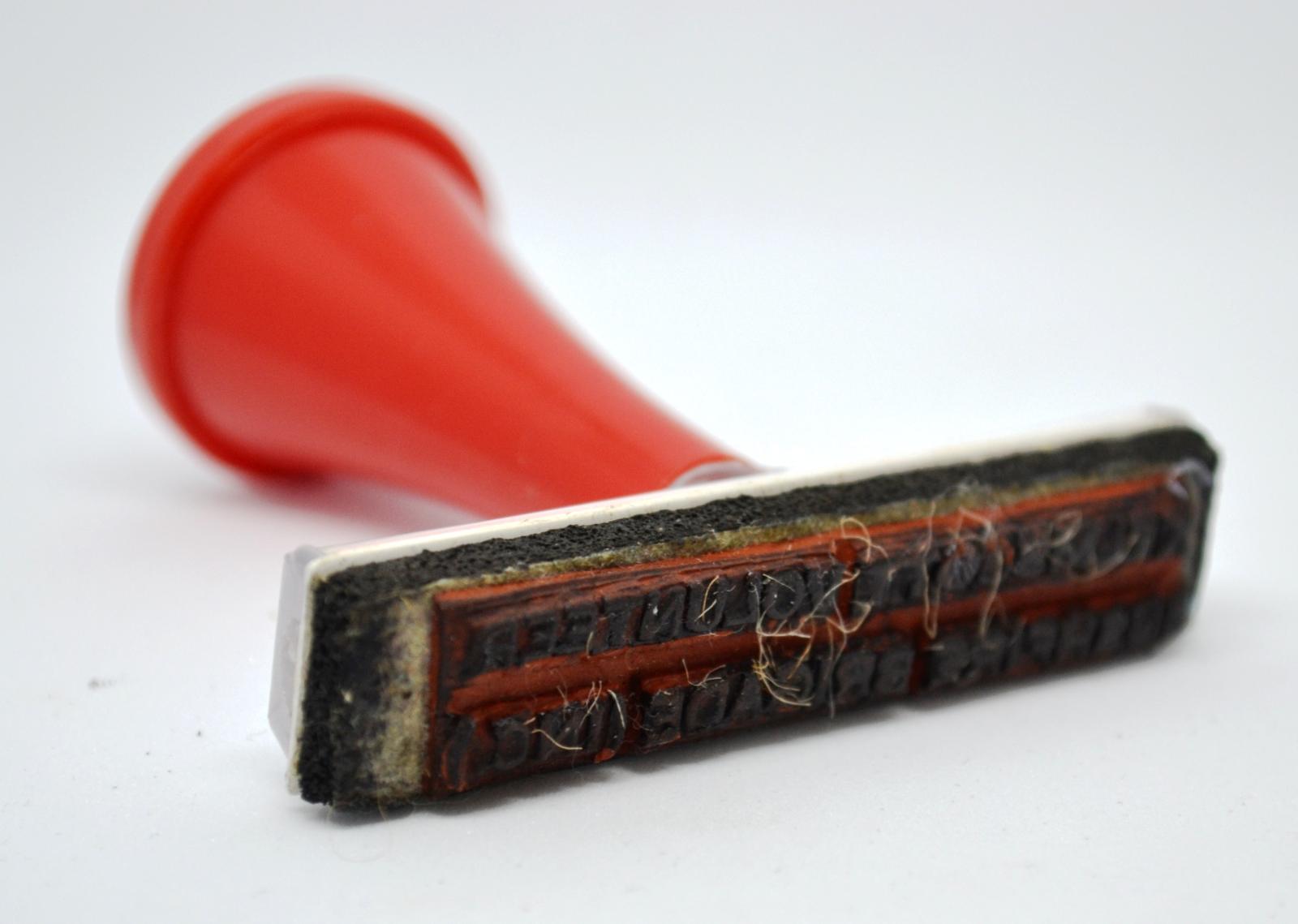
Kelmscott Volunteer Bushfire Brigade Inc stamp, c1980s.
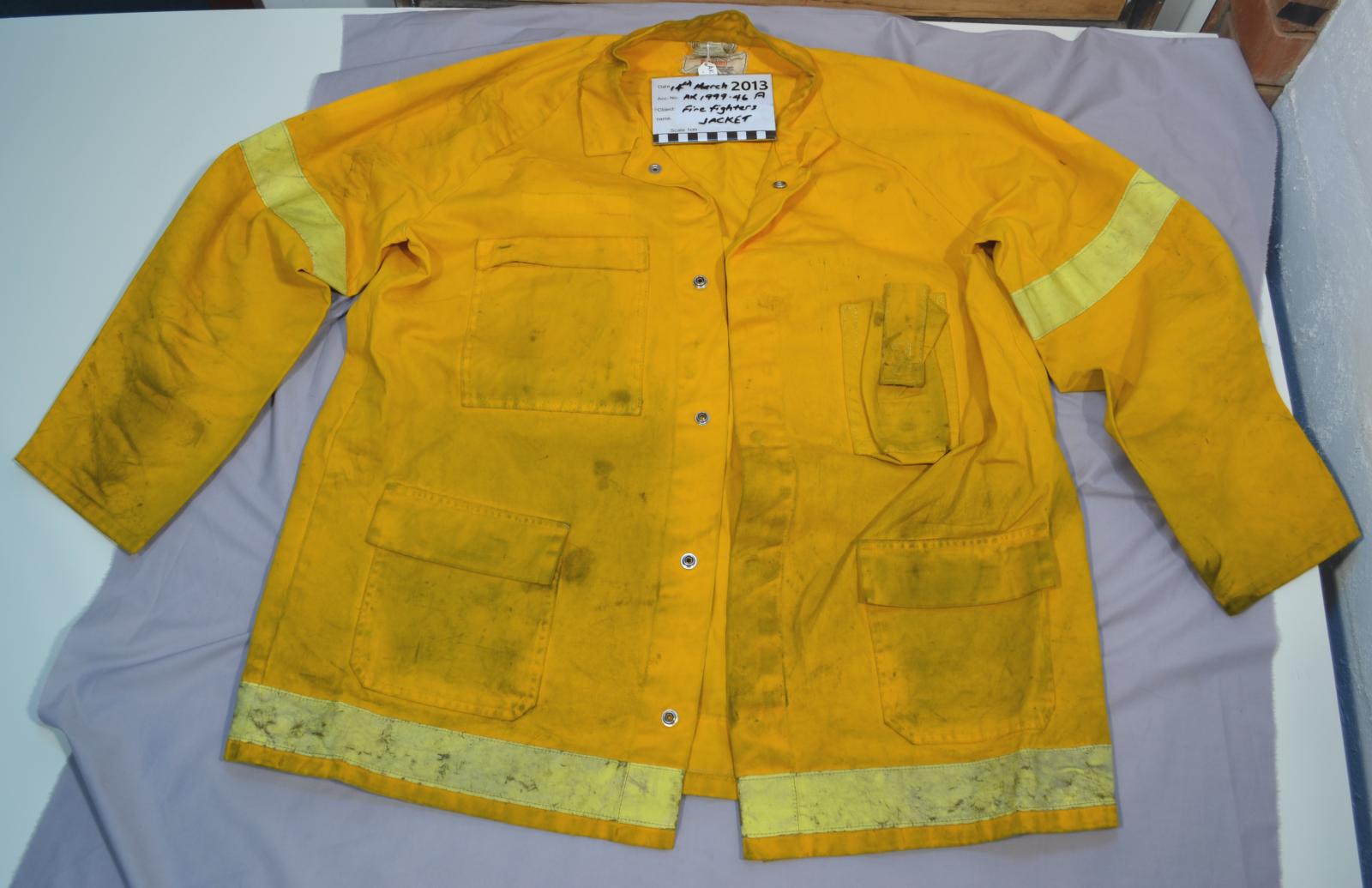
Firefighting uniform worn by a member of the Armadale West Bushfire Brigade, c1990s.
Since the 1980s the safety equipment and uniforms worn by volunteer firefighters have been standardised and tested to make sure it protects the users during a fire. Old materials that either burnt away or melted have been replaced over time with new materials that are designed to better help protect the wearer.
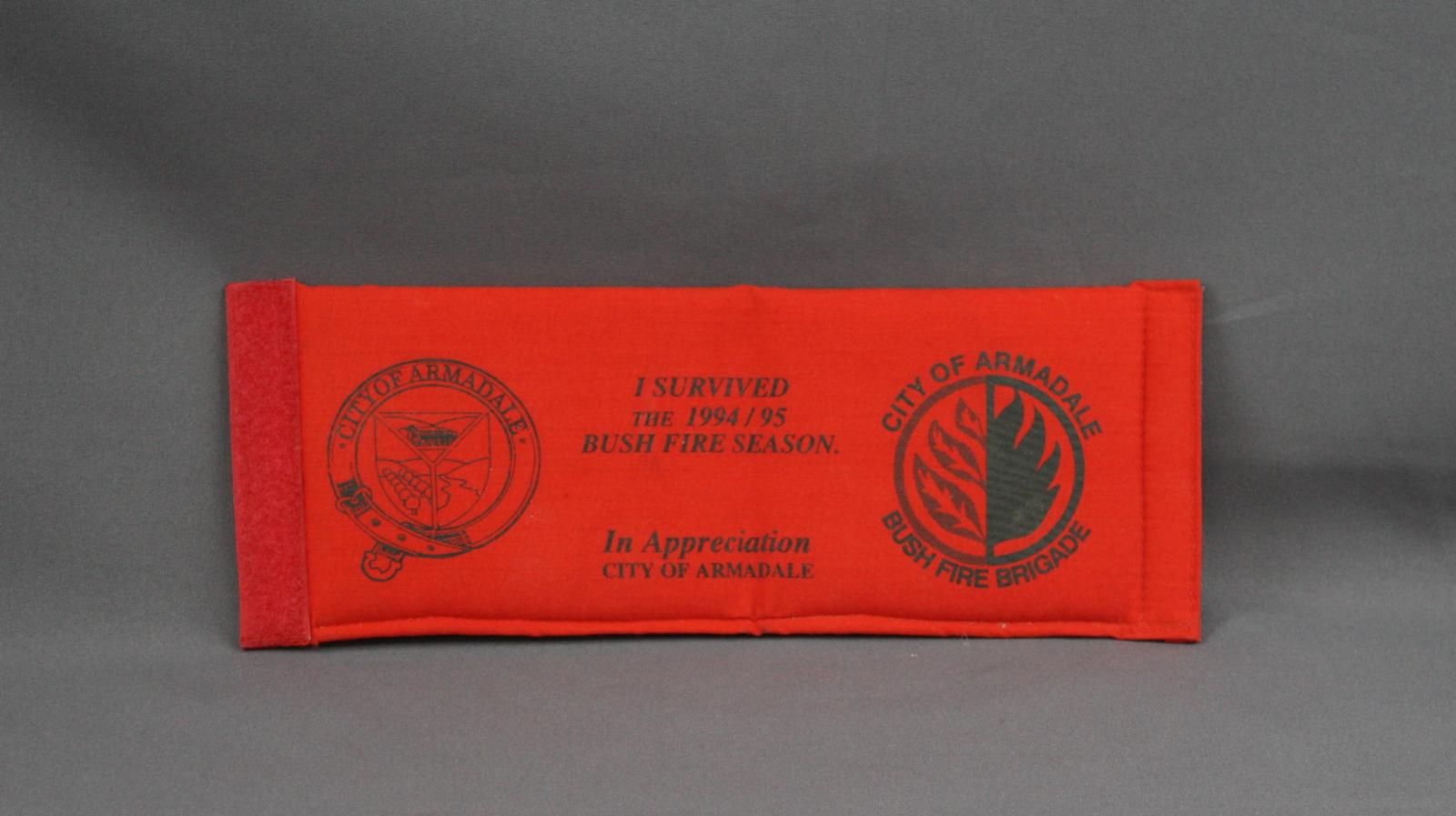
Souvenir stubby holder, 1995.
This stubby holder, owned by Robert ‘Cam’ Clay, was produced as a special memento by the City of Armadale for members of the City’s Volunteer Bushfire Brigades, who fought dozens of fires across the summer of 1994 and 1995. The Bedfordale Brigade attended more than 16 substantial blazes that threatened people’s homes and lives between November and February. Michale Edmead in his diary from that summer noted how exhausted he was after attending five different fires over four days in February 1995.
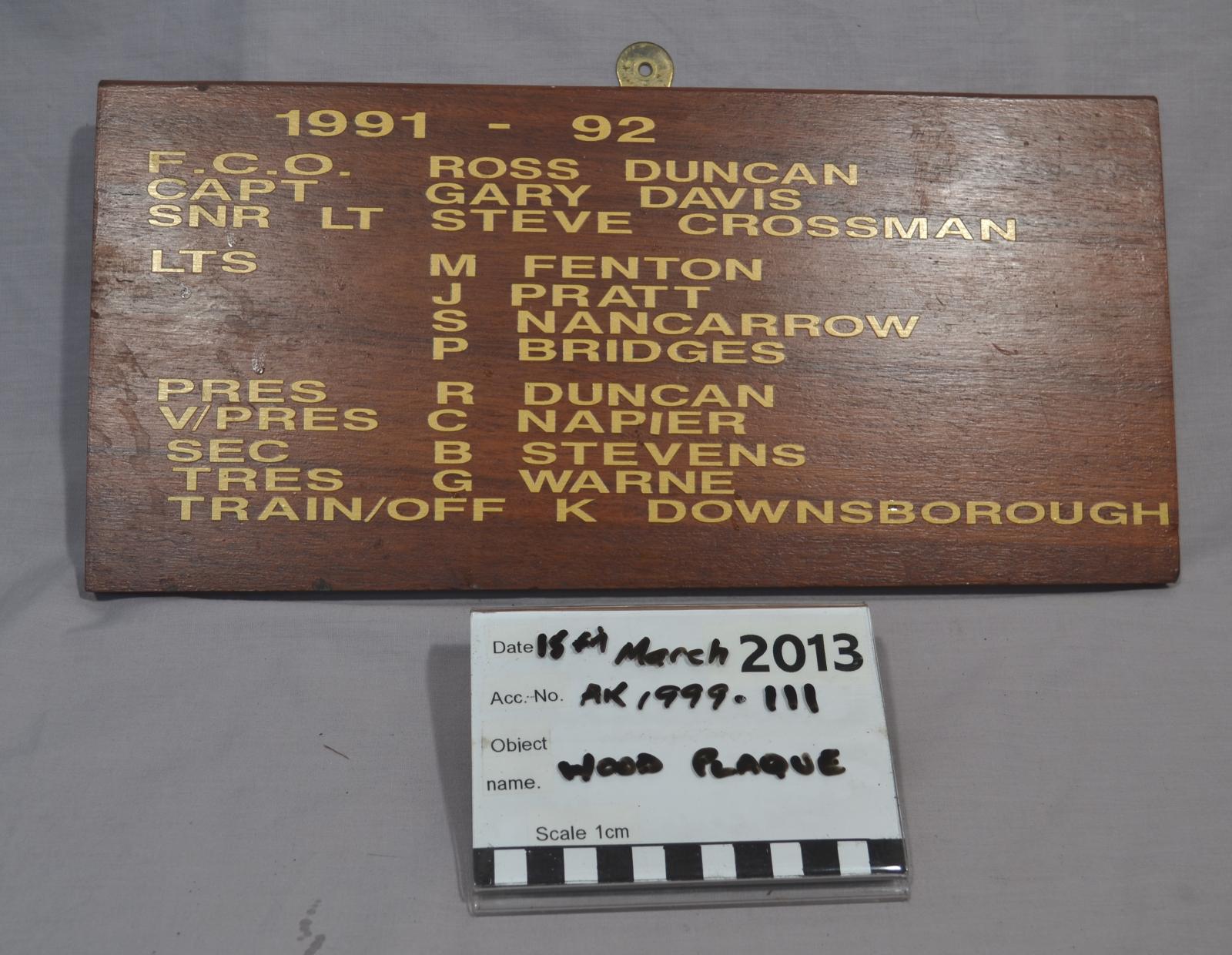
Plaque recording the office bearers for the Armadale West Volunteer Bushfire Brigade, 1991-92.
The plaque hung in the Armadale West’s headquarters on Brigade Road, Forrestdale.
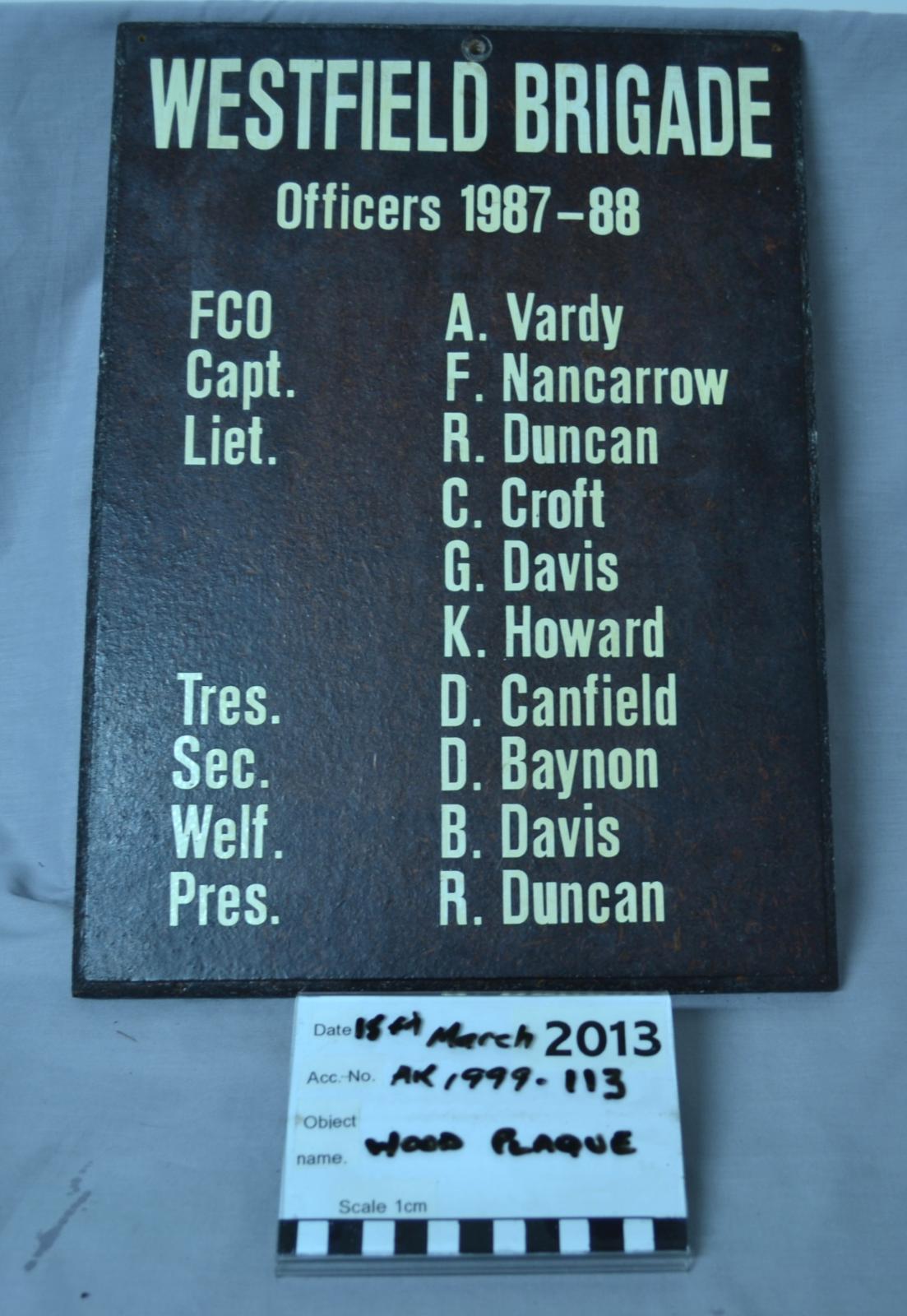
Plaque recording the inaugural office bearers for the new Westfield Volunteer Bushfire Brigade, 1987-1988.
The original Westfield Volunteer Bushfire Brigade operated from 1945 to 1954. In 1987 the Wungong Volunteer Bushfire Brigade officially changed its name to the Westfield Volunteer Bushfire Brigade. The plaque was on display at the Brigade headquarters on Westfield Road.
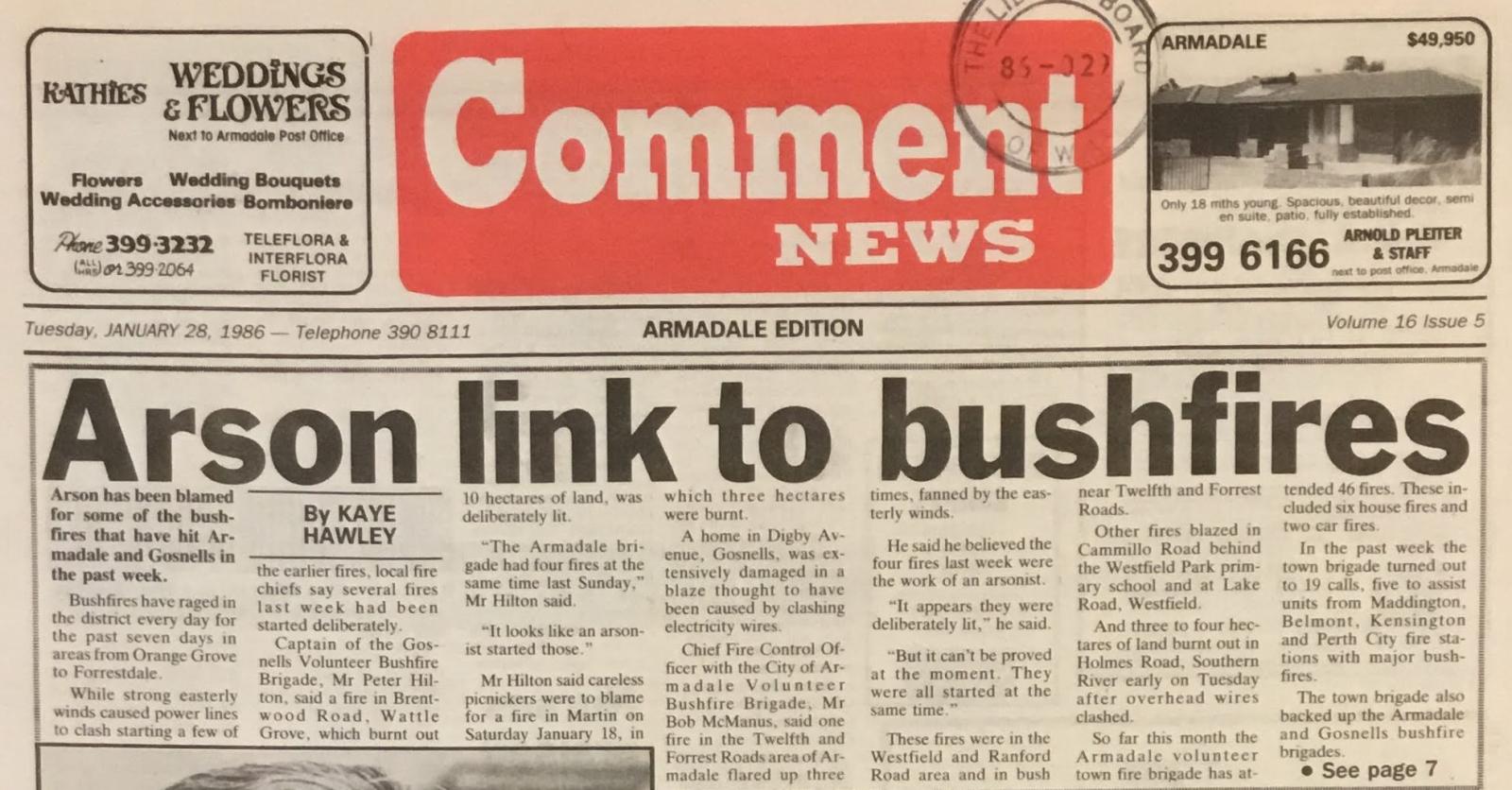
Comment News, 28 January 1986.
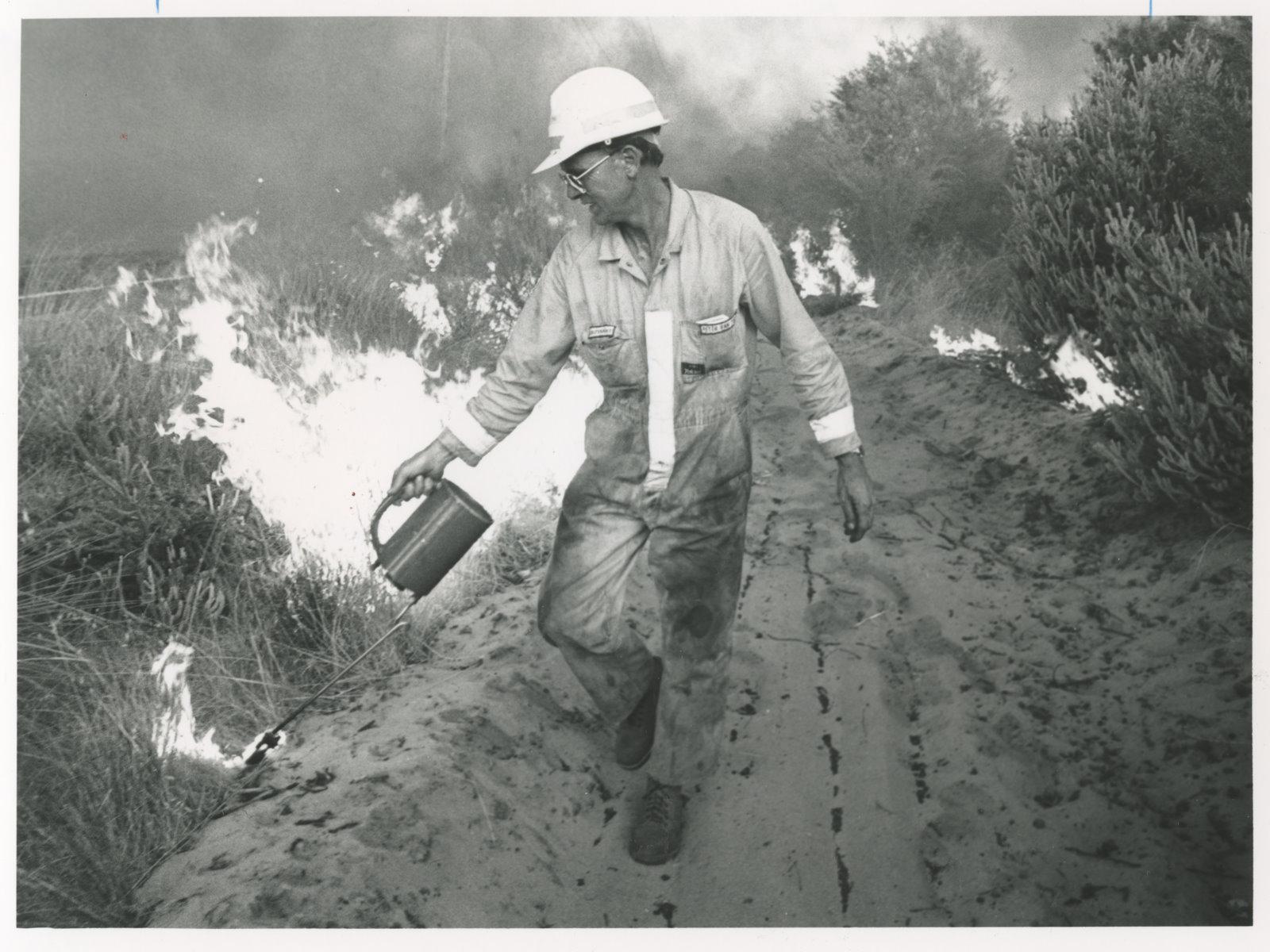
A volunteer bush fire brigade member backburning along Ranford Road during a bushfire in Forrestdale, January 1990s.
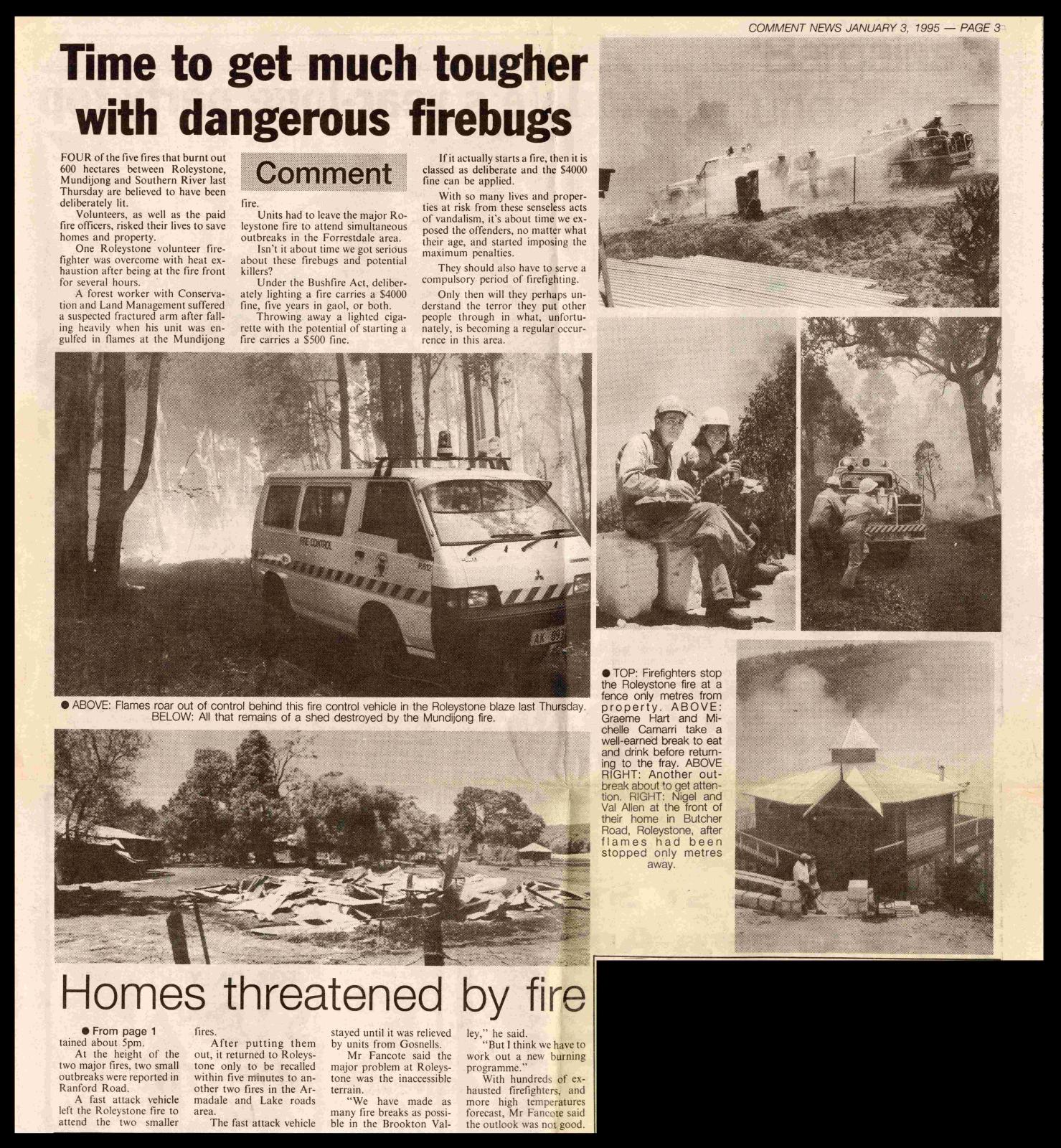
Comment news on the 8th of January, 1995.
This newspaper cutting was collected by Michele Edmead who was a member of the Roleystone Bushfire Brigade at this time. The summer of 1994 to 1995 was a very busy one with numerous, some deliberately started, fires threatening property, livestock and lives through out the City and neighbouring areas.
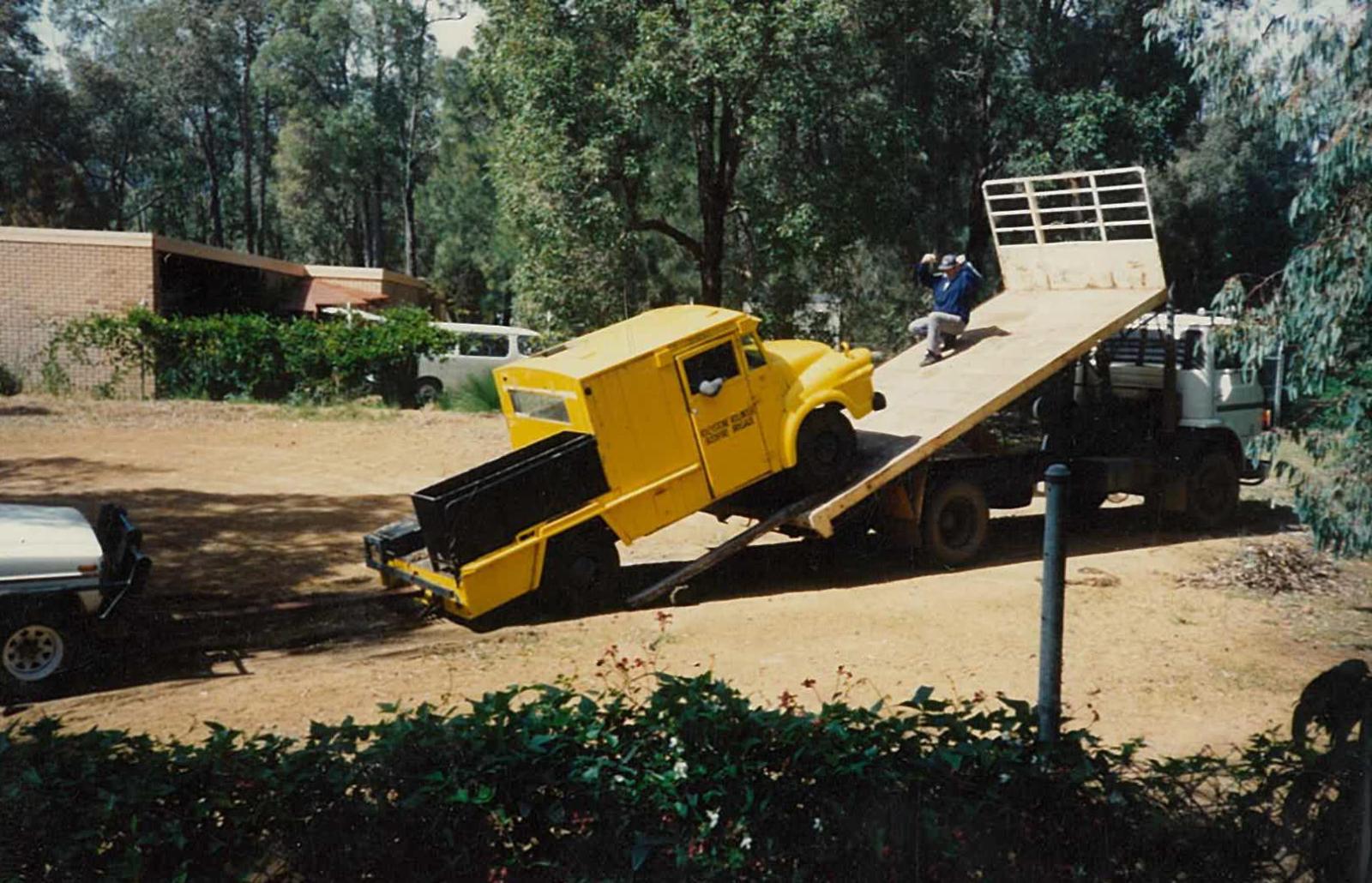
The Roleystone Bushfire Brigades new fire fighting vehicle, a converted armoured car, c1984.
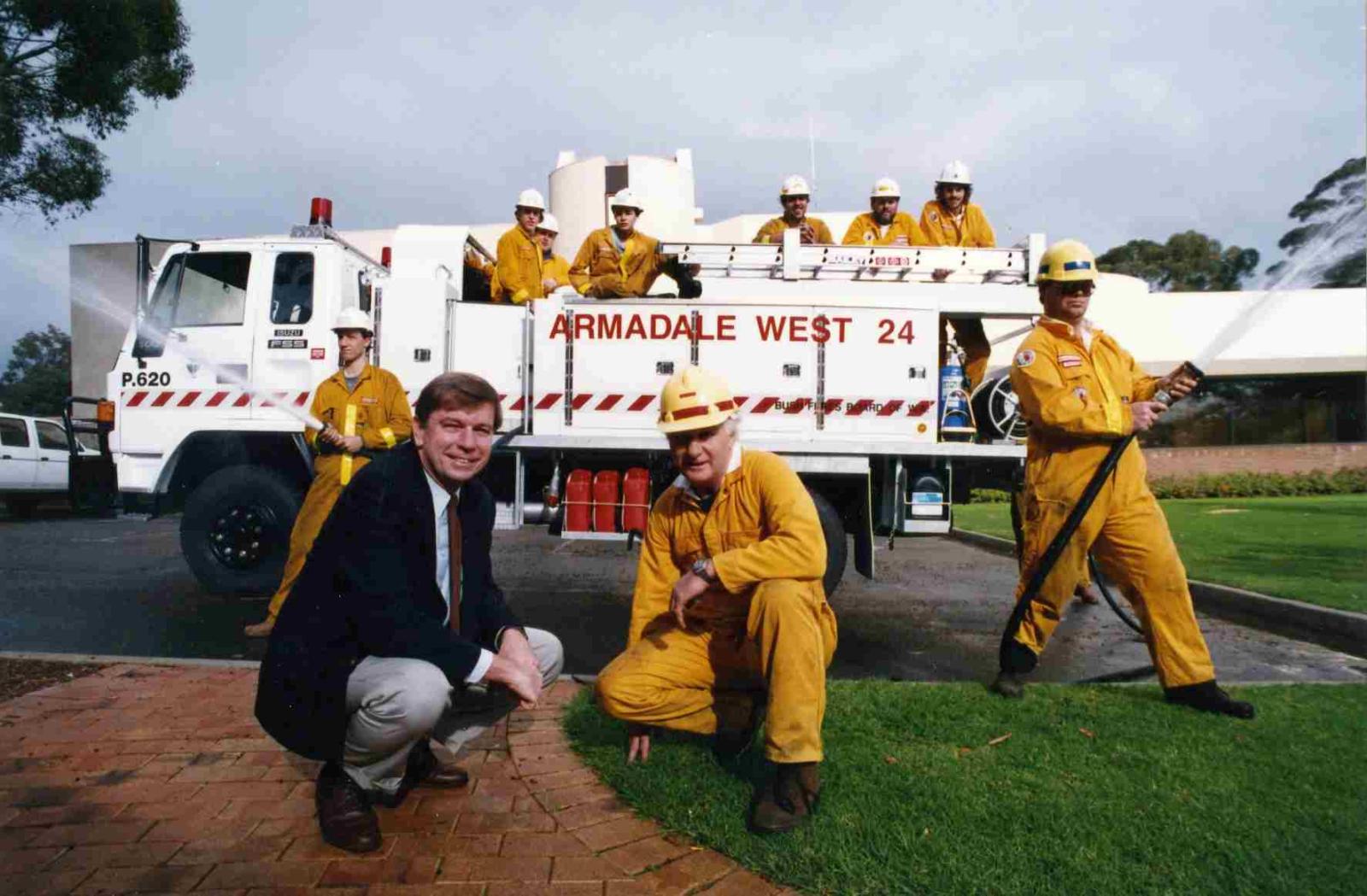
City of Armadale Mayor Rodger Stubbs posing with members of the West Armadale Volunteer Bush Fire Brigade and their new fire truck, c1997.
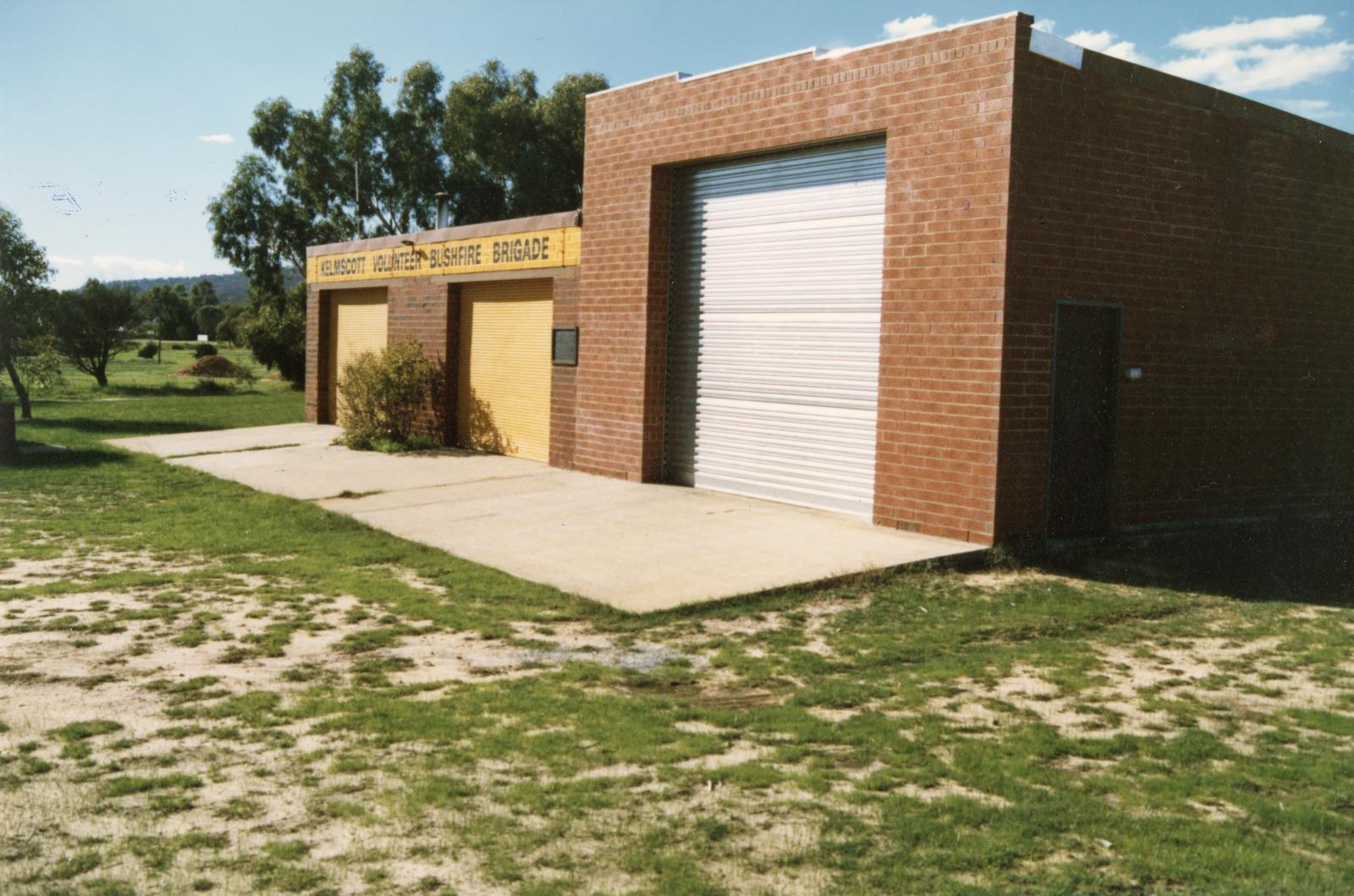
The headquarters for the Kelmscott Volunteer Bush Fire Brigade located at Frye Park on Clifton Street, Kelmscott, c1987.
Members of the Roleystone Volunteer Bush Fire Brigade competing at tug of war during a volunteer bushfire brigade competition, c1994.
2000s to today
Bedfordale and the Roleystone-Karragullen Volunteer Bushfire Brigades, all located in the hills above Armadale and Kelmscott, remained very active. The increase in the numbers of people living in the hills means more pressure on the local brigades to prevent fires from destroying the communities that live there.
In 2005 a large bushfire, started by an arsonist threated communities along the Darling Ranges including Karragullen, Araluen and Roleystone. The local brigades were part of 1500 personnel who fought the fire for five days. 27,000 hectare of bushland was burnt but they managed to prevent the loss of any homes or human life.
On 6 February 2011 a bushfire was started in Roleystone and strong easterly winds drove the fire down the hill towards Kelmscott, leading to the evacuation of over 4,000 people. The fire burnt out 405 hectares of bush and destroyed 69 homes. Over 150 fire fighters were on the ground that night trying to contain the fire. Again, thanks to their hard work with the assistance of over 200 police officers no lives were lost.
In the last seven years the Roleystone, Karragullen and Bedfordale Volunteer Bushfire Brigades have attended over 1000 bushfires of various sizes.
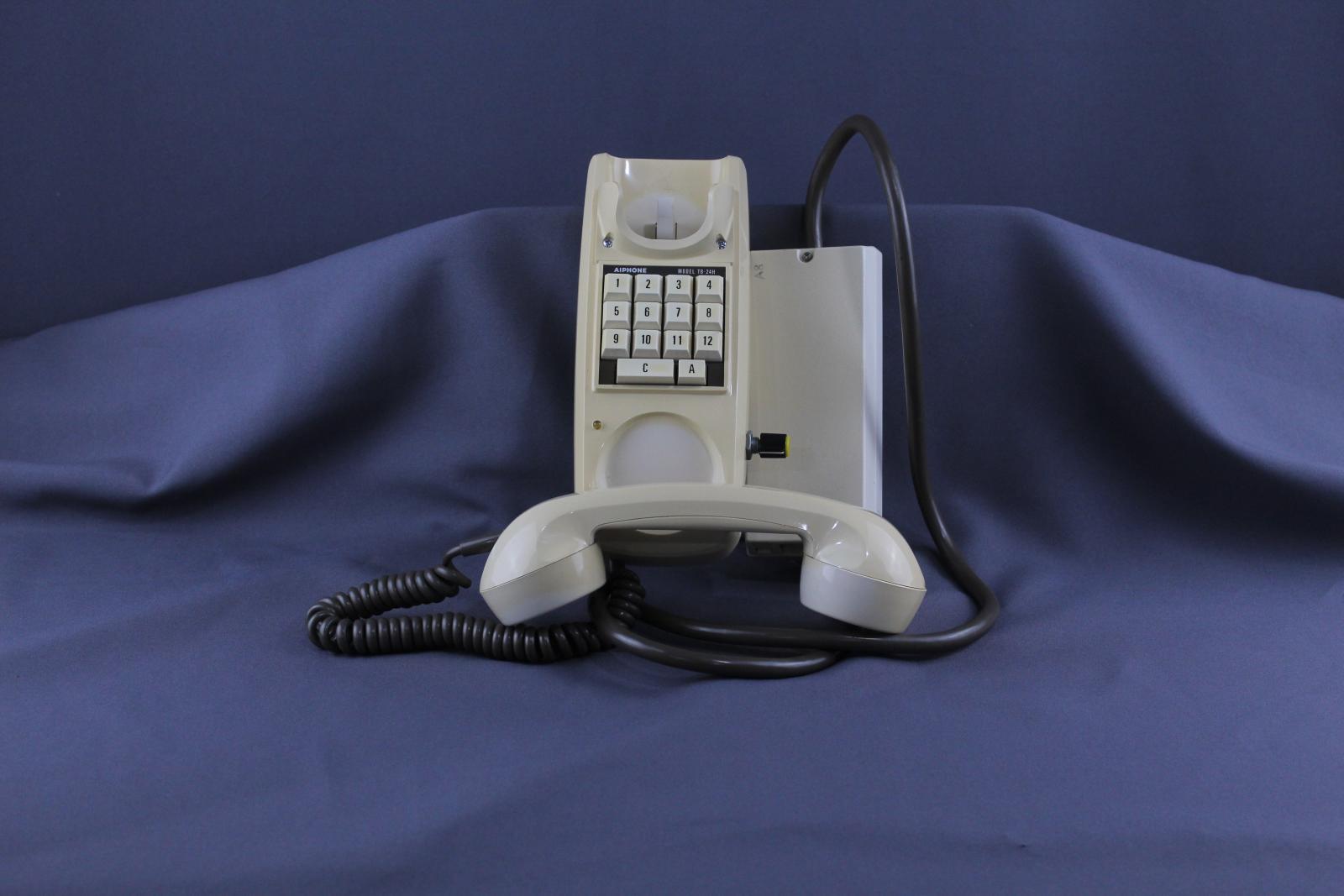
Aiphone two way radio telephone, 1985-2005.
This radio phone was installed in 1985, in the office of the City of Armadale’s head ranger who was also the City’s fire control officer. The radio phone allowed them to communicate with the City’s rangers out in the field as well as volunteer bushfire brigades during a fire. Three other phones were installed in the City’s administration building and were used up until 2005 when the ranger’s offices were moved to a new building.
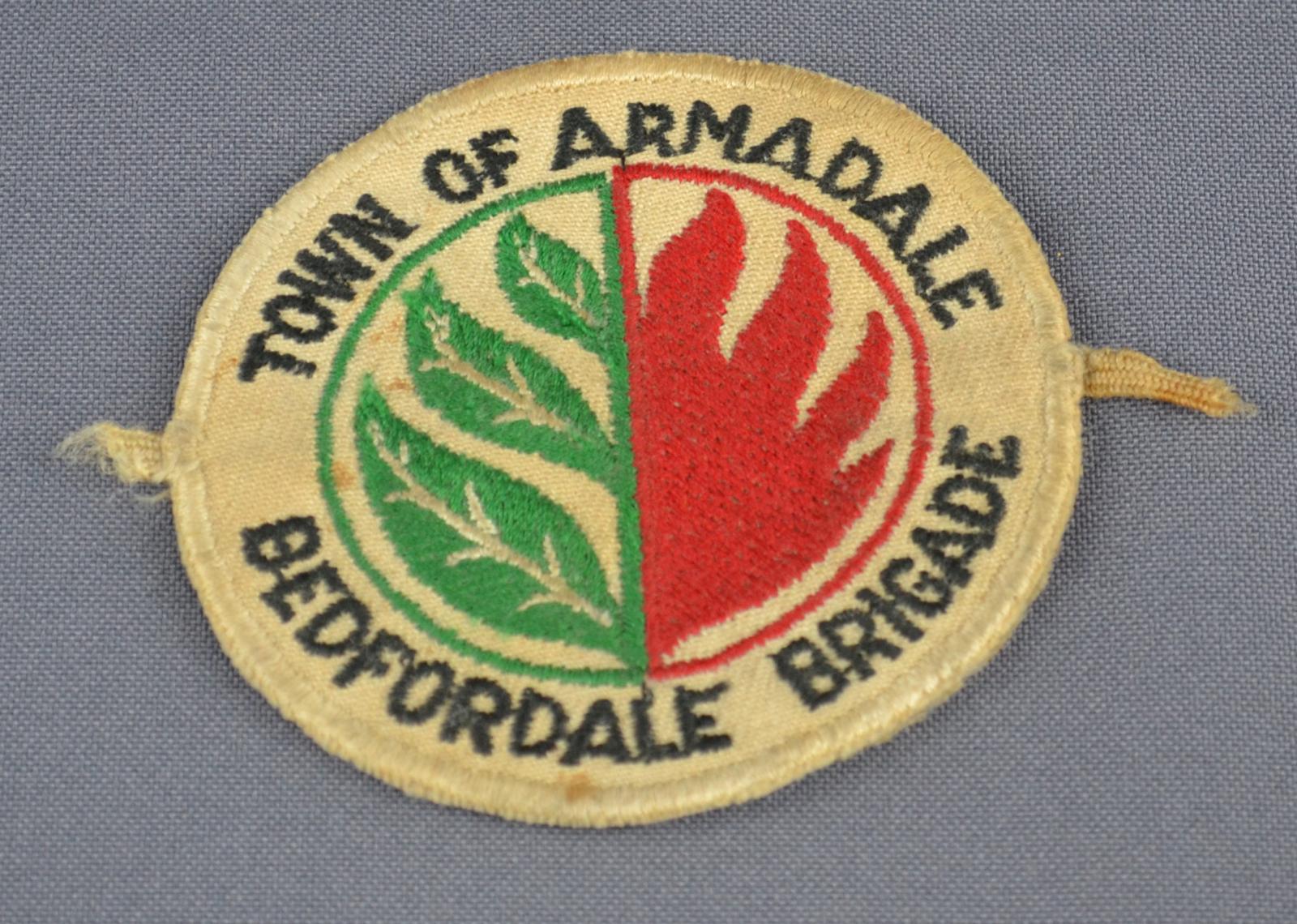
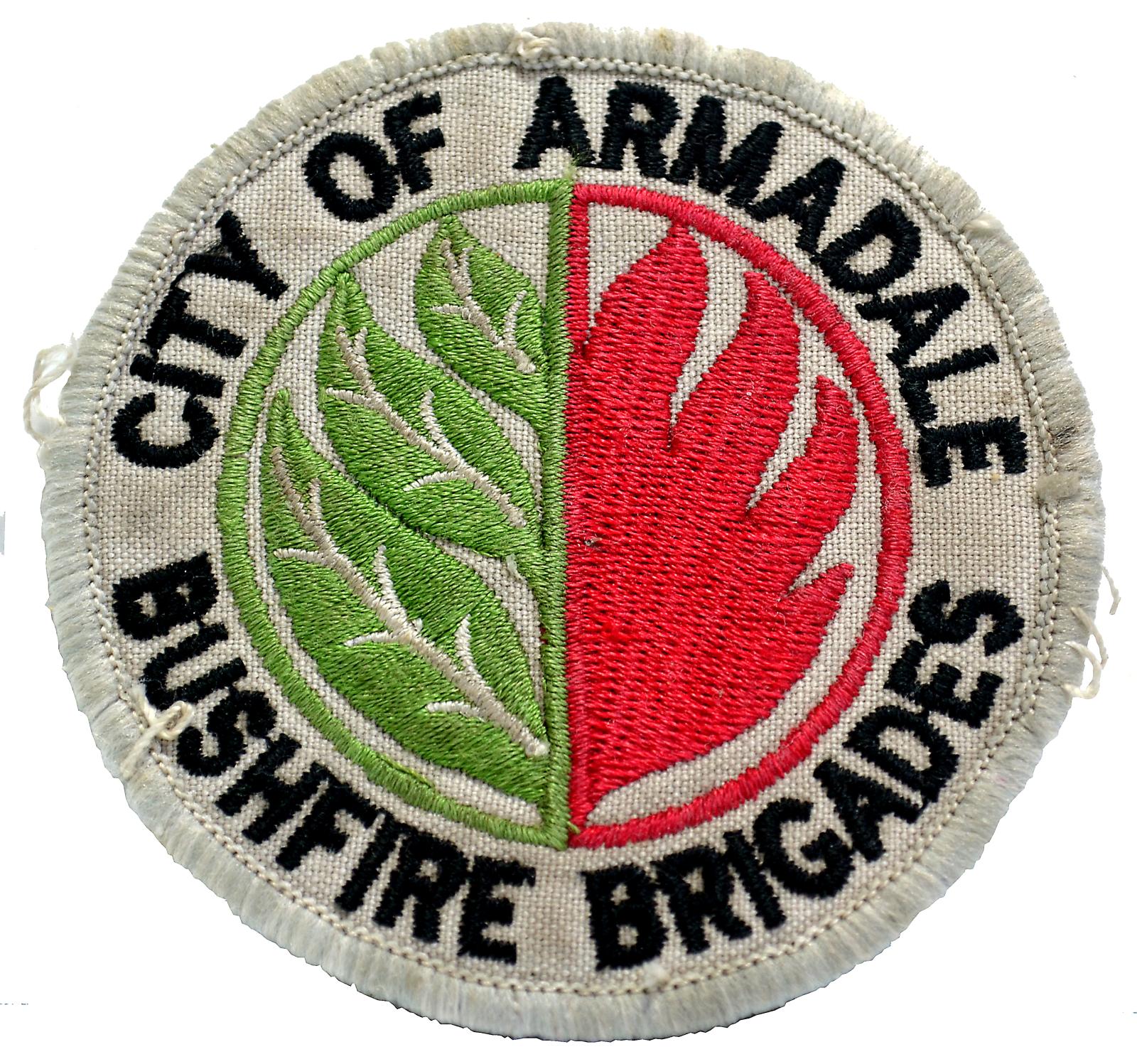
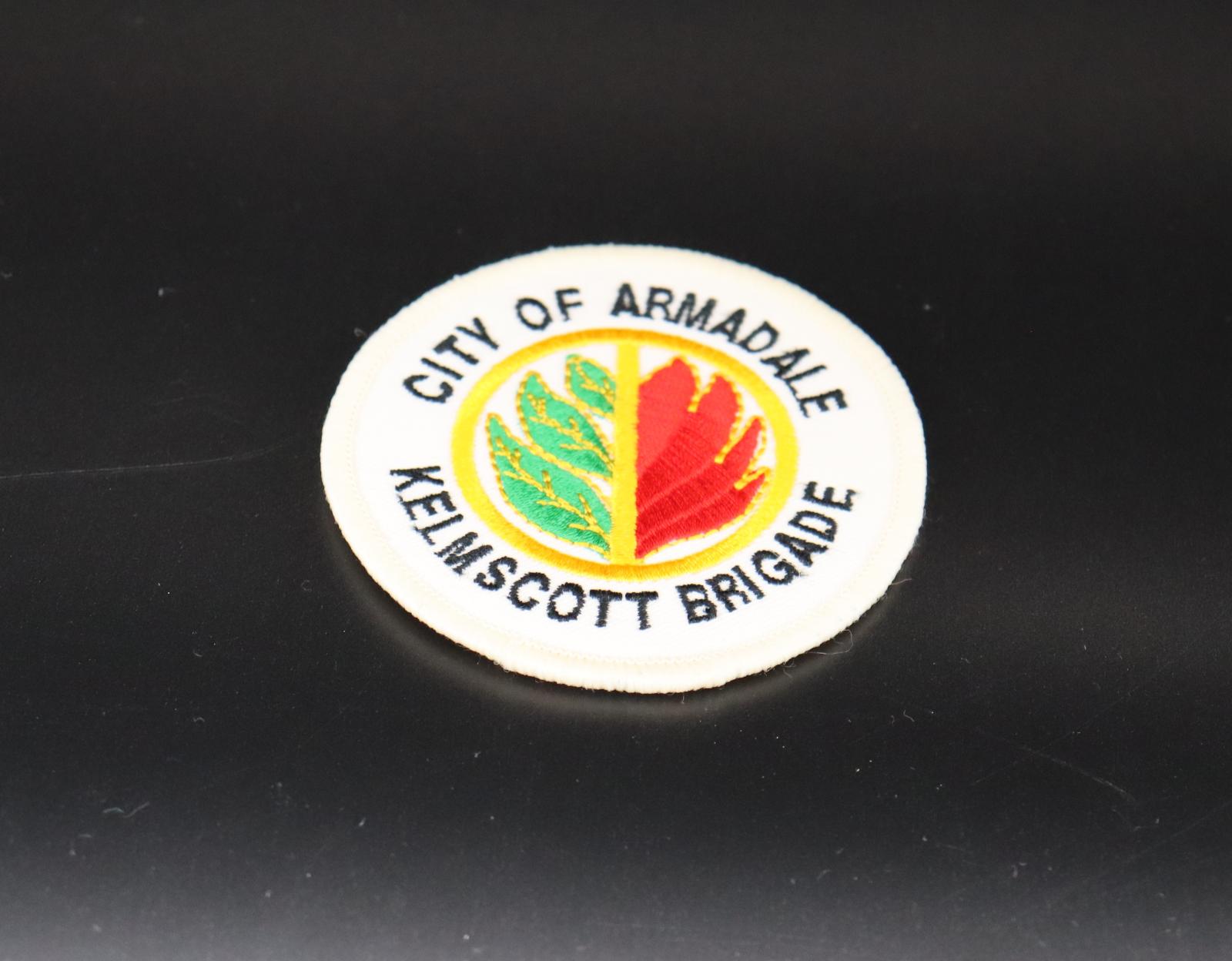
Volunteer Bushfire Brigade Patches, 1980-2013.
These used and unused patches were given to members of volunteer bushfire brigades that operated in the Town and later the City of Armadale.
The left patch and middle patch was issued in Robert ‘Cam’ Clay in 1980 and c2010. The right patch were given to the Kelmscott Brigade in the late 1980s or early 1990s.
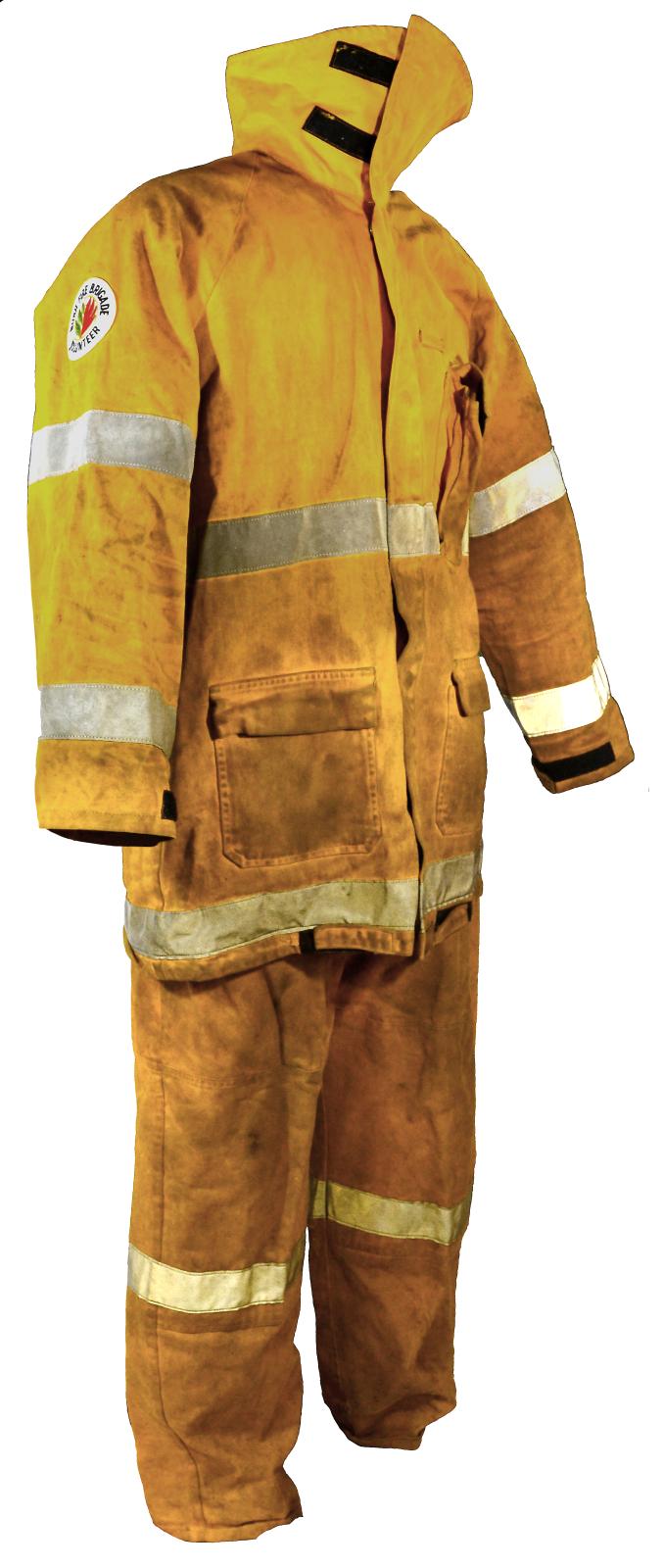
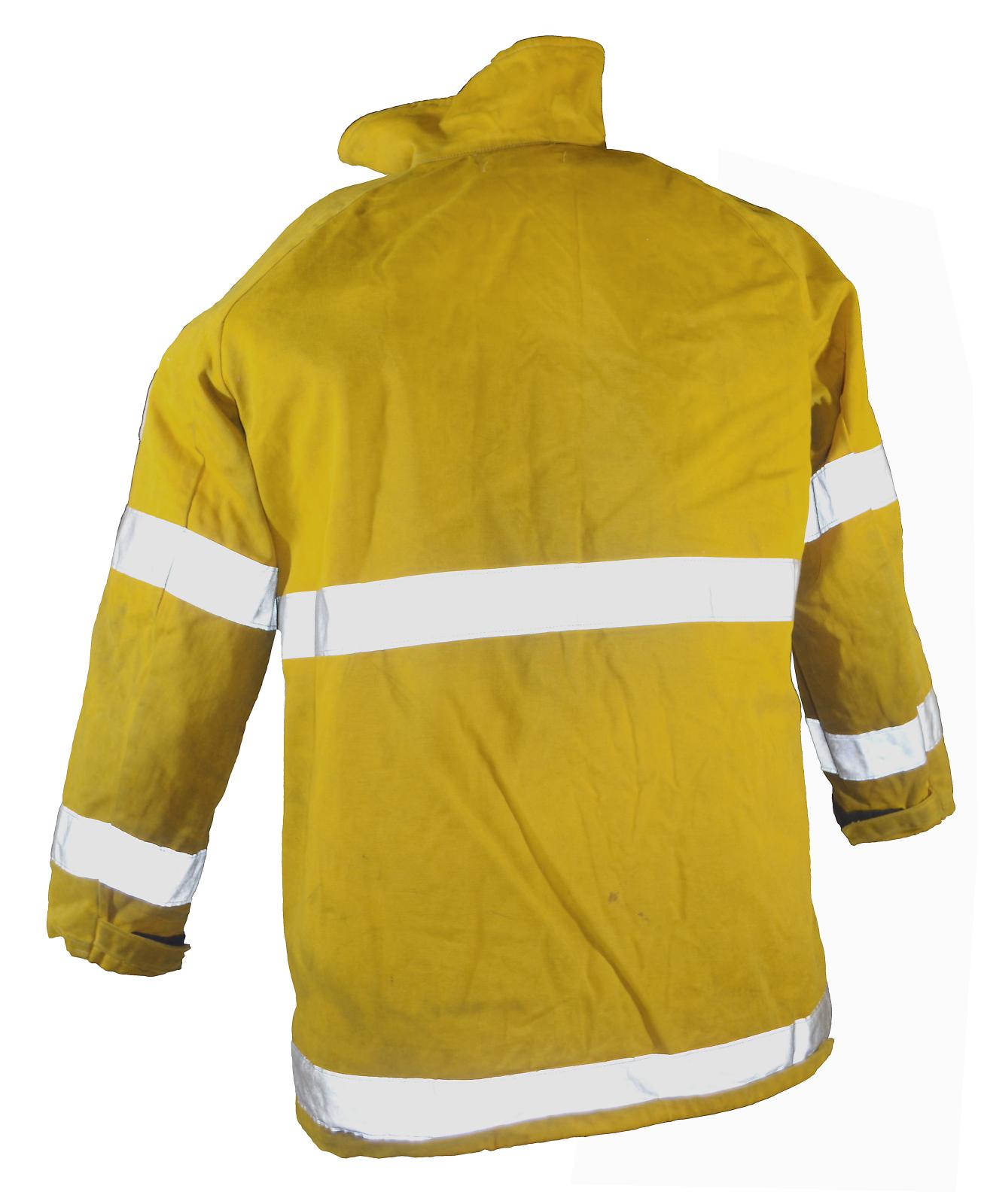
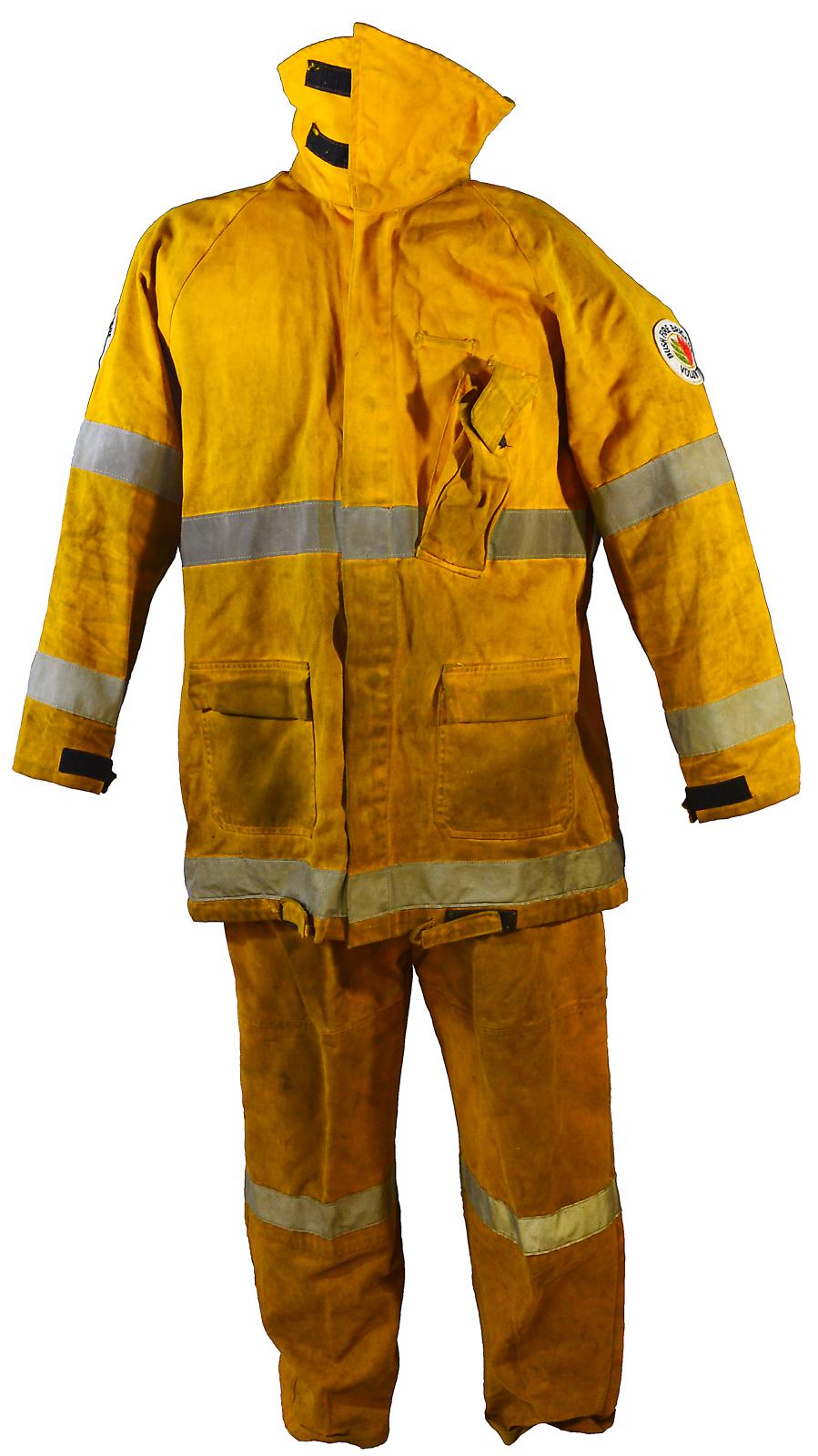
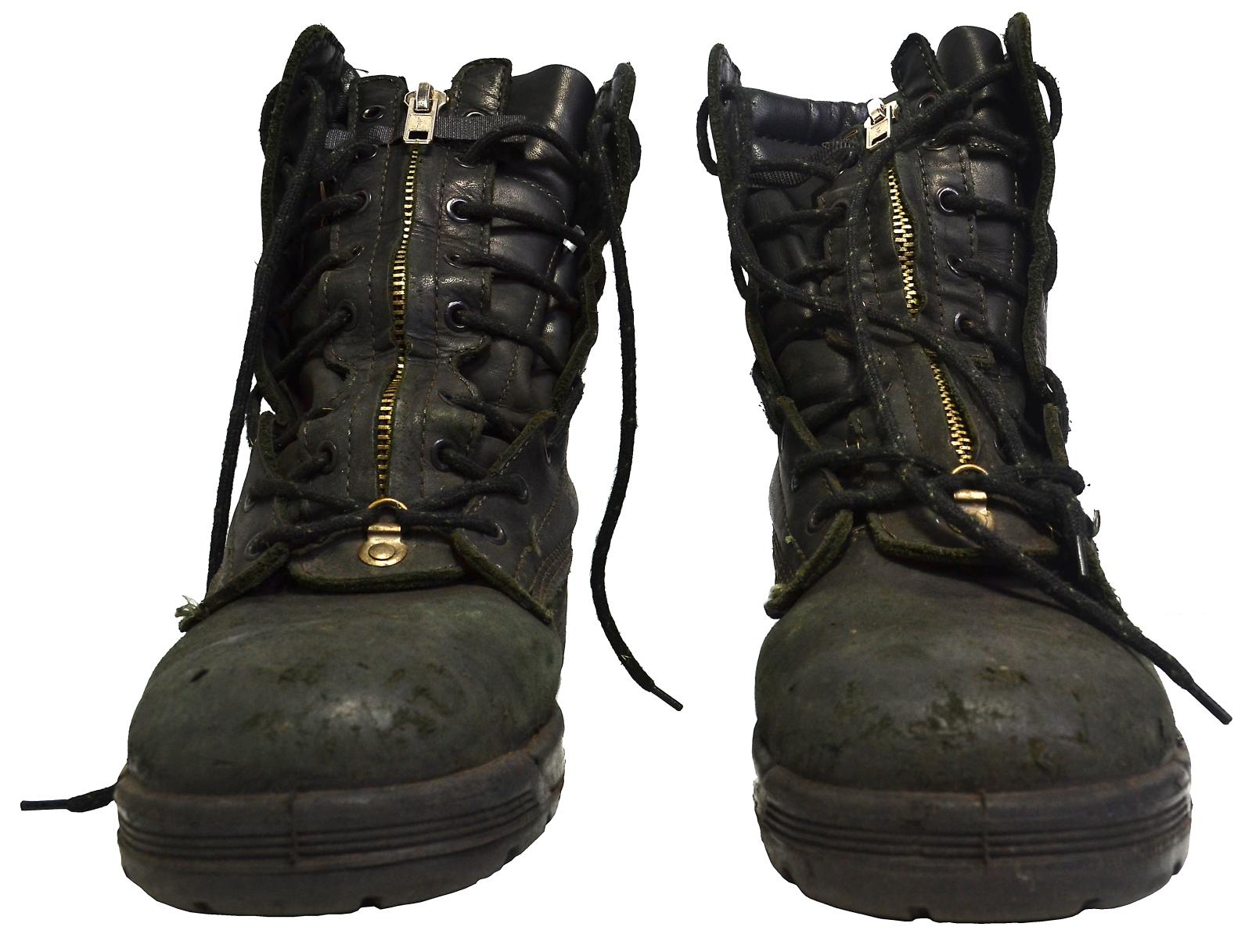
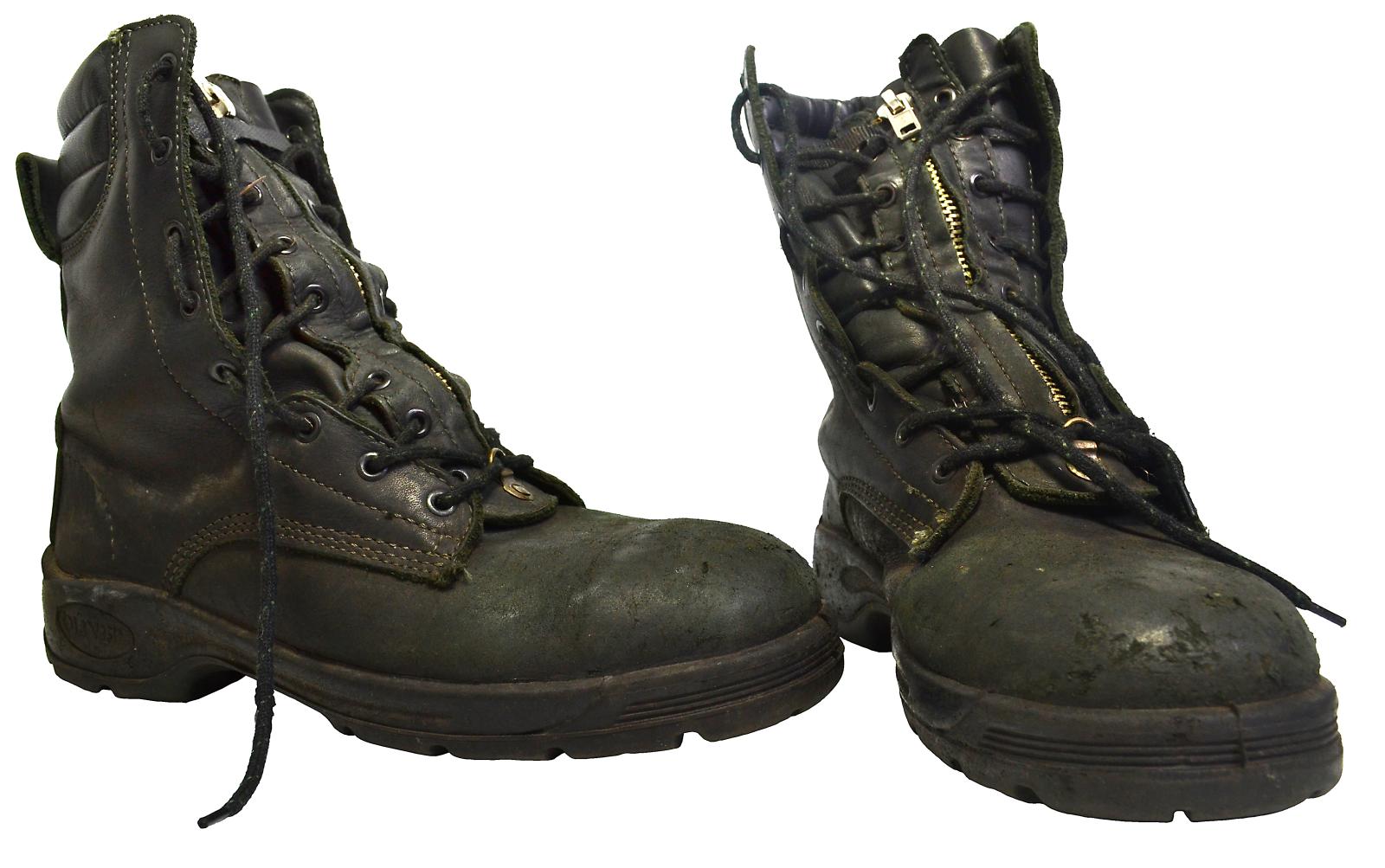
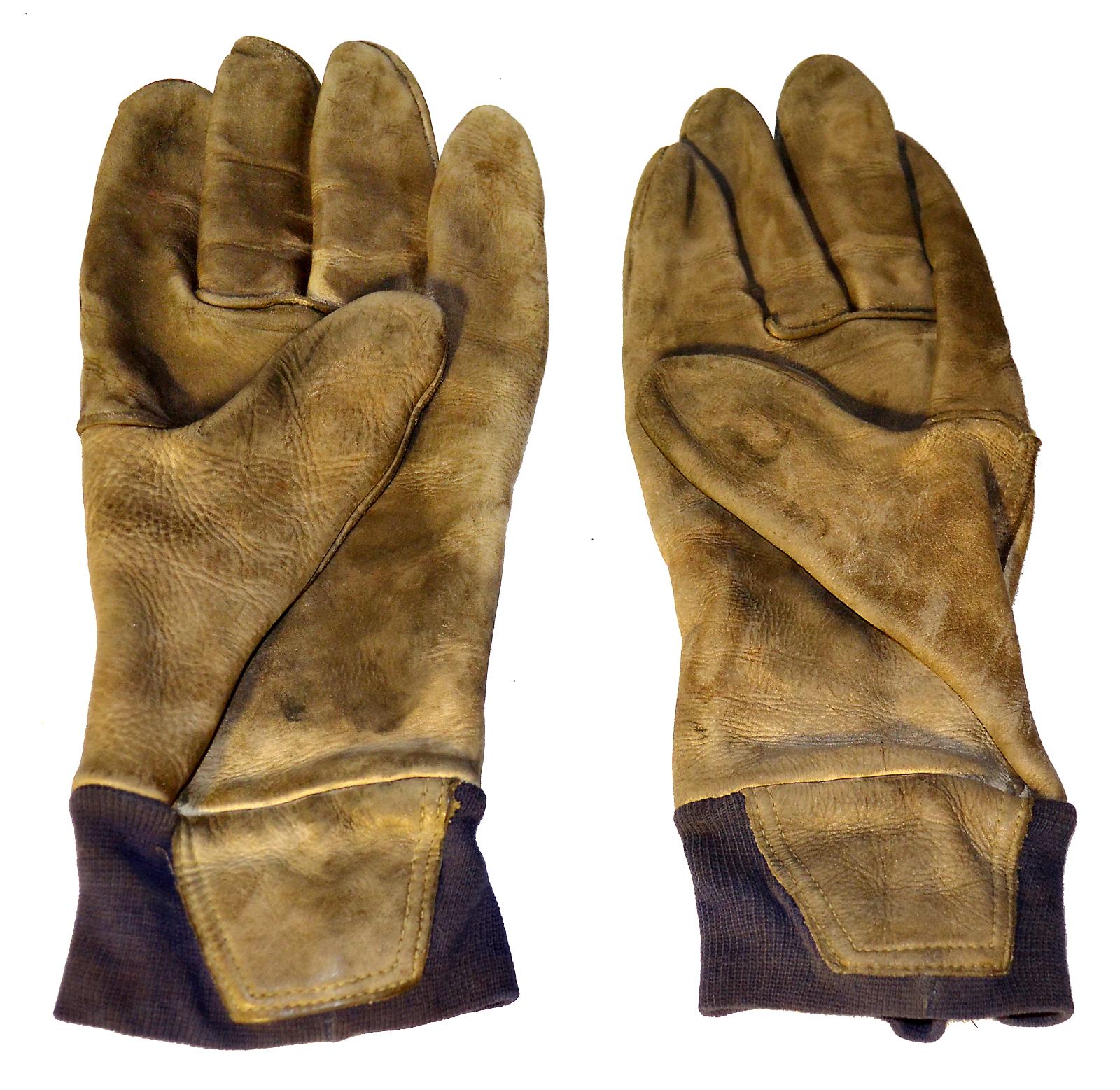
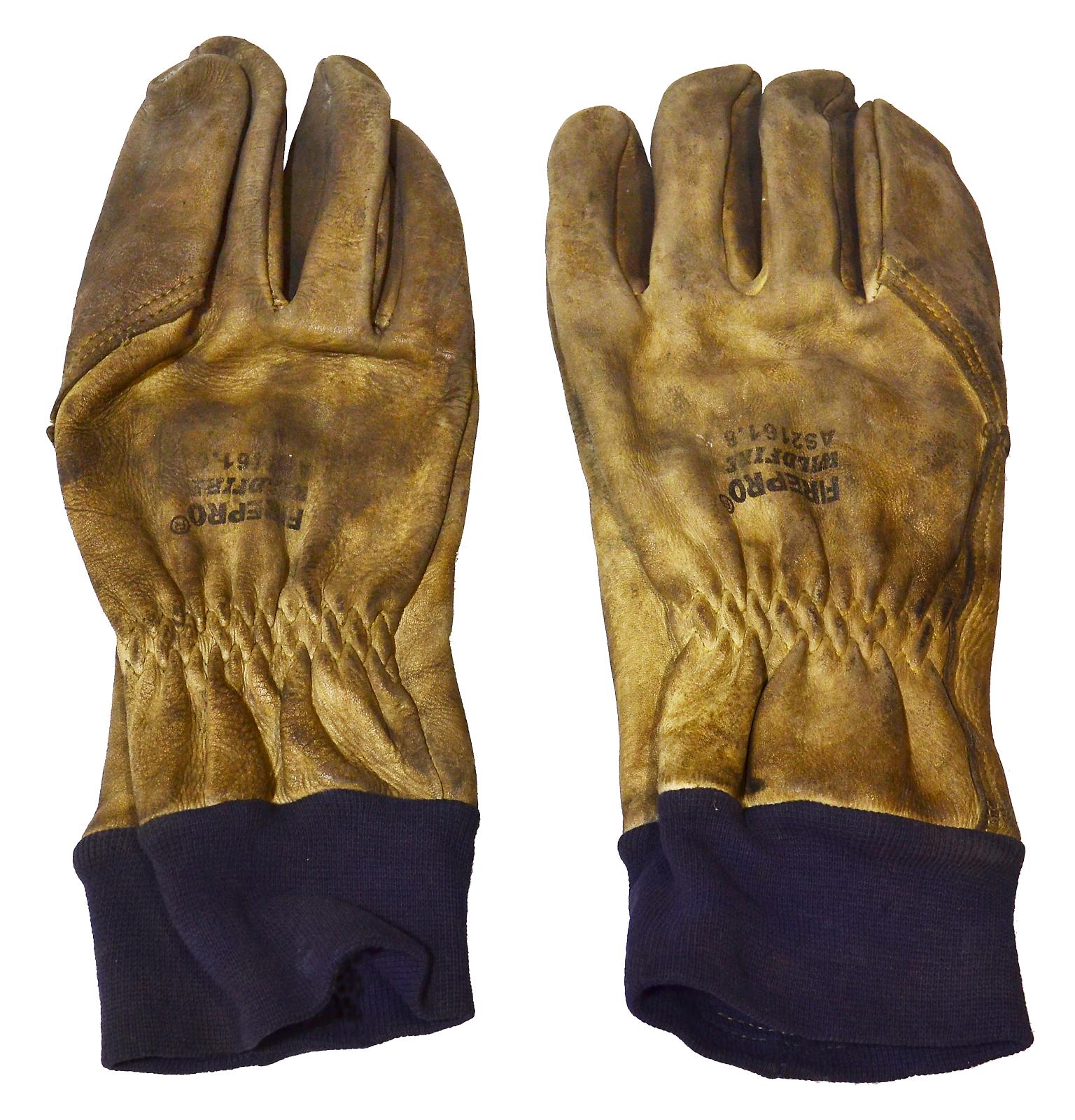
Bedfordale Volunteer Bushfire Brigade firefighting uniform, worn by Robert ‘Cam’ Clay, 2010-2013.
Cam officially joined the Bedfordale Volunteer Bushfire Brigade in 1975 and was a member for over 35 years. Cam wore the uniform when the Brigade helped to fight the Roleystone Kelmscott Bushfire on the 5 – 6 February 2011.
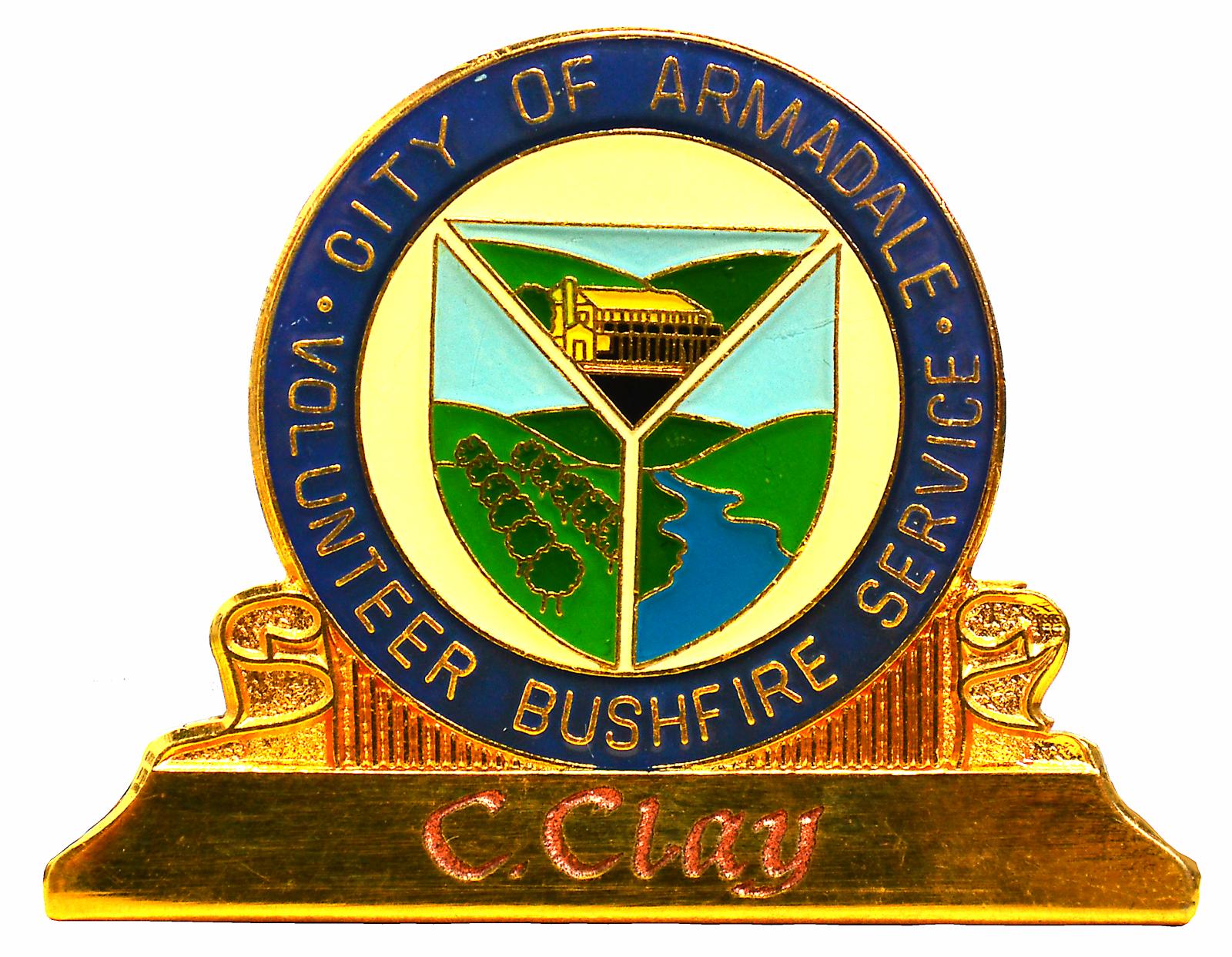
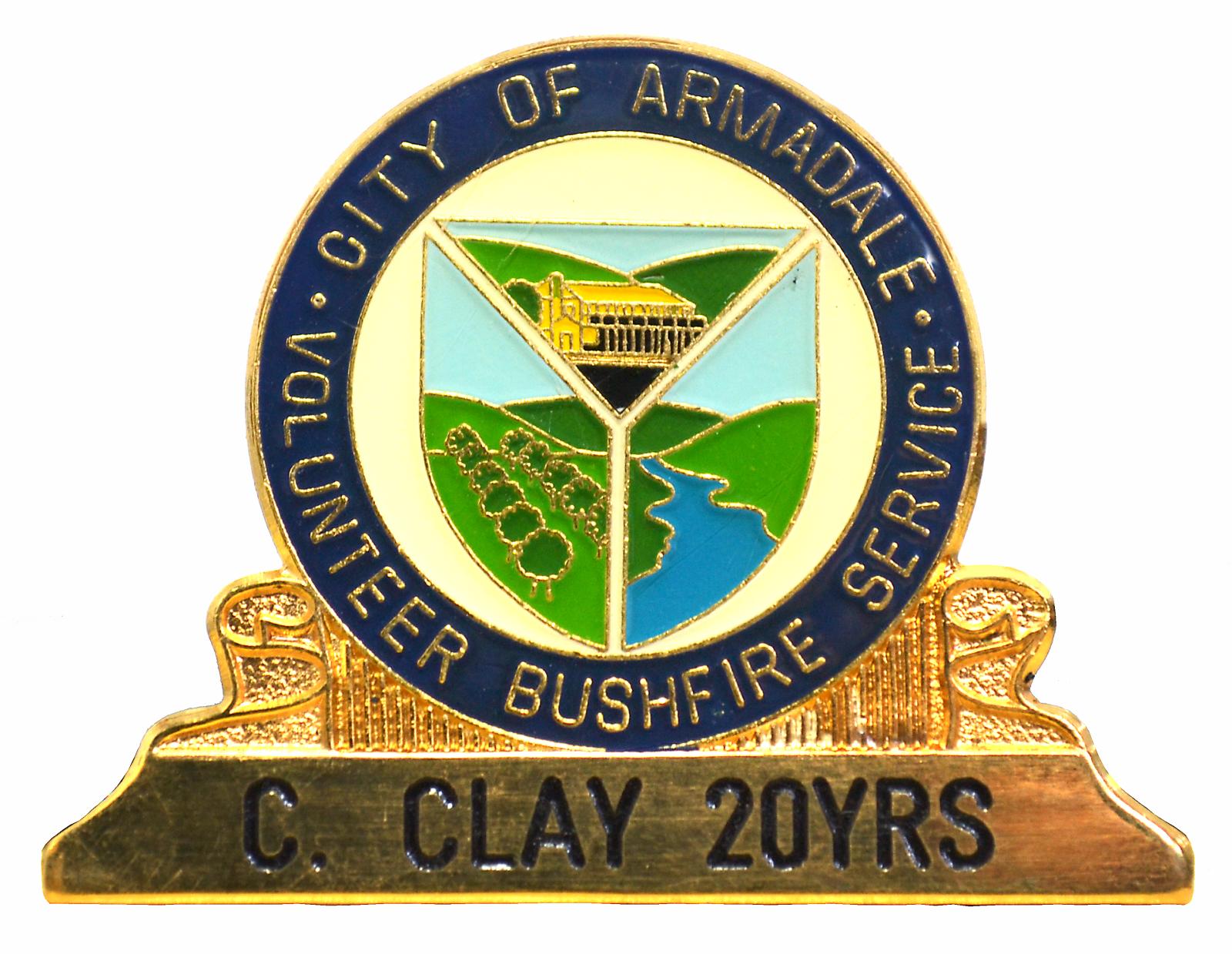
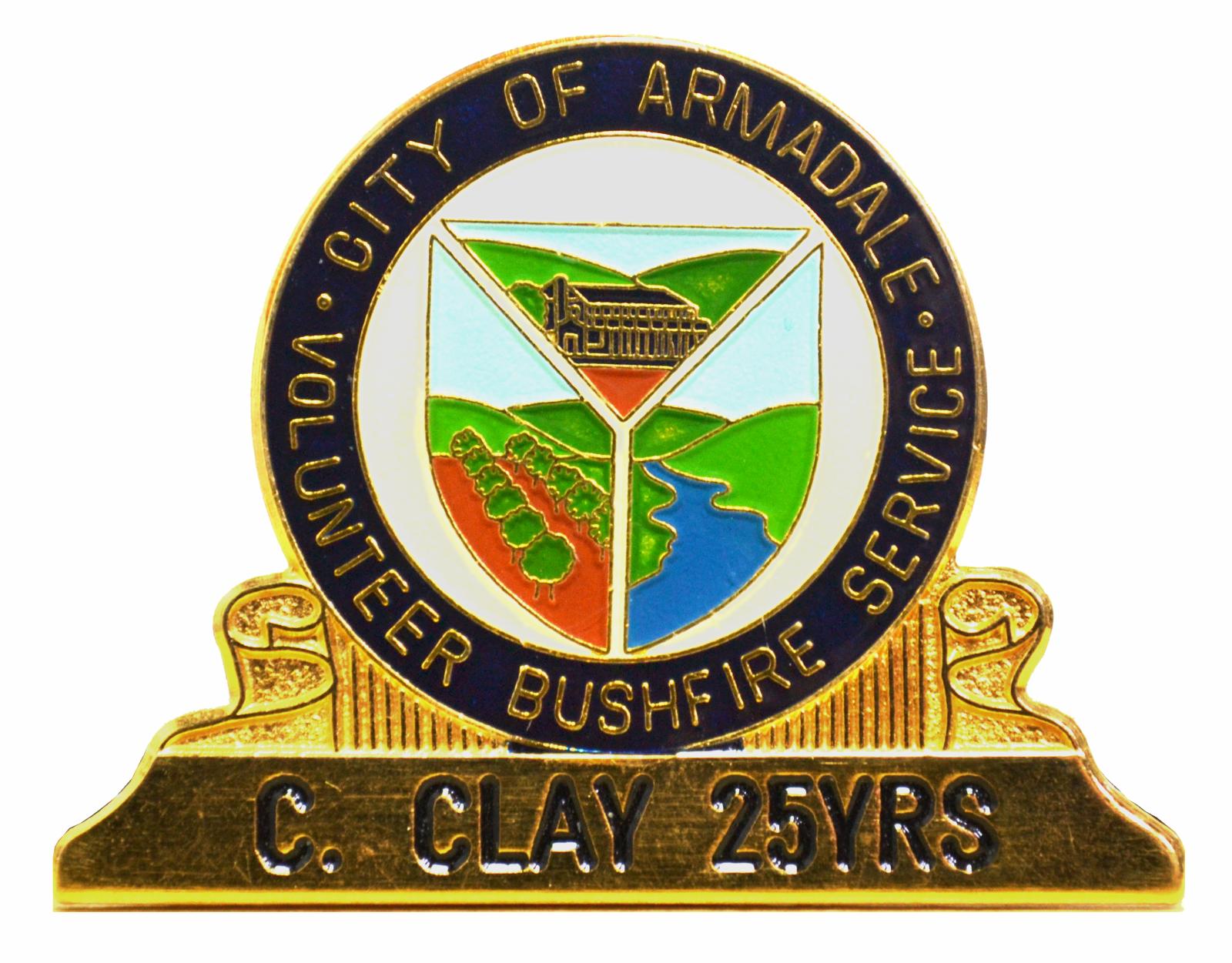
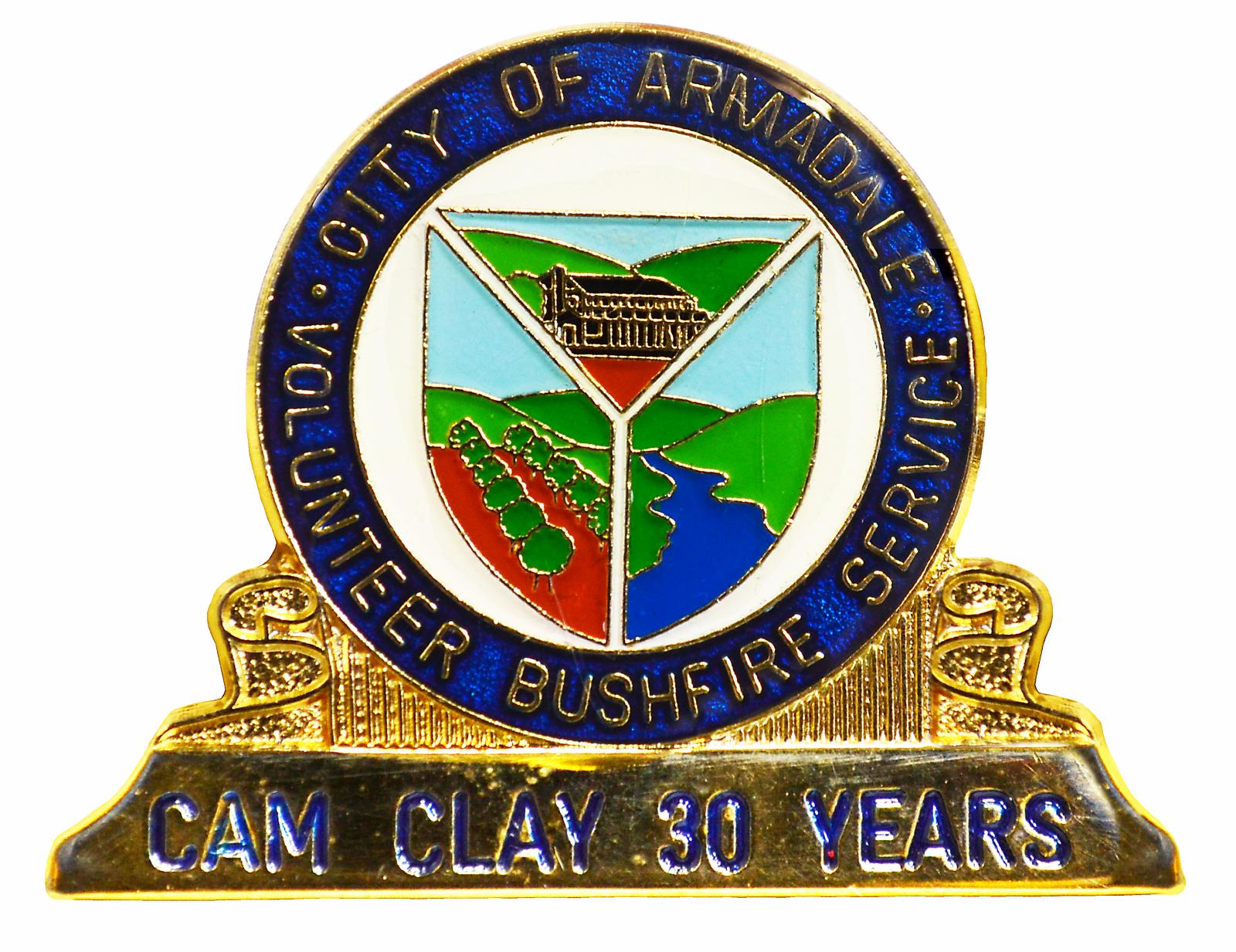
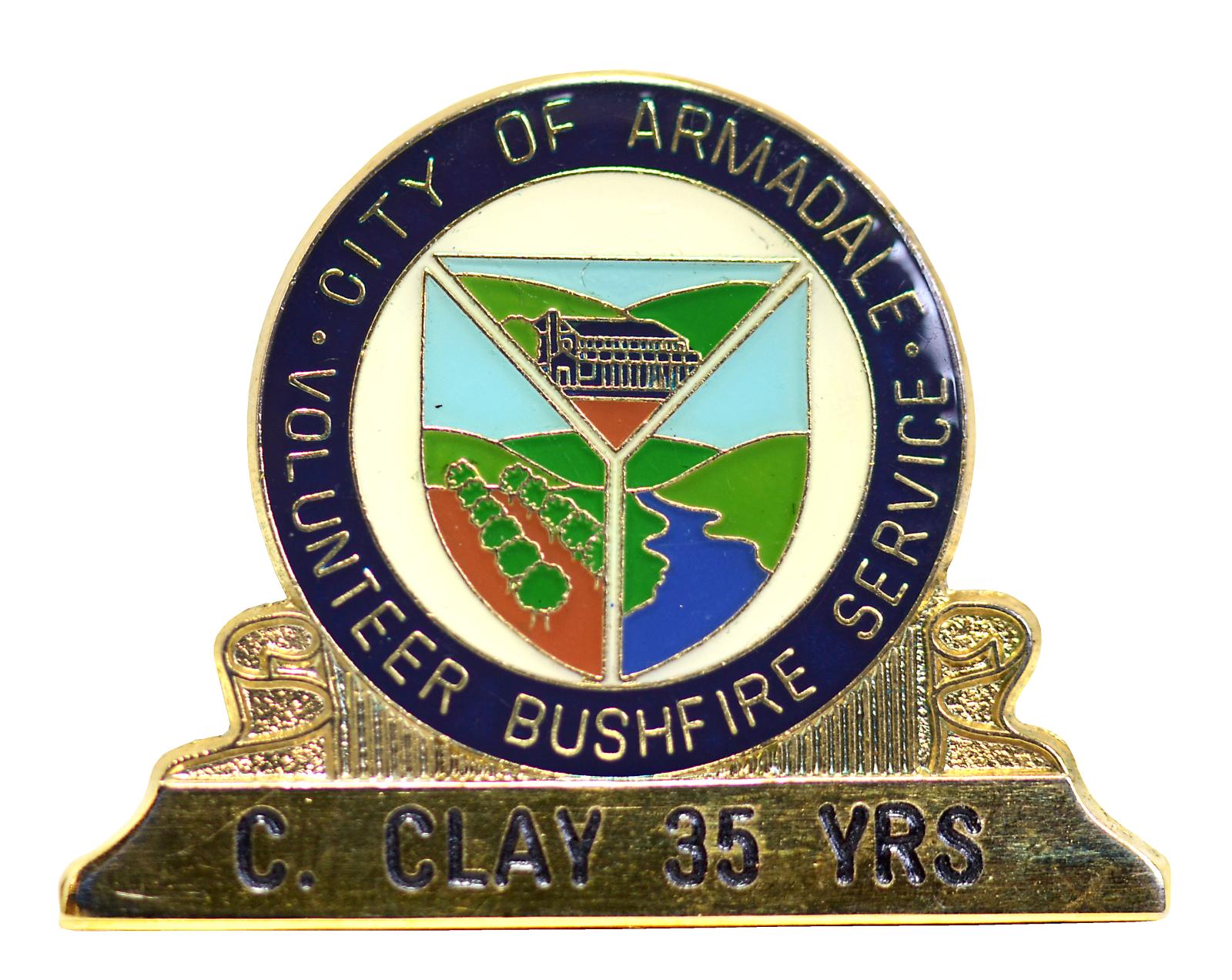
Badges presented the City of Armadale to acknowledge Robert ‘Cam’ Clay’s 15, 20, 25, 30 and 35 years of voluntary service to the Bedfordale Volunteer Bushfire Brigade, 1975-2010.
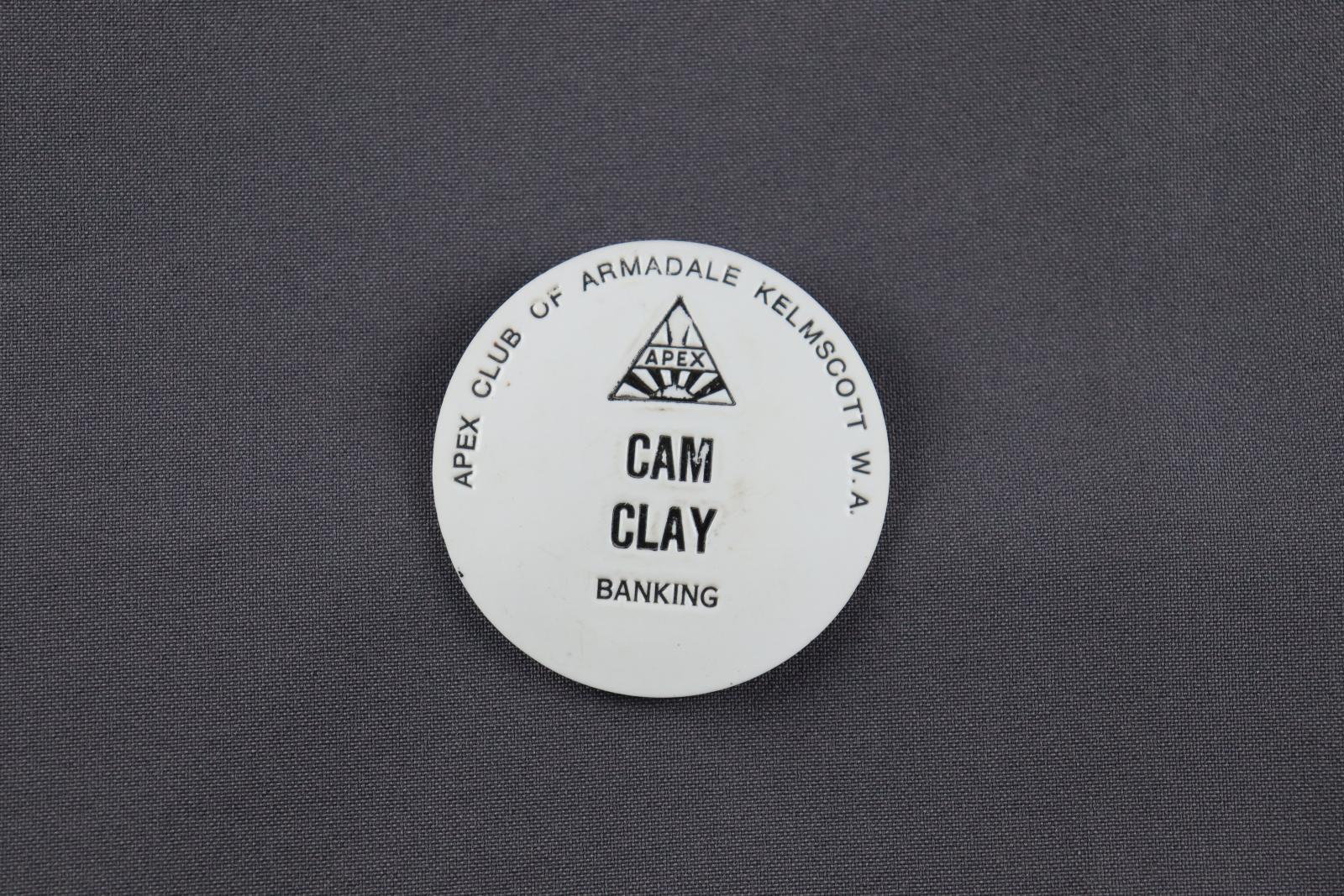
Souvenir Roleystone Karragullen Bushfire Brigade, c2021.
Produced to promote the new amalgamated brigade. This stubby holder was purchased at the open day to celebrate the Brigades new headquarters on Springdale Road, Karragullen on 9 June 2024.
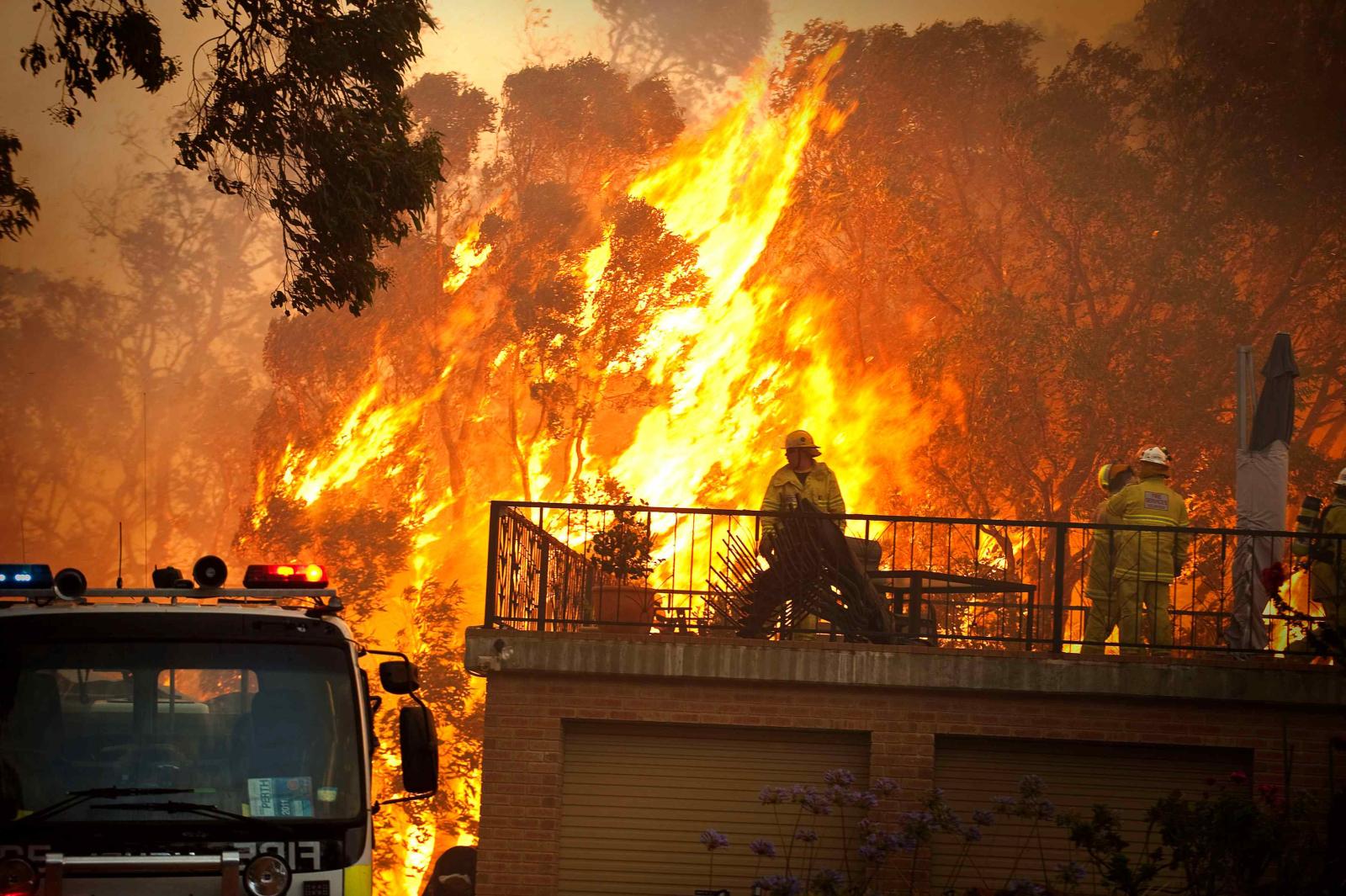
Firefighters protecting a home during the Roleystone Kelmscott Bushfire, 7 February 2011.
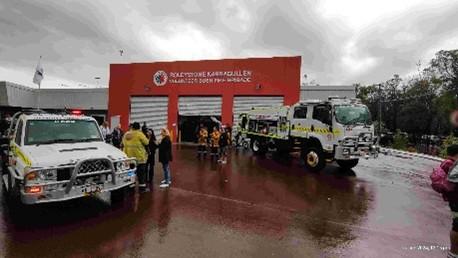
The opening of the new Roleystone Karragullen Volunteer Bushfire Brigade station, 9 June 2024.
Armadale Volunteer Fire Brigade
Since 1929 Council advocated for the establishment of a firefighting unit in the town of Armadale, however, laws, costs, inadequate water supply, and World War II kept preventing the establishment of the unit. Finaly in March 1961 the Armadale Fire District was approved by the Western Australian Fire Brigade Board and on 15 March the Armadale Volunteer Fire Brigade was officially inaugurated.
Outside of firefighting the brigade was also tasked with doing building fire inspections as well as inspecting the town’s fire hydrants. In the brigade’s first six months they were recorded as attending one ‘rubbish or grass fire’.
In December 1963 the brigade moved into their new fire station on the corner of Forrest Road and what is today Green Avenue. The following year the fire district was extended and became the Armadale-Kelmscott Fire District, as 70 new fire hydrants were installed in Kelmscott.
In 1989 after a trial during the previous summer three permanent firefighters deployed to the Armadale Fire Station, working 7am to 5pm seven days a week, with support after 5pm and on weekends from the Armadale Volunteer Brigade.
Now named the Armadale Volunteer Fire and Rescue Service, they continue to support the Fire and Emergency Services unit at the Armadale Fire Station as well as working in partnership with the local Bush Fire Brigades.
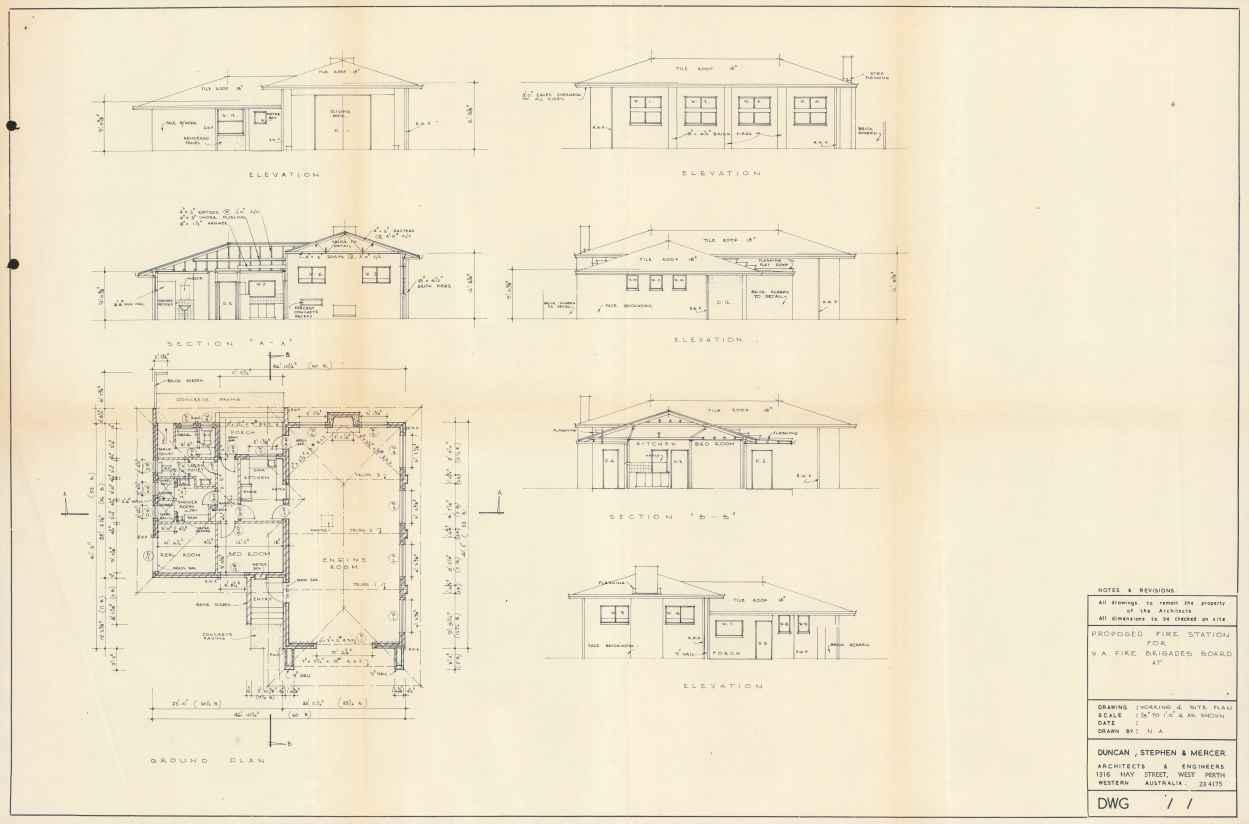
Working and site plan for proposed Armadale Fire Station by Duncan, Stephen & Mercer Architects and Engineers, 1962.
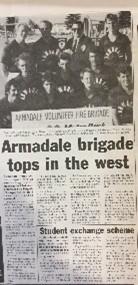
Comment News, 8 April 1986 page 9
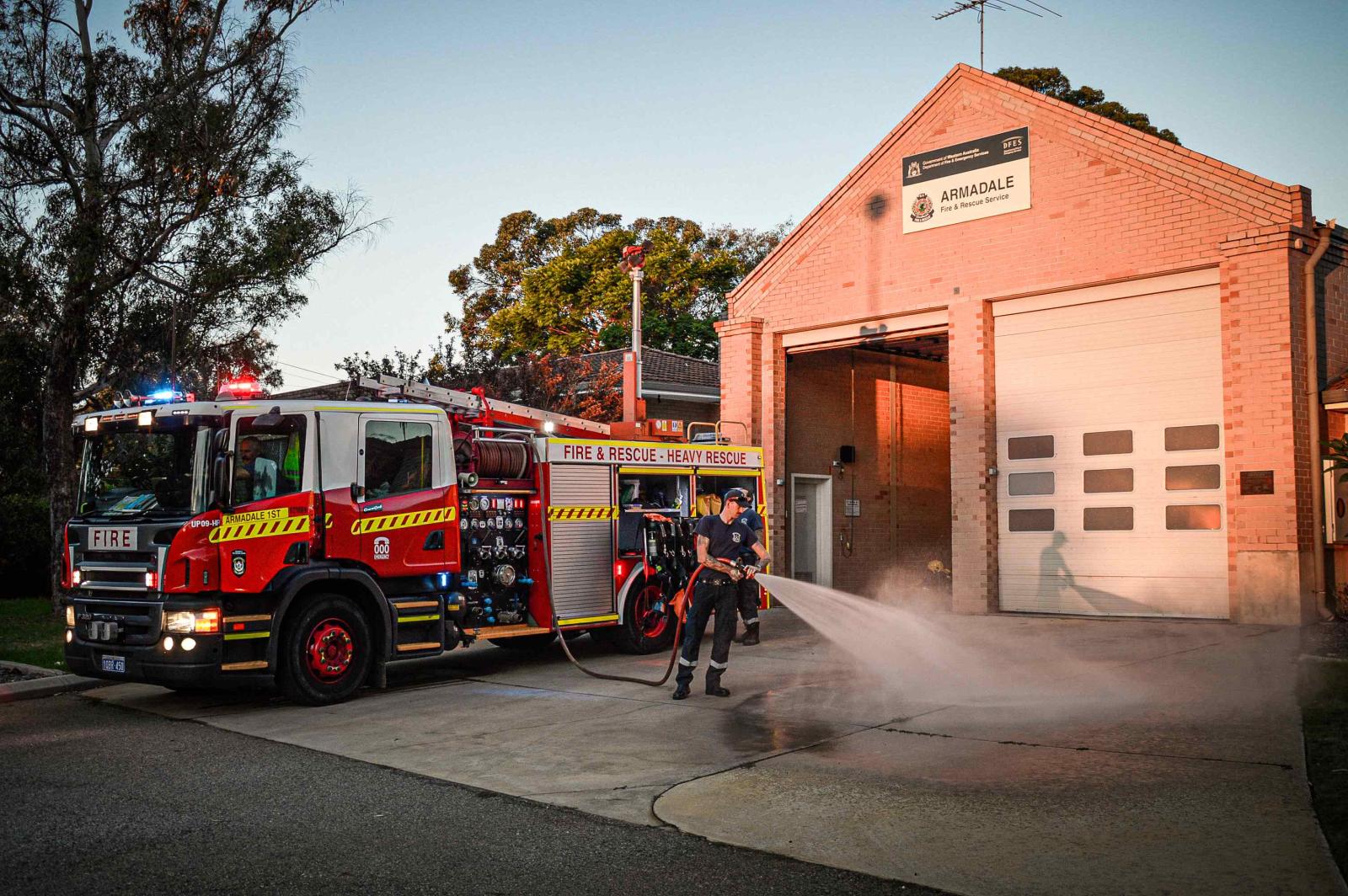
Armadale Fire Station during the evening shift, 2021.
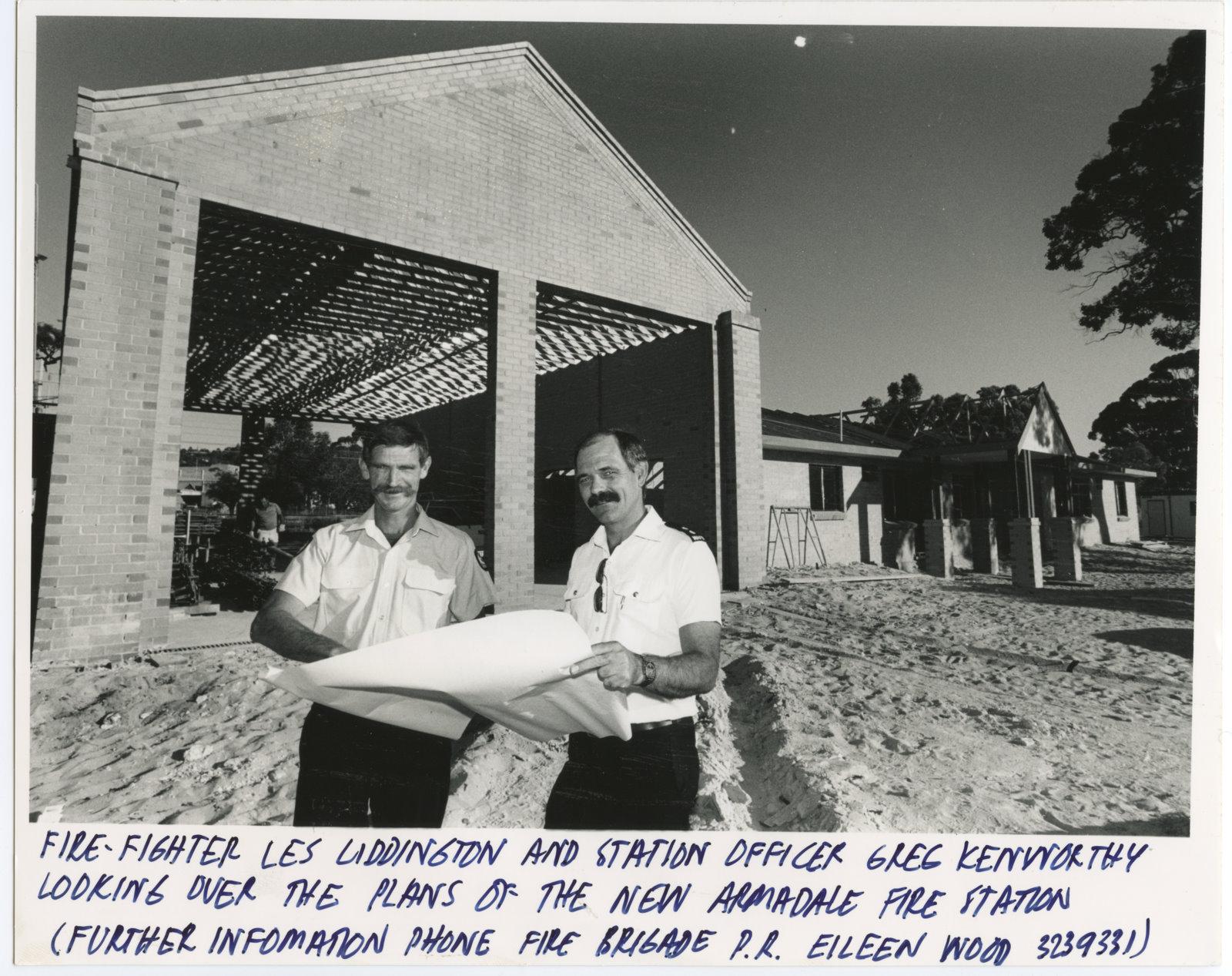
Fire Fighter Les Liddington and Station Officer Greg Kenworthy standing outside of the extended and renovated Armadale Fire Station, 1991.