

WWII era 'Penny-a-plane' fundraising card with stamps
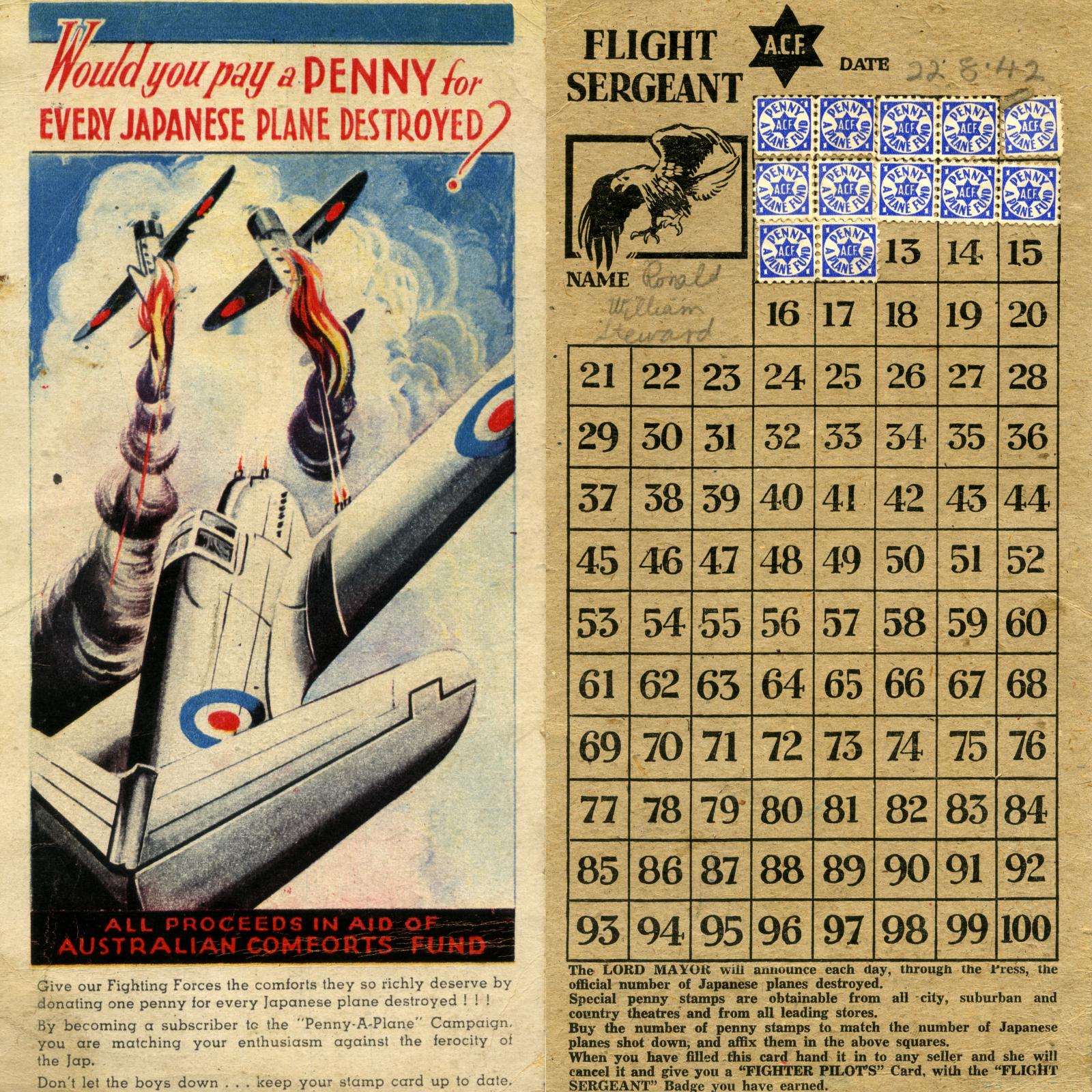
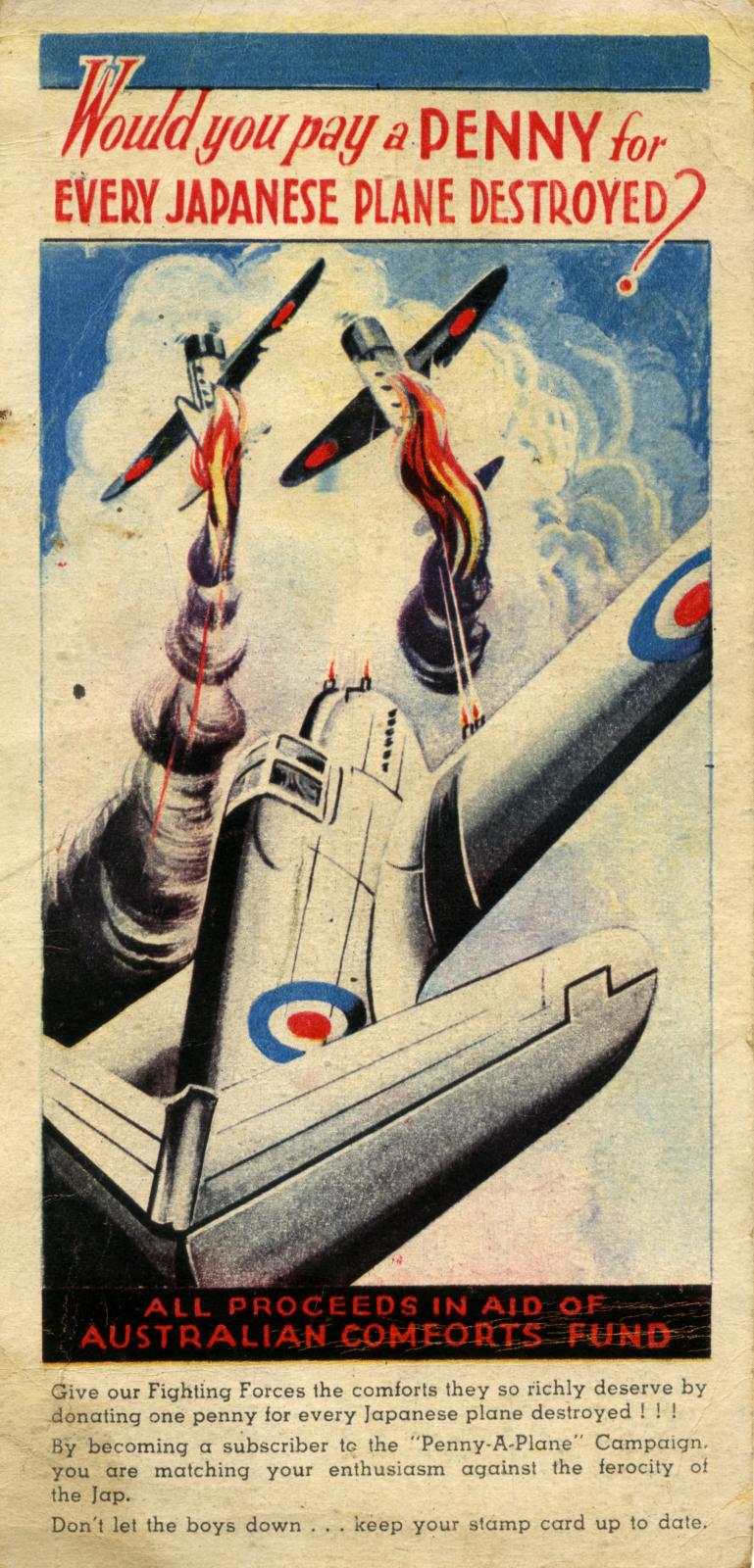
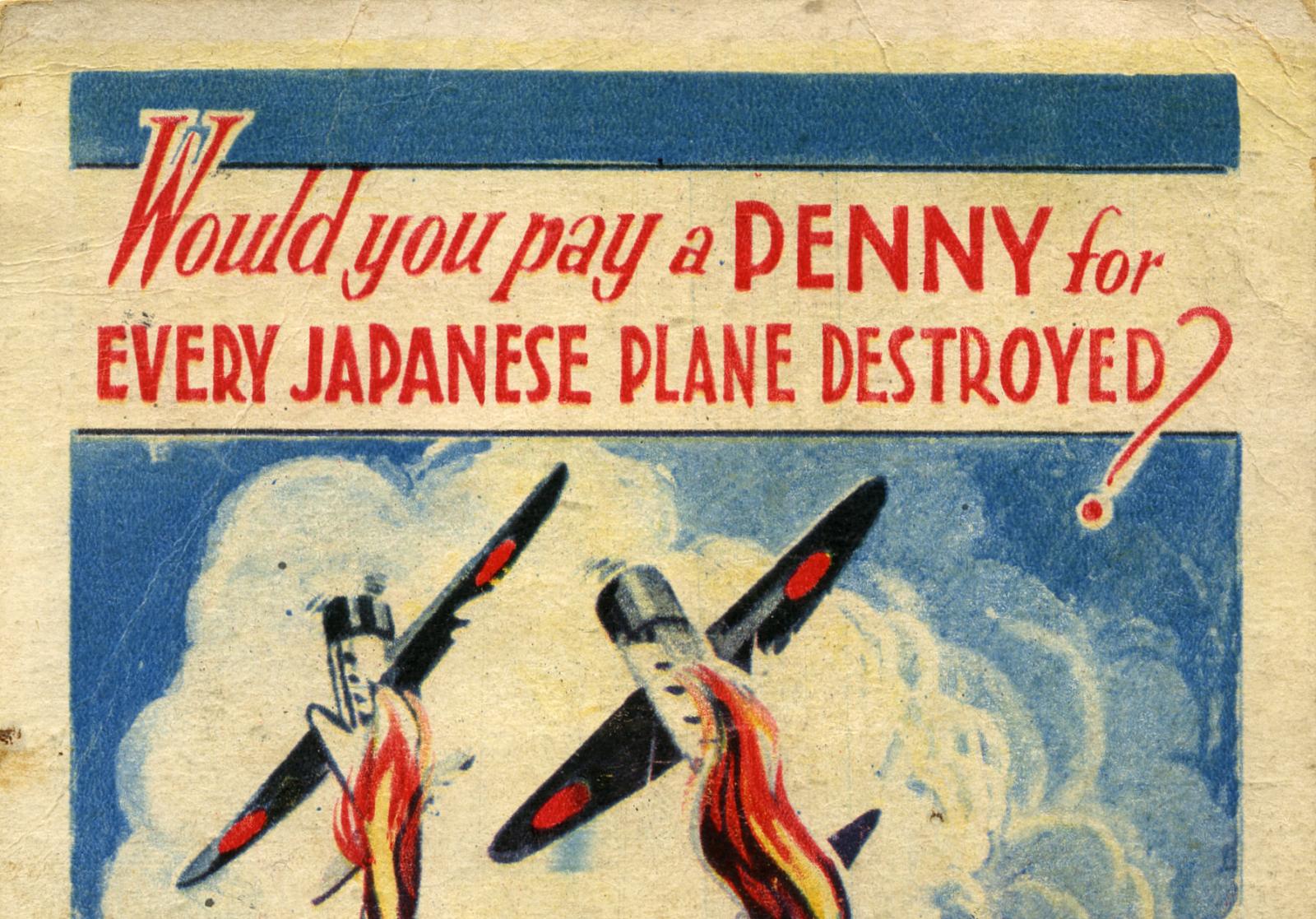
1942World War Two era 'Penny-a-plane' fundraising card with twelve stamps attached. On one side is a colourful graphic depicting an allied plane shooting down two Japanese planes, which are billowing flames and smoke, with a blue sky behind. The card surrounding the central motif is cream in colour with red writing.
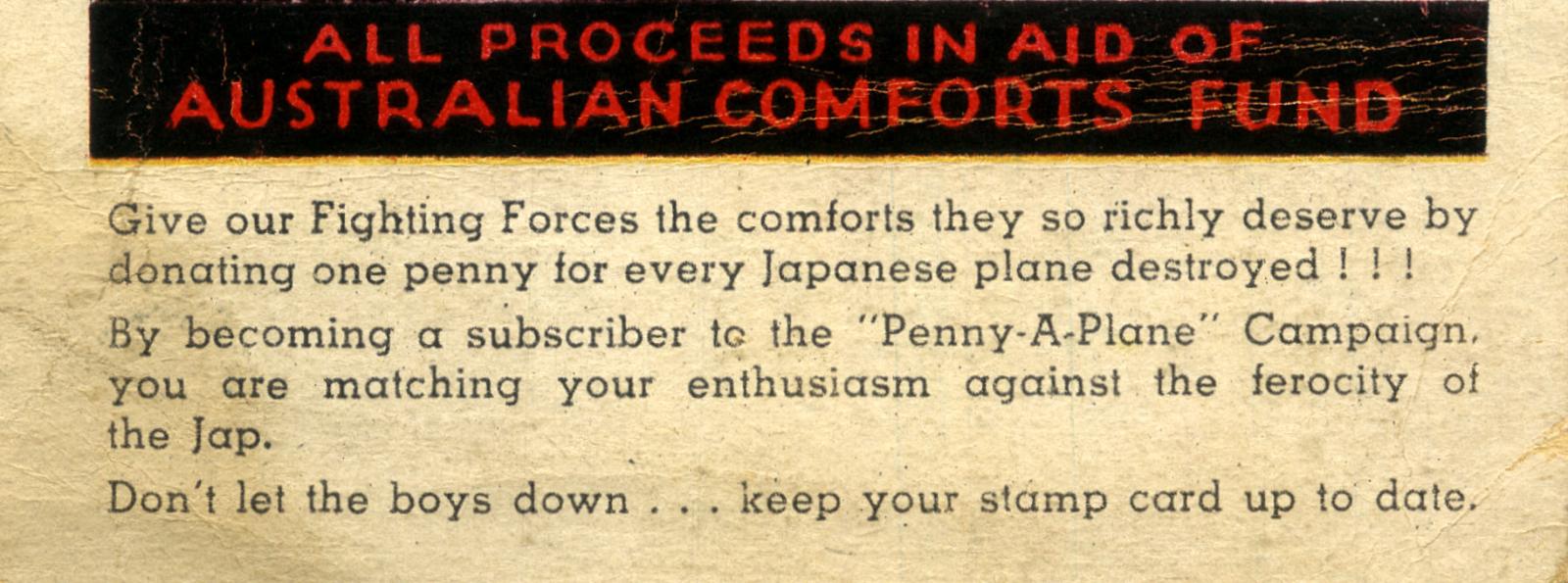
At the top is a horizontal banner containing the question 'Would you pay a PENNY for EVERY JAPANESE PLANE DESTROYED?' while at the bottom in a black banner is the text 'ALL PROCEEDS IN AID OF AUSTRALIAN COMFORTS FUND" in red capital letters.
Below this is the patriotic call to citizens to subscribe to the campaign.
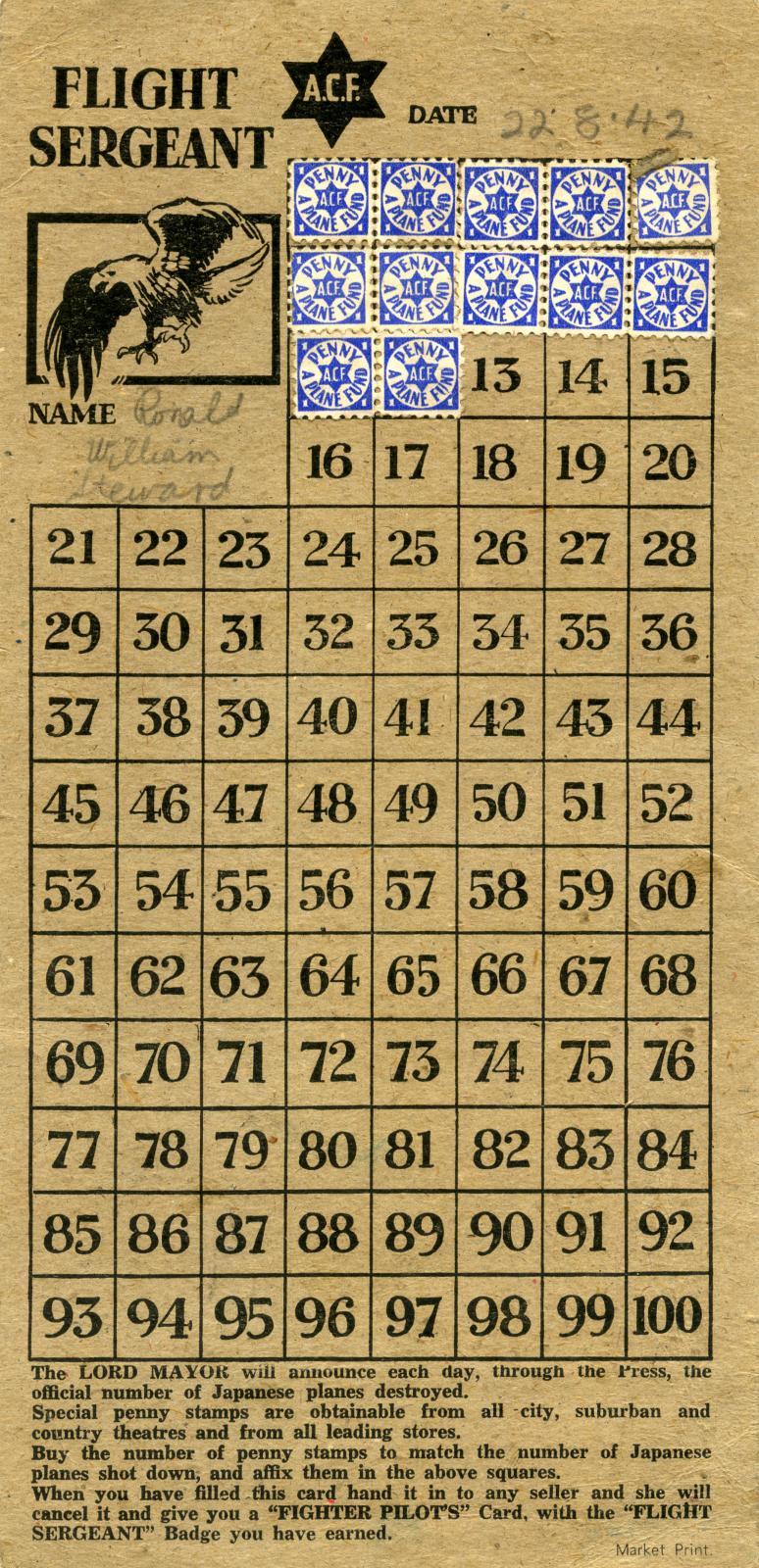
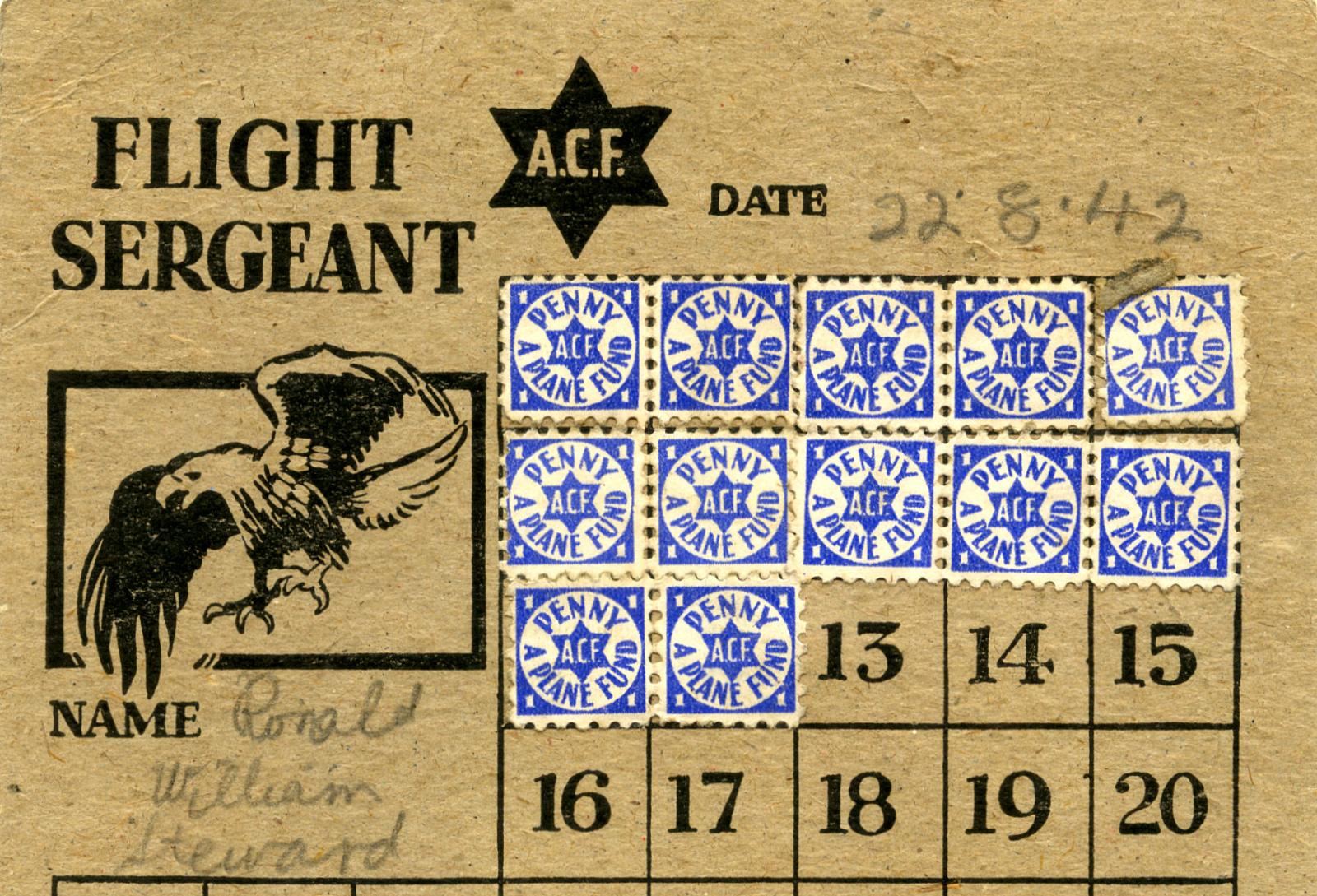
The other side is buff card with black text. It has the text 'FLIGHT SERGEANT' at the top with the ACF logo in a six pointed star and a space for the date. Written in pencil is the date 22.8.42.
Directly below on the left is a depiction of an eagle with wings outstretched as though landing, and under that the word 'Name' where the owner of the card has written his name in pencil - 'Ronald William Steward'.
The majority of the card is taken up by a grid with numbers 1-100. The first 4 rows to the right of the eagle have sets of 5 while the remaining 10 rows are in sets of 8.
Twelve blue and white square stamps with perforated edges have been attached neatly to the card along the top three lines.
Information about the campaign is printed on nine lines in black lowercase text at the bottom of the card.
The printer's name is written in the lower right corner.
The 'Penny-a-Plane"' stamp and donation drive was officially launched by the Australian Comforts Fund in August 1942. This coincided with a time when public anxiety about enemy air raids was at its peak following the historical bombing of Darwin earlier that year. It encouraged citizens to buy a penny stamp for every reported Japanese aircraft shot down, helping fund comforts and support for the fighting forces.
The height of the fundraising drive took place during the school holidays and Christmas period in December 1942, when schools, retail department stores, and local picture theatres heavily promoted the stamp.
It gradually wound down by mid-1943 as the threat of direct air attacks on the Australian mainland diminished and the fund shifted to other patriotic appeals.
For every Japanese plane shot down, card-holders bought a 1d stamp. A rank and badge were awarded for every 100 stamps bought. Completing successive cards advanced the holder through simulated Royal Australian Air Force (R.A.A.F.) officer and pilot ranks.
According to the Australian War Memorial, during the 1942 World War Two Penny-a-Plane fundraising campaign, the Australian Comforts Fund (A.C.F.) structured its promotion rewards around a sequential 5-tier simulated hierarchy based on the Royal Australian Air Force (RAAF).
Participants started as raw recruits and climbed the ranks by completely filling individual collector cards with 100 one-penny (1d) 'enemy plane destroyed' stamps. Each completed card level unlocked a physical, coloured enamel promotion badge manufactured by Melbourne's K.G. Luke or local distributors, allowing the participant to advance to the next card.
There were comparable appeals in each state with different award badges issued for reaching certain fundraising goals.
By January 1943, 633 Japanese planes had been shot down, and followers of the campaign in NSW since its inception had passed through the ranks of Flight-Sergeant (100 stamps), Fighter-Pilot (200), Bombing Officer (300), Squadron Officer (400), Golden Eagle (500), and Kittyhawk Ace (600). At this point, they would each have contributed £2. 13s 1d. A seventh category was proposed and was to be called ACF Beaufort, but it is not known if these were ever issued.
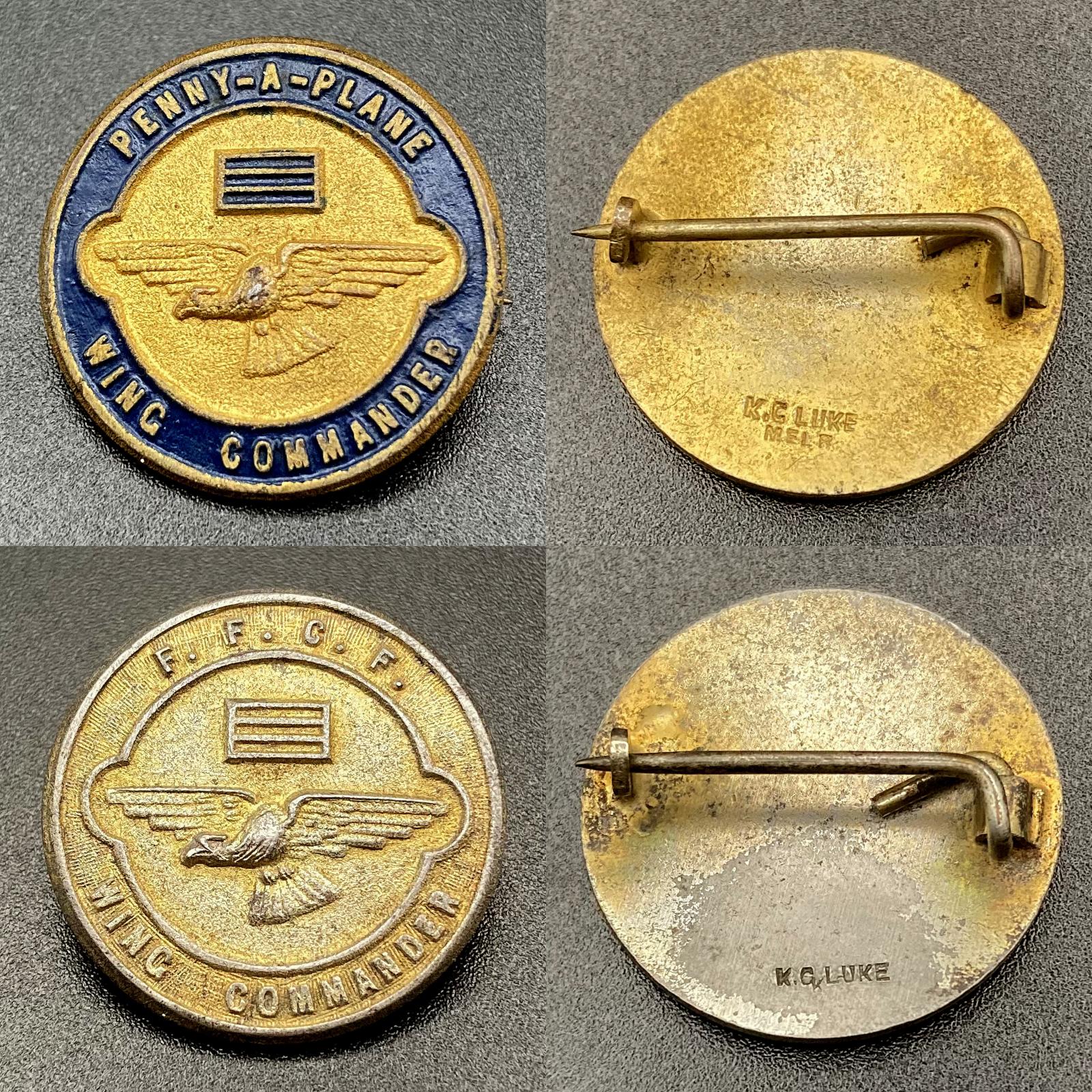
In Victoria, the tiers and rank badges were slightly different, starting with Sergeant Pilot (100 stamps), Flying Officer (200 cumulative stamps), Flight Lieutenant (300), Wing Commander (400), and Golden Eagle / Kittyhawk Ace (500).
Western Australian merit badges were completely different in format, having winged brevets rather than circular pins for each rank.
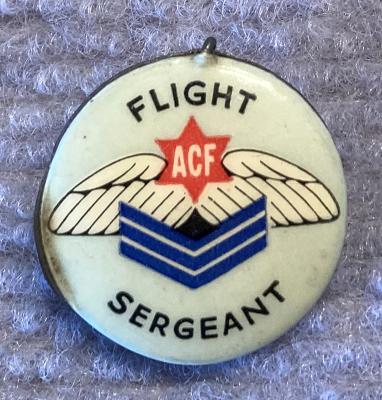
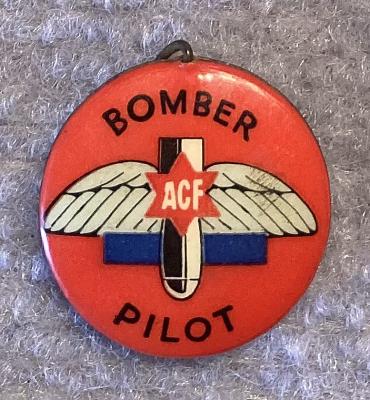
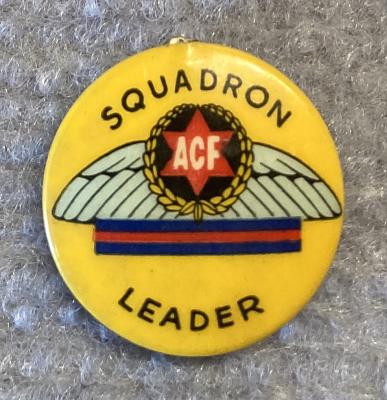
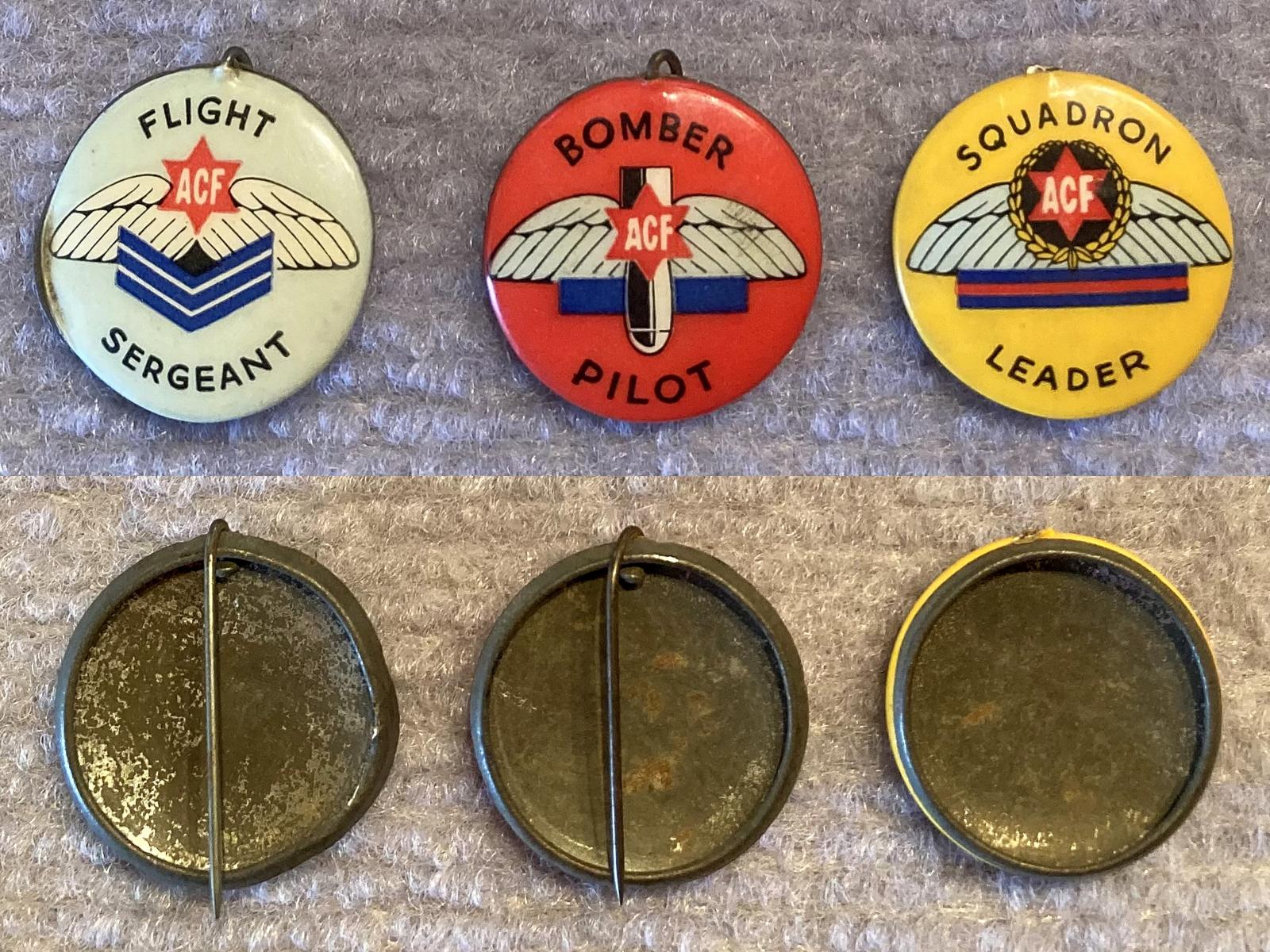
Three of the rank pins/buttons are held in the collection - Flight Sergeant, Bomber Pilot and Squadron Leader - and two different versions of the metal 'Wing Commander' badges.
This partly completed fundraising card with twelve 1 d stamps is the first level of the scheme which when complete would have entitled the owner to a 'Flight Sergeant' badge.
It is named and dated to Ronald William Steward, 22 August 1942. The date aligns perfectly with the start of the campaign.
Details
Details
On front of card from top to bottom:
"Would you pay a PENNY for
EVERY JAPANESE PLANE DESTROYED?"
"ALL PROCEEDS IN AID OF
AUSTRALIAN COMFORTS FUND"
"Give our Fighting Forces the comforts they so richly deserve by
donating one penny for every Japanese plane destroyed!!!
By becoming a subscriber to the "Penny-a-Plane" campaign,
you are matching your enthusiasm fagainst the ferocity of
the Jap.
Don't let the boys down...keep your stamp card up to date"
On reverse of card from top to bottom:
"FLIGHT
SERGEANT
ACF DATE 22.8.42.
NAME Ronald
William
Steward"
The LORD MAYOR wili announce each day, through the Press, the
official number of Japanese planes destroyed.
Special penny stamps are obtainable from all city, suburban and
country theatres and from all leading stores.
Buy the number of penny stamps to match the number of Japanese
planes shot down, and affix them in the above squares.
When you have filled this card hand it in to any seller and she will
cancel it and give you a "FIGHTER PILOT'S" Card, with the "FLIGHT
SERGEANT" Badge you have earned."
"Market Print"
Related Objects
Related Objects
Other items from Recollections of War
-
WWII era fundraising badge/button - 'Penny-a-plane' - Flight Sergeant
-
WWII era fundraising badge/button - 'Penny-a-plane' - Bomber Pilot
-
WWII era fundraising badge/button - 'Penny-a-plane' - Squadron Leader
-
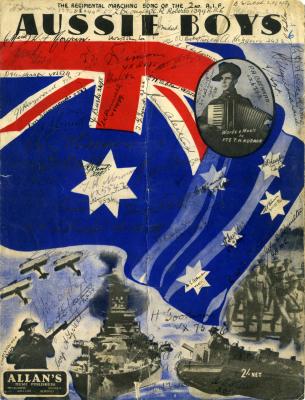
WWII era 'Aussie Boys' signed sheet music
-
Sweetheart brooch made from three Indian Two Annas coins - 1896
-
Student Nurses Association Royal College of Nursing badge
-
The General Nursing Council for England and Wales badge presented to M.B. Lethem 1922
-
The General Nursing Council for England and Wales badge presented to E.E. Webb 1943
-
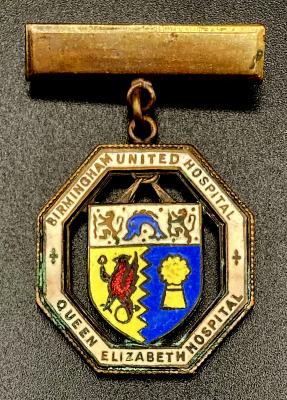
Birmingham United Hospital Queen Elizabeth Hospital badge presented to Nurse E.E. Webb
-
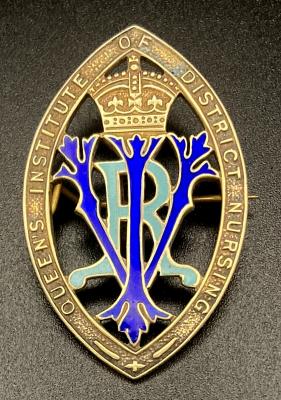
Queen's Institute of District Nursing badge presented to Winifred L. Bingham
-
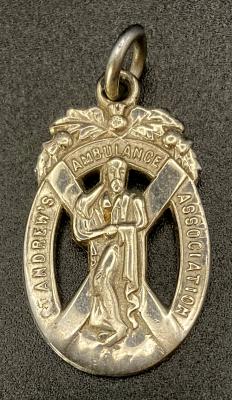
St. Andrew's Ambulance Association medal pendant
-
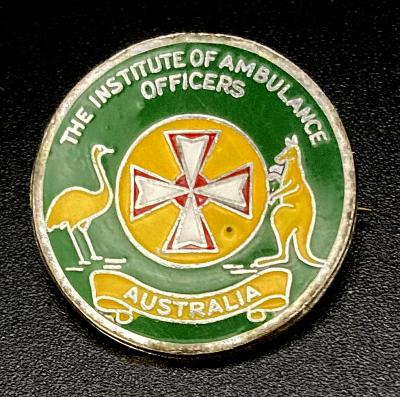
The Institute of Ambulance Officers Australia enamel badge
Scan this QR code to open this page on your phone ->
