

Birmingham Battalion lapel badge converted to photo locket
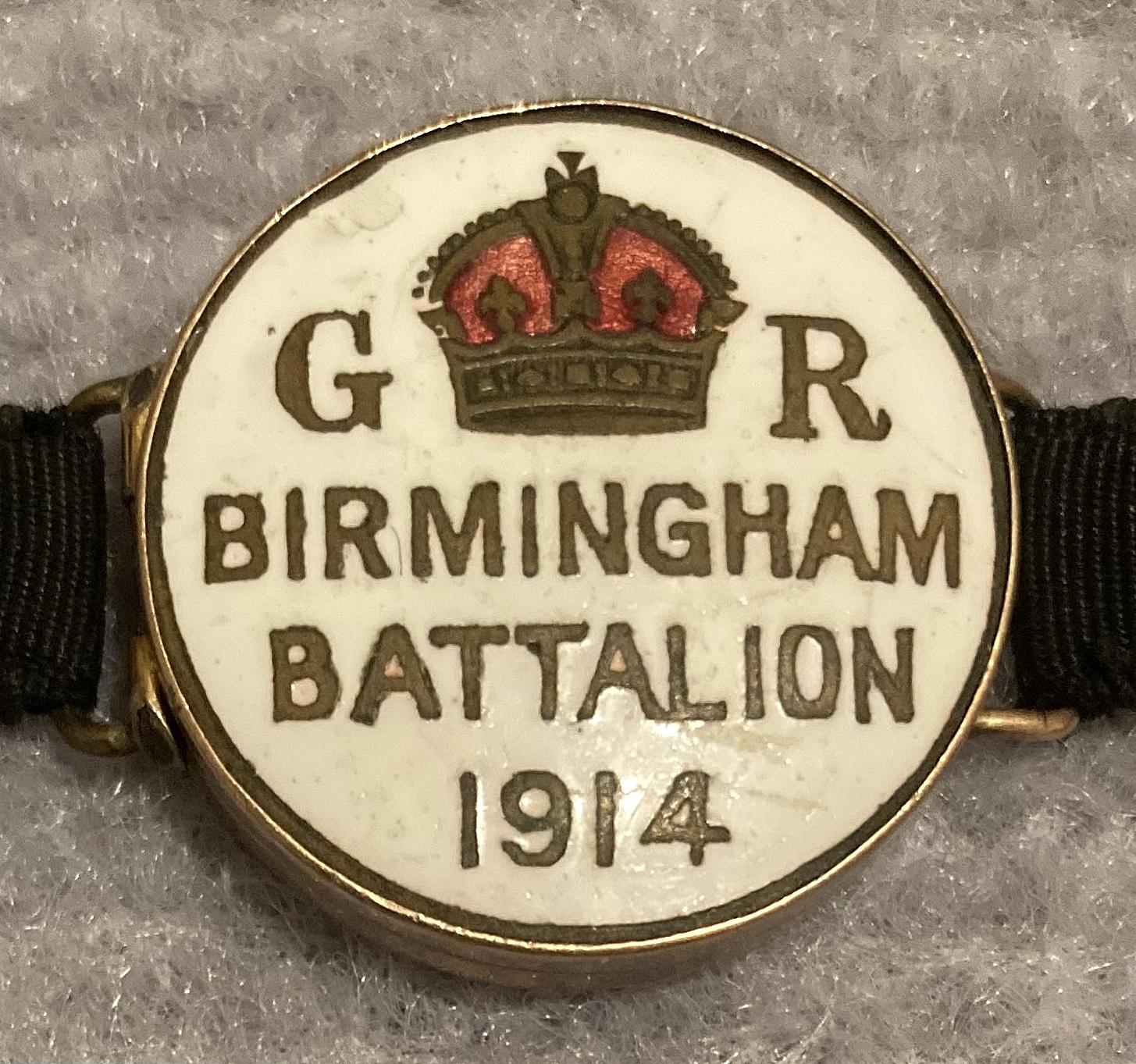
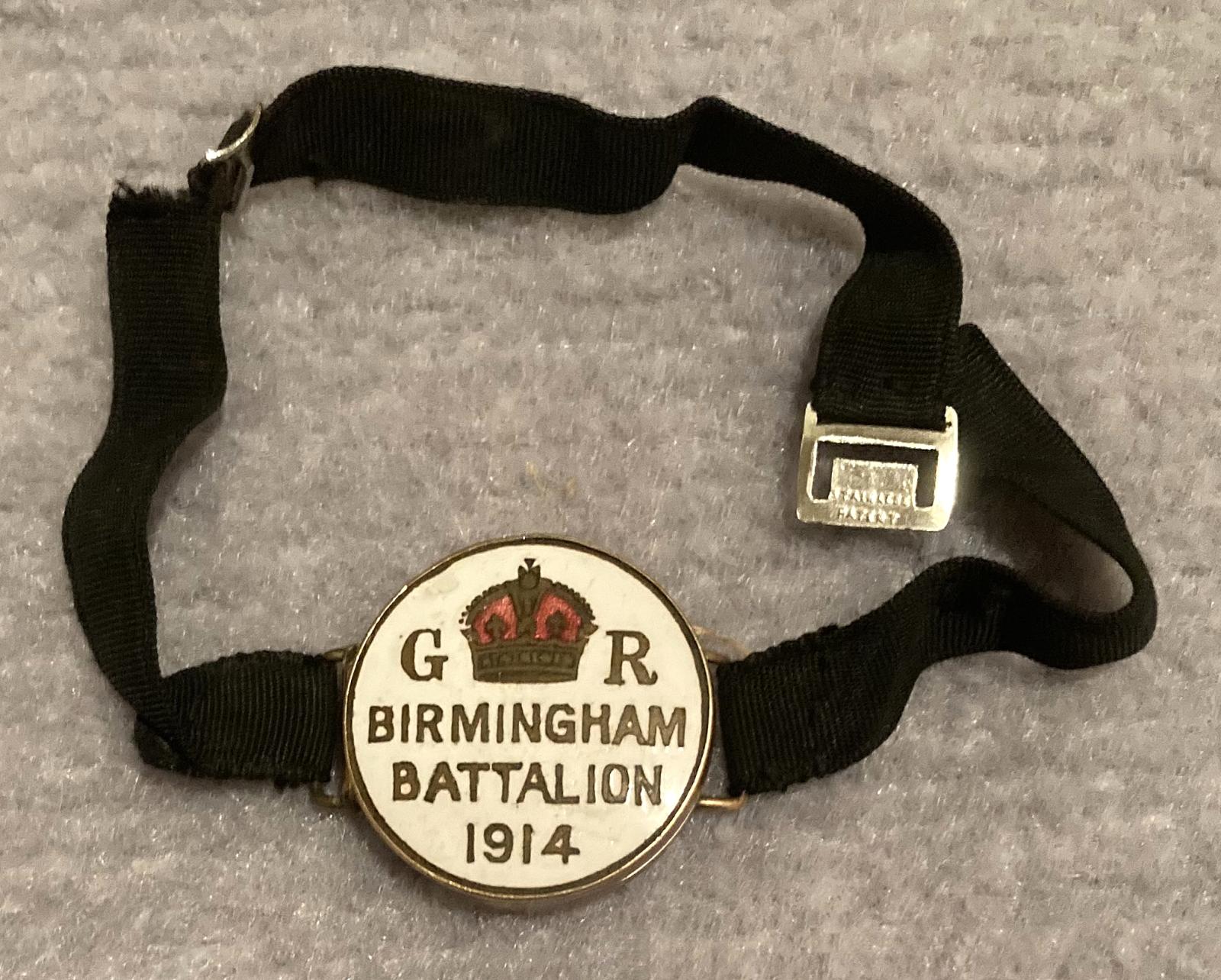
1914Circular, white enamel, gold-rimmed badge featuring a gold and red King's Crown with gold letters 'G' and 'R' (Georgius Rex) either side, underneath which the words 'BIRMINGHAM BATTALION 1914' appear, also in gold lettering.
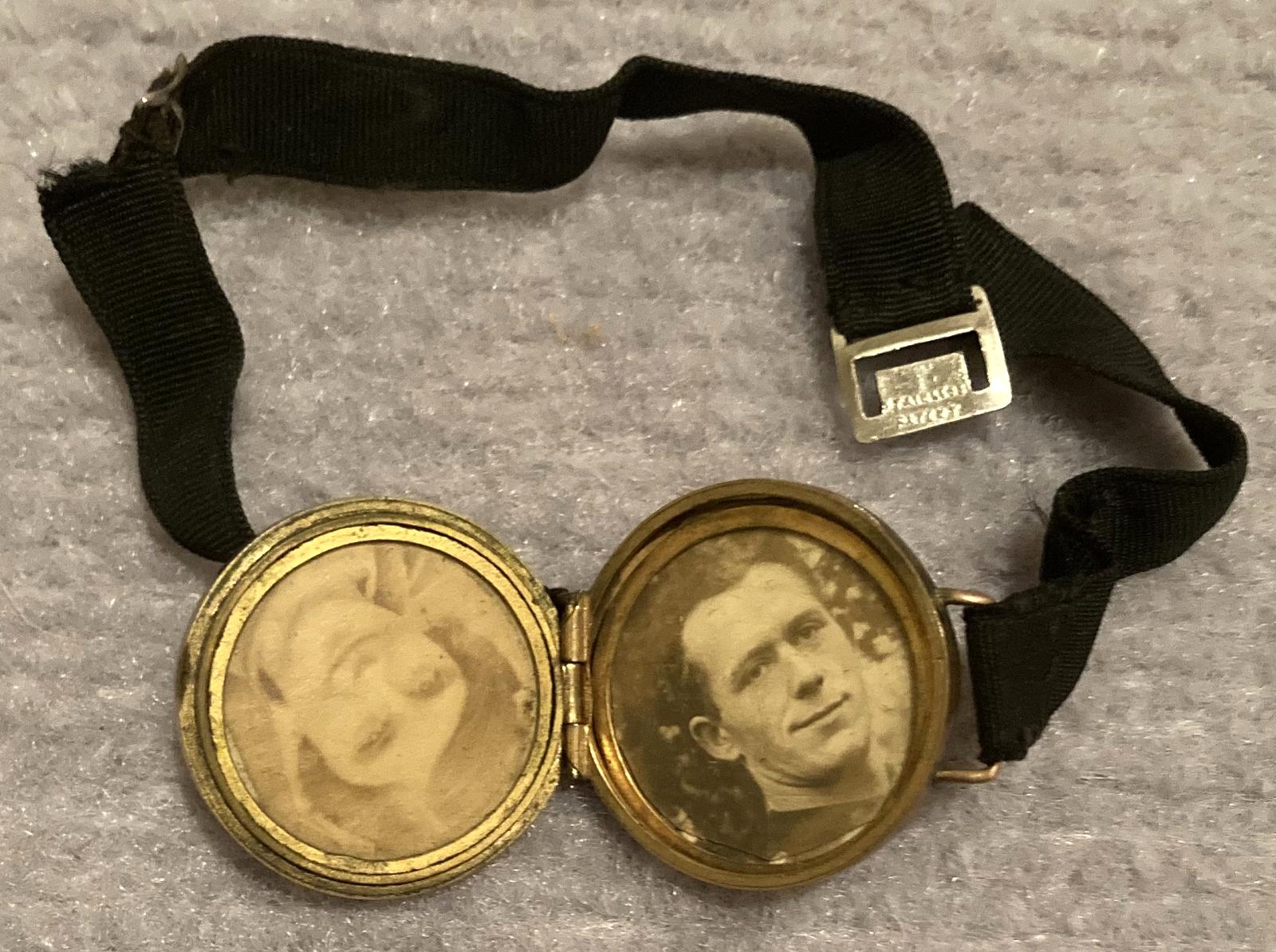
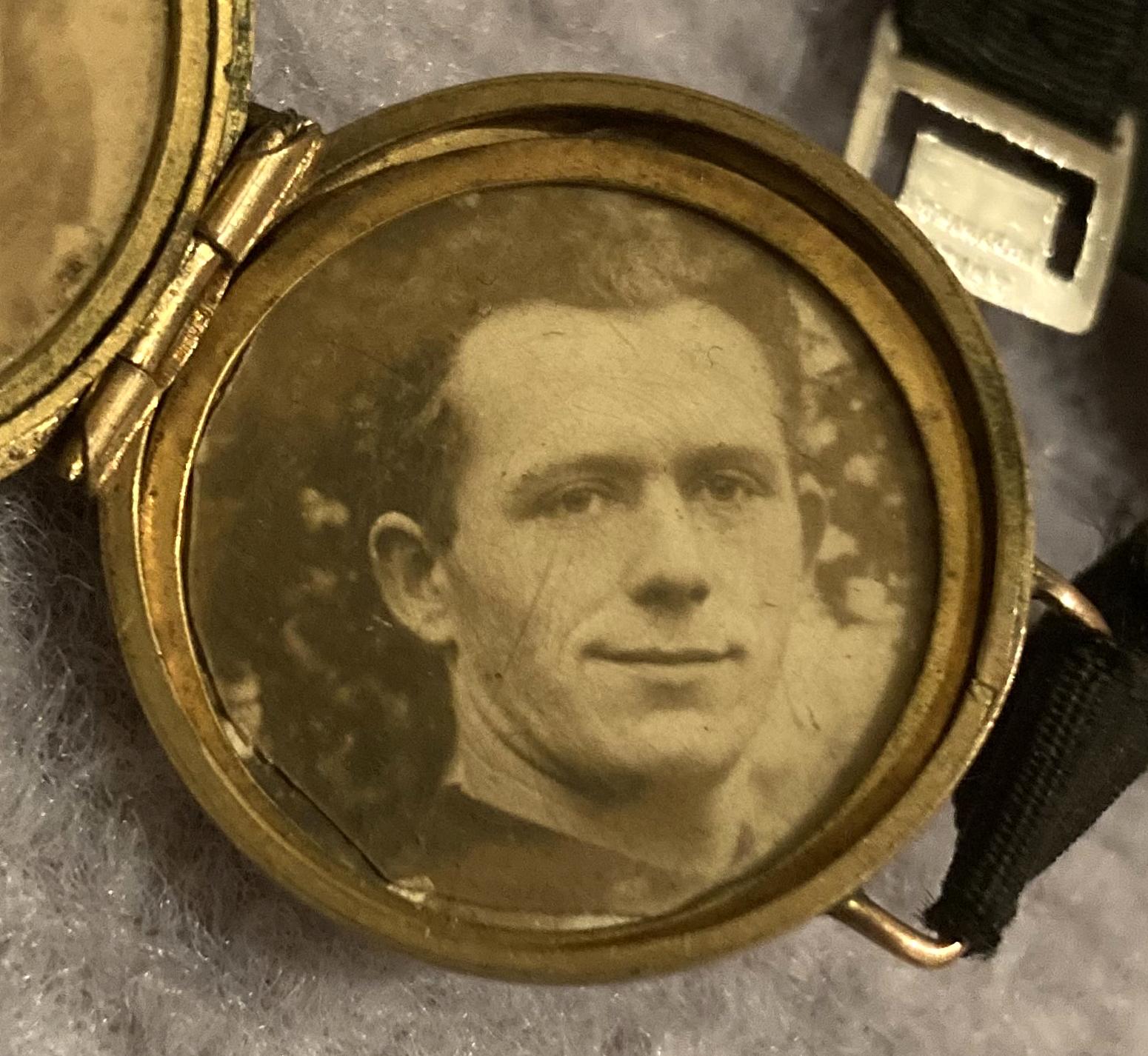
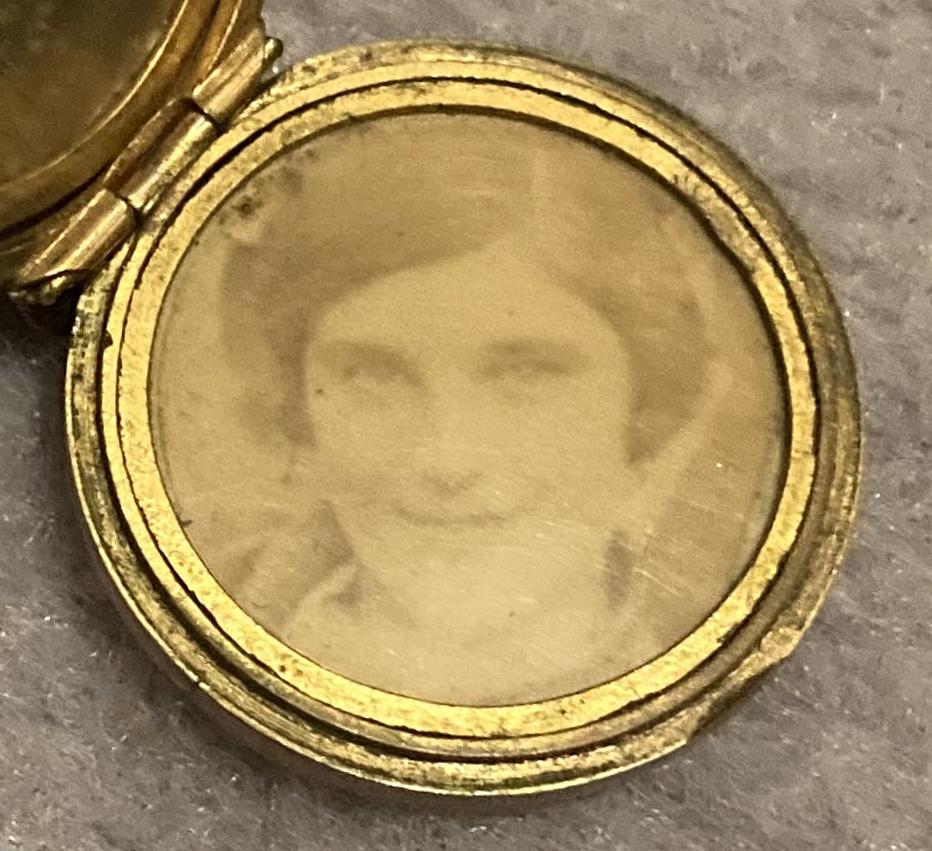
The badge is convex in shape and forms the top section of a flat-based photo locket containing two portraits - one of a woman and the other of a man. These are held within metal borders and covered with thin glass or celluloid for protection. They have moved over time, such that the woman is nearly upside down and the man on an angle.
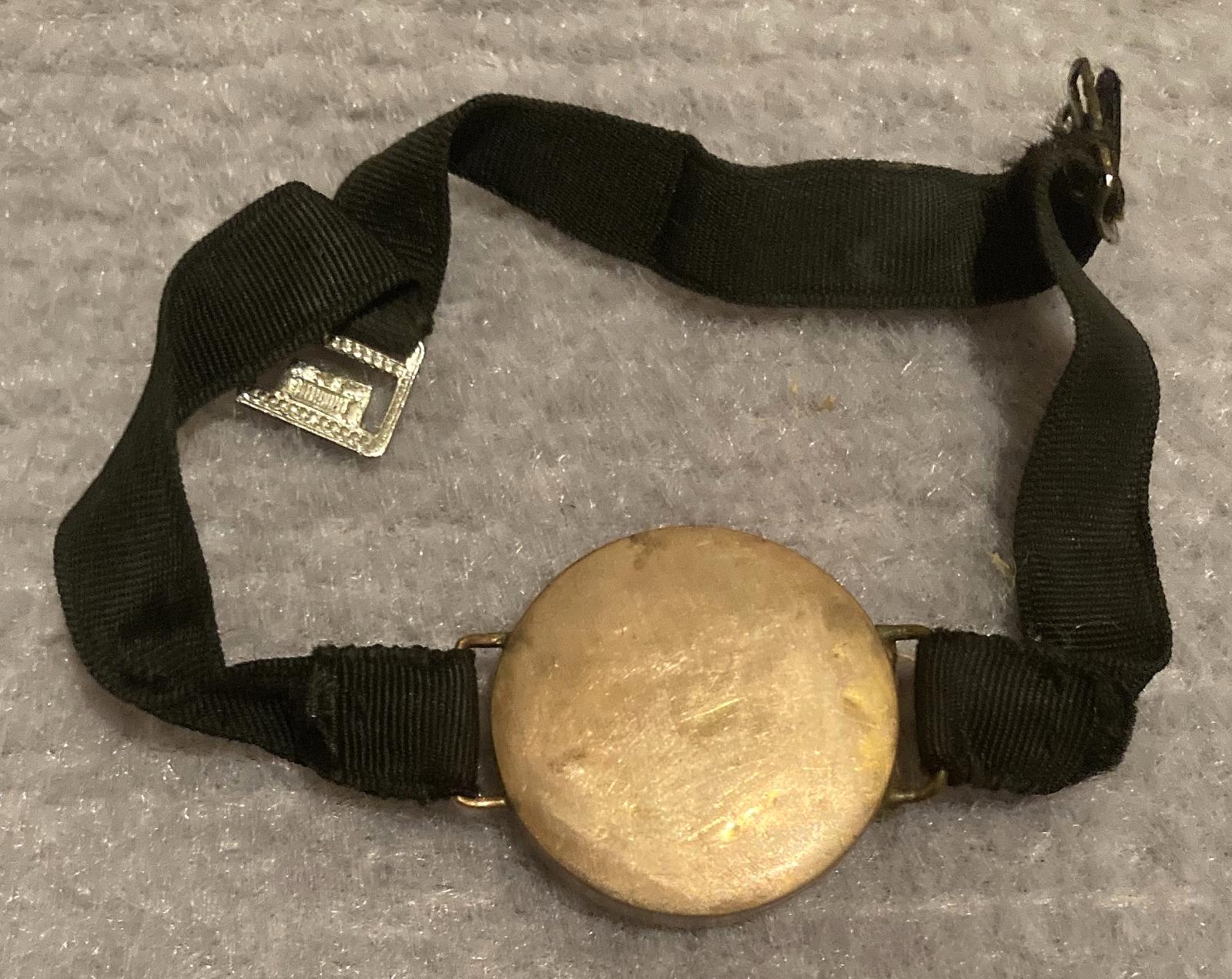
The top piece clips into the bottom. There are D-shaped metal wire loops attached at each side through which a black ribbon is threaded. It has a couple of metal catches for adjustment. Given the length of the ribbon, it appears that this was worn as a bracelet.
These badges were produced in September 1914 for volunteers joining 'Kitchener's Army,' specifically for the local "Pals" battalions raised in Birmingham. They represented the14th, 15th and 16th Battalions, Royal Warwickshire Regiment. They were raised in Birmingham by the Lord Mayor and a local committee. The lapel badge was worn on civilian clothing during 1914 before uniforms were issued.
These badges were often privately commissioned by local committees rather than officially supplied by the War Department, with common makers including H.B. Sale Ltd. or W.J. Dingley of Birmingham. As the back of this badge is not visible, the maker remains unknown.
For whatever reason, this lapel badge was converted into a double photo locket and threaded onto a ribbon for wearing. It may be that once the uniforms with correct insignia were issued, these badges became obsolete.
Details
Details
"G" "R"
"BIRMINGHAM
BATTALION
1914"
More items like this
Other items from Recollections of War
-
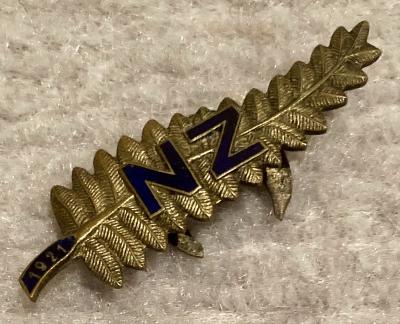
1921 New Zealand silver fern sweetheart brooch
-
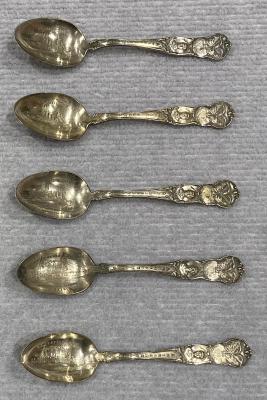
Spoons commemorating the visit of the U.S. Great White Fleet to Australia in 1908
-
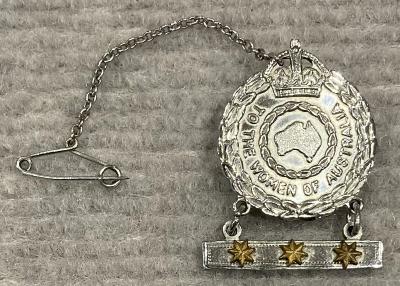
WWII Female Relative's Badge with three stars issued to Edith May Chalklen
-
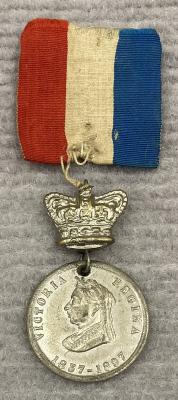
1897 Queen Victoria Diamond Jubilee souvenir commemorative medallion
-
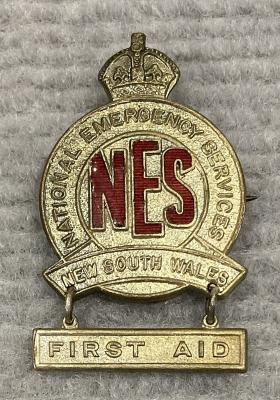
First Aid qualification badge, National Emergency Services (N.E.S.) New South Wales
-
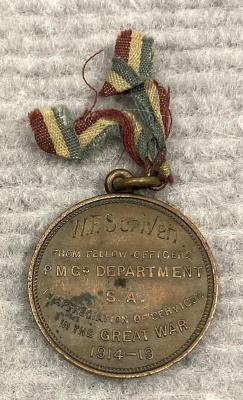
War Service medal from South Australian P.M.G. Department presented to Walter Frederick Scriven
-
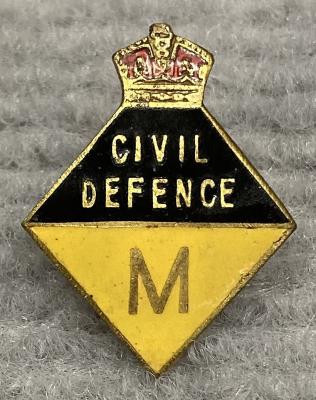
Civil Defence Queensland Messenger (M) badge
-
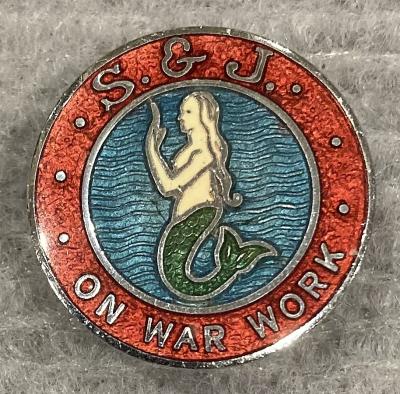
WWII era S & J 'On War Work' enamel badge
-
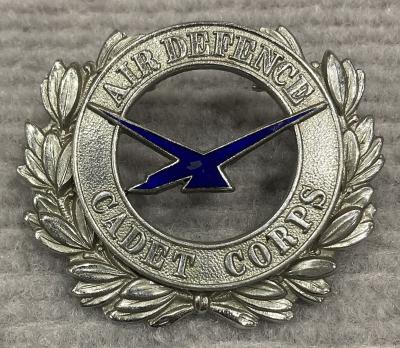
Air Defence Cadet Corps (A.D.C.C.) cap badge
-
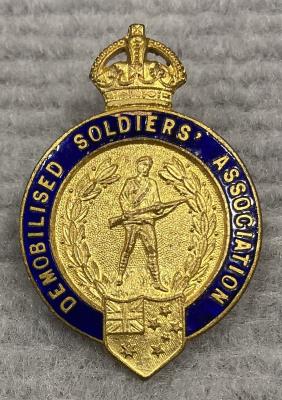
WWI era Demobilised Soldiers' Association member's lapel badge
-
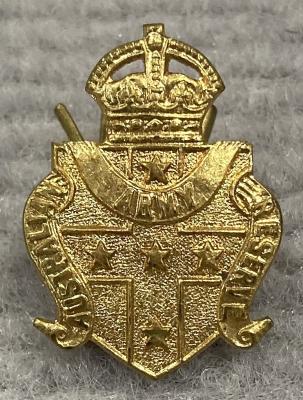
Australian Army Reserve gilded brass lapel badge
-
King's Royal Rifle Company mother of pearl sweetheart brooch
Scan this QR code to open this page on your phone ->
