

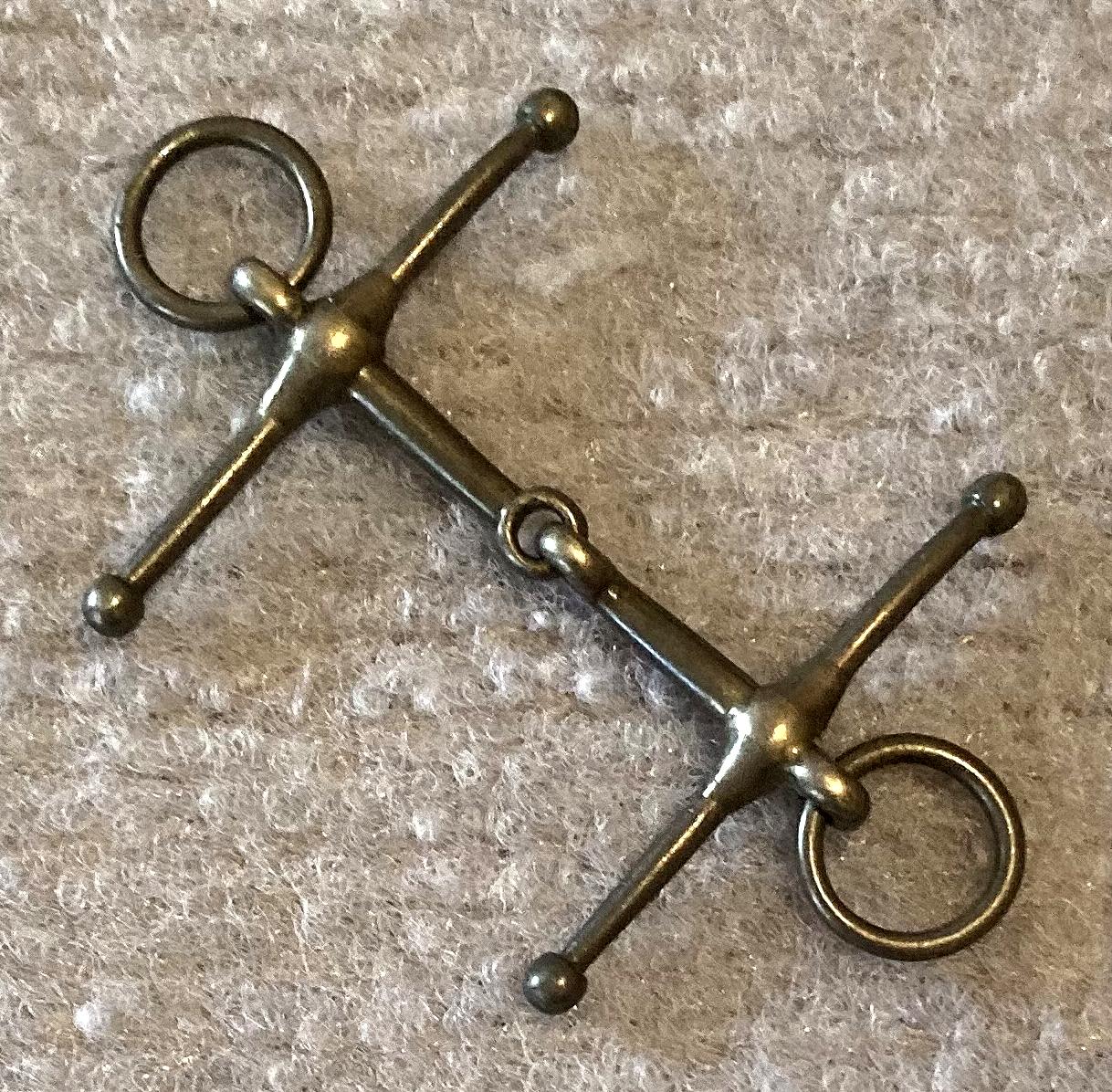
Miniature metal full cheek, loose ring, snaffle horse bridle bit
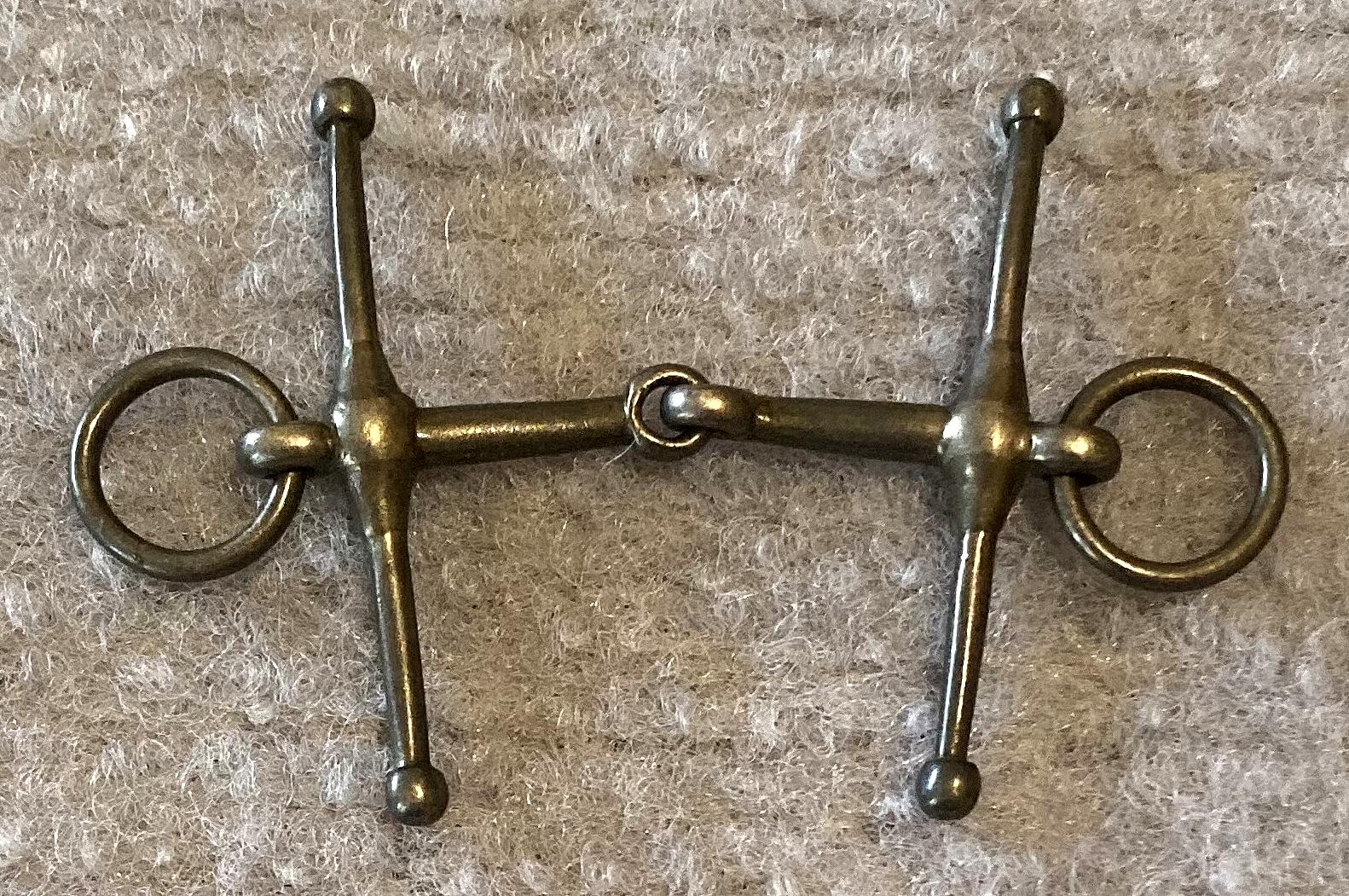
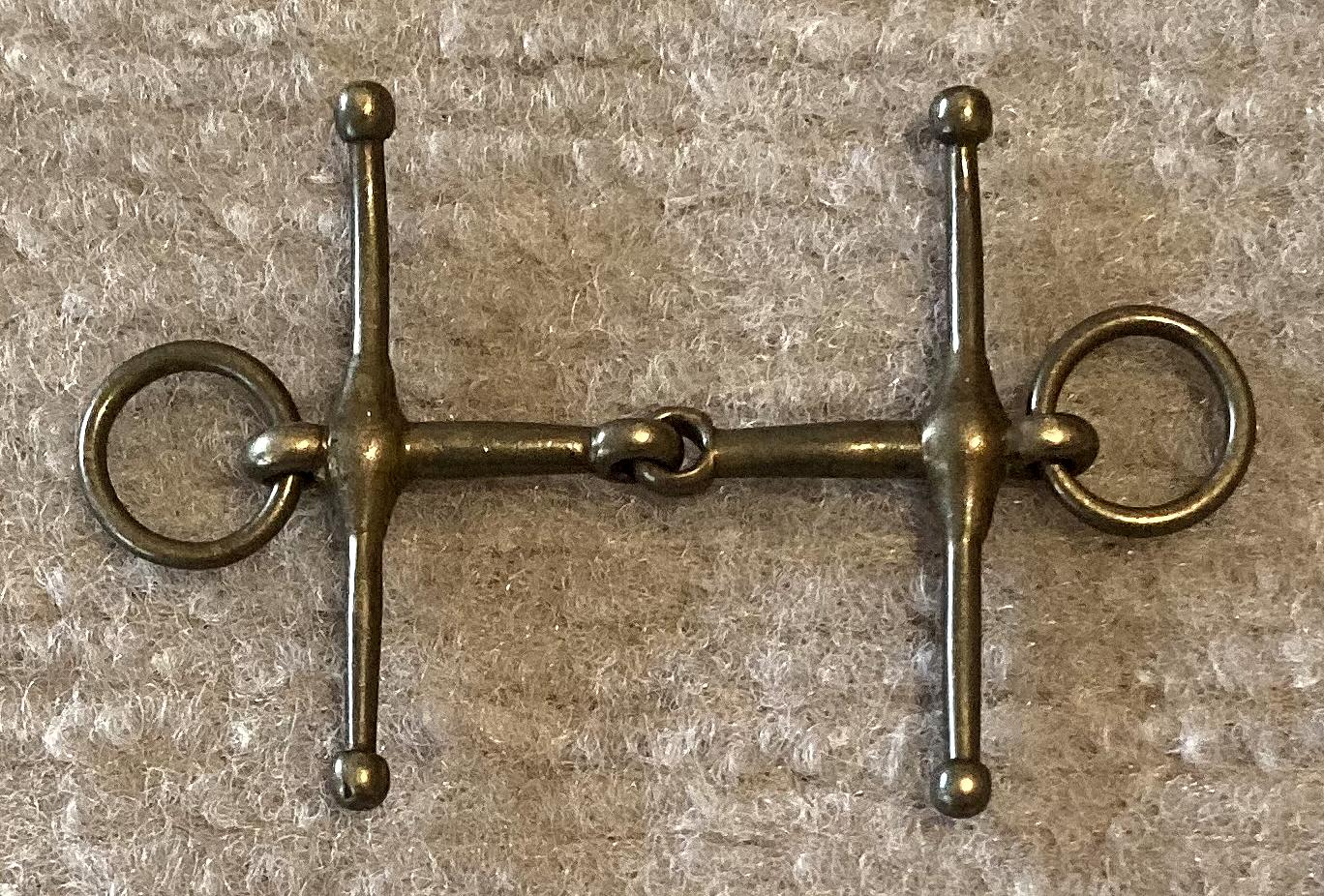
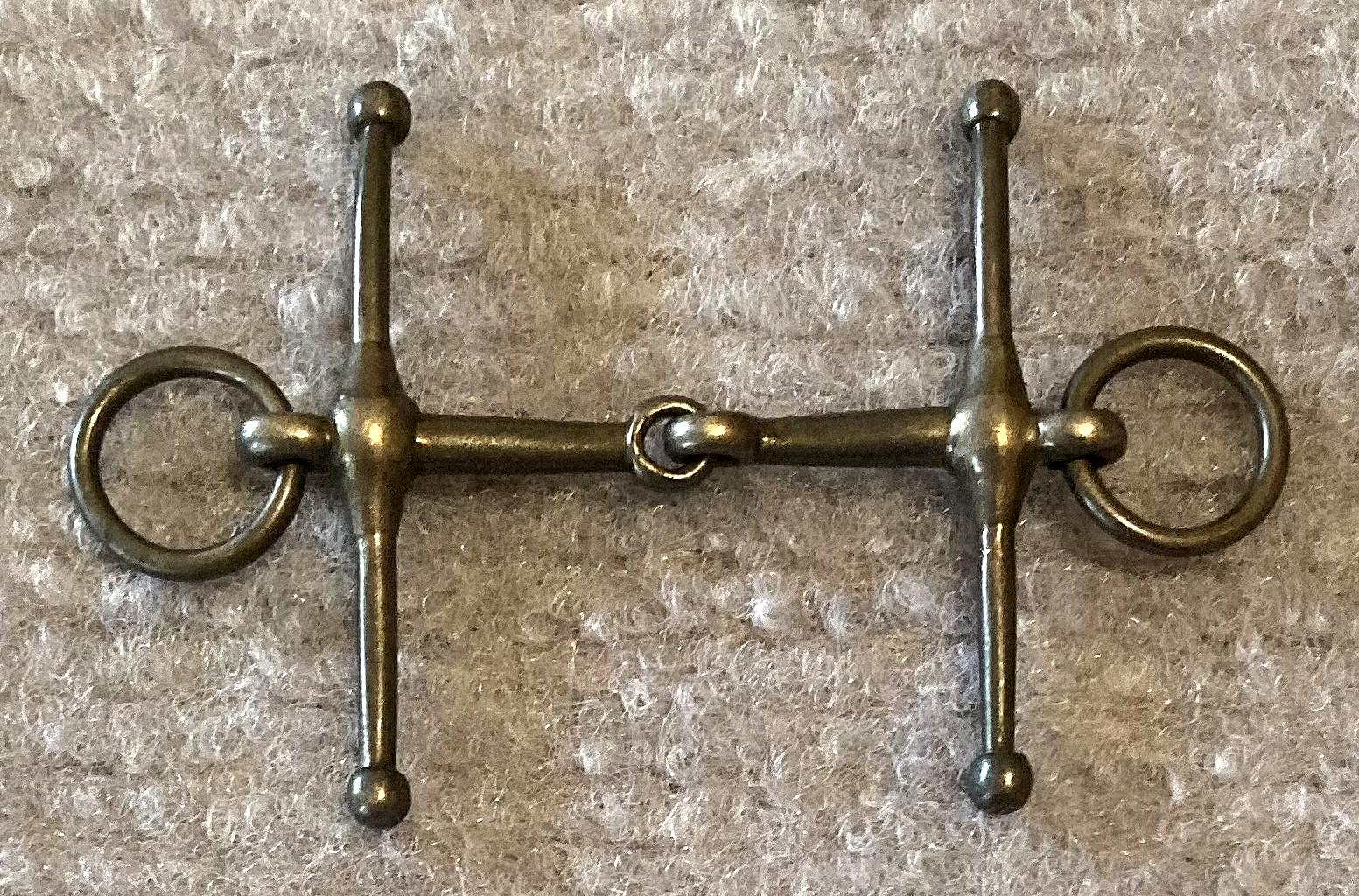
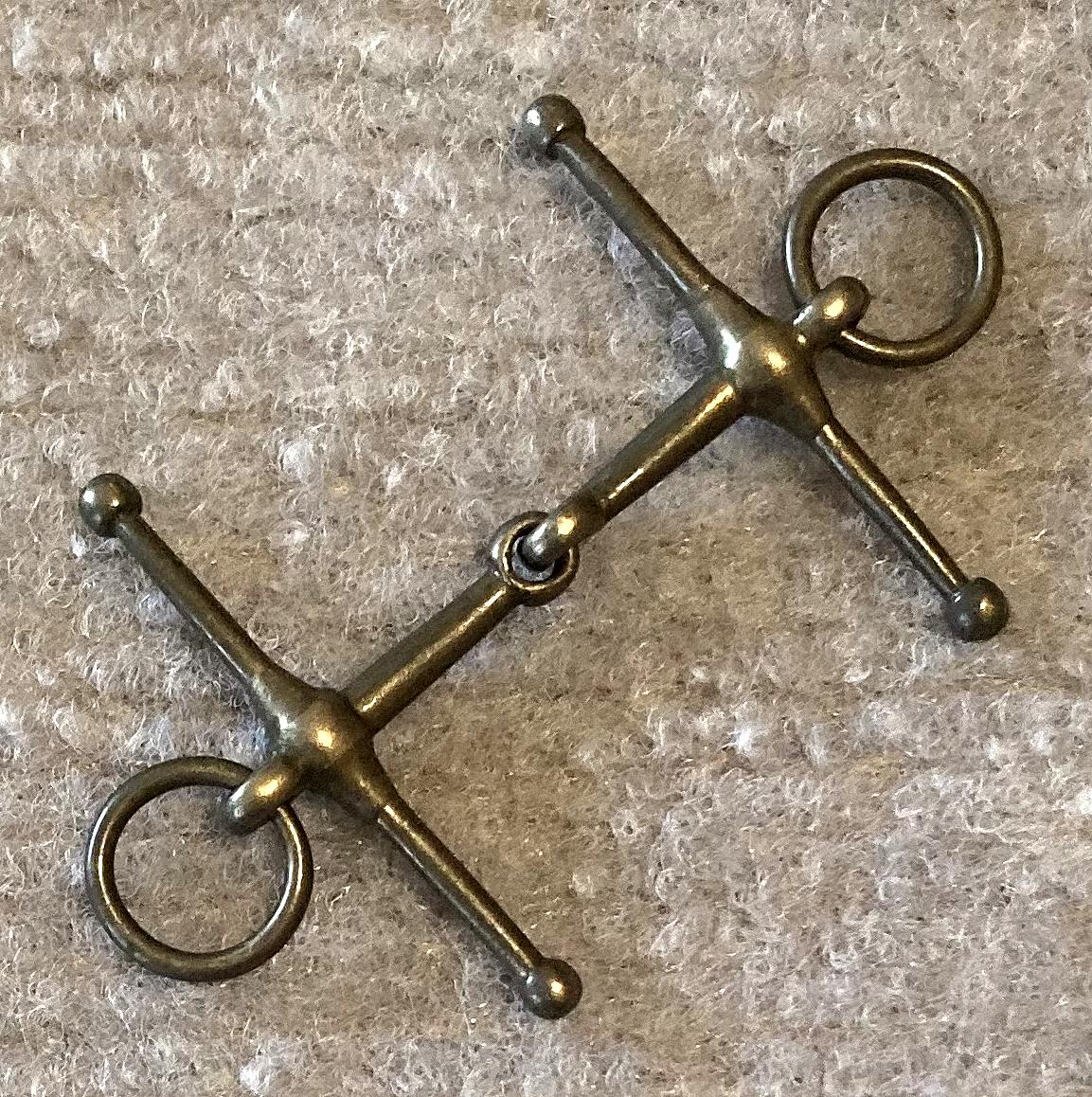
Miniature metal depiction of a full cheek loose ring snaffle horse bridle bit.
It comprises two fixed T-pieces which end in knobs on the wider arms and have rings on the shorter arms which are at right angles to each other.They join in the centre with one ring passing through the other, creating a movable 'H' formation.
On the outside of each T-piece is another ring through which a larger ring is threaded. In a full size version, the reins would pass through these larger rings.
It is extremely well made - it swivels and articulates just like a real one.
This miniature bit was bought as having belonged to World War One Australian soldier, Norman William Tulloh.
Norman was a 21 year old clerk from Malvern, Melbourne when he enlisted on 1 April 1915 (service number 4650). He served as a Gunner with the Field Artillery Brigade 2, 7th Reinforcements.
He served at Gallipoli but was invalided to hospital with enteric fever. After time in convalescent hospitals in Alexandria and England, he was returned to Australia. He then returned to service in France and was promoted to 2nd Lieutenant with the 1st Division Artillery by the time he was discharged in June 1919.
Field Artillery Brigades in World War One heavily relied on horses, which were crucial for transporting guns, ammunition, and personnel across rough terrain where motorized transport failed.
It is not possible to know whether Norman developed an affinity for horses during this time or whegher it was something he came to after the war. The purpose of the miniature bit is also unknown.
The FM bit (or Fulmer bit) is a specialized full-cheek snaffle where the rings are loose rather than fixed. The design combines the safety and steering precision of full cheeks with the "play" and responsiveness of a loose ring bit. It was designed by Franz Mairinger (FM) - a former Spanish Riding School instructor who immigrated to Australia after World War Two.
Details
Details
Other items from Recollections of War
-
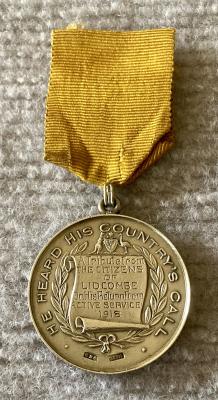
Welcome Home presentation medal from the Citizens of Lidcombe, 1919
-
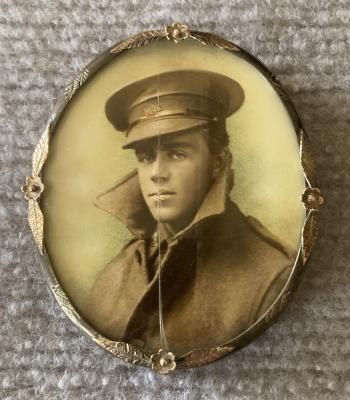
Miniature hand tinted portrait of WWI Australian soldier in silver and gold frame
-
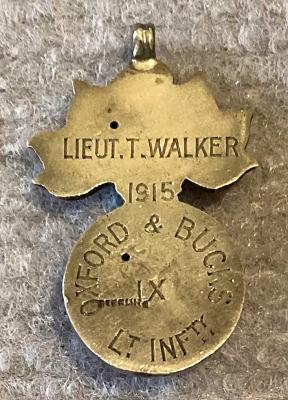
Sterling silver pendant or fob named to Lieutenant T. Walker, 1915
-
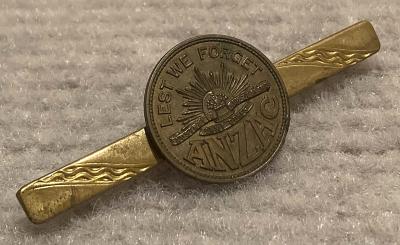
'Lest we forget ANZAC' tie or lapel pin
-
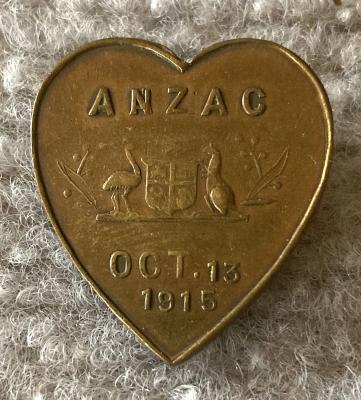
Heart-shaped sweetheart brooch sold to raise funds for wounded soldiers on first Anzac Day - 13th October 1915
-
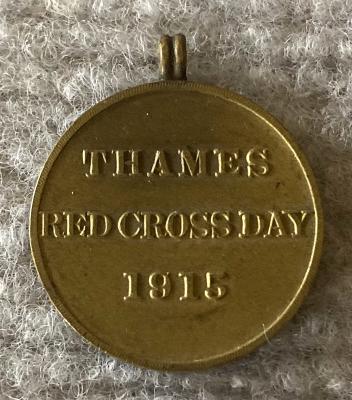
Fundraising medallion sold to support Thames Red Cross Day - 1915
-
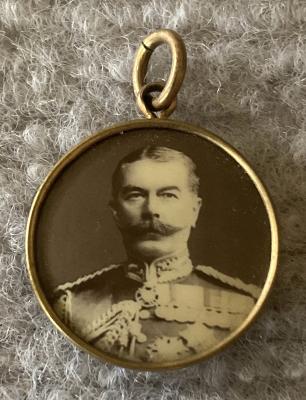
World War One era double-sided photographic pendant locket - Lord Kitchener and General French
-
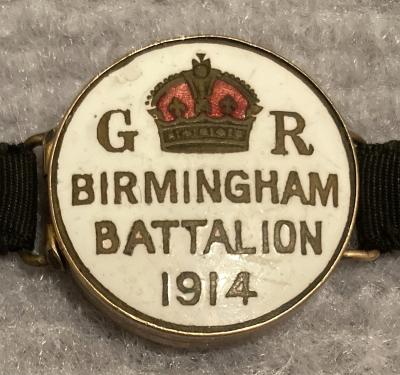
Birmingham Battalion lapel badge converted to photo locket
-
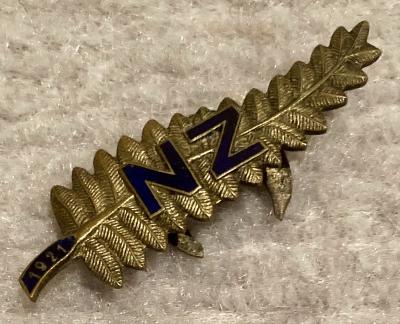
1921 New Zealand silver fern sweetheart brooch
-
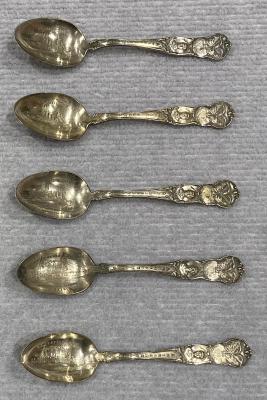
Spoons commemorating the visit of the U.S. Great White Fleet to Australia in 1908
-
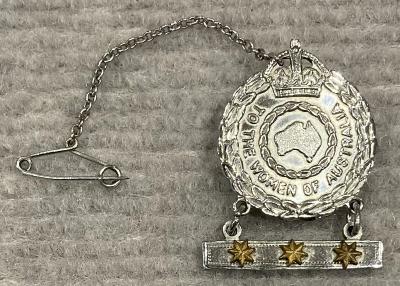
WWII Female Relative's Badge with three stars issued to Edith May Chalklen
-
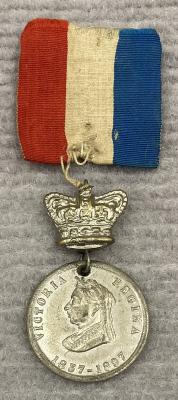
1897 Queen Victoria Diamond Jubilee souvenir commemorative medallion
Scan this QR code to open this page on your phone ->
