

Second World War Royal Australian Engineers 13th Field Coy AIF Shoulder Colour Patch (single)
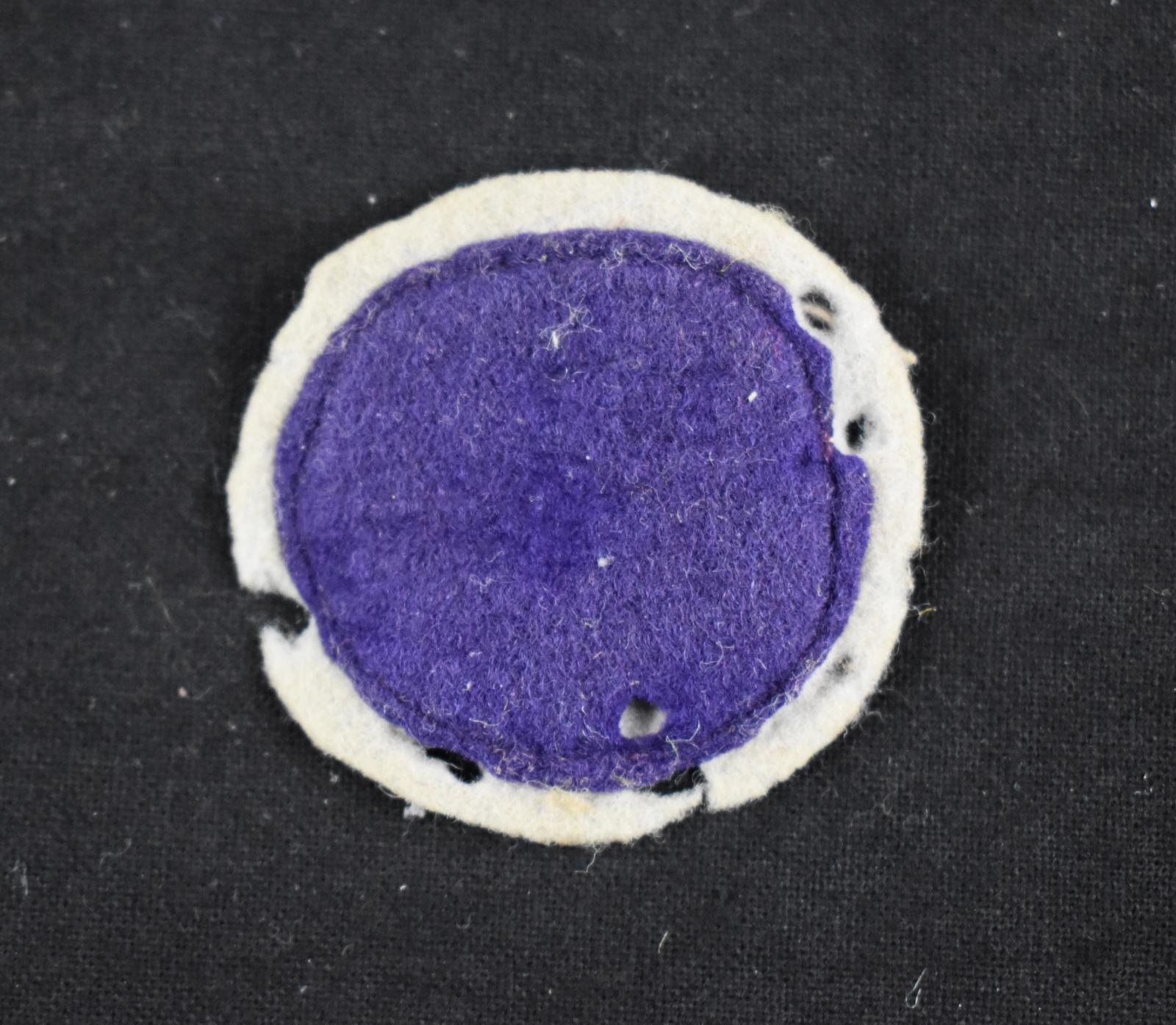
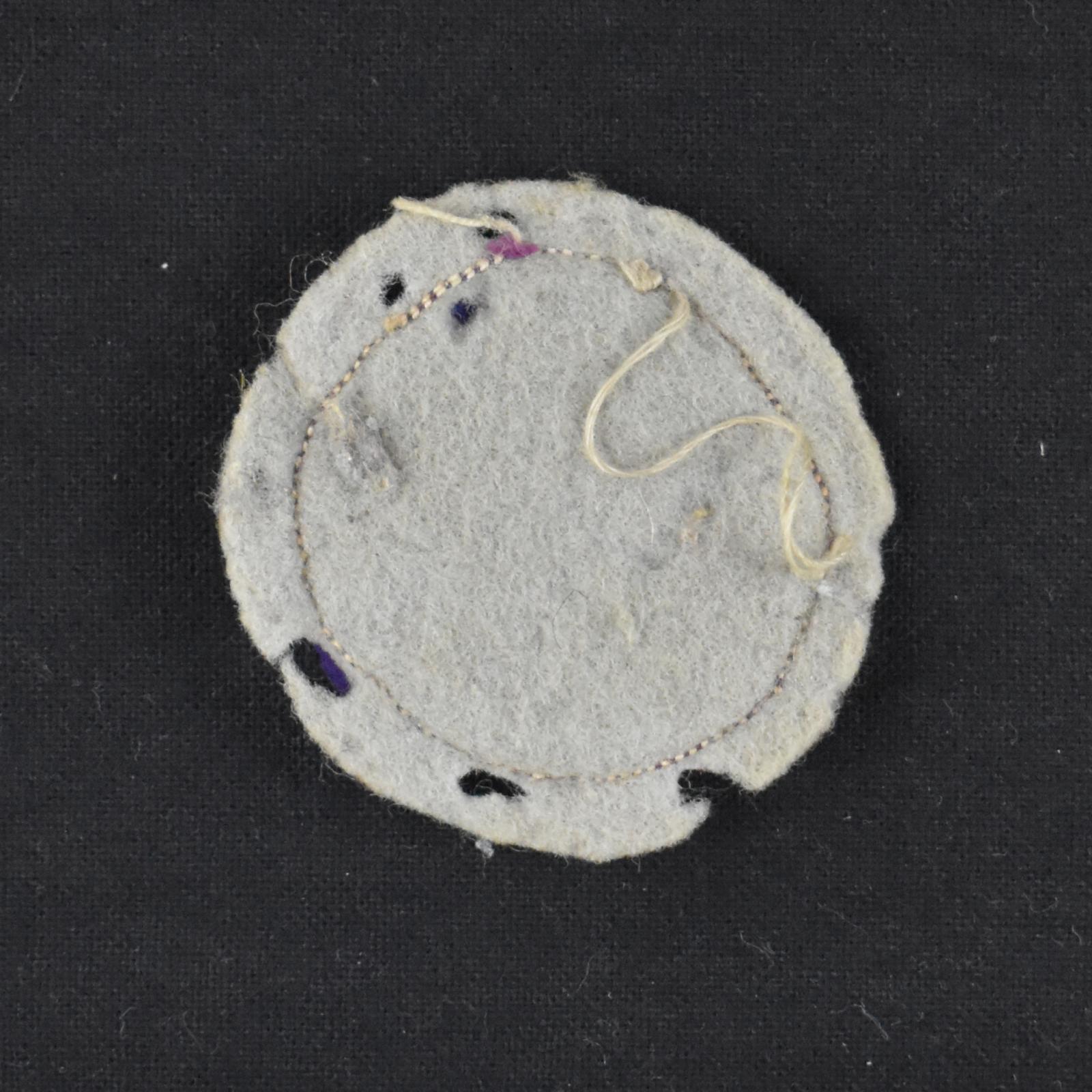
1939 - 1945A circular Second World War shoulder patch consisting of a purple circle on a grey circular background. There are stitches and a loose thread showing on the rear of the patch where the two pieces of felt have been sown together. There are also some small holes in the outer grey circle of the colour patch.
Colour patches were worn by the Australian Army at the head of jacket sleeves and greatcoats between 1915 and 1950 primarily to distinguish one unit from another. The patches were based on the colour flags that were staked on the battlefield in the First World War to distinguish unit lines. A Divisional Order - Number 81 (A) Administration -issued at Mena in Egypt described the colours and shape of the patches to be worn. Colour combinations indicated the function of the unit while the shape indicated the formation to which the unit belonged. After the First World War the patches were worn by the Citizens Military Forces (CMF) and so the militia became identified with the divisional structure of the Australian Imperial Force (AIF).
The Army units of the Second World War wore patches with a grey background in response to the reduced number of battalions in each brigade (4 to 3). In November 1940, another instruction was issued whereby the second AIF battalions would wear the patches from the first AIF but on a grey background with the shape reflecting their divisions. This system was used until 1949 as the Australian Army adopted the British system using embroidered shoulder titles, formations signs and lanyards. Around 1960-unit formation signs were dropped, followed by the partial replacement of shoulder titles with metal abbreviated corps and regimental titles worn on shoulder straps. In 1987 the wearing of colour patches on the right side of the puggarees on hats to acknowledge the Army’s heritage was authorised by the Chief of the General Staff.
Details
Details
The 13th Field Company (Australian Engineers) was a Western Australian militia unit mobilised at Melville in 1941 and attached to the 13th Infantry Group. Originally the only field company in Western Australia, it also supported garrison battalions. In April 1942, the company moved to Chidlow then to Moora in May, working on camp accommodation and road maintenance before moving to Dandaragan in July, and returning to Moora in February 1943.
By March 1943, the Company was based at Batchelor in the Northen Territory working on bridge and road construction before moving on to the Hughes Airfield while some of the unit worked on wharf construction at Noonamah (a rural area near Darwin) between July 1943 and March 1944.
As the threat to Darwin receded, the unit prepared in Noonamah for service overseas and was assigned to the 5th Infantry Division which embarked in November for New Britain where the Japanese controlled Rabul, previously the capital and administrative centre of the Australian Mandated Territory of New Guinea. Here they supported the 13th Infantry Brigade in the advance to Rabul before relocating to Tol Plantation in March 1945 and then becoming part of the occupation force on Rabul at the end of the war.
Open in Google Maps
Nearest geotagged records:
- Invalid Cup (0km away)
- Peter LONEY Letter (0km away)
- Ellis SILAS Water Colour Painting (0km away)
- Engraved Japanese Water Bottle belonging to Robert George Staunton RENNIE WX7493 (0km away)
- Enlistment Poster (0km away)
- W. D. & H. O. Wills Lace Flag Cigarette Cards (0km away)
- First world War Picture Postcard (0km away)
- Photograph of the Japanese surrender to Australia on 13 September 1945. (0km away)
- Engraved Tin given to Major Arthur Robinson HOME WX11151 (0km away)
- Martini-Henry action (0km away)
Nearby places: View all geotagged records »
Princess Royal Fortress Military Museum
Princess Royal Fortress Military Museum
Other items by Australian Government
-
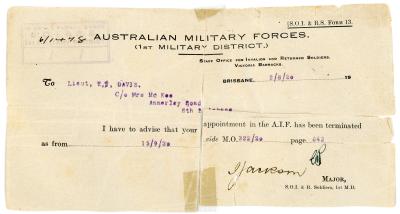
Australian Military Forces Termination Notice for Lieut. Ernest James DAVIES
-
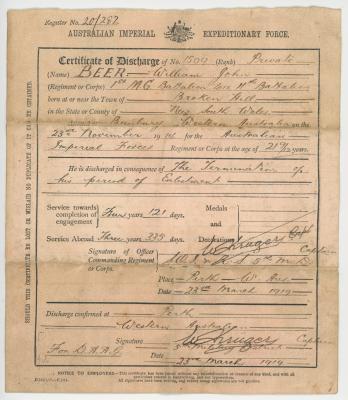
First World War Discharge Paper of Pte. William John BEER 1509
-
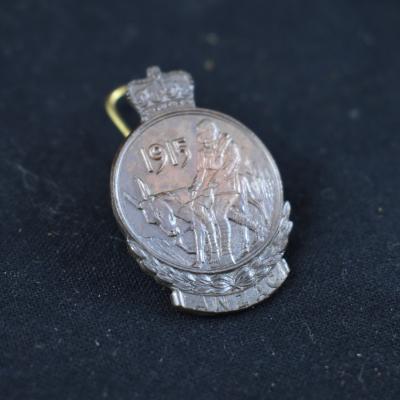
1967 ANZAC Commemorative Lapel Badge and Certificate of Pte. William John BEER 1509
-
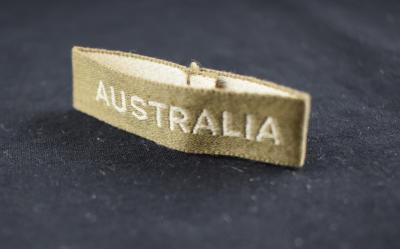
Second World War ‘Australia’ Khaki Shoulder Flash
-
Letter to Lieut. Ernest James DAVIES from the “Military Forces of the Commonwealth” regarding MBE presentation
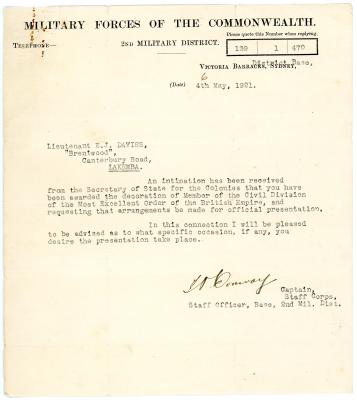
-
1967 ANZAC Commemorative Medallion and Certificate of Pte. William John BEER 1509
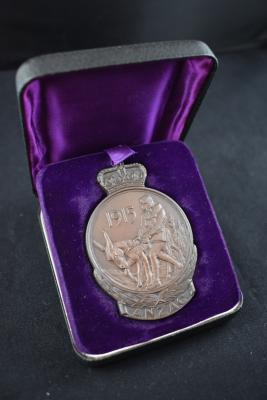
-
Commonwealth of Australia WA Motor Spirit Ration Ticket
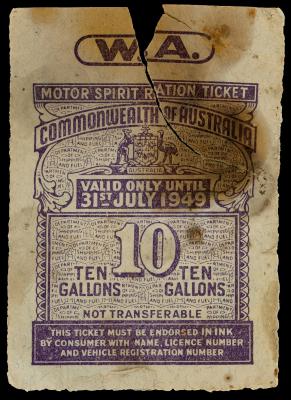
-
Commonwealth of Australia Department of Defence Statement of Account for Lieut. Ernest James DAVIES
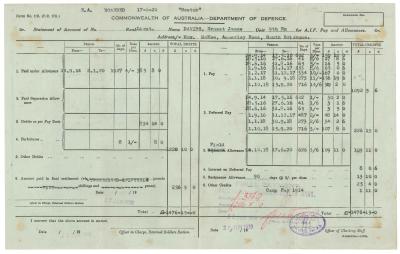
-
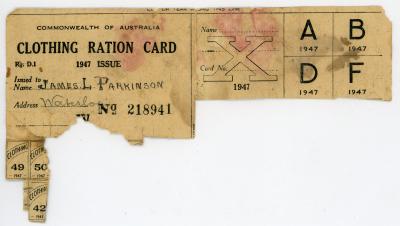
Commonwealth of Australia Clothing Ration Card Issued to James L. PARKINSON
Other items from Princess Royal Fortress Military Museum
-
Legacy Centenary Torch

-
Souvenir ‘Snapshots of Albany’ Photographic Booklet
-
First World War German Mauser M1898/05 Bayonet with Scabbard
-
Carved Stick from Holly Ridge, Gallipoli as gathered by Lt-Col. Rupert Anstice RAFFERTY
-
1915 Metal Whistle issued to Lt-Col. Rupert Anstice RAFFERTY
-
First World War Memorial Plaque for Ernest Charles Gordon SCOTT
-
In the sands of our remembrance, grows the soul of our nation (Poppy sculpture)
-
Picture in frame “FLEET WEEK AT ALBANY”
-
Black leather bound Holy Bible presented to Reverend Ivern A. JACOBS
-
Quarterly Ticket of Membership to Methodist Church of Australasia – Rev. Ivern A. JACOBS
-
Soldier’s Pay Book Issued to Agnes Mary NEWMAN, WF90136 & Pouch
-
Commonwealth of Australia 1948 “Special Clothing Coupon Issue (Pre-Natal)"
Scan this QR code to open this page on your phone ->
