
Silver identity badge made from coin suspended on black bow brooch - Trevelyan Ethelbert Bainbridge
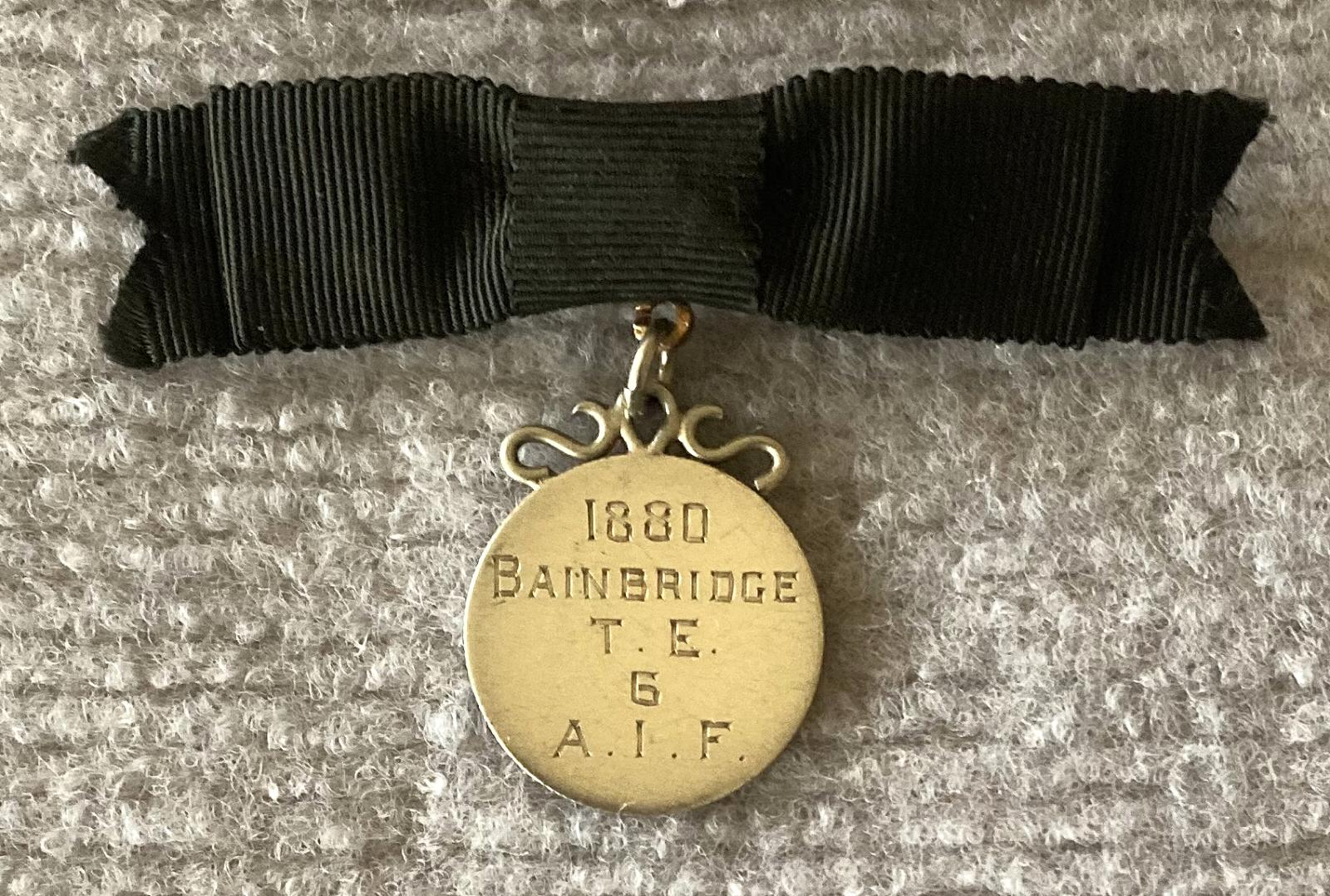
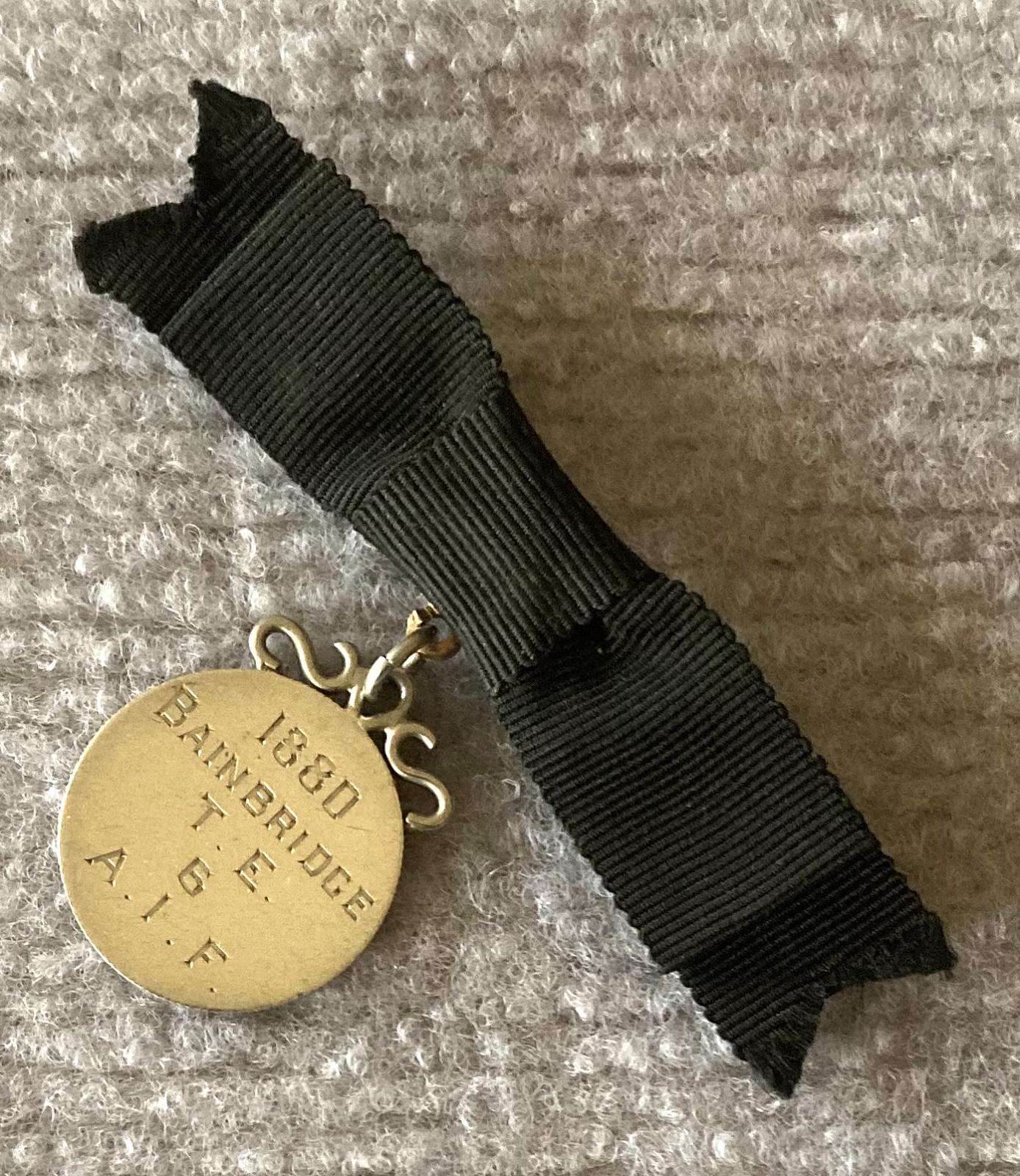
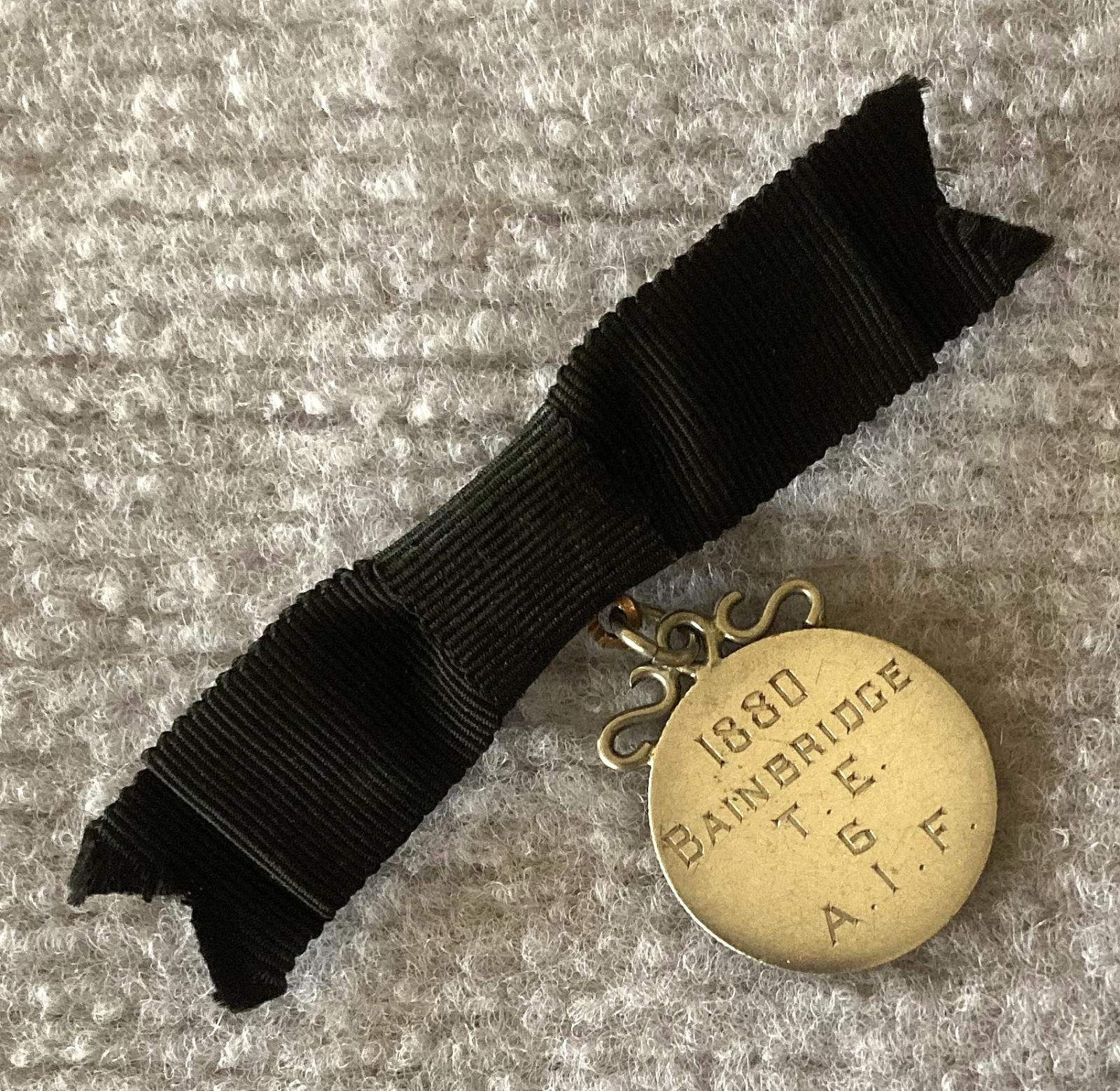
c. 1915Identity disc made from a silver Egyptian or Ottoman Empire 10 Qirsh coin for Australian soldier, Corporal Trevelyan Ethelbert Bainbridge, during World War One.
One side of the coin has been erased and then impressed with his details - his name, service number (1880), and Battalion (6th Australian Infantry).
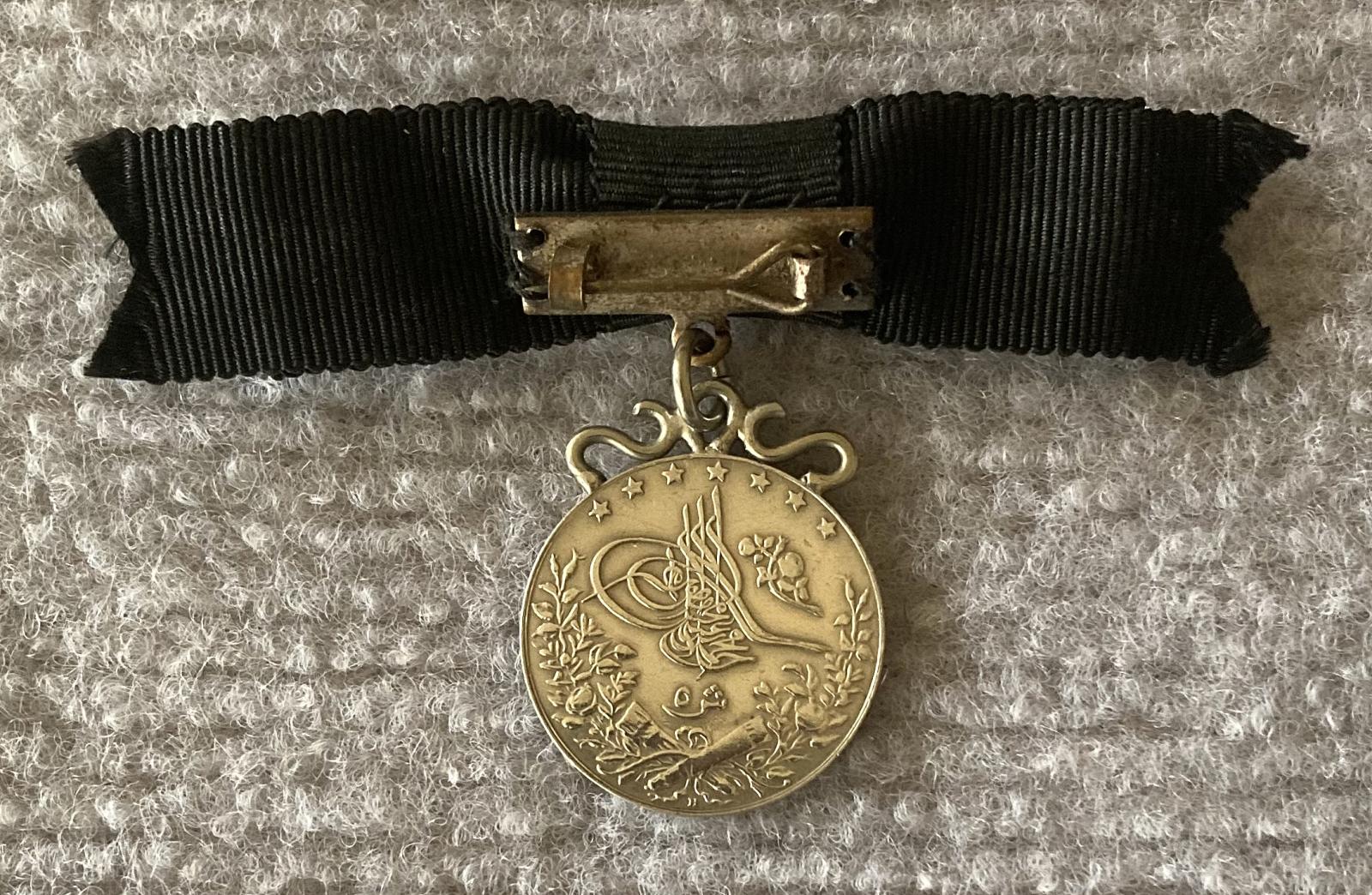
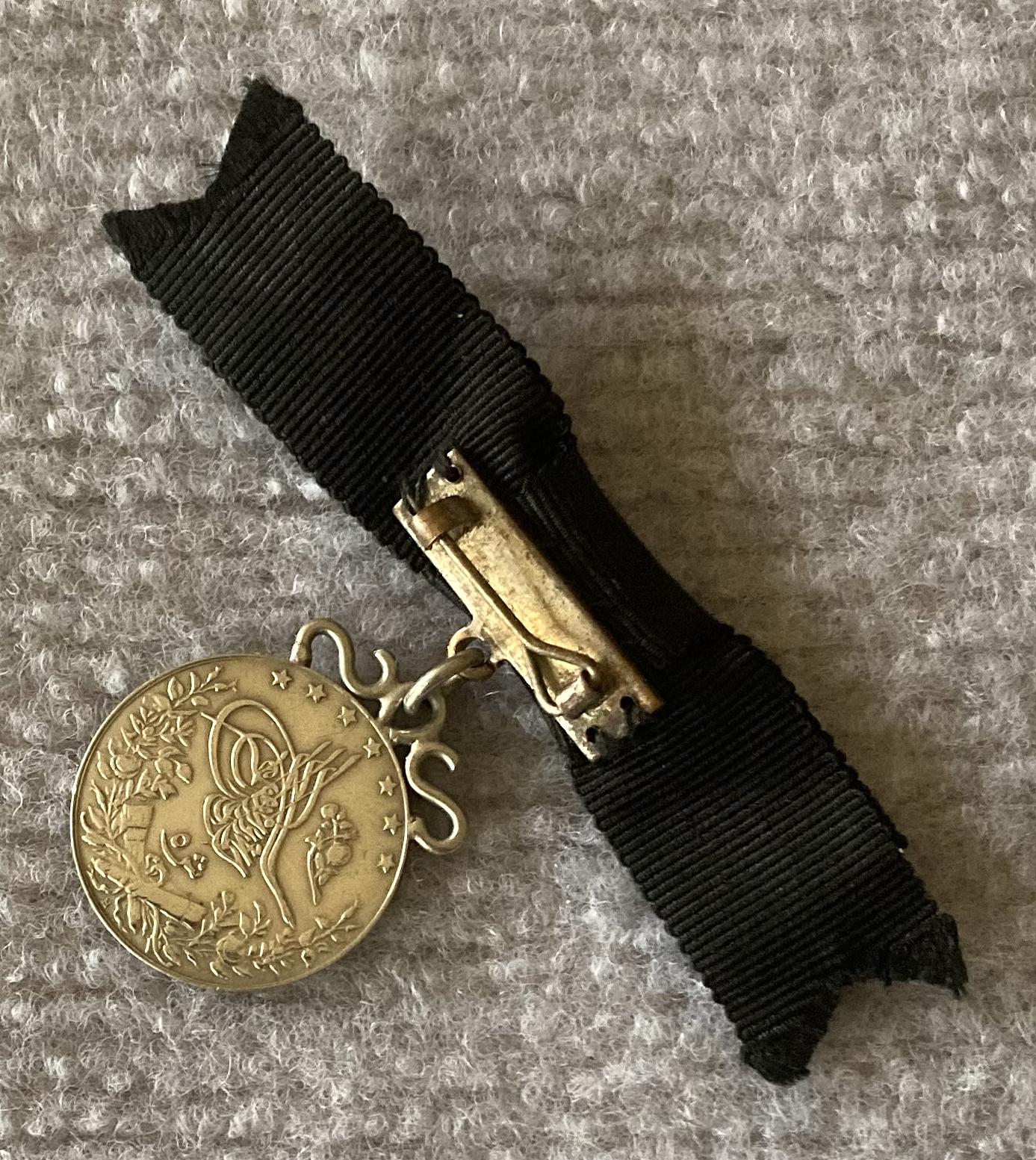
The reverse of the coin retains its original design, which includes a central tughra indicating the name of the Sultan. A series of seven stars appear in an arc at the top of the coin, while below is a wreath of foliage containing a central pair of crossed quivers.
The maker's mark, a letter 'H' (Heaton and Sons of Birmingham, United Kingdom) is under that.
The edge of the coin is reeded.
The coin has a ring attached to the top with two decorative scrolls in the shape of an 'S' in silver on either side. This is then attached to a black ribbon bow with a metal pin clasp on the reverse through which the silver coin ring is threaded.
Trevelyan Ethelbert Bainbridge was born in Gobur, Alexandra in Victoria on 22 November 1891. He was a 23 year old clerk when he enlisted with the 4th Reinforcements of the 6th Battalion A.I.F. in Melbourne on 11 December 1914. His service number was 1880.
He embarked from Melbourne, Victoria, on board HMAT A18 Wiltshire on 13 April 1915. He served at Gallipoli from late May to early August 1915, when he was sent to Malta for medical treatment. He was then sent to London where he joined the Army Pay Corps.
He returned to Australia on board HMAT A37 Barambah on 8 April 1917 and was discharged for family reasons.
Two of Trevelyan's brothers also served - Joseph Stanley (service number 166, 6th Battalion) who was killed in action at Cape Helles, Dardanelles in May 1915, and Captain Garnet Surrey Bainbridge (4th Battalion) who returned to Australia in April 1919.
The coin was manufactured during the reign of Sultan Mehmed V, 1909-1918, by Heaton & Sons of Birmingham, UK. However, the identity disc would have been made in Egypt by a local vendor providing souvenirs to the visiting soldiers, and personalised in this case for Trevelyan Ethelbert Bainbridge. Based on his service record, it was made and purchased between May and August 1915,
The suspension of the coin on a ribbon bow could indicate that it was made for a woman to wear, and the black colour may reflect mourning.
Details
Details
On erased side of coin:
"1880
BAINBRIDGE
T.E.
6
A.I.F."
Other items from Recollections of War
-
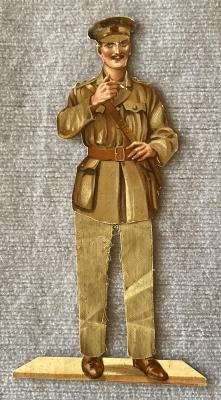
WWI era paper doll of British Army Officer made from card and cloth
-
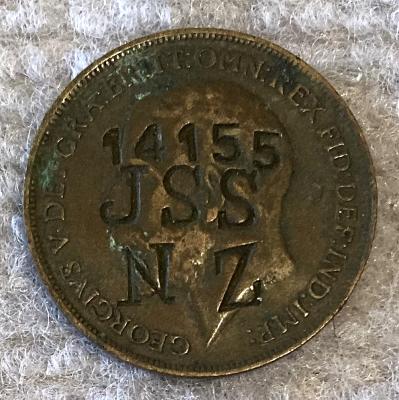
WWI identity disc made from a coin for John Stephen Shimmin, N.Z.E.F.
-
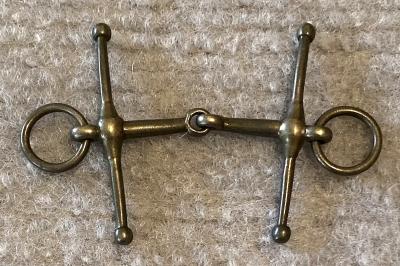
Miniature metal full cheek, loose ring, snaffle horse bridle bit
-
Welcome Home presentation medal from the Citizens of Lidcombe, 1919
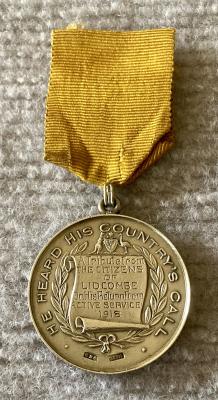
-
Miniature hand tinted portrait of WWI Australian soldier in silver and gold frame
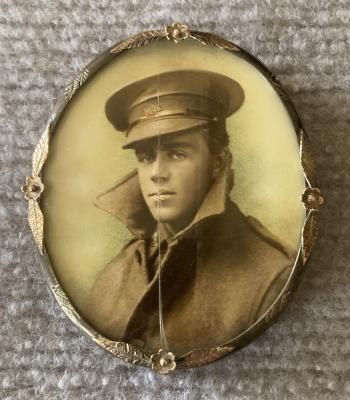
-
Sterling silver pendant or fob named to Lieutenant T. Walker, 1915
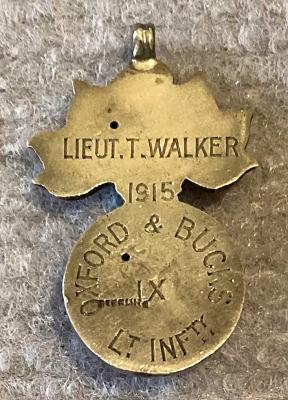
-
'Lest we forget ANZAC' tie or lapel pin
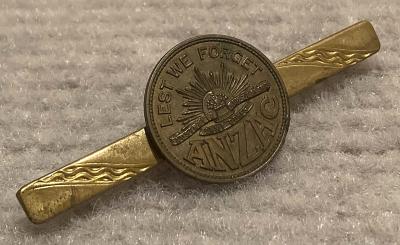
-
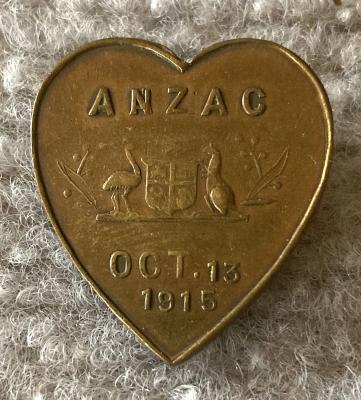
Heart-shaped sweetheart brooch sold to raise funds for wounded soldiers on first Anzac Day - 13th October 1915
-
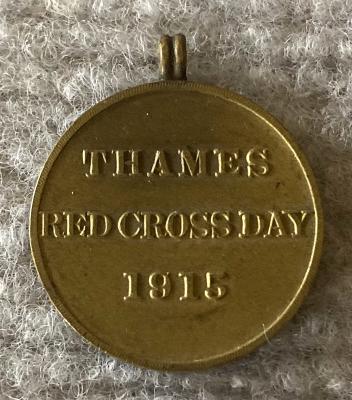
Fundraising medallion sold to support Thames Red Cross Day - 1915
-
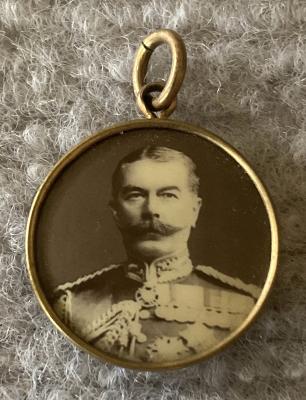
World War One era double-sided photographic pendant locket - Lord Kitchener and General French
-
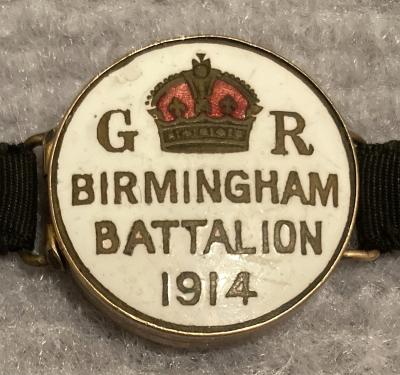
Birmingham Battalion lapel badge converted to photo locket
-
1921 New Zealand silver fern sweetheart brooch
Scan this QR code to open this page on your phone ->
