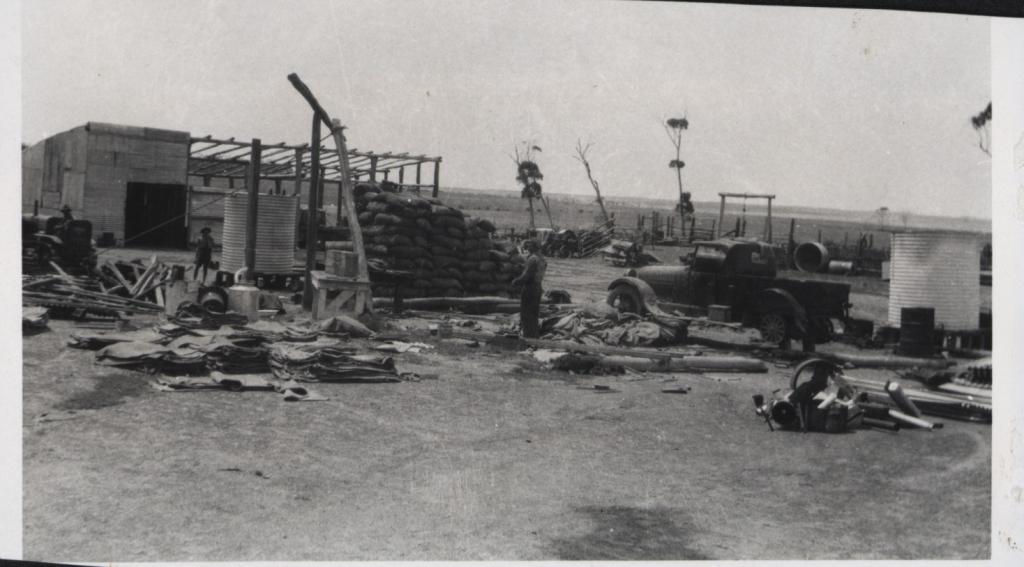
FARMYARD SCENE
1935 - 1945Black & white photo of farm shed and yard. Partly built/demolished buildings in background. Tracks middle far left. Boy standing near tank on stand (low) various lengths of timber on ground near piles of wheat bags. Stack of wheat in bags in middle of photo. Man standing in front of stack - utility to right of man. Tank on low stand on far right - various piles of assorted material laying on the ground. Three spindly trees at fence line.
The landscape shown here looks similar to the scenes shown in some other photographs in the Shire of Toodyay's museum collection.
They were donated by Peter Salvaire and are believed to be his Manmanning property in the Dowerin Shire. (inc. 2001.1252, 2001.1675 and 2001.1703)
Details
Details
Based on the vehicle and other visual markers in the scene, this photograph was most likely taken during the 1930s or 1940s.
1. The Truck and the WA "Lifespan" Effect
• Imported Chassis: In the late 1920s and early 1930s, American truck chassis (like the Dodge Brothers 1.5-ton variants or Ford Model AAs) were imported into Australia as bare chassis to avoid high import tariffs. They were then fitted with locally constructed wooden utility beds or "buckboard" trays specifically tailored for handling grain bags or wool bales.
• Extended Utility: Because of Western Australia's sheer geographical isolation and the crushing economic impact of the Great Depression, regional farmers and pastoralists famously kept machinery running indefinitely. A late-1920s truck would routinely be patched up, modified (such as removing hood panels to handle the brutal WA summer heat), and kept in heavy service well into the World War II era.
2. Iconic Western Australian Pastoral Infrastructure
• Wheatbelt or Murchison Indicators: The massive, neat stack of burlap bags indicates a major bag-stacked grain harvest (typical of the WA Wheatbelt before bulk silos dominated) or wool bales from a northern/goldfields pastoral station.
• Water Infrastructure: The presence of corrugated iron water tanks is the ultimate signature of rural WA. Because groundwater in large stretches of the state is notoriously hypersaline, rainwater collection via corrugated iron tanks hooked up to timber homestead roofs or shearing sheds was the literal lifeblood of these stations. The weathering on these structures suggests the farm has been established for a number of years.
Final Timeline Summary
Because the truck shows heavy agricultural wear, the building is adapting, and the photo is capturing an era before the post-war mechanical boom of the late 1940s, the picture captures a classic snapshot of WA rural life between 1935 and 1945.
Related Objects
Related Objects
Other items from Shire of Toodyay
-
WHEAT CROP
-
LARGE TREE BEING UPROOTED

-
VICTORY PARADE FIRE BRIGADE
-
VICTORY DAY MARCH

-
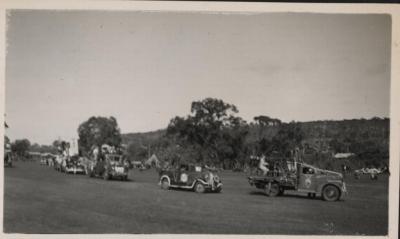
VICTORY DAY FLOATS
-
VICTORY DAY FLOATS
-
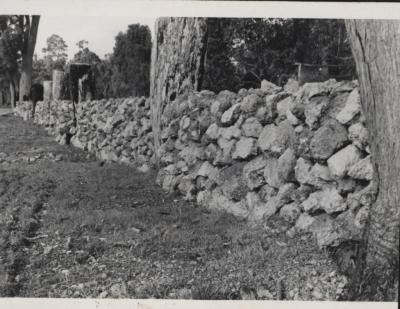
DRY STONE WALL UNKNOWN LOCATION
-
POST OFFICE DECORATED FOR VICTORY DAY

-
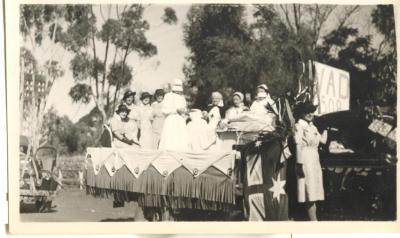
V.A.D. FLOAT IN VICTORY DAY PARADE
-
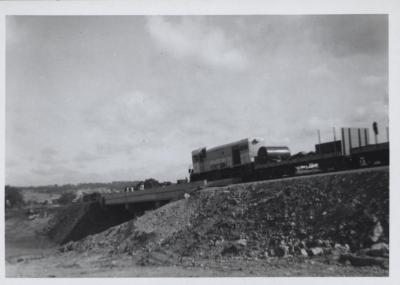
BUILDING STANDARD GAUGE RAILWAY LINE, TOODYAY 1964
-
STANDARD GAUGE RAILWAY LINE DOZER AND SCRAPER, TOODYAY 1964

-
SLEEPER LAYING MACHINE - STANDARD GAUGE RAILWAY, TOODYAY 1964