
WWI fundraising ribbon - Lavender Day, ANZAC Club and Huts
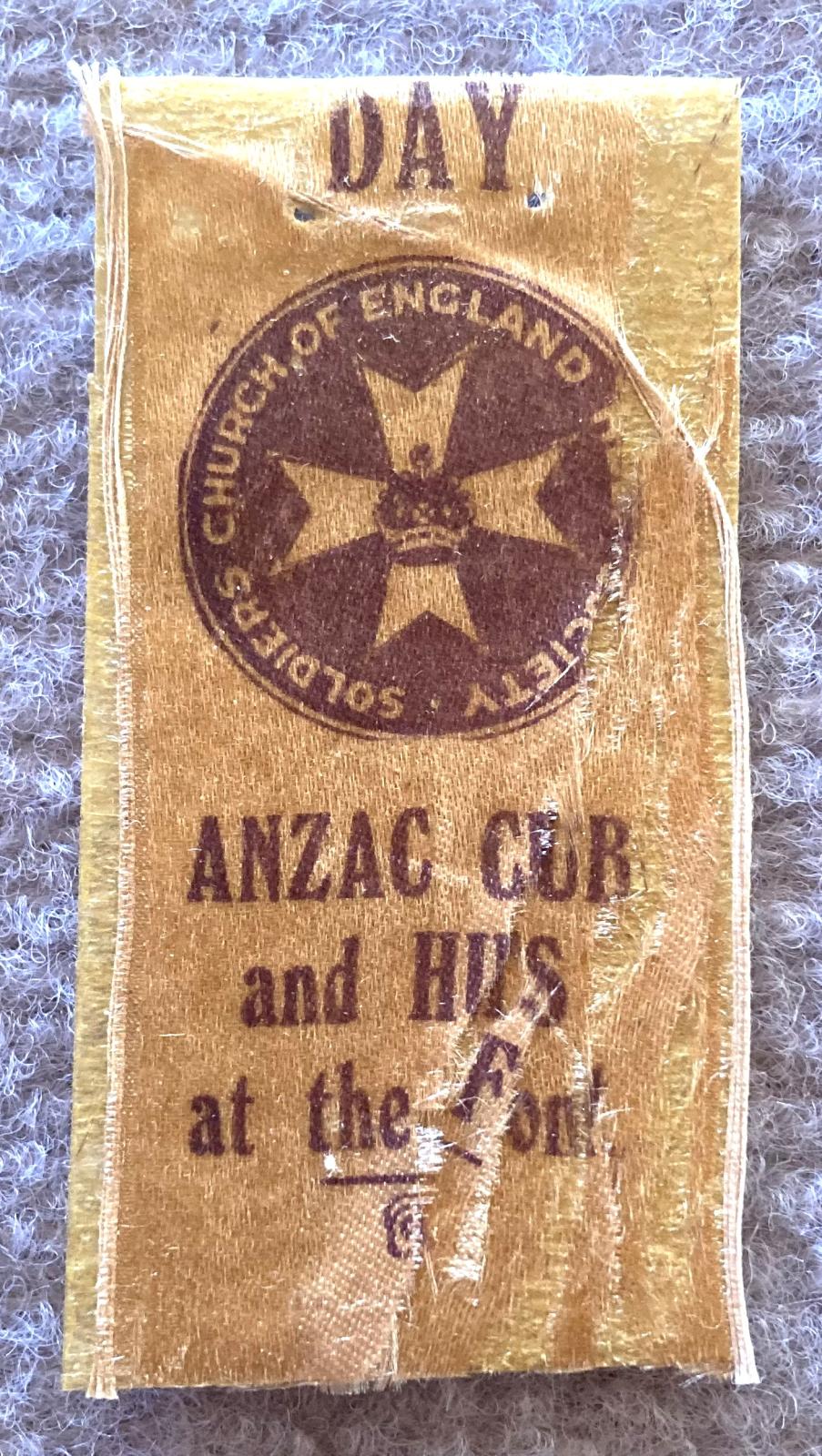
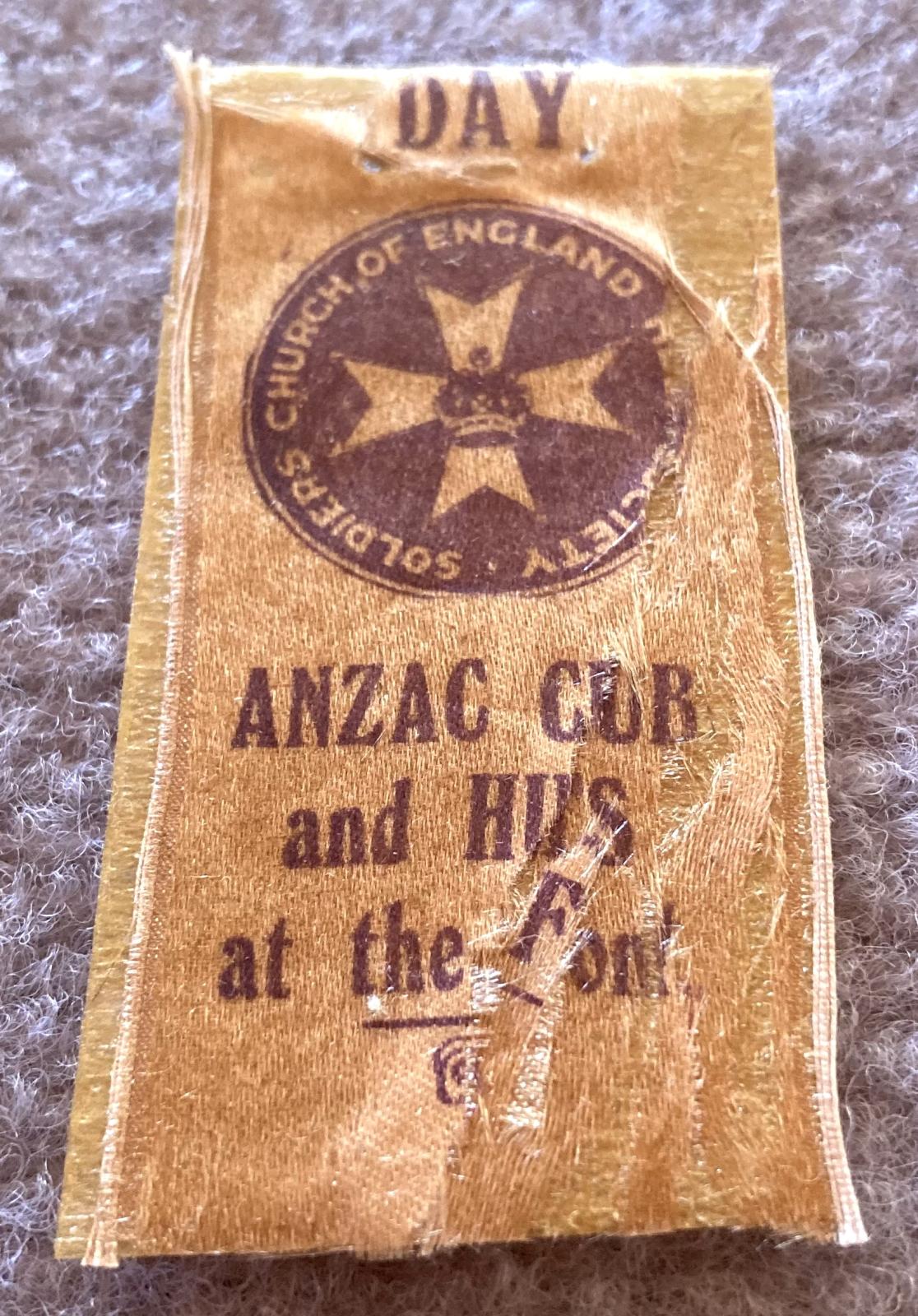
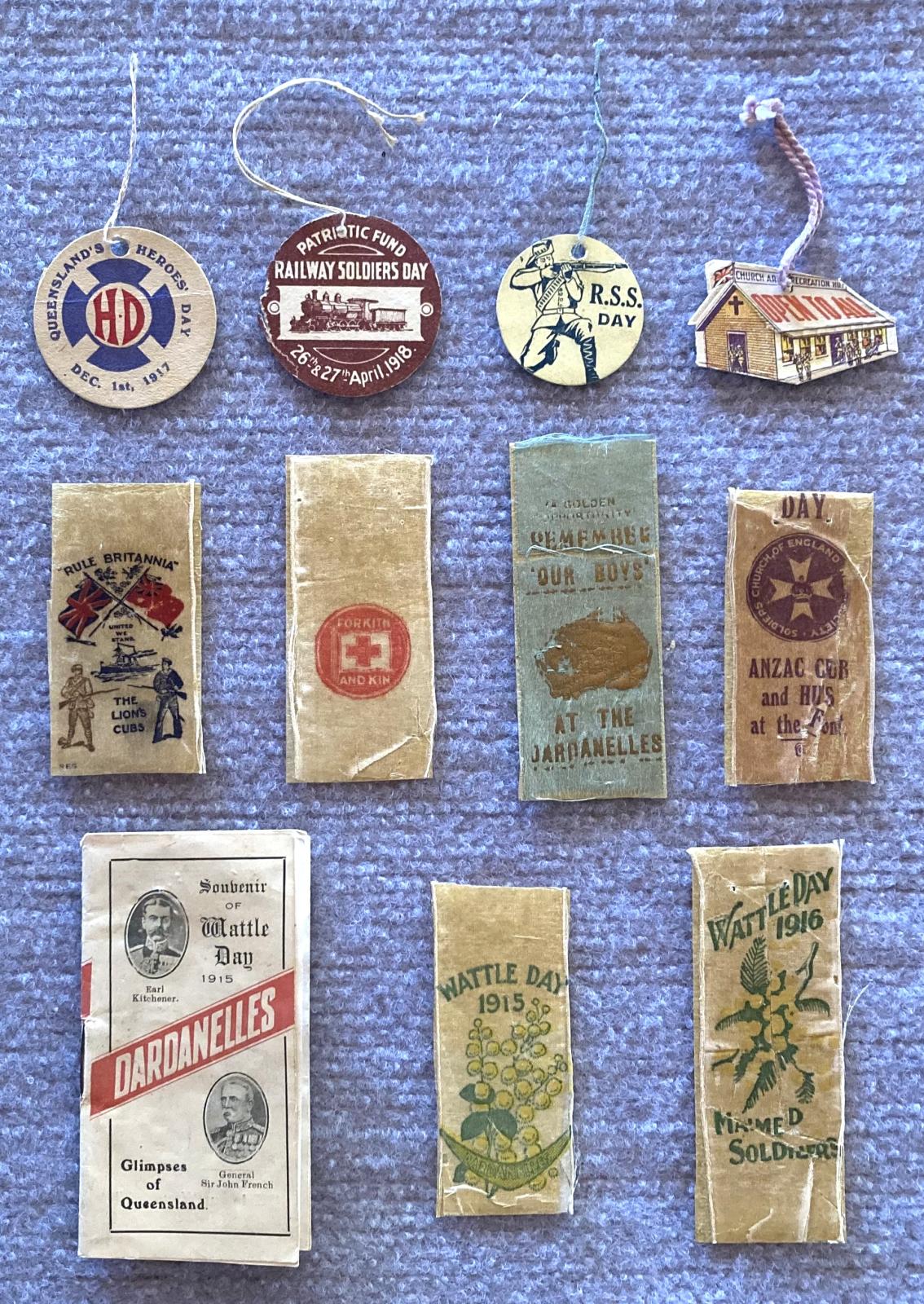
c. 1916World War One era section of cream coloured silk ribbon cut from a longer roll. It has been glued to a paper backing for preservation.
At the top is printed the word 'Day' in purple, under which a depiction of a purple badge with a Maltese cross and a central crown appears. Around the rim of the badge, 'Soldiers Church of England Help Society' is printed in cream.
Below the badge is written 'ANZAC CLUB and HUTS at the Front'.
There is significant creasing of the ribbon which has distorted the words and the top section of the ribbon has been cut off. It should read 'Lavender Day'..
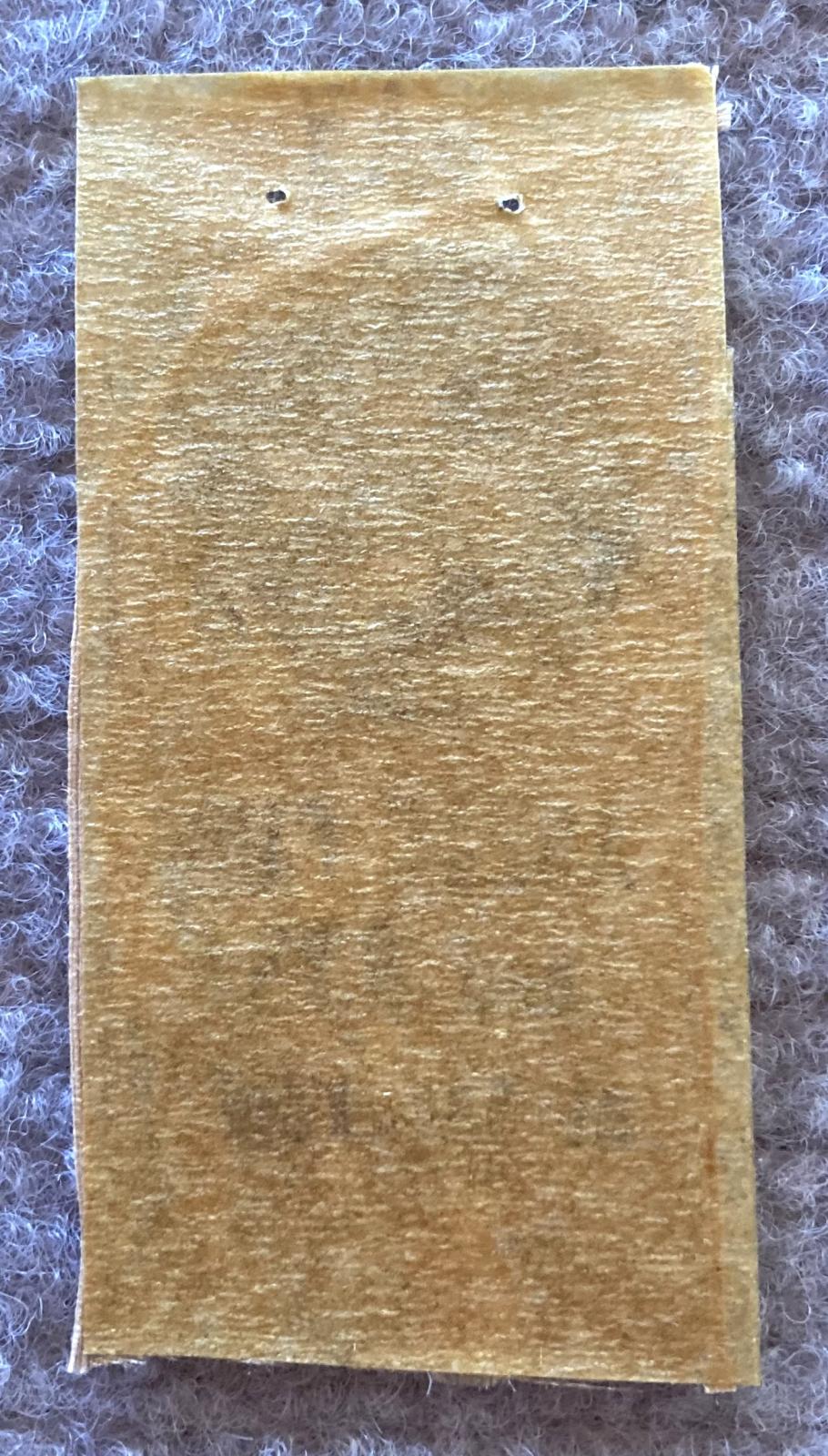
The reverse is plain.
This fundraising ribbon is one of a number of patriotic items in the collection produced during World War One to raise money and bolster morale on the home front.
It was produced to support Lavender Day, a charity set up by the Church of England to provide clubs, huts, tents and comforts to Australian soldiers serving overseas. The Australian Soldiers' Club in Cairo, for example, provided accommodation, games, music, reading material, whist drives and socials in addition to cigarettes and other comforts.
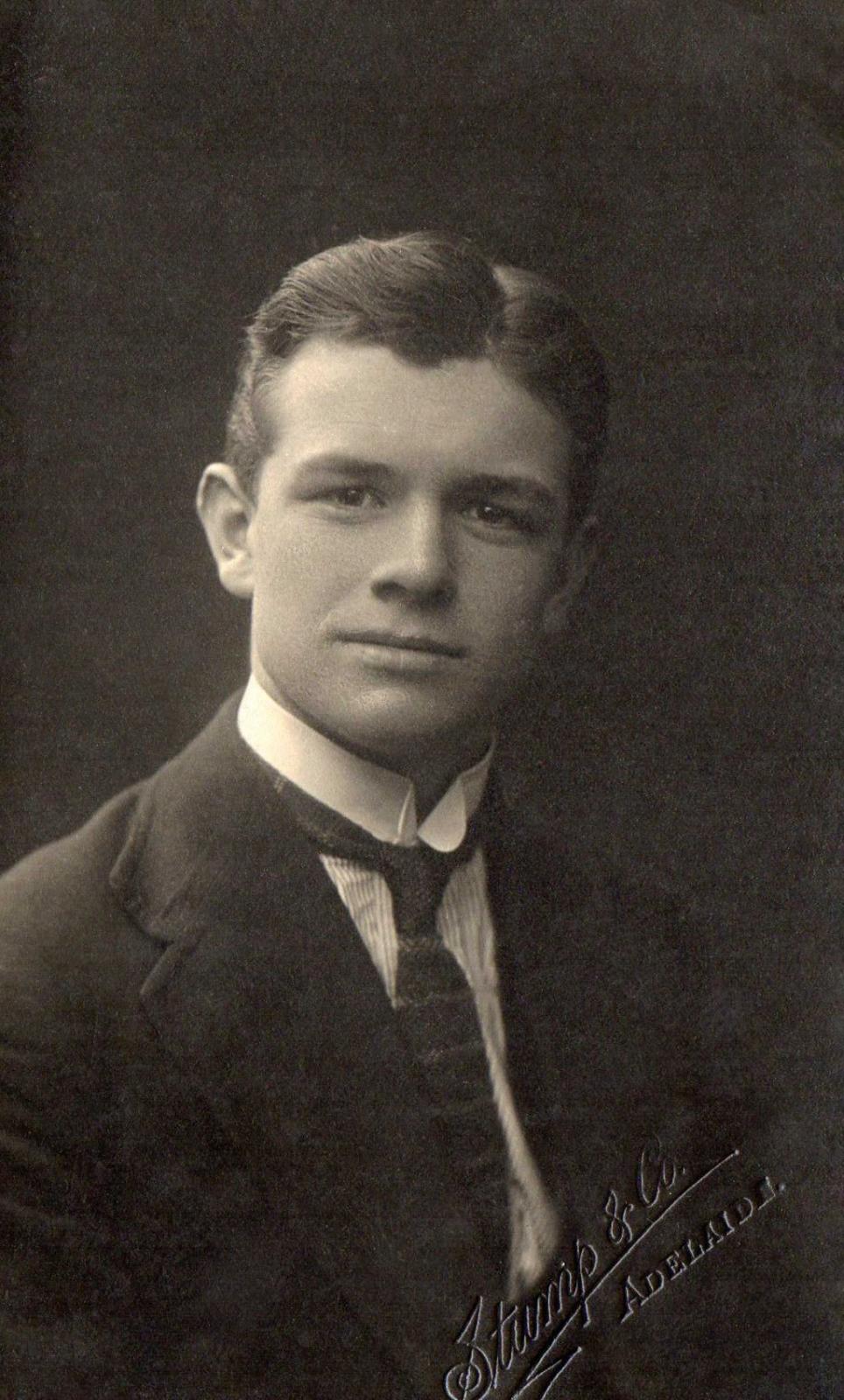
Philip Roy Dennett (known as Roy) was born in Prospect, South Australia on 30 May 1897. He was an 18 year old postal assistant when he enlisted with the 29th Battery of the 8th Field Artillery Brigade, A.I.F. on 21 September 1915. His service number was 19629.
He embarked from Melbourne, Victoria, on board HMAT A7 Medic on 20 May 1916 and served in France as a Gunner and a Driver.
He returned to Australia aboard HMAS Australia in June 1919 and as discharged a month later.
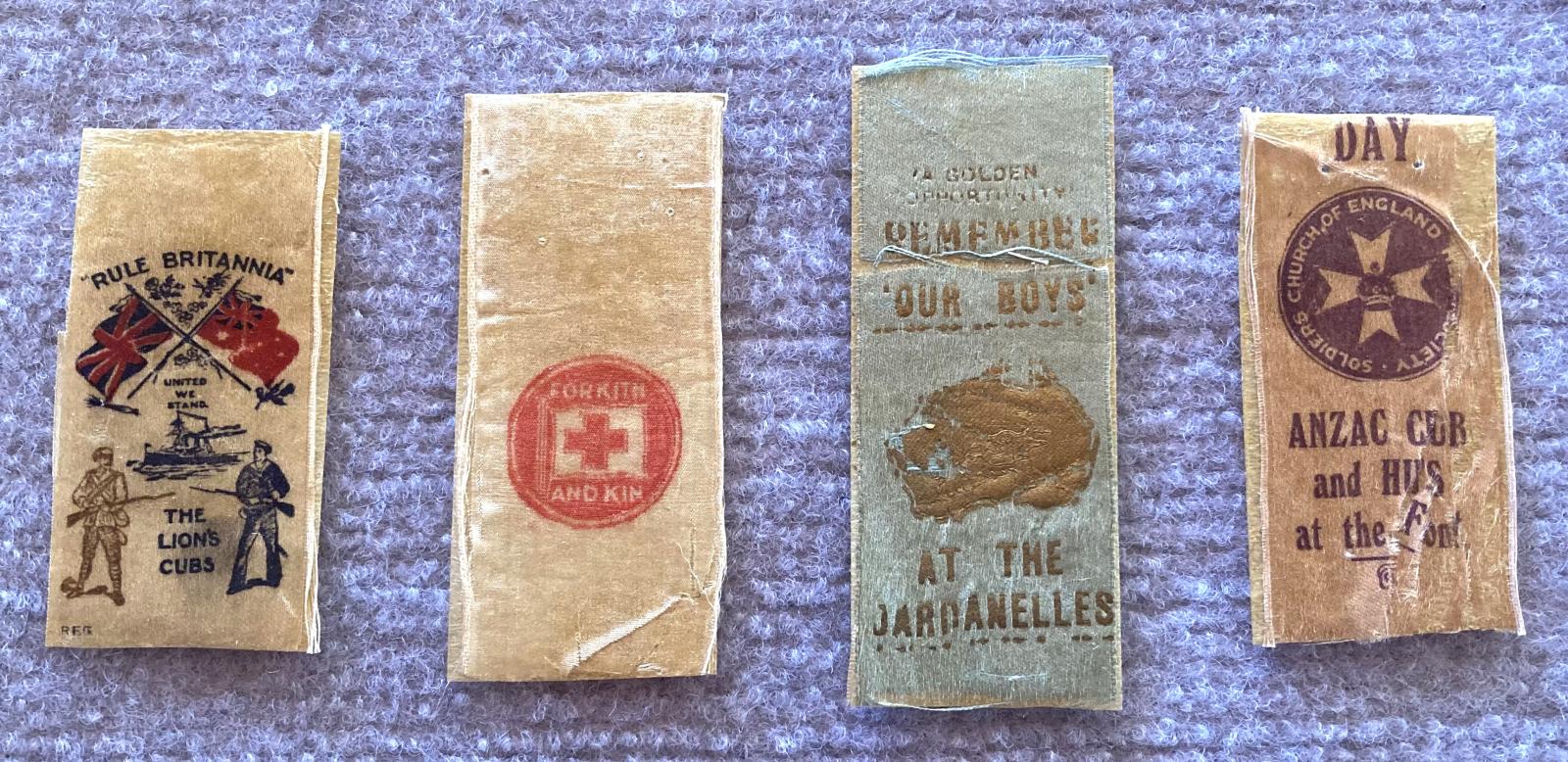
This ribbon is one from a group of 4 tags, 6 ribbons and a souvenir booklet dating from World War One which were purchased together. They were all attached to a cardboard backing protected with plastic. Written on the cardboard was: '19629 GNR P.R. DENNETT, 8 F.A.B. A.I.F.'
Roy Dennett would have been serving overseas when many of the ribbons and tags were produced and purchased, so they were possibly bought and saved by a family member. This would have been seen as supporting the war effort generally and Roy more specifically.
They are rare survivors. The ribbons in particular are very delicate and were not designed to last. They are ephemera in the true sense of the word.
The portrait of Roy was obtained from a distant relative and is printed with her permission.
Details
Details
From top to bottom:
"DAY"
On badge:
"SOLDIERS CHURCH OF ENGLAND HELP SOCIETY"
Below badge:
"ANZAC CLUB
and HUTS
at the Front"
Related Objects
Related Objects
Other items from Recollections of War
-
WWI fundraising tag - Queensland's Heroes' Day 1917
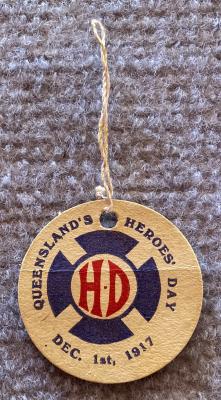
-
WWI fundraising tag - Railway Soldiers Day Patriotic Fund 1918
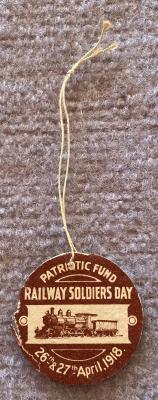
-
WWI fundraising tag - Returned Sailors' and Soldiers' (R.S.S.) Day
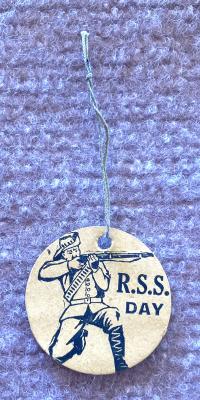
-
WWI fundraising tag - Church Army Recreation Hut
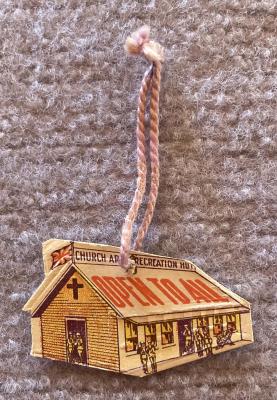
-
'Hospital Day 1918' metal and enamel fundraising brooch
-
'Wattle Day 1918' metal and enamel fundraising brooch
-
'Blind Day' fundraising brooch 1920
-
Silver and gold prize medallion for Boomerang mouth organ contest
-
WWI era double-sided photo pendant featuring sailor and soldier
-
Medallion issued in Albany to celebrate Queen Victoria's Jubilee in 1887
-
Education Department of Western Australia medallion awarded to Irvine McKenzie, Albany 1905
-
Copper memorial plaque commemorating American nurse Jane Delano
Scan this QR code to open this page on your phone ->
