

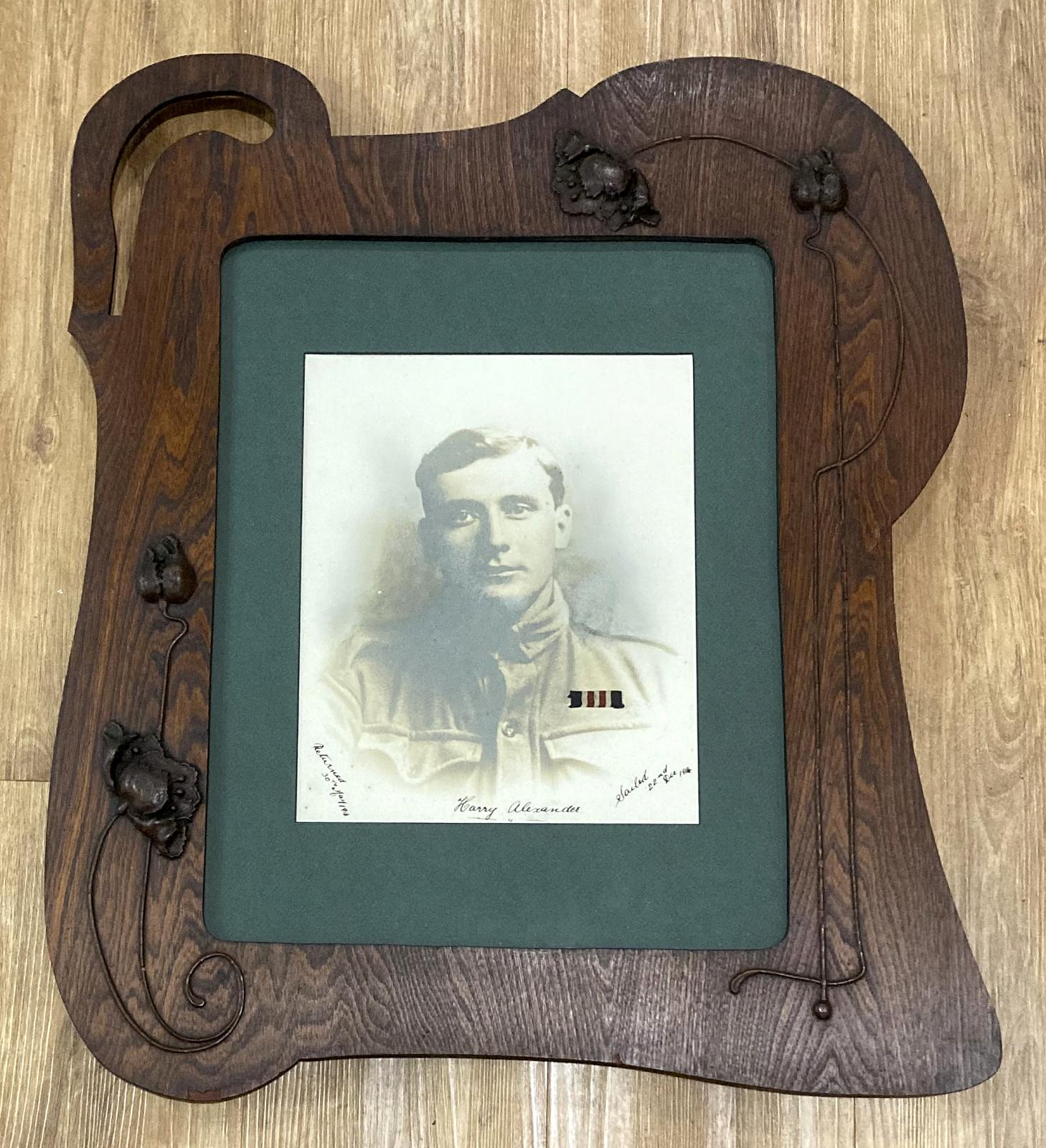
Art Nouveau timber framed portrait of A.I.F. soldier, Harry Alexander M.M.
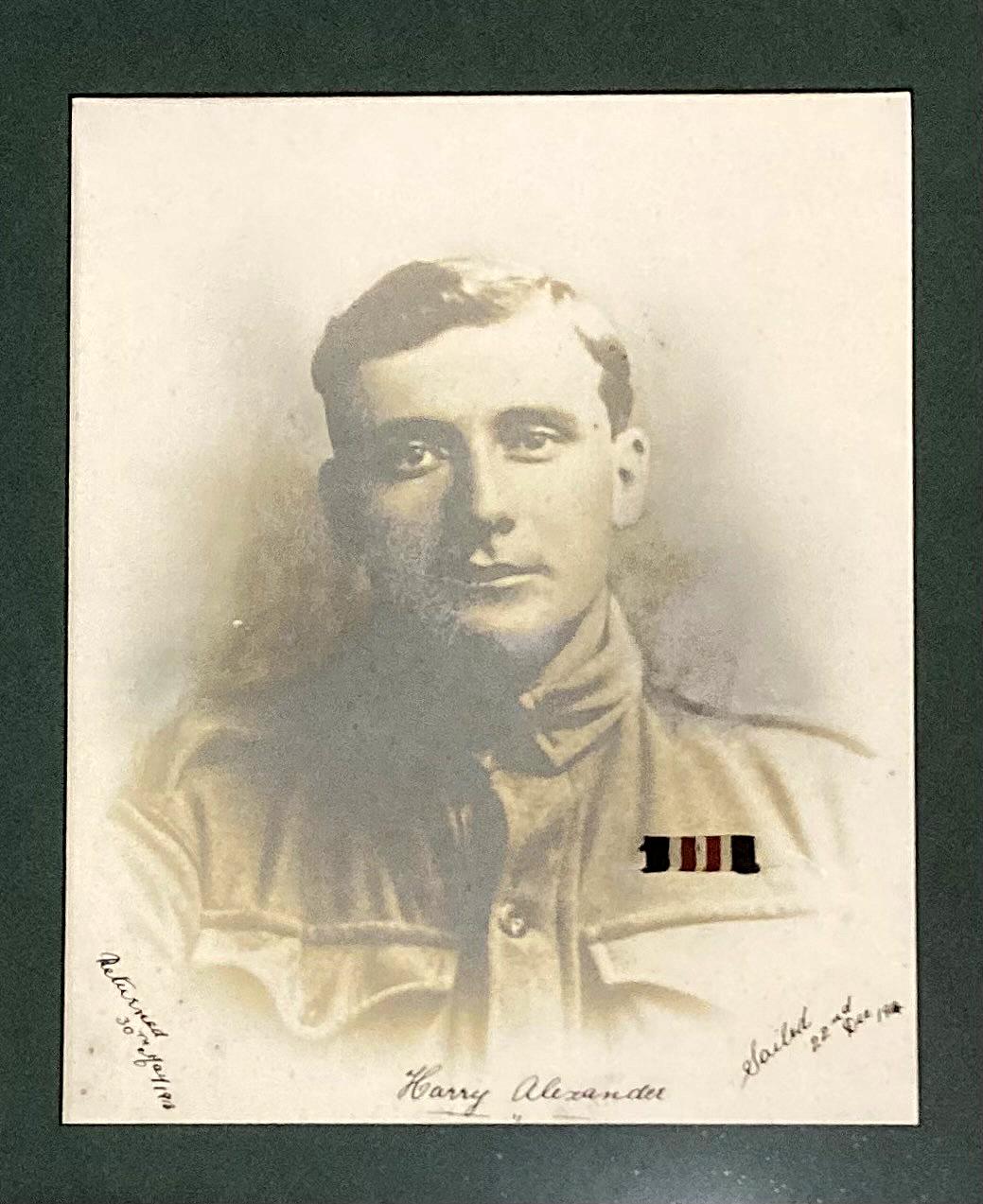
c. 1918Art Nouveau timber framed greyscale/sepia portrait of Australian Imperial Force (A.I.F.) soldier, Lance Corporal Harry Alexander M.M. (Military Medal).
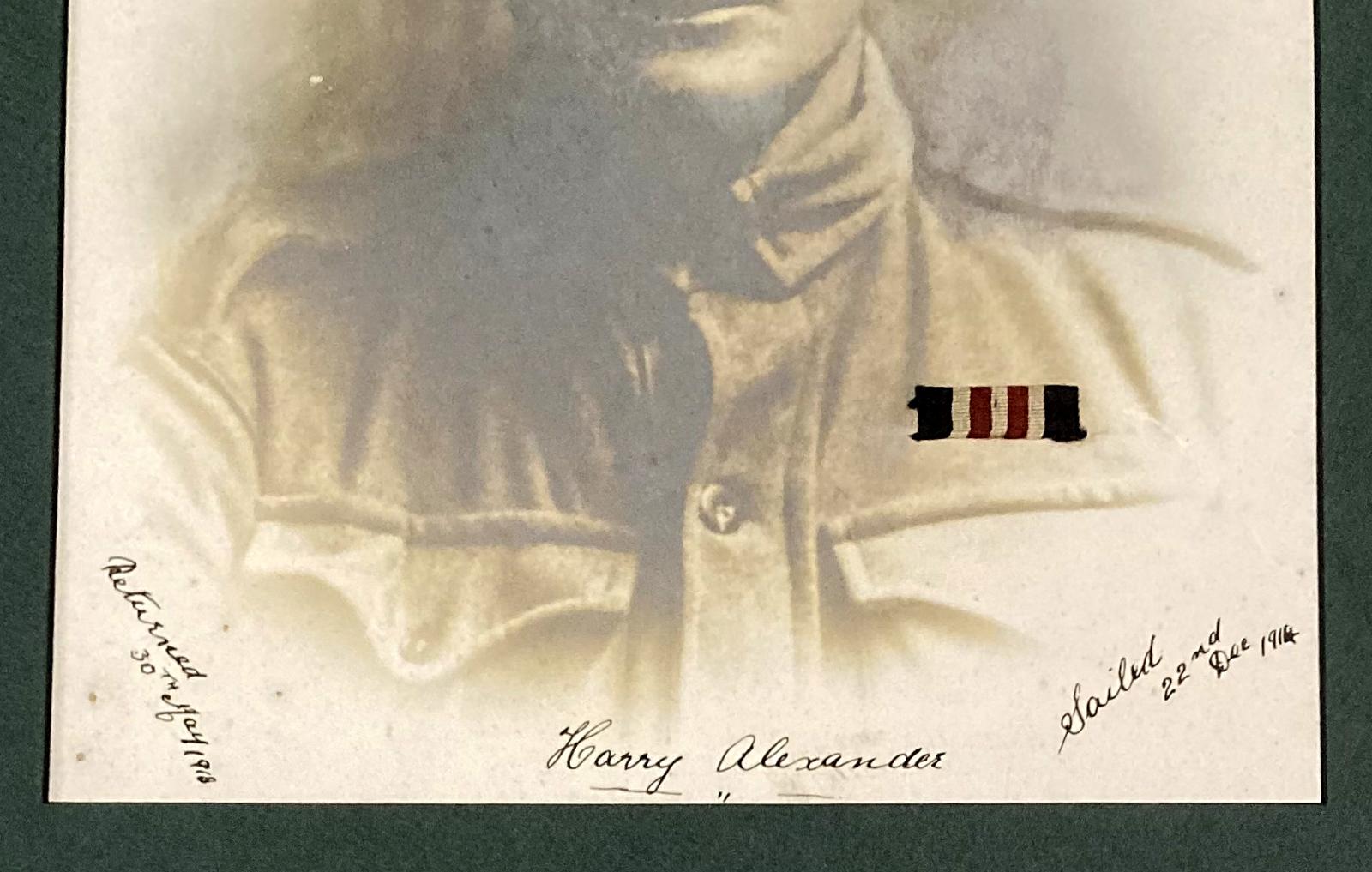
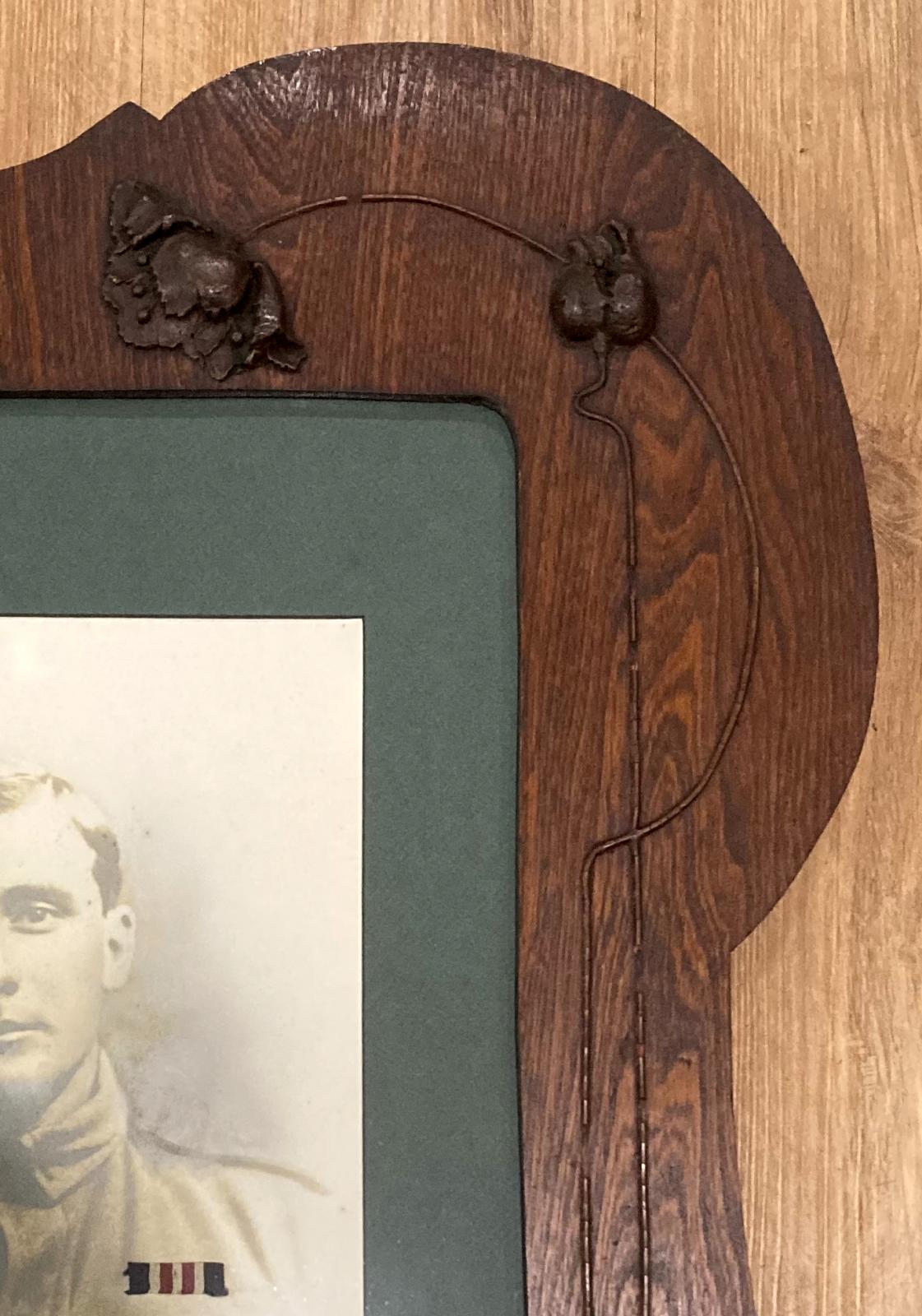
He is wearing his service dress uniform . A small section of red, white and blue ribbon is positioned aove the tunic pocket where his medals would be pinned. This ribbon has come from his Military Medal.
Details about his service including his name and when he departed and returned are written in black at the bottom of the portrait.
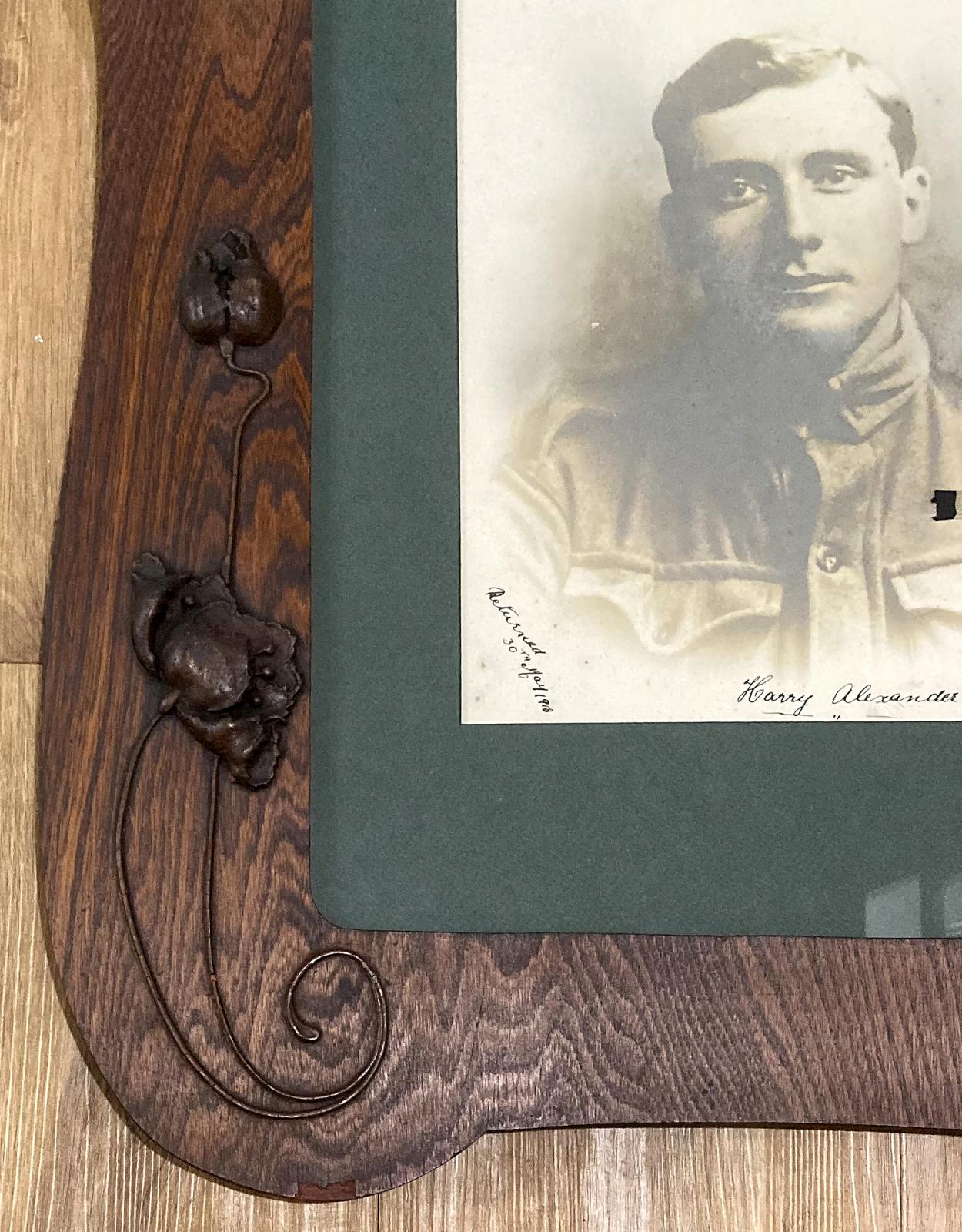
The frame is extremely decorative, featuring a highly figured flat timber background with carved timber flowers, buds and seed pods in relief. The whiplash lines typical of Art Nouveau design extend along each side The frame has a void at the top left and curved, asymmetrical edges.
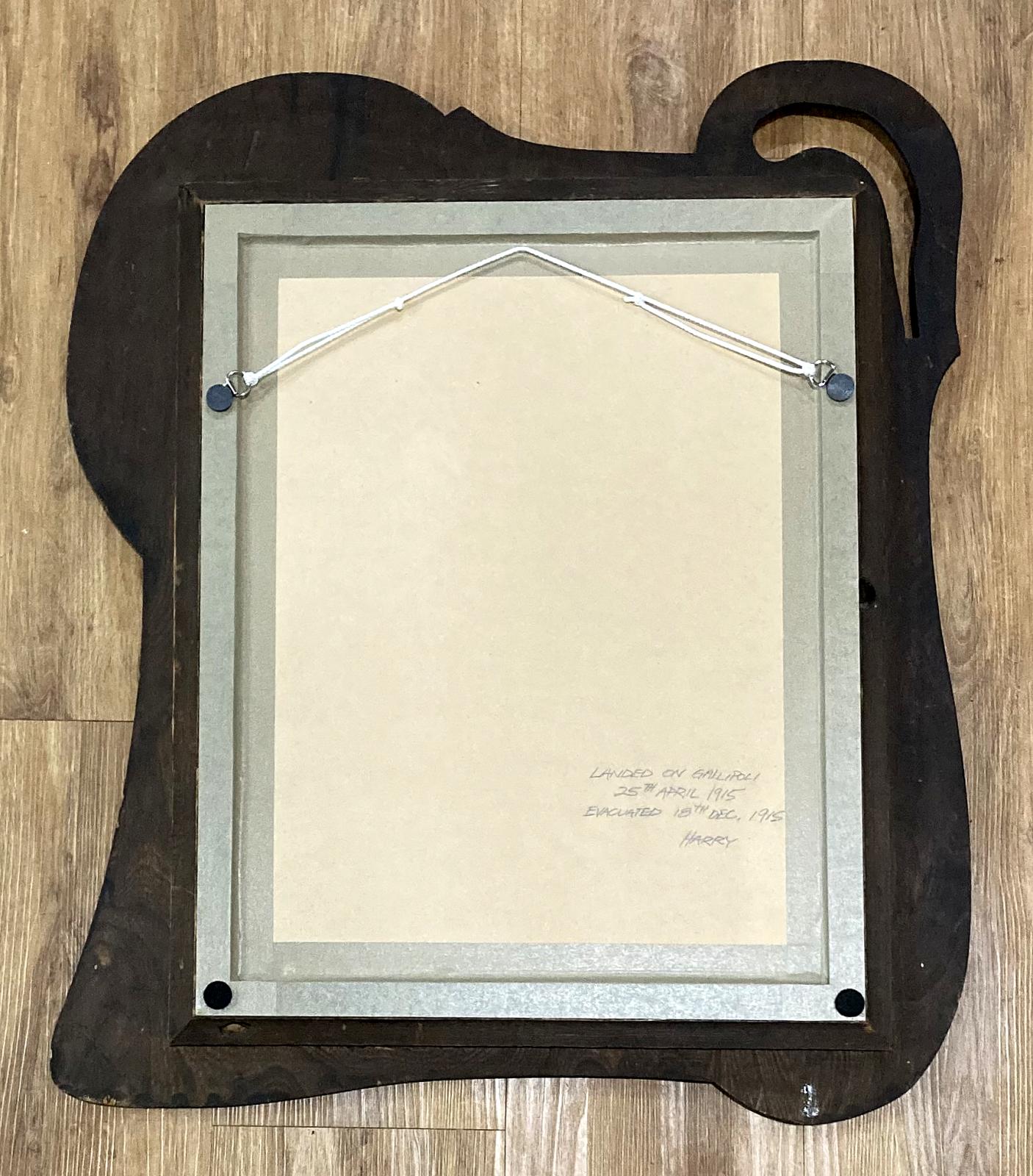
The reverse of the portrait has a card backing held in place by tape, and a white cord attached to two metal clips for hanging. Text transcribed from the back of the portrait inside has been written in the lower right corner.
Henry (Harry) Alexander was born on 11 March 1894 in Waratah, Tasmania. He was a 20 year old mill hand when he enlisted as a Private with 15th Battalion, G Company on 18 September 1914. His service number was 1001.
He embarked from Melbourne, Victoria, on board Transport A40 Ceramic on 22 December 1914.
He served at Gallipoli with the 4th Brigade, 15th Battalion from 25 April 1915 - January 8 1916. He also served in Egypt and the Western Front. He was promoted to Lance Corporal on 30 October 1917.
On 25 February, he took part in an action which earned him the Military Medal.
The citation reads: 'Private (Lance Corporal) Harry Alexander is recommended for great gallantry during an enemy raid near Hollebeke on 25th February 1918. He was one of the garrison of the post which the enemy attempted to raid under cover of a heavy barrage. After the barrage had lifted he was one of the first to jump out and fought with such bravery and coolness that two parties of raiders were driven off leaving a prisoner in our hands.'
Source: 'Commonwealth Gazette' No. 120
Date: 7 August 1918
He joined the staff at A.I.F. Headquarters in London on 30 March 1918. He embarked for Australia on board Transport A30 Borda on 5 April 1918, arriving on 30 May 1918. He was discharged on 21 August 1918.
Given that the Military Medal was not awarded until 1918, the framing of the portrait took place after that date, as it includes a section of the medal ribbon.
The text giving details about his embarkation and return also indicates a date of 1918 or later.
The timber frame is in the Art Nouveau style - design using organic forms, sinuous 'whiplash' curves, and nature-inspired motifs. This frame has the floral embellishments - poppy flowers and seed pods - as well as whiplash curves and asymmetry.
Details
Details
On lower edge of portrait:
"Returned
30th May 1918"
"Harry Alexander"
"Sailed
22 Dec
1914"
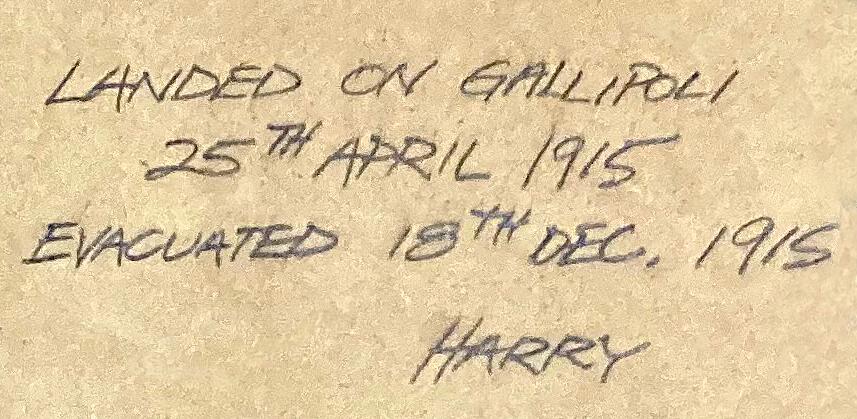
On reverse of portrait:
"LANDED ON GALLIPOLI
25TH APRIL 1915
EVACUATED 18TH DEC, 1915
HARRY"
Other items from Recollections of War
-
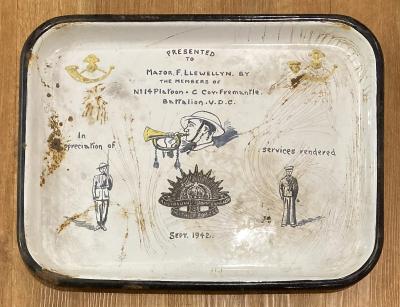
Enamel tray presented to Volunteer Defence Corps (V.D.C.) Major F. Llewellyn
-
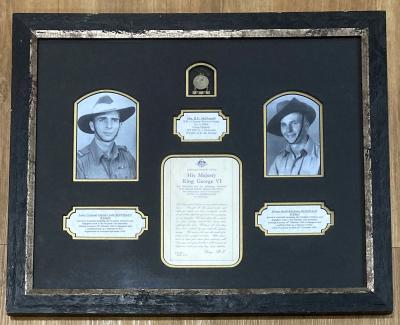
Framed WWII Female Relative's Badge with two stars issued to Beatrice Maud McDonald
-
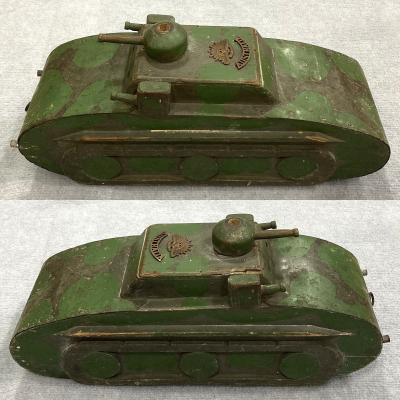
Metal and wood hand made toy tank
-
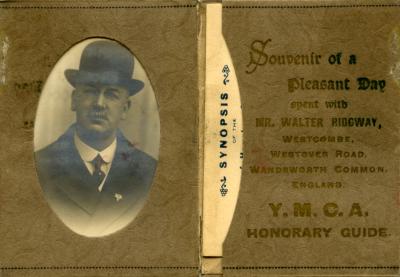
Y.M.C.A. Souvenir of 'My Visit to England During the Great War 1914-1918'
-
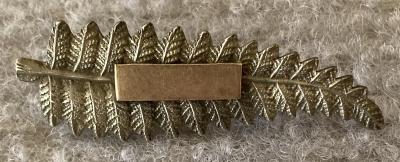
WWI era NZ silver fern sweetheart brooch with name plate
-
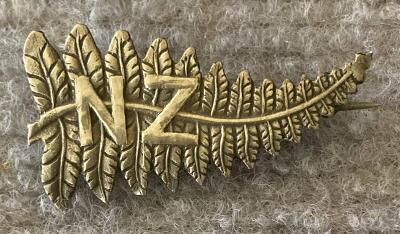
WWI era NZ silver fern sweetheart brooch - large
-
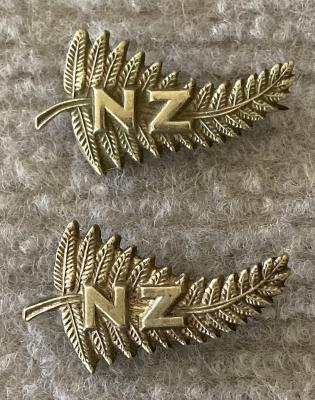
WWI era NZ silver fern sweetheart brooches - small
-
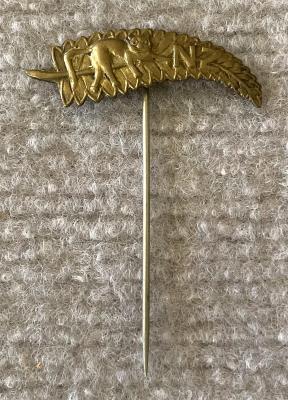
WWI era NZ silver fern sweetheart pin with 'cat' motif
-
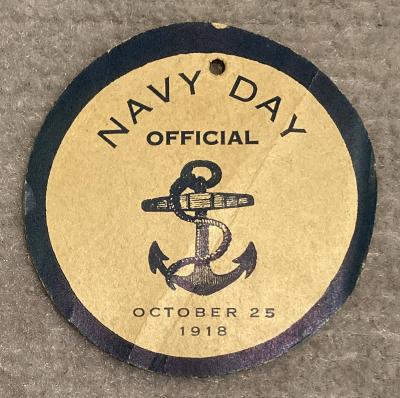
Navy Day 1918 Official fundraising collector's badge
-
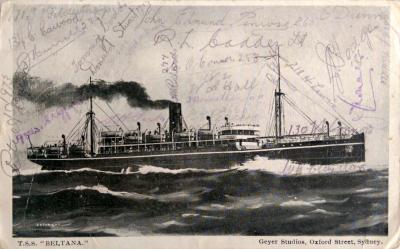
Signed postcard of WWI transport ship HMAT A72 Beltana
-
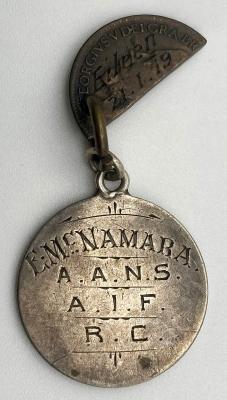
Identity disc and keepsake made from coins relating to A.A.N.S. nurse Eileen McNamara
-
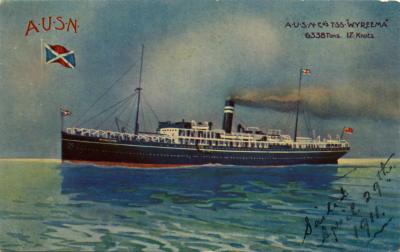
Colour postcard of the T.S.S. Wyreema - 1911
Scan this QR code to open this page on your phone ->
