

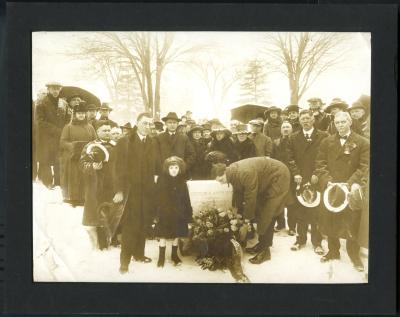
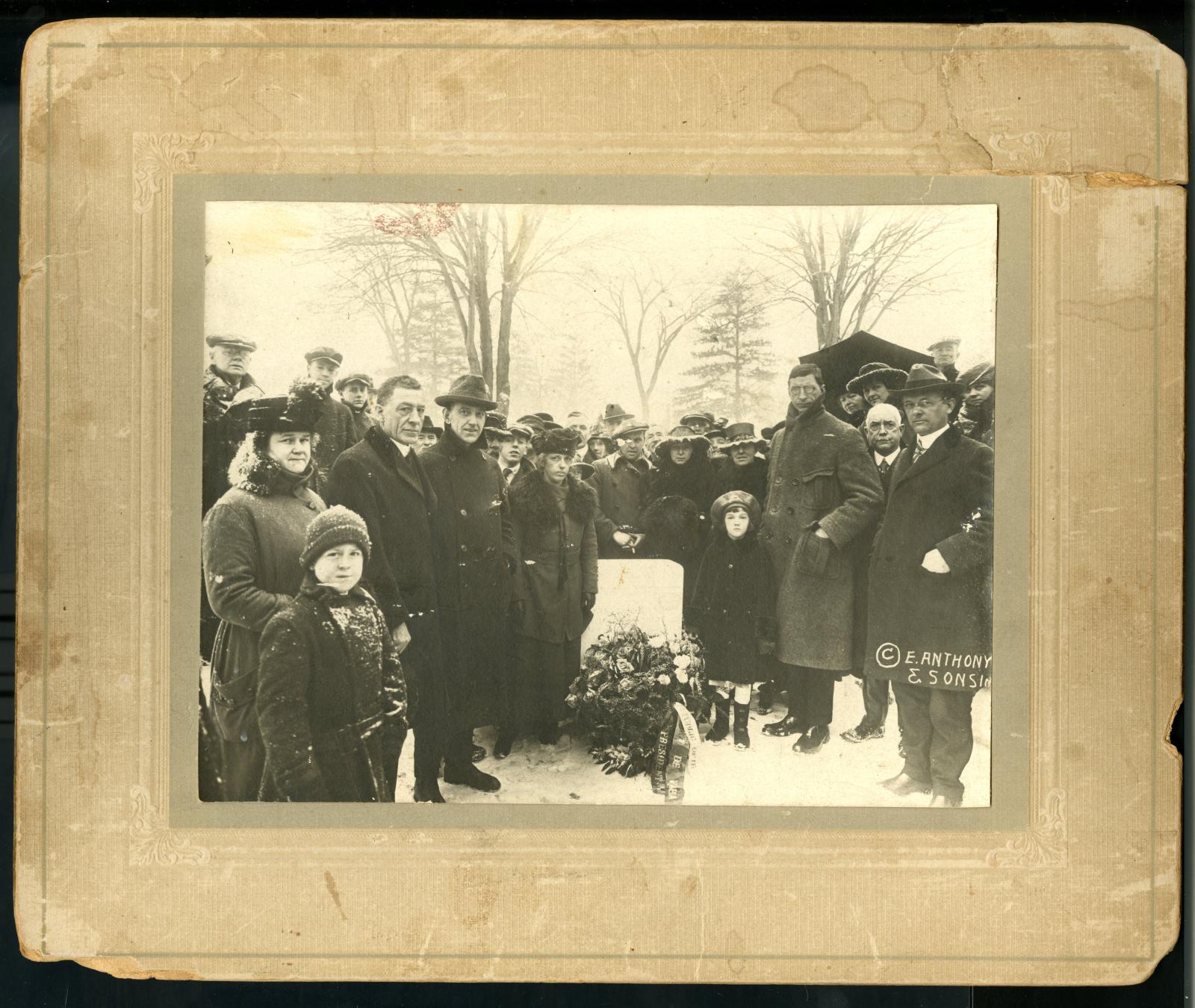
Photograph at the grave of Captain George Anthony
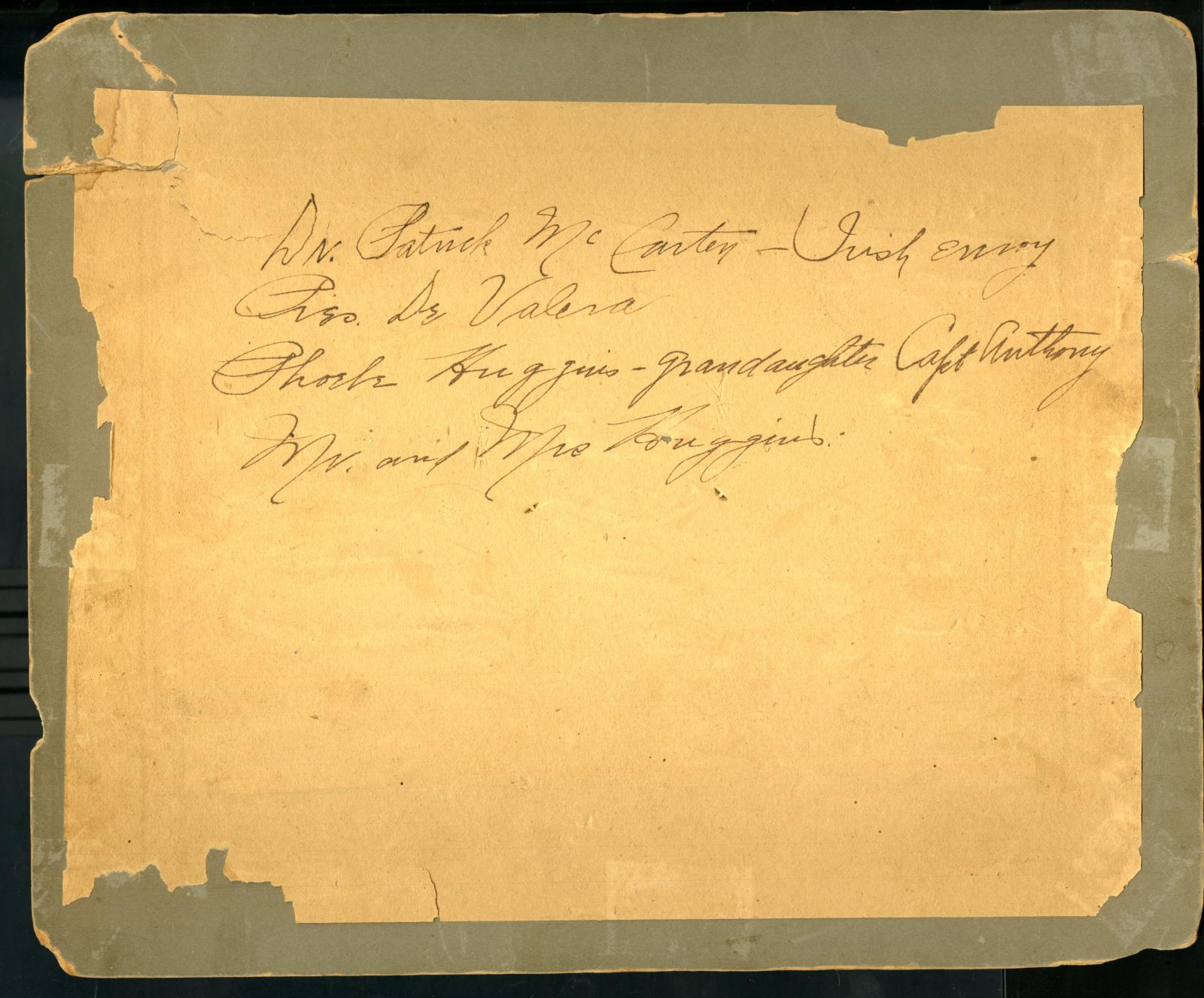
c. 1913Digital only scan of a black and white, landscape photograph at the grave of Captain George Anthony. The photograph depicts a large crowd of people standing in the snow at the gravesite of Captain George Anthony. Standing to the right of the headstone is a young girl in a dark dress, hat and boots, identified as Captain Anthony's granddaughter, and mother of the donor, Pheobe Huggins. The headstone is illegible. The photograph sits within in a cream-coloured cardboard frame. On the reverse of the photograph, handwritten in black ink, is, 'Dr Patrick Mc Carter[…] Irish Envoy/ […] De Valera/ Pheobe Huggins - granddaughter of Capt. Anothony/ Mr and Mrs Huggins'. The paper frame is in poor condition with staining and tears present. The photograph itself has yellow and red marks in the top left-hand corner.
This is a scan of an original photograph. It was donated by James Ryan, the great-grandson of George Anthony, who was Captain of the Catalpa during the Fenian rescue. The small girl standing next to the grave is Pheobe Huggins, the granddaughter of Captain Anthony, and mother of the donor. James Ryan visited Fremantle in April 2026 to partake in the 150th anniversary celebrations of the Catalpa rescue, held in Fremantle, Rockingham and Bunbury. For this visit he bought with him a selection of his family archives, including documents related to the Catalpa and Captain Anthony. During this visit James met with Fremantle Prison staff and kindly allowed us to scan these documents and accession these scans into the Prison’s collection. The physical documents remain in America with James Ryan.
Details
Details
George Anthony was the Captain of the whaling vessel Catalpa involved in the rescue of six Fenian convicts from Fremantle in 1876. He was born in New Bedford on 23 August 1843 and after finishing school, went to sea working in the whaling industry. He had served on the Bark Draco from 1858-1871 as sixth mate, third mate, and later first mate. He also served as first mate on the Schooner Cohannet from 1872-73. He attained the rank of Captain in his early thirties before captaining the Catalpa at the age of 32.
The Fenian movement or Irish Republican Brotherhood was a secret political society resisting British rule in Ireland in the 1860s. Several Fenians who had infiltrated the British military services were discovered, arrested and sentenced to transportation to Australia. In 1868 the convict ship Hougoumont arrived at Fremantle carrying 280 convicts, including 62 Fenians. Of this number 17 had been serving in the British Army and were classified as ‘military’, one of them was John Boyle O’Reilly. This was the last convict transport ship to arrive in Australia.
Two rounds of pardons in 1869 and 1871 saw most of the Fenians released. In 1874 a letter written by Fenian James Wilson was smuggled out of Fremantle Prison and sent to John Devoy in New York. Devoy, another Irish journalist and Fenian living in exile in the United States, discussed the Fenians still incarcerated in Fremantle Prison with John Boyle O’Reilly, as well as members of the American branches of Irish republican groups, and between them they plotted to rescue the six remaining prisoners. A whaling ship, the Catalpa, was purchased and in April 1875 it sailed from Massachusetts bound for Western Australia. Captained by George Anthony and crewed by 22 sailors, most of whom did not know their true mission, the Catalpa took eleven months to reach Australia. Meanwhile two undercover Fenian agents, John Breslin and Tom Desmond, arrived in Fremantle in September 1875. Breslin masqueraded as a wealthy American businessman. He was even given a personal tour of the Convict Establishment. Desmond took a job as a wheelwright, making wheels for carriages; he recruited local Irishmen to help with the rescue.
The Catalpa reached Bunbury in March 1876. Captain Anthony and Breslin met to finalise the rescue. Coded messages were sent to the Fenians in the Convict Establishment with the assistance of the same Father Patrick McCabe who had assisted O’Reilly in 1869, and on Easter Monday the rescue plan was put into action. Desmond’s helpers cut the telegraph lines between Fremantle and Perth to hamper communications. The six Fenian prisoners left the Prison in their morning work parties. This was the Easter weekend and coincided with the Perth Regatta on the Swan River and so security was at a minimum. At a prearranged time, the six prisoners slipped away from their work parties on Hampton Road to be met by Breslin and Desmond with two horse-drawn carriages. The carriages raced south to Rockingham where a whaling long boat from the Catalpa was waiting to take them out to the ship, waiting offshore. A local worker saw the convicts as they arrived on the beach and hurried to Fremantle to alert the authorities.
A fierce storm blew in, which prevented the long boat from reaching the Catalpa. Forced to remain in the long boat in rough seas overnight, the Fenians feared for their lives. At first light the Fenians, having endured a night aboard the long boat, once again rowed for the Catalpa, boarded, and the ship set sail. By this time the steamship Georgette, commandeered by Western Australian authorities, was making for the whaler, as was a police cutter (a sailing ship often used by government agencies for speed rather than commercial capacity). The Georgette intercepted the Catalpa but the police demand to board were rejected by the first mate (Captain Anthony was not present) as the vessel was outside the three-mile maritime boundary and had reached international waters. After tailing the Catalpa for several hours, the Georgette was running low on coal and was forced to turn back to Fremantle. The next day, 19 April 1876, the Georgette was dispatched again, this time with a 12-pound cannon mounted to the bow and intercepted the Catalpa again. Demands to heave-to or turn back were ignored, and Captain O’Grady of the Georgette fired a warning shot across the Catalpa’s bow. Captain Anthony indicated the American flag and is said to have brazenly claimed that if the Georgette fired on the Catalpa, it would be firing on America itself. On the Georgette, Captain O’Grady was under orders from the Governor not to engage in hostilities in international waters; so, not wanting to create a diplomatic incident, Captain O’Grady allowed the Catalpa to sail away.
The Catalpa arrived at its home port of New Bedford, south of Boston on 25 August 1876 to a heroes’ welcome. Back in Western Australia the Governor and authorities were severely shamed and a thorough inquiry was held. After returning to America on the Catalpa, Anthony worked as a policeman for 5 years. From 1886 onwards he worked as a customs house boarding inspector at the New Bedford port for more than 25 years. He passed away from pneumonia in 1913 at the age of 69.
More items like this
Other items from Fremantle Prison
-
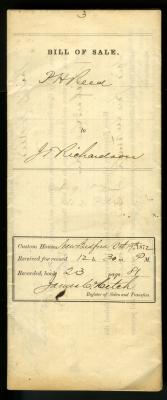
Bill of Sale - 19/10/1872
-
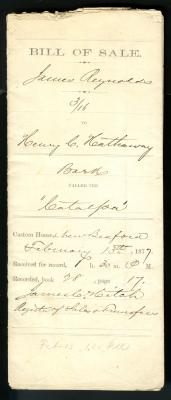
Bill of Sale - 13/02/1877
-
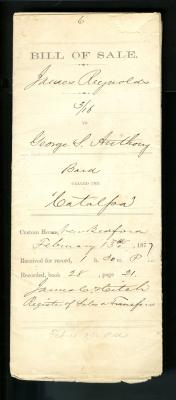
Bill of Sale - 13/02/1877
-
Bill of Sale - 16/03/1875
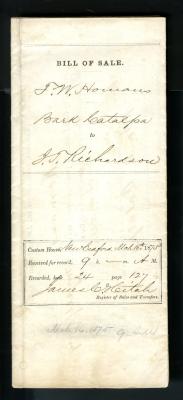
-
Handwritten Draft of Catalpa Book
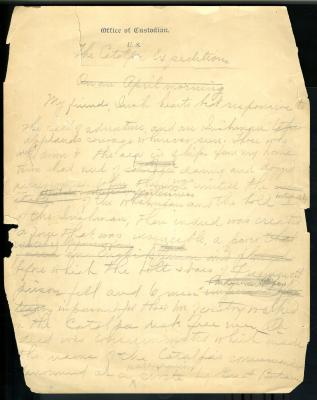
-
Newspaper Clipping
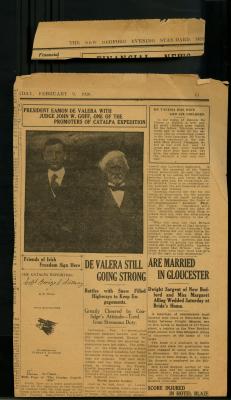
-
Scrapbook
-
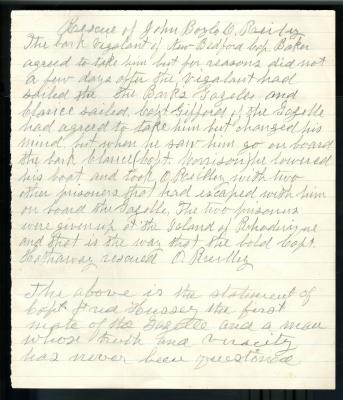
Letter by Fred Hussey
-
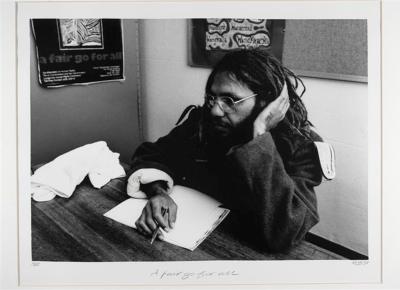
A FAIR GO FOR ALL: EDUCATION, 10.40AM
-
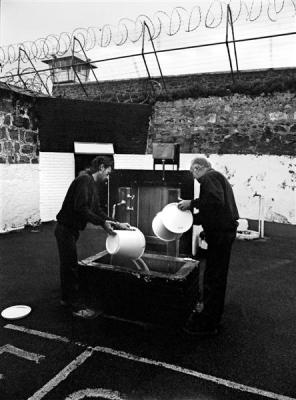
6.55AM MESSING OUT: DIVISION 1, EMPTYING MESS BUCKETS IN YARD SINK
-
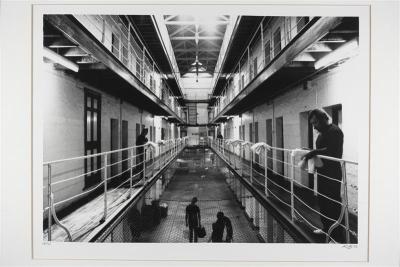
UNTITLED: DIVISION 3, 10.45AM, LANDING LAUNDRY
-
UNTITLED: INFORMATION CENTRE, 12.00PM, IN/OUT TRAYS
Scan this QR code to open this page on your phone ->
