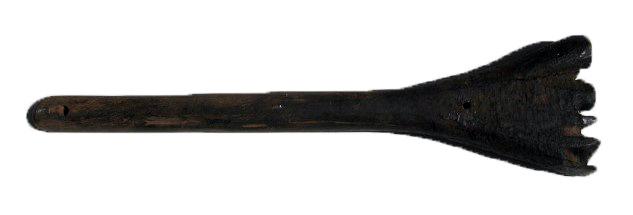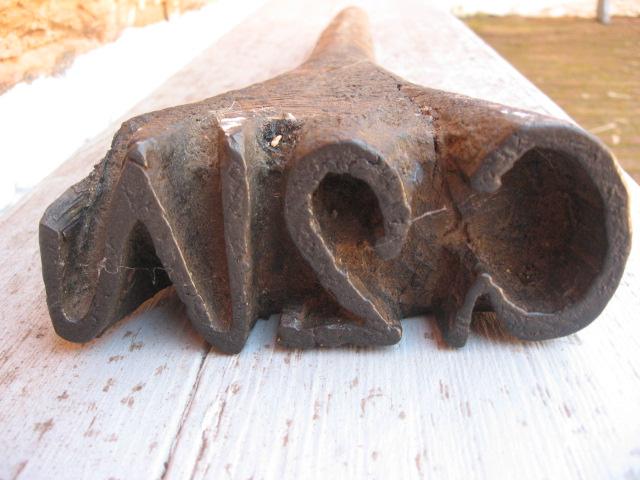
TAR-MARKING SHEEP BRAND, G2W
c. 1880 - 1920Hand carved wooden branding tool in form of G2W.
This brand is estimated to date from the late 1800s or very early 1900s. During this era, Toodyay was a thriving pastoral district heavily focused on sheep farming.
How It Was Used: Before modern plastic ear tags or aerosol paint cans, early Western Australian farmers had to find creative ways to sort and claim their livestock. The deeply notched wooden teeth on the flared end correspond to a specific property or owner's shorthand mark. The notched end was dipped directly into a bucket of thick, black pine tar or oil-based pigment. The farmer would firmly slap or press the wooden teeth onto the sheep’s wool—usually across the back or rump. The tar would leave a long-lasting, weather-resistant stamped mark that allowed shepherds to quickly identify their flock from a distance during shearing or sales.
Items like this were entirely hand-carved out of local Australian hardwoods (often jarrah or jam wood) because iron tools were expensive or difficult to acquire for remote pioneer settlers.
Details
Details
In 1925 G2W brand registered to GT Wilkerson, 'Oakfield', Northam
Other items from Shire of Toodyay
-
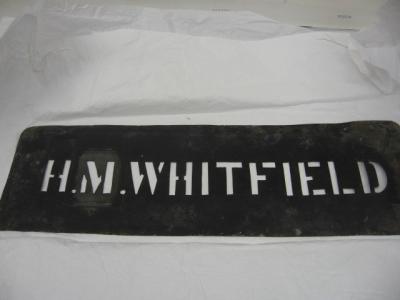
BALE STENCIL, WHITFIELD
-
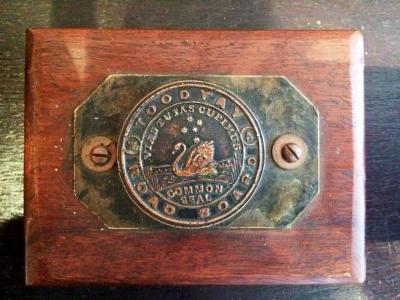
TOODYAY ROAD BOARD COMMON SEAL 1953 - 1961
-
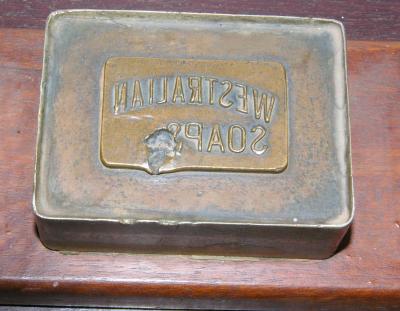
DIE, WESTRALIAN SOAPS
-
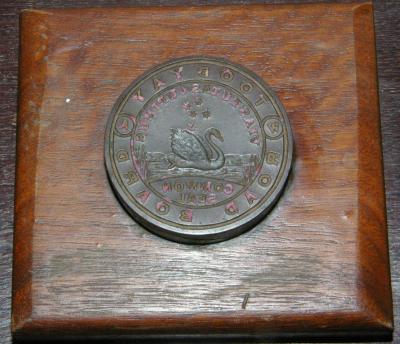
TOODYAY ROAD BOARD COMMON SEAL 1953 - 1961
-
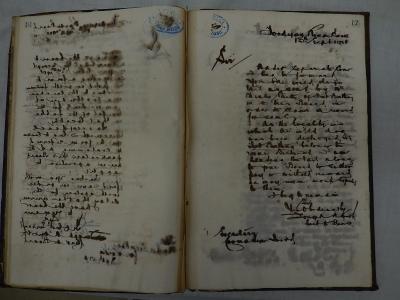
LEDGER BOOK, COPIES OF CORRESPONDENCE TOODYAY ROAD BOARD 1901
-
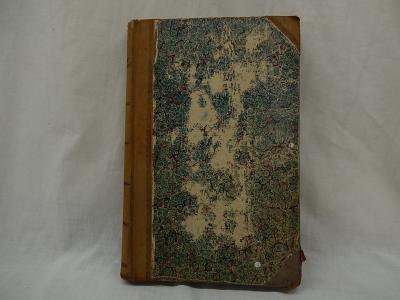
LOCAL COURT LEDGER RECEIPT BOOK
-
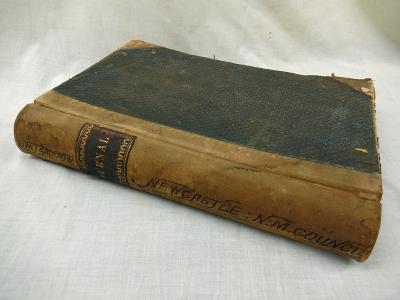
LEDGER, NEWCASTLE MUNICIPALITY RATES 1888-1901
-
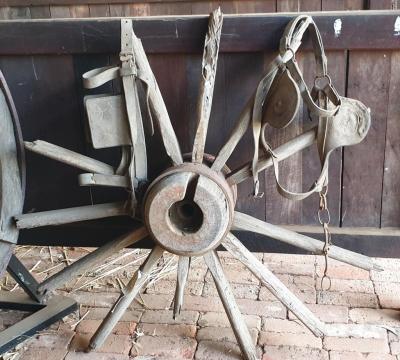
SPOKES AND HUB OF WHEEL FROM FOUR WHEEL FARM DRAY
-
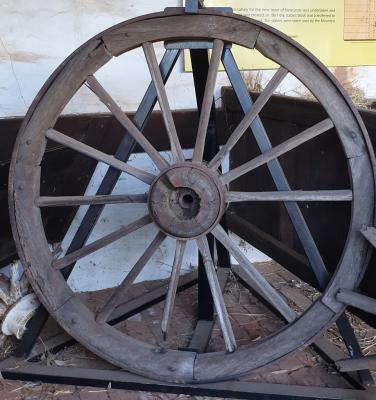
WHEEL FROM LIGHT TIPPING DRAY
-
PLOUGH, SINGLE
-
GRISTER
-
WATER TROUGH FROM HOLLOW LOG