IRONS, GEM
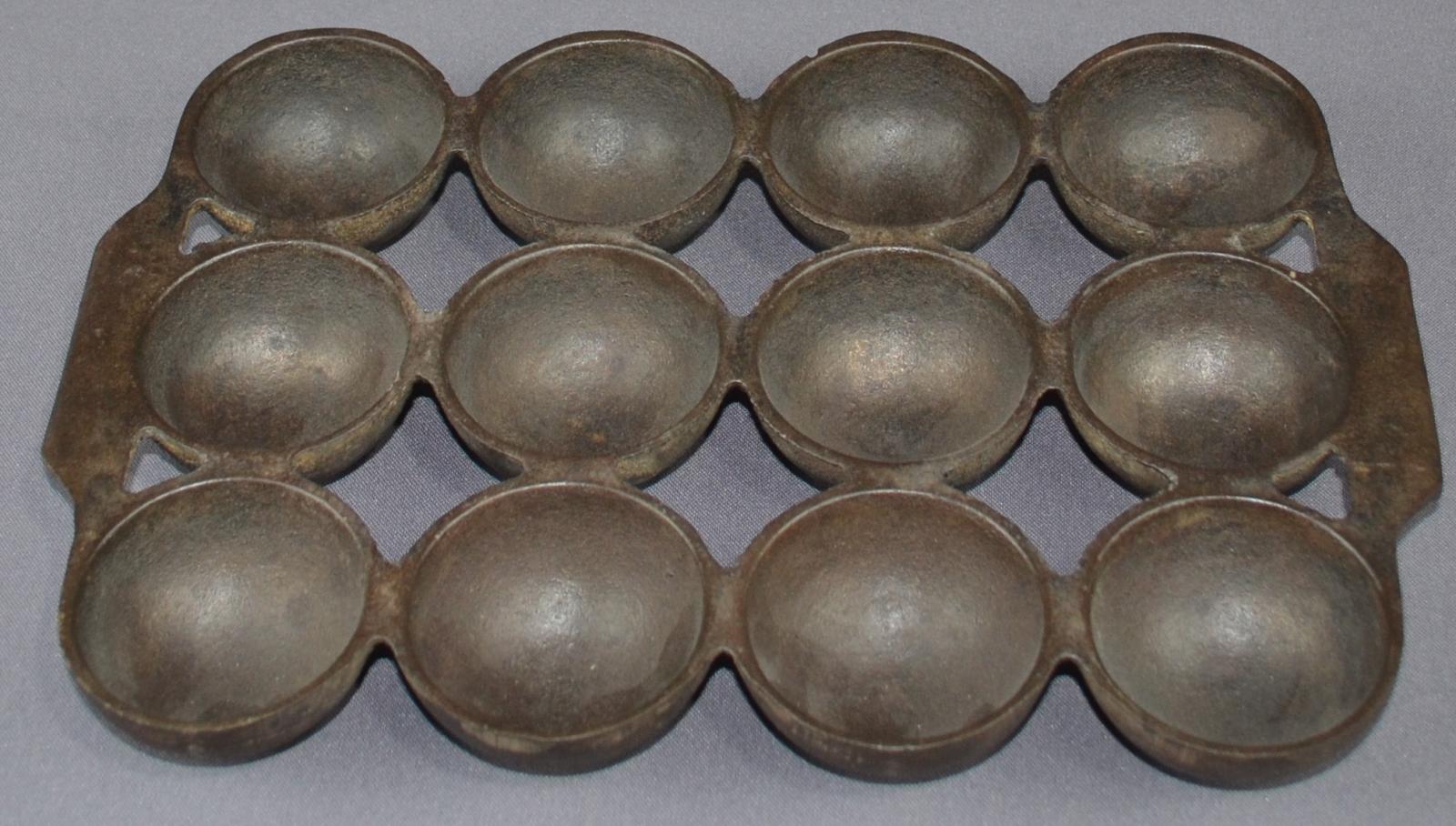
c. 1916Cast iron tray with twelve individual hemispherical moulds joined together in three rows of four. Item has a handle at each end.
Gem Scones recipes begin to appear in local papers in the mid 1910s. They were promoted as a quick and easy recipes using a gem scone tray. The cast iron tray cost around 2 shillings and 3 pence. By the 1930s and 40s the price had dropped to 1 shilling and 11 pence as the cast iron tray was replaced with a cast aluminium.
The basic recipe for Gem Scones is, 2 small cups self-raising flour, 1 egg,
2 ounces sugar. 1 ounce butter, 1 cup milk. Method - Cream butter and sugar, add beaten egg, sift in the flour, add milk, stir well. Cook in a very hot gem irons in very hot oven for 10 minutes. Split open, spread with butter, serve very hot.
Taken from a recipe published in the South Western Advertiser 19 June 1936
Details
Details
LOW
An example of a common kitchen tool found in many home kitchens from the early 1900s through to the late 1960s. The gem scone was a simple recipe for a quick an easy sweet baked good designed to be eaten for morning or afternoon tea. It also represents a time pre 1980s when the vast the majority of food eaten in the home was home made.
The tray is made from cast iron, a common material for mass produced kitchen items from the 1700s through to the early 1900s. In the mid 1900s cast iron was replaced by aluminium as a cheaper and lighter alternative.
City of Armadale - History House
City of Armadale - History House
Other items from City of Armadale - History House
-
COMPACT, POWDER - MOTHER OF PEAL INLAY
-
PUFF, COMPACT - GREY
-
CURLER, HAIR - DINKIE
-
RADIO/RECORD, CONSOLE - KRIESLER MULTISONIC COMBINATION MODEL 11-95
-
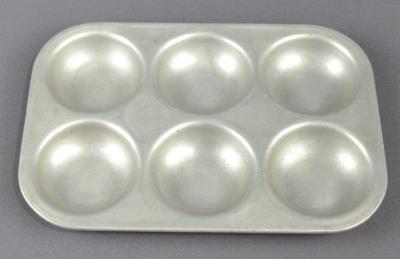
TRAY, MUFFIN
-
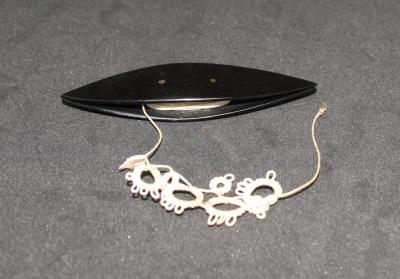
SHUTTLE, LACE AND CROCHET
-
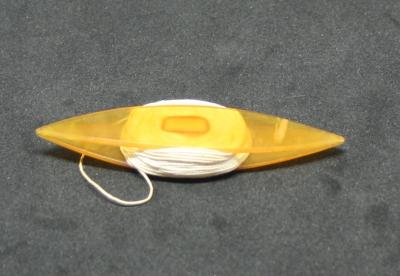
SHUTTLE, LACE AND CROCHET
-
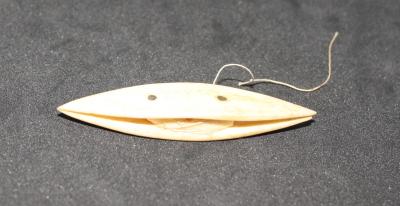
SHUTTLE, LACE AND CROCHET
-
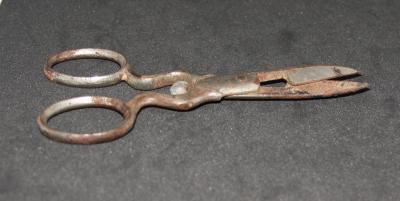
SCISSORS, FABRIC - LACE MAKING
-
NEEDLE, LACE AND CROCHET
-
HOOK, LACE AND CROCHET
-
HOOK, LACE AND CROCHET