

Dunlop Motor Car Outfit as used by Dr Maurice Buchan JOHNSON
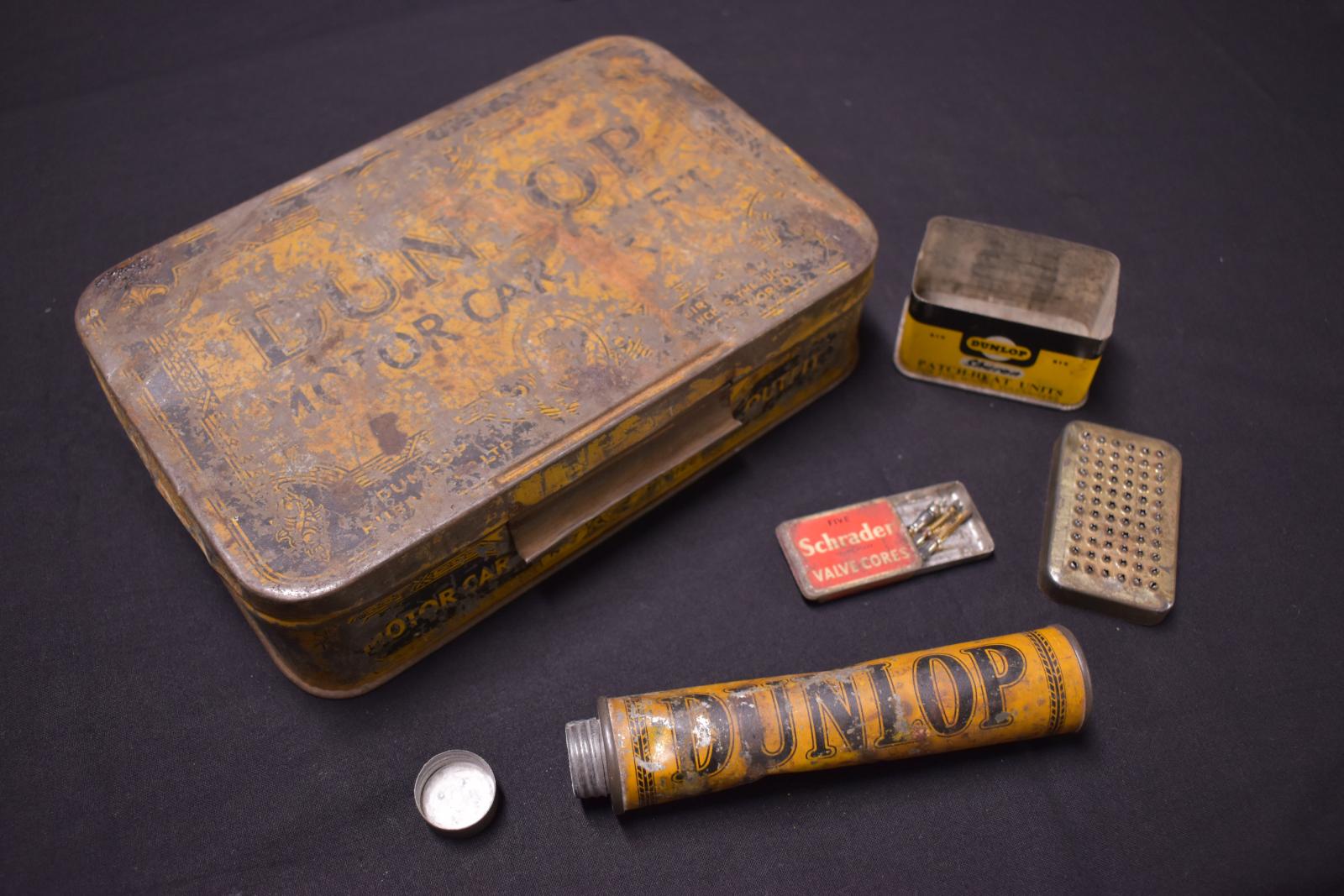
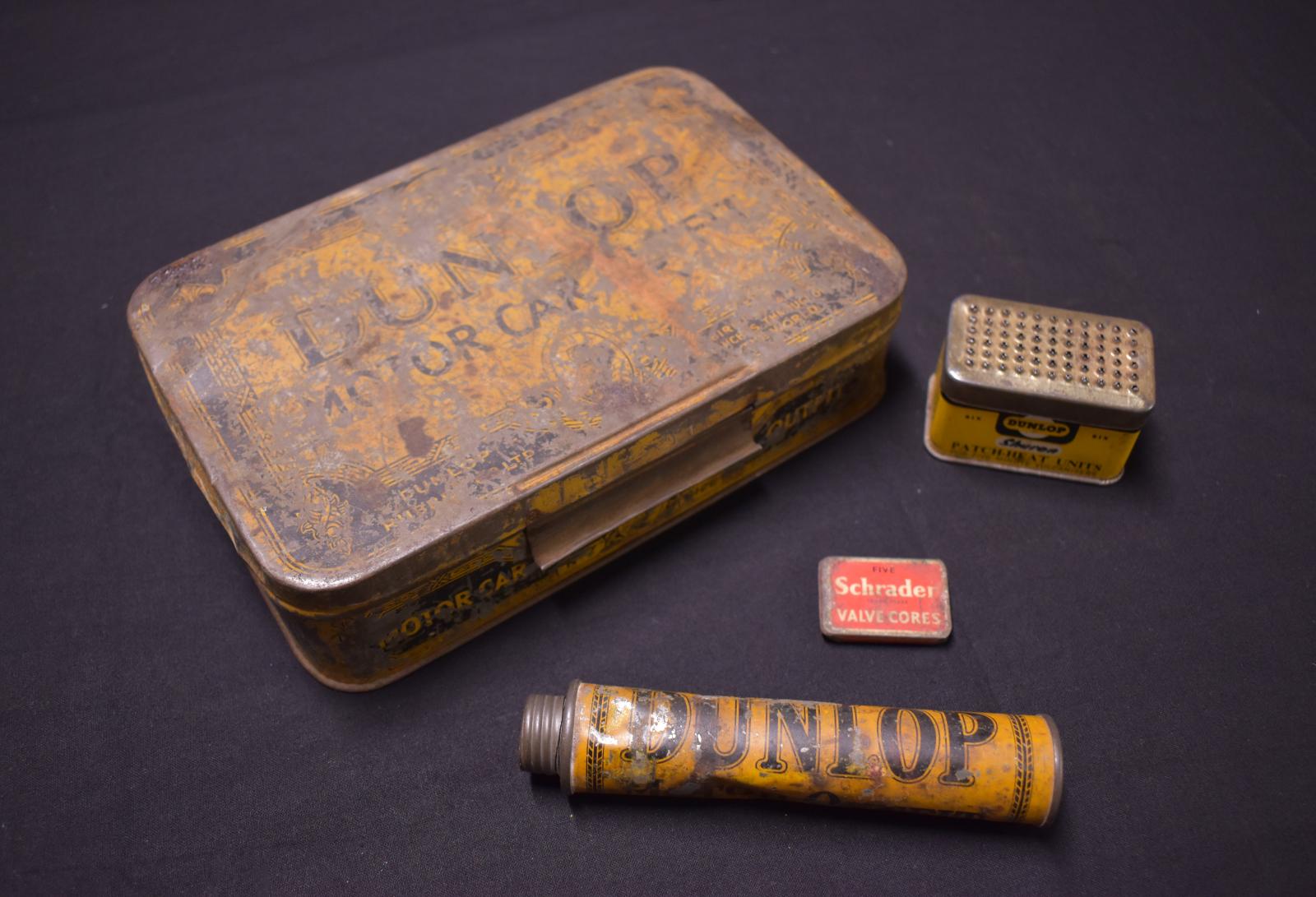
c. 1920a. A large metal tin containing several items necessary for the repair of rubber tyres. The tin has been painted with yellow and black enamel paint on the lid and sides while the base is a copper colour. The lid has a yellow painted background with a stylised border, a horizontal and a vertical lozenge with indecipherable content, and inscriptions in black paint on the surface of the lid. The tin shows multiple signs of wear.
b. The ‘French Chalk’ metal cylindrical tin has a yellow enamel background and black enamel inscriptions. There is a black border below the neck of the tube and at the bottom of the tube. There is a small metal screw cap lid, and the tin contains white powdered chalk. There are signs of wear on the tin.
c. ‘Shuron Patch-Heat Units’ tin with lid. The tin’s metal lid is a ‘striker’ consisting of 60 small perforations. The tin has a black border at the top of all faces and sides with a yellow background. The front face has a rounded black rectangle as part of the border with a white circle in the middle and “DUNLOP” (in black) placed on a smaller yellow rounded rectangle over the white circle. The rest of the face of the tin has several inscriptions in black paint. The tin shows signs of wear and is empty. The back of the tin shows a set of directions for tyre repairs along with the location of “Dunlop Rubber” in Australia in black paint and small print.
The left-hand side of the tin states an alternate method for tyre repair along with an important reminder in black paint on a yellow background. The tin’s ride-hand side features instructions for “SELF LIGHTING” in black paint and small print on a yellow background.
d. ‘Schrader Valve Cores tin’ (with 3 valves inside). This small metal tin has a red lid with a thin yellow border. It carries an inscription in black and white paint. The base consists of rippled metal and is a pull-out tray that contains three (3) metal valves. The tin shows signs of wear.
John Boyd DUNLOP started ‘Dunlop’ in 1887 developing the first air cushioning system, leading to the development of the pneumatic tyre (1887) that was patented in 1888. After leaving in 1894 the company merged with another business to become the ‘Dunlop Rubber Company’ in 1912. The Dublin based manufacturing plant achieved numerous ‘firsts’ in the development of tyres in the early 1900’s and opened a modern rubber factory in Naniwacho, Japan (1909). The company developed a variety of tyre tread patterns; introduced ‘wide tyres’ and tractor tyres, tubeless tyres and steel belt tyres. Their tyres were used on various cars that won multiple Le Mans races, World Endurance Drivers Championships and set a new lap record time at Bathurst (New South Wales, Australia) in 2020. In 2025 Sumitomo Rubber Industries bought the Dunlop brand along with distribution and Trade-Mark rights covering North America, Europe and Oceania.
Details
Details
a. On large tin lid “DUNLOP / MOTOR CAR / OUTFIT / DUNLOP / RUBBER / CO. LTD” with “DUNLOP / MOTOR CAR / OUTFIT / NO 2 SIZE” on side. Along the sides “Fit Dunlop and BE SATISFIED”. Closing tab: Pat No 15280/2. b. Cylindrical Tin “FRENCH CHALK / FOR / DUNLOP / MOTOR OUTFIT”. c: Shuron Patch-Heat Units’ with front face: “SIX DUNLOP SIX/ SHURON / PATCH-HEAT UINTS / FOR FIVE MINUTE VULCANISERS”. On back “DIRECTIONS / 1. THOROUGHLY ROUGHEN around patch – don’t just scratch - / and dust off with clean cloth. Don’t use petrol. / 2. Remove glazed cloth from patch. Don’t touch clean surface. / 3. Place unit over puncture. Put centrally in clamp and screw down / very firmly. / 4. Lay “striker” on dark line, and while pressing down and away / sharply. Fuel will then light and “STRIKER” MUST BE PLACED / OUTSIDE OF TIN CONTAINER. / 5. In 5 minutes remove clamp, when the new rubber will be part of / the old. / Dunlop Rubber Aust. Ltd (Inc in Vic).” On left hand side: “Alternatively the fuel may / be lighted by digging up ‘ a flap of fuel with a / knife at the dark line / and touching this with a / blazing match-HEAD. / Important. Shuron Patch-heat Units are damp- / proof, instant in li9ghting / and are suitable for any / make of vulcaniser.” On right-hand side: “DAMP-PROOF / SELF LIGHTING / For blowouts and long cuts, overlap two or more / patches, re-roughening after each operation.” d. “FIVE/SCHRADER/TRADE MARK / VALVE CORES”.
Maurice Buchan JOHNSON was born on 18 September 1881 in Kew, Victoria. Appointed to the Australian Army Medical Corps (AAMC) on 19 September 1914, he embarked Australia on HMAT Kyarra (A55) on 5 December 1914. He served at the 1st Australian General Hospital and later at the AAMC training depot, where he was promoted to the rank of Major in November 1916. Records show that he was hospitalised due to Synovitis in his right knee, a condition that saw him spending time in the Number 3 General Hospital in London before being found fit by the Medical Board in April 1916. and then transferred to the Number 12 Field Ambulance in June 1917. By January 1918 his knee condition was listed as ‘chronic, but JOHNSON continued to serve. On 11 April 1919 his appointment was terminated after being deemed “Medically Unfit for Active Service”. JOHNSON received the 1914/15 Star, the Victory Medal and the British War Medal in recognition of his service. On his return to Australia, JOHNSON practised medicine in Albany and was involved in several community groups and activities: President of the Albany sub-branch of the RSL (1923), Vice President of the Albany Cricket Association (1924). JOHNSON is associated with the official unveiling of Albany’s Roll of Honour Board’ on 25 April 1924 which features the names of 597 personnel who enlisted from Albany in the First World War. In addition, he was associated with the Albany Ambulance Brigade and conducted their First Aid examinations, assisted by Dr Arthur HOME. In 1928 JOHNSON and his wife left Albany for Perth and later travelled to North America and England in 1929 to observe the “splendid advances … made in the use of radiology”.
(The Daily News Tuesday 23 April 1929, p7). After his death on 18 January 1949, JOHNSON’s wife, Ruth, bequeathed $400 to the University of Western Australia for the ongoing “Maurice Buchan Johnson Prize in Botany”, awarded to the biology student majoring in and achieving the highest mark in ‘Plant Diversity and Conservation’. This prize continues today.
Open in Google Maps
Nearest geotagged records:
- Invalid Cup (0km away)
- Peter LONEY Letter (0km away)
- Ellis SILAS Water Colour Painting (0km away)
- Engraved Japanese Water Bottle belonging to Robert George Staunton RENNIE WX7493 (0km away)
- Enlistment Poster (0km away)
- W. D. & H. O. Wills Lace Flag Cigarette Cards (0km away)
- First world War Picture Postcard (0km away)
- Photograph of the Japanese surrender to Australia on 13 September 1945. (0km away)
- Engraved Tin given to Major Arthur Robinson HOME WX11151 (0km away)
- Martini-Henry action (0km away)
Nearby places: View all geotagged records »
Princess Royal Fortress Military Museum
Princess Royal Fortress Military Museum
Other items from Princess Royal Fortress Military Museum
-
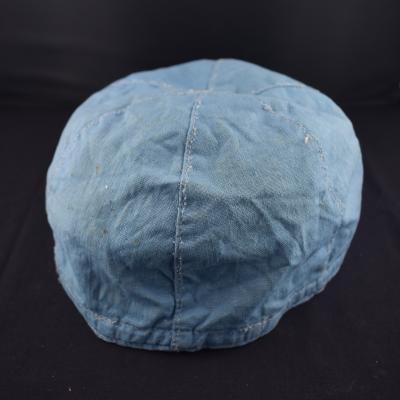
Medical Cap worn by Dr Maurice Buchan JOHNSON
-
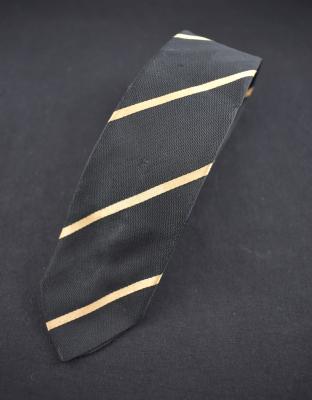
Men’s Striped Tie worn by Dr Maurice Buchan JOHNSON
-
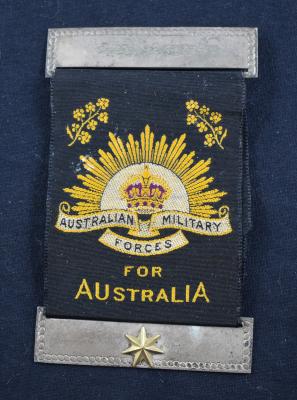
First World War Mothers and Widows Ribbon issued to Mrs E. Taylor, number 22566
-
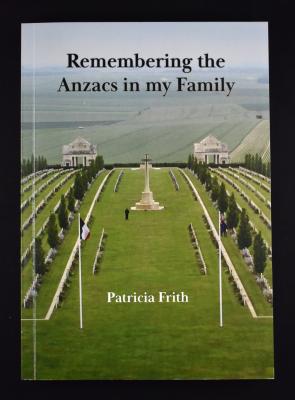
'Remembering the Anzacs in my Family' Book by Patricia FRITH
-
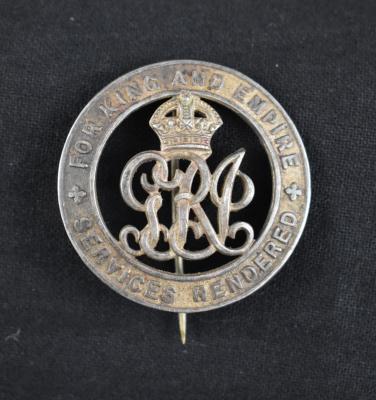
First World War Silver War Badge of L/Cpl Albert Benjamin FREDERICKSON 933
-
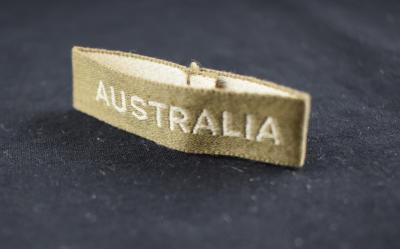
Second World War ‘Australia’ Khaki Shoulder Flash
-
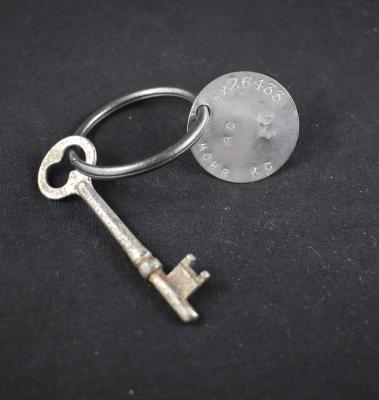
Second World War Metal Identity Disc issued to Sapper Kingsley Charles MOHR WX26433 with Key
-
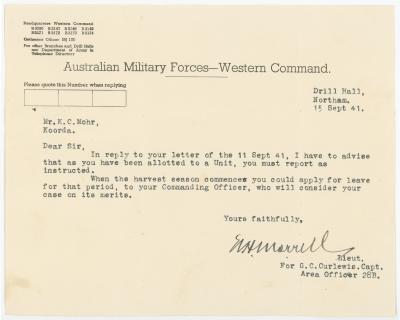
Second World War Australian Military Forces letter to Sapper Kingsley Charles MOHR WX26433 dated 15 September 1941
-
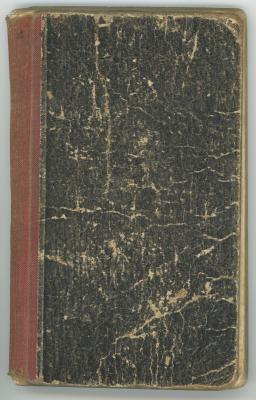
Second World War Small Notebook used by Sapper Kingsley Charles MOHR WX26433
-
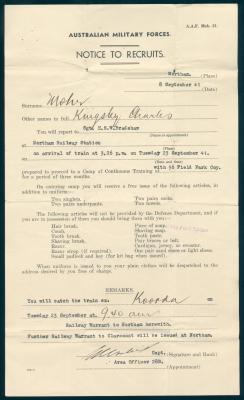
Second World War Australian Military Forces ‘Notice to Recruits’ to Sapper Kingsley Charles MOHR WX26433
-
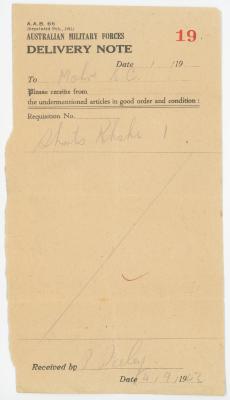
Second World War Australian Military Forces ‘Delivery Note’ to Sapper Kingsley Charles MOHR WX26433
-
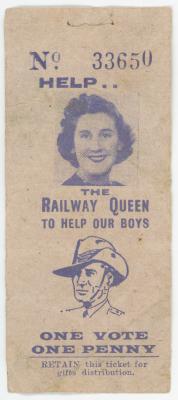
Second World War ‘Help the Railway Queen To Help Our Boys’ Ticket purchased by Sapper Kingsley Charles MOHR WX26433
Scan this QR code to open this page on your phone ->
