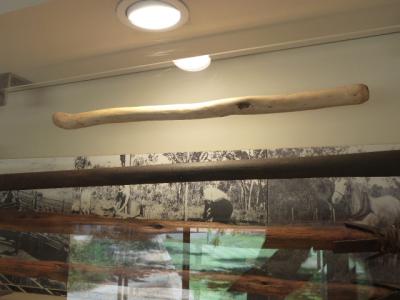
GRAIN THRESHING FLAIL
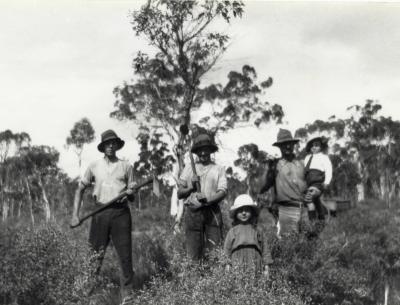
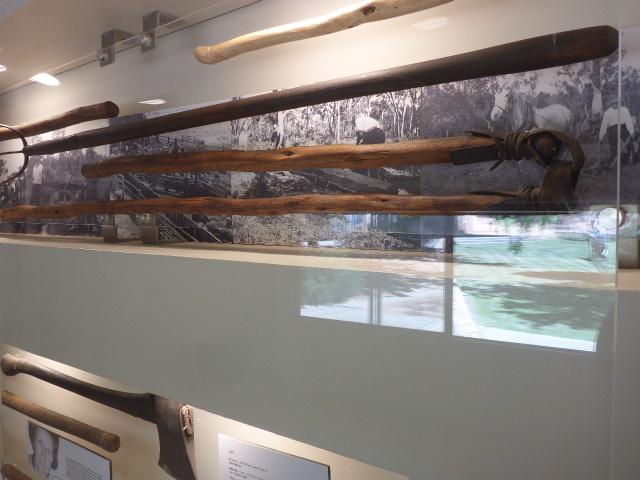
1850 - 1910After a grain crop was harvested and stooked to ripen in the paddock, the stooks would be brought back to the shed and laid out on a hard floor where the flail was used to thresh the grain. The flail consists of two different sized pieces of thin branches cut from the bush and joined together by a piece of leather thong that then enabled the second piece to be articulated or spun in the air and brought down onto the grain heads in a threshing motion. Once harvesting machines were invented and used this method of threshing was discontinued.
'Our very first crop, an area of one and quarter hectares, was selected by broadcasting seed and superphosphate by hand from a bag slung from the shoulders. Whenever some grain was required the plants were cut about twenty centimetres below the heads with sickle and the grain was threshed out with a flail. Hay ws cut with a scythe and tied into sheaves by hand.' 1920. Dosh Loveland and Molly Phillips (oral interview)