Improvised weapons- wooden clubs
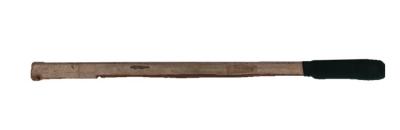
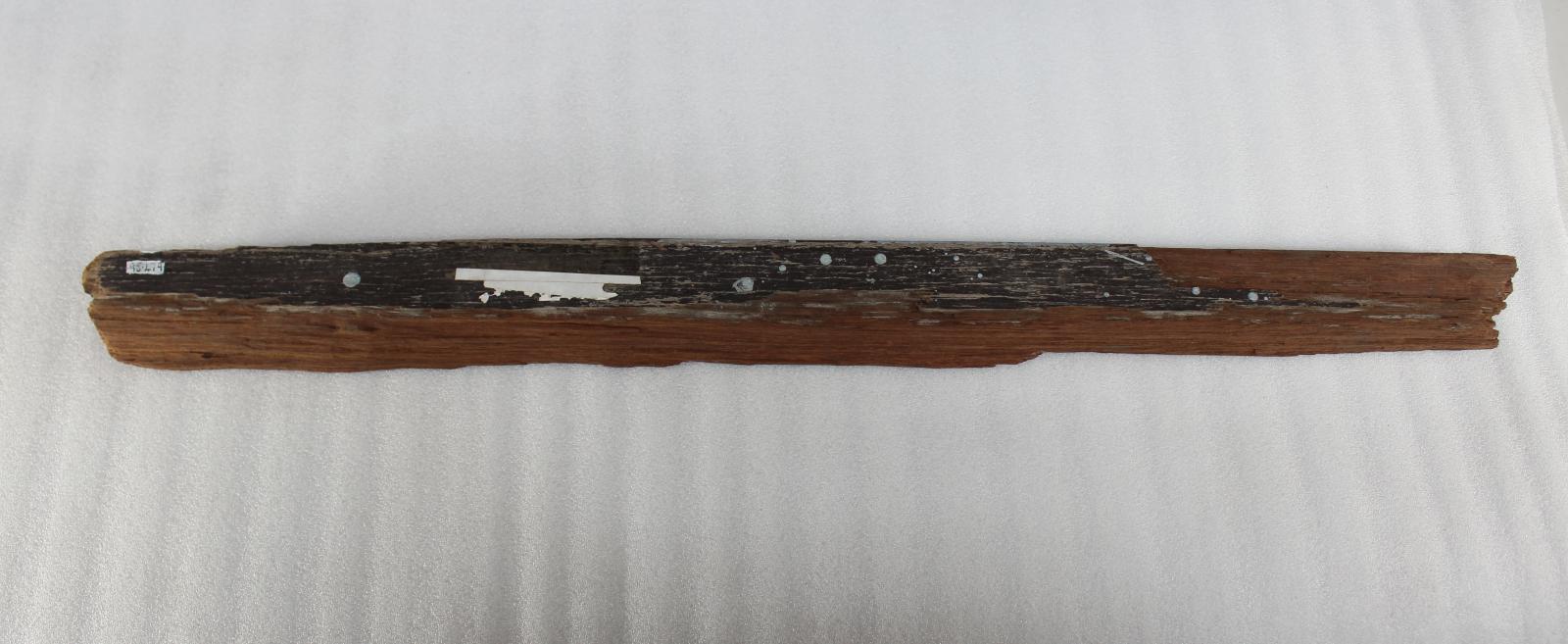
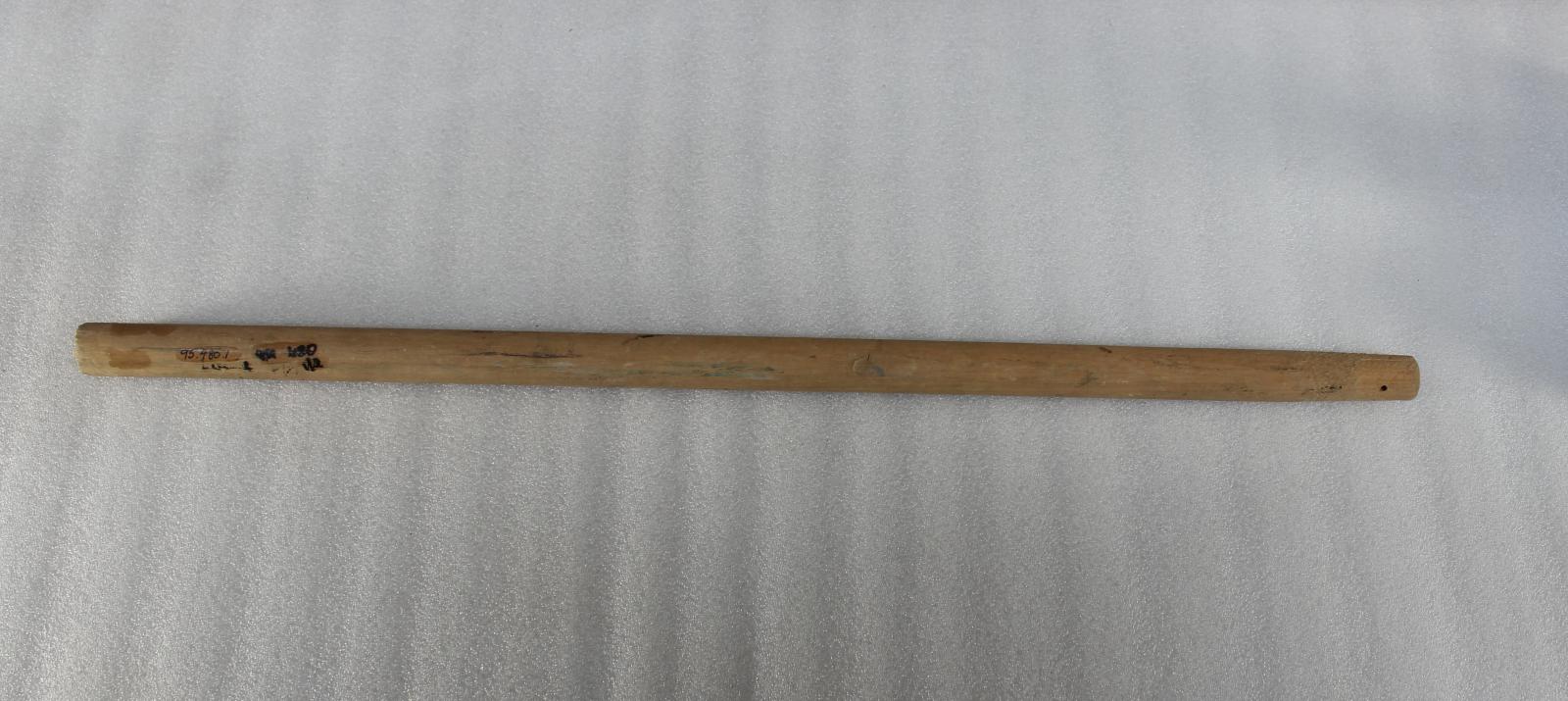
1988Clubs made from various pieces of broken wood with associated evidence tags, described below as follows:
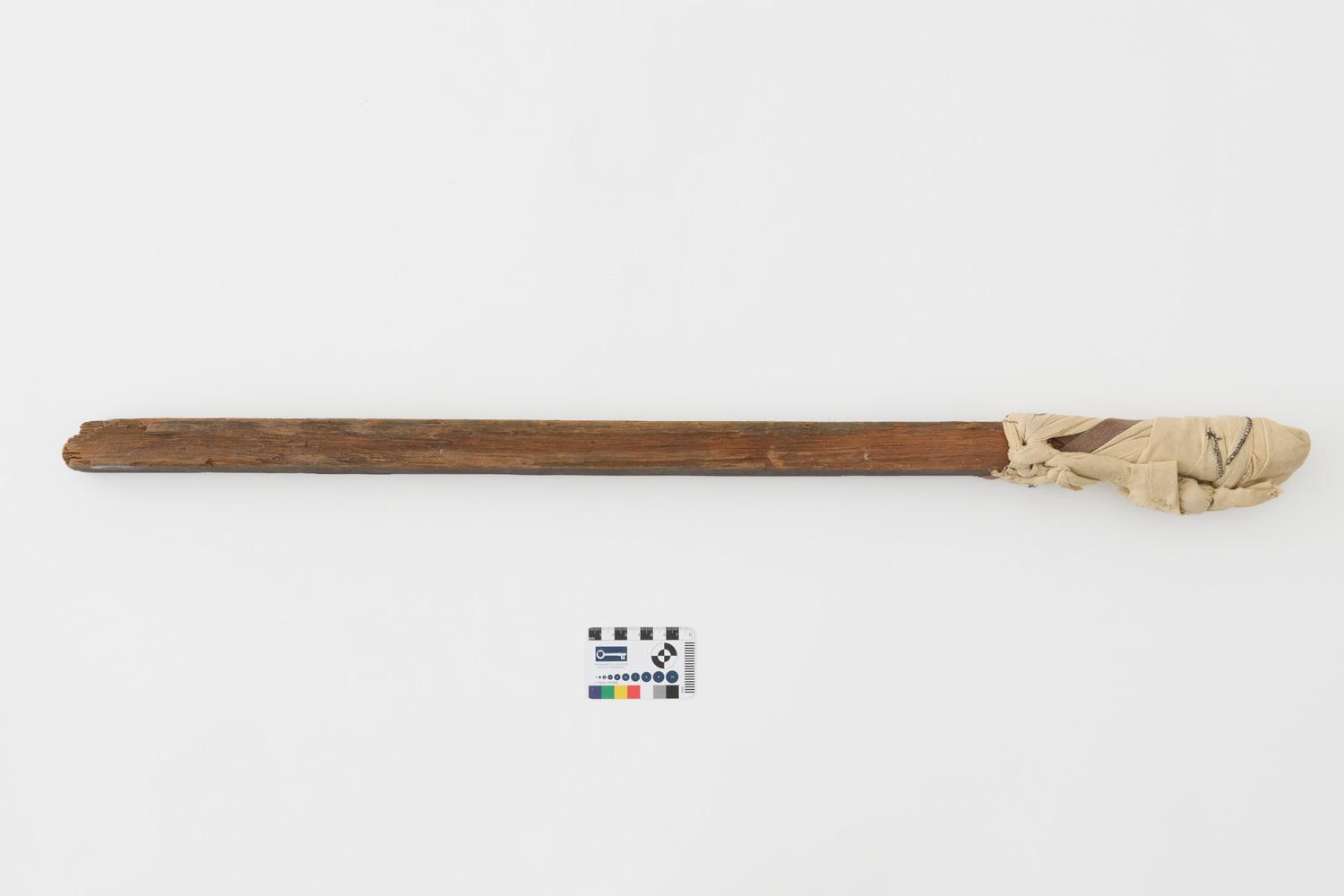
1995.473.1-2 Club made from piece of broken rectangular wood. Two sides of the wood are painted dark brown. One end is wrapped in light brown cotton fabric, forming the grip. The fabric is made of a piece of a T-shirt, recognisable from the clearly visible dark brown collar. The textile was ripped off and knotted in place. The other end is rough and splintery. Associated evidence tag.
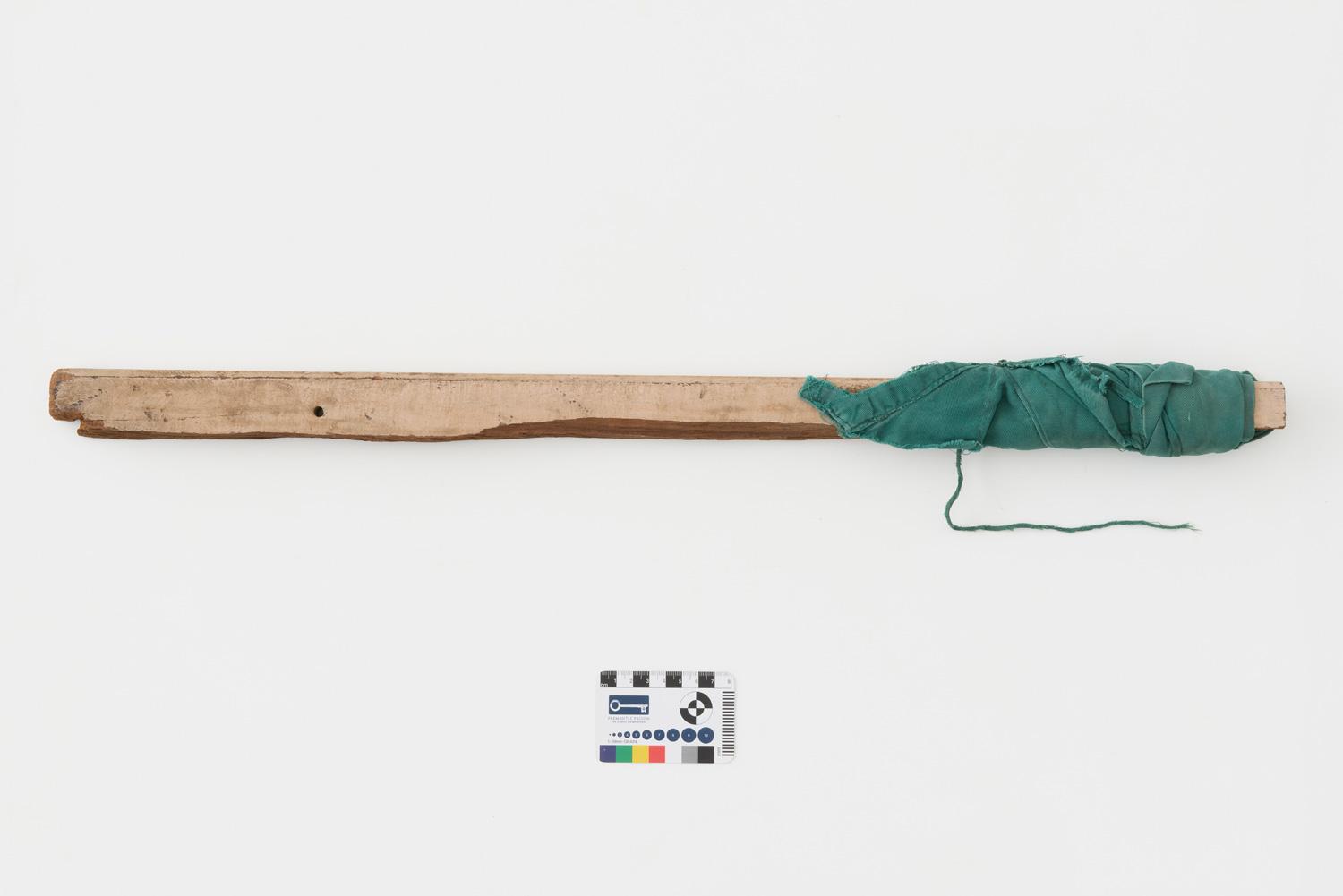
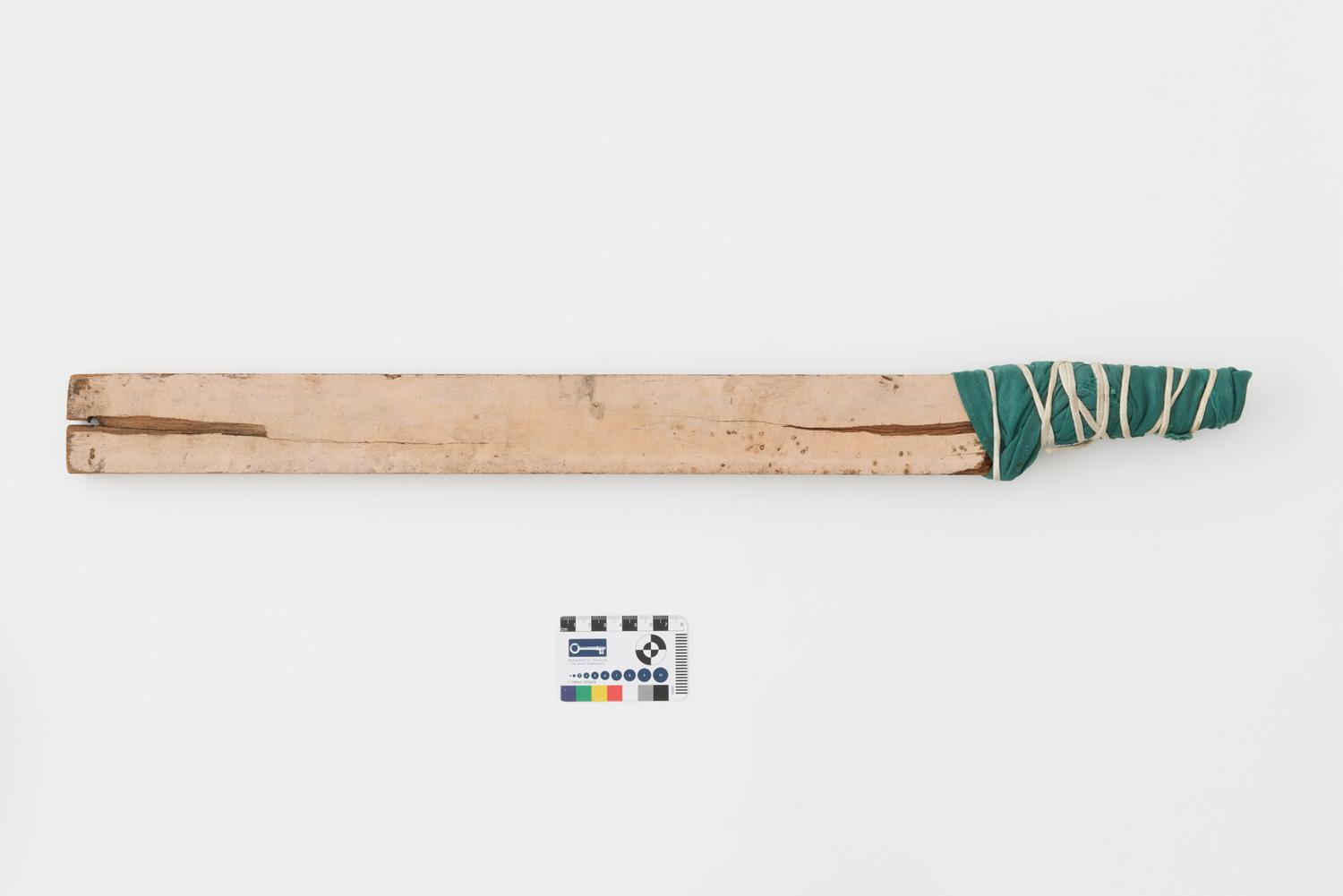
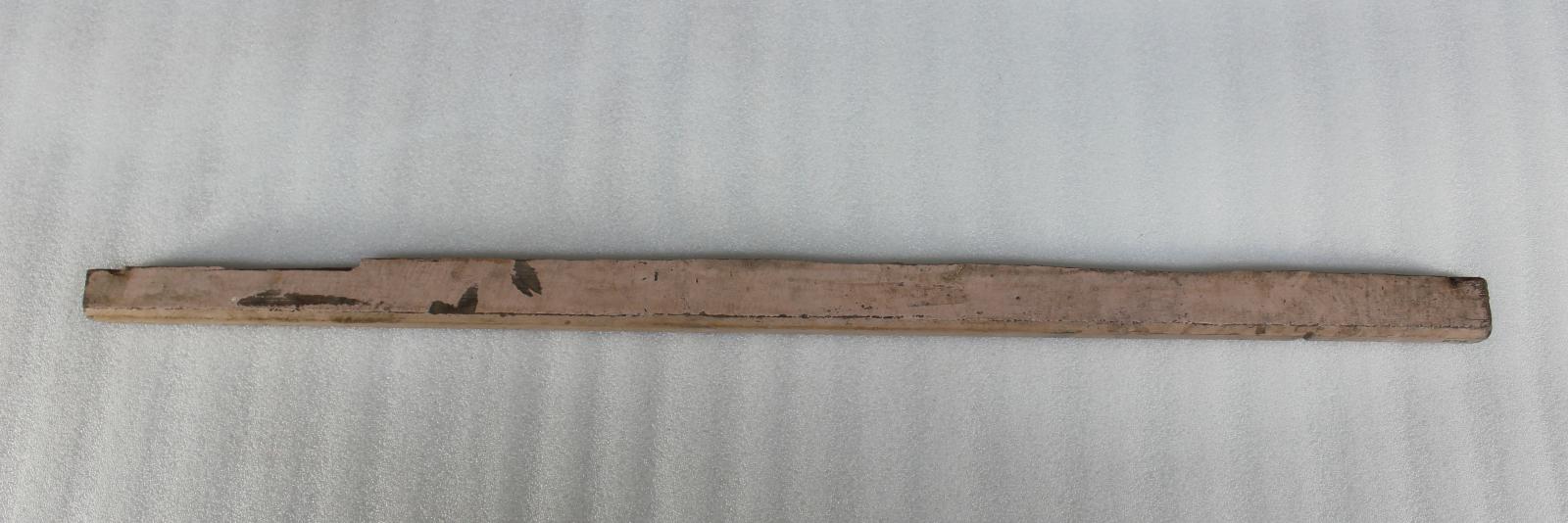
1995.474.1-2 Club made from a piece of broken rectangular wood. One side and both edges are painted light pink. One end is wrapped in a piece of dark green prison issue uniform to form a grip. Remnant of sticky tape on one of the painted sides.
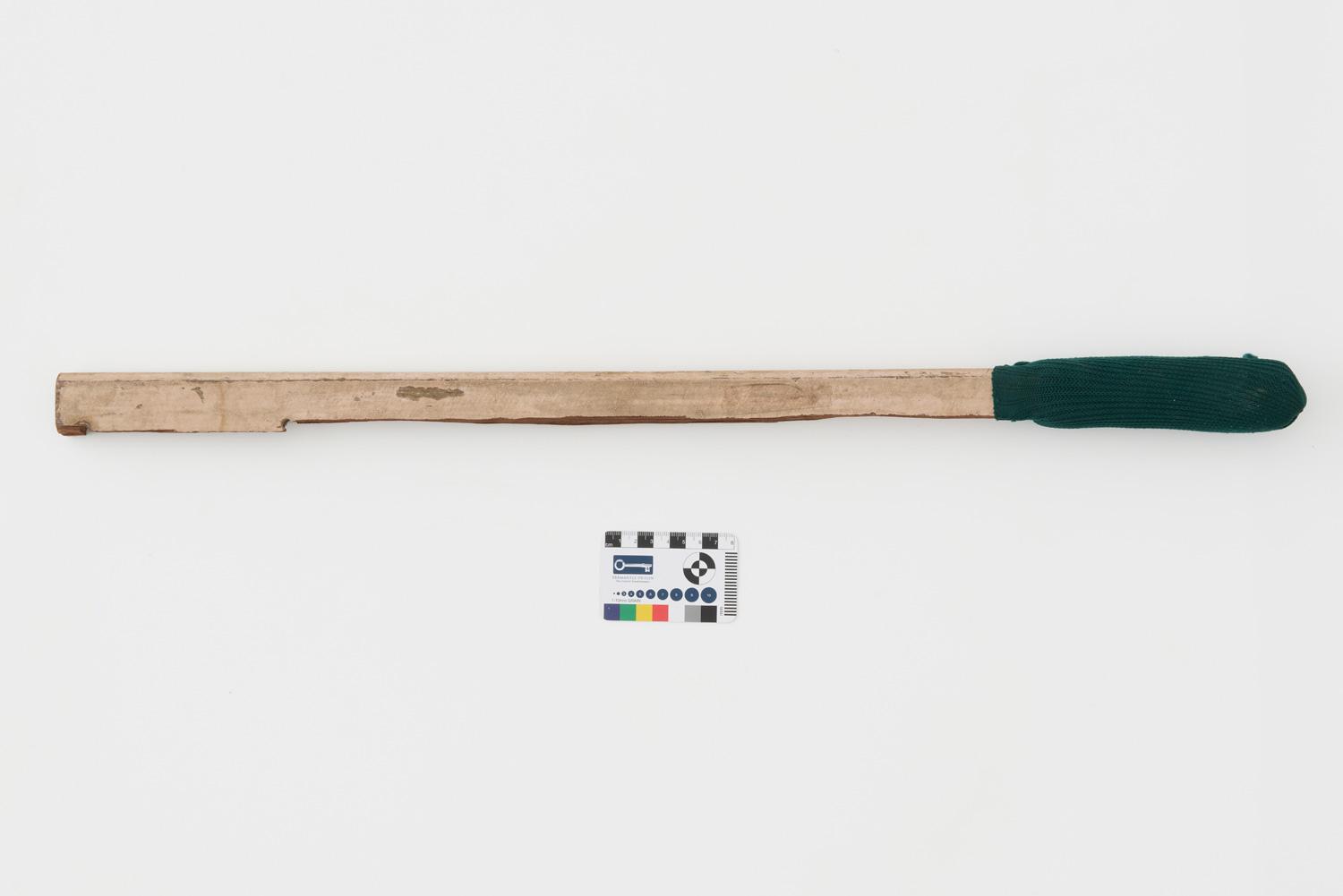
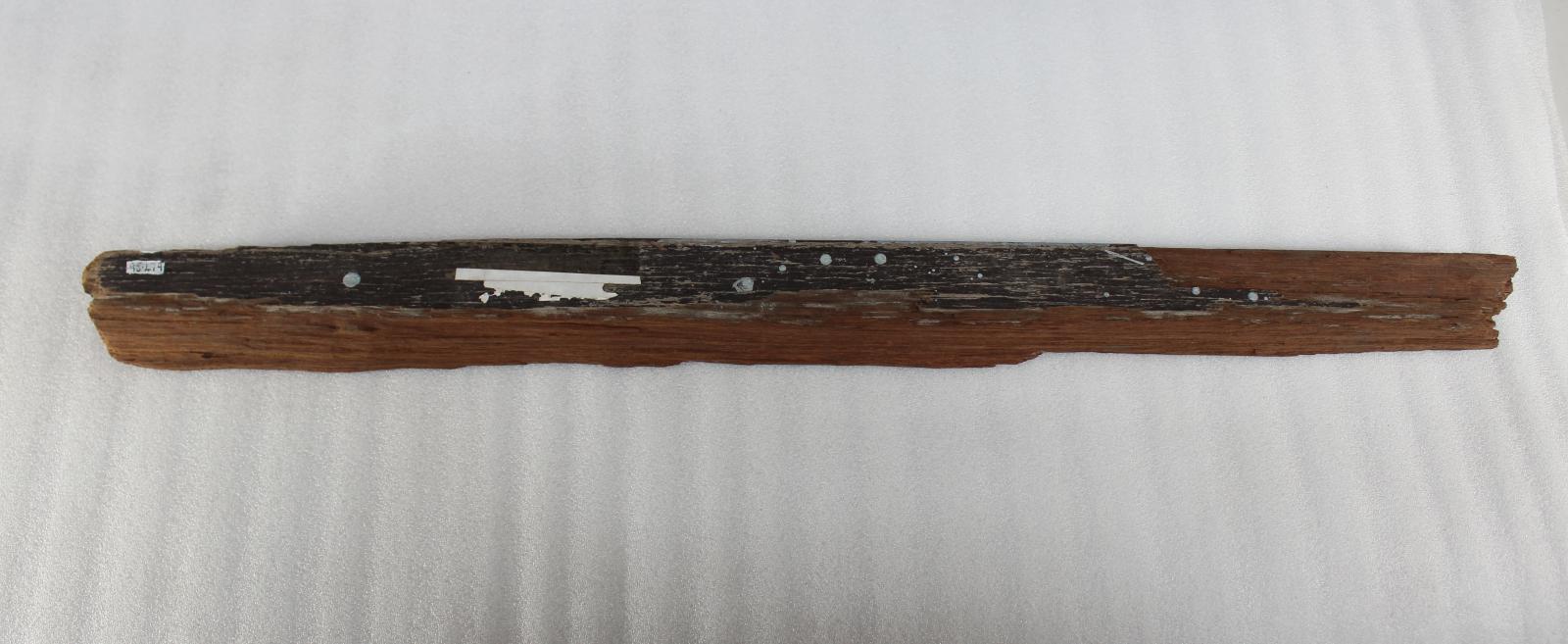
1995.475.1-2 Long, thin, wooden club, made from a single piece of broken rectangular timber with uneven edges and notches on the surface. Three sides of the club have remnants of light pink paint on the surface. Some sticky tape has been glued to one of the sides of the timber. Around one end of the timber is wrapped a piece of dark green, thick, cotton fabric, likely from a prisoner uniform. A dark green, woven sock has been placed over the fabric, covering the end of the club.
1995.476.1-2 Club made from piece of broken rectangular wood. The sides and edges are all painted light pink. The narrower end is wrapped in a piece of dark green prison issue uniform and bound with a length of white cord forming a grip. The wider end has a countersunk screw hole. Sticky tape glued to one side.
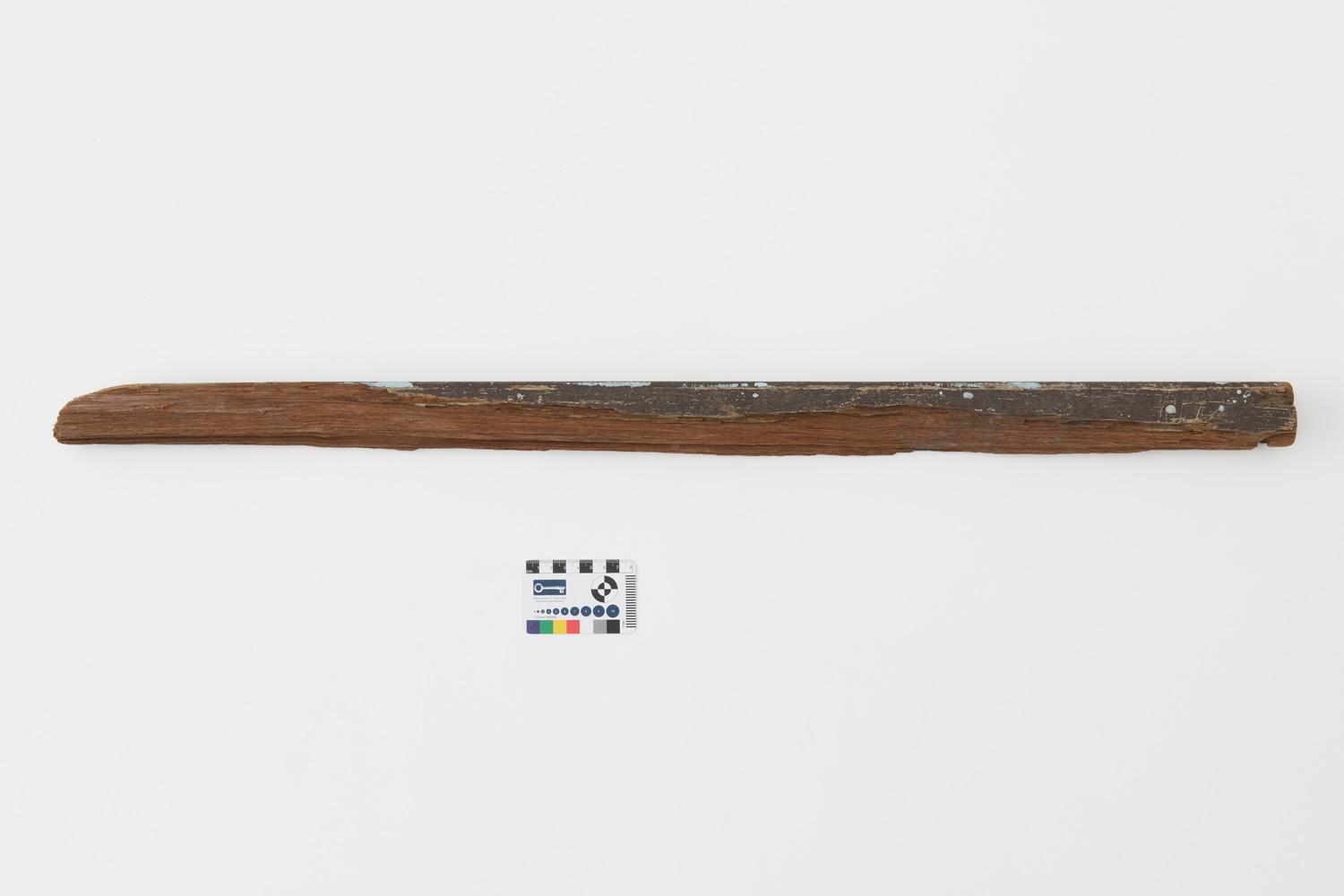
1995.477.1-2 Club made from a piece of broken rectangular jarrah wood. One side and both edges are painted dark brown. Blue paint stains along one edge. One end is splintering. Sticky tape on one side.
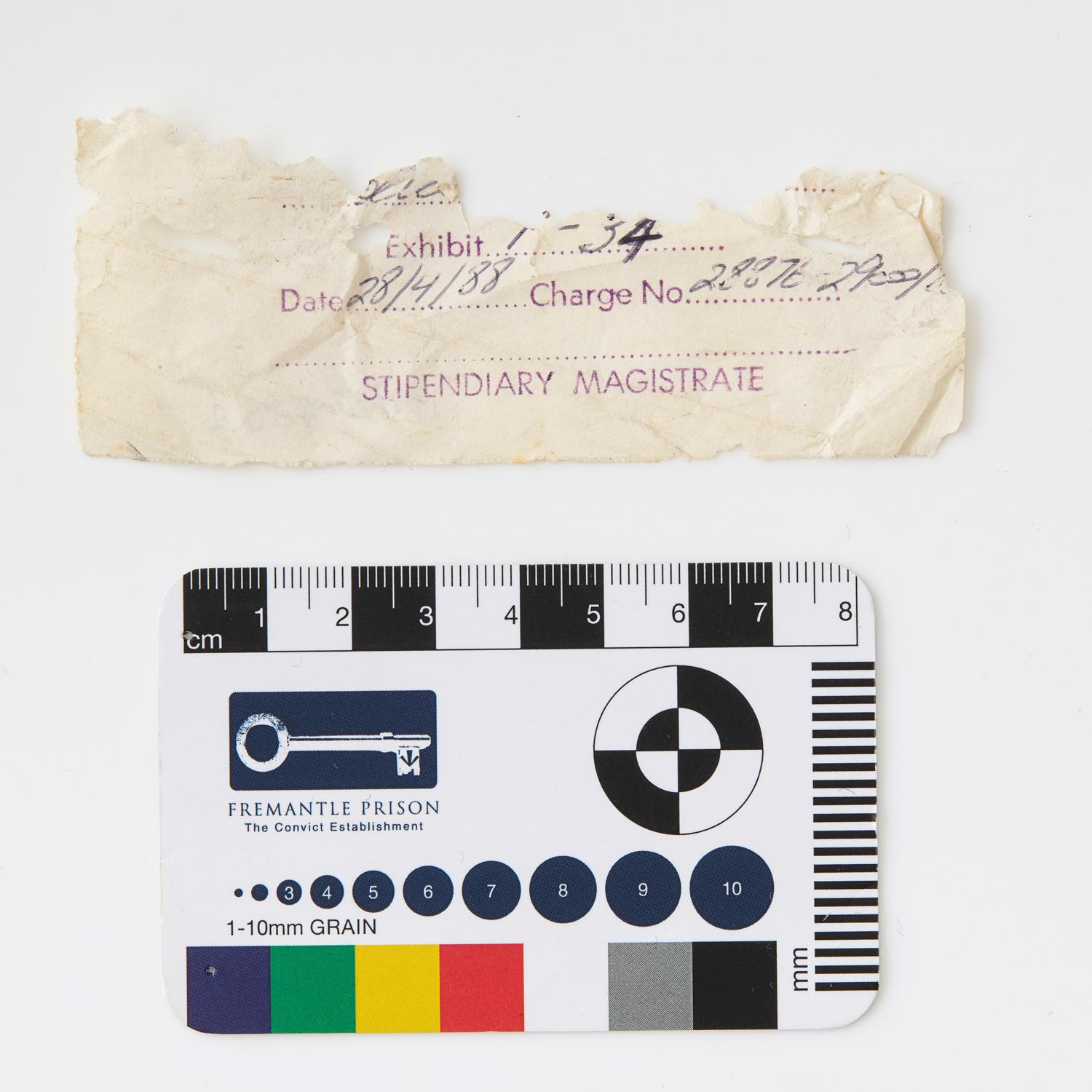
1995.478.1-2 Club made from a piece of broken rectangular wood. One side and both edges are painted light pink. A paper label is attached to one side with plastic tape. The white paper is badly damaged by silverfish, is folded in many parts and is brittle. The paper is lined and bears both printed and handwritten text, mostly faded and illegible. It reads: '28/4/88', '33' and at the bottom is printed 'STIPENDI[AR]Y MAGIST[RATE]'.
The end of one piece is wrapped in green fabric which is likely a torn piece of an inmate’s uniform, another from a white tee shirt, ripped off and knotted in place to form a handle.
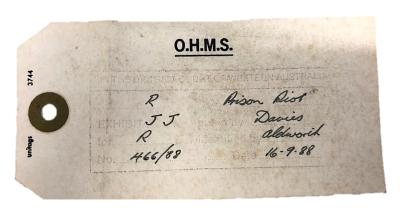
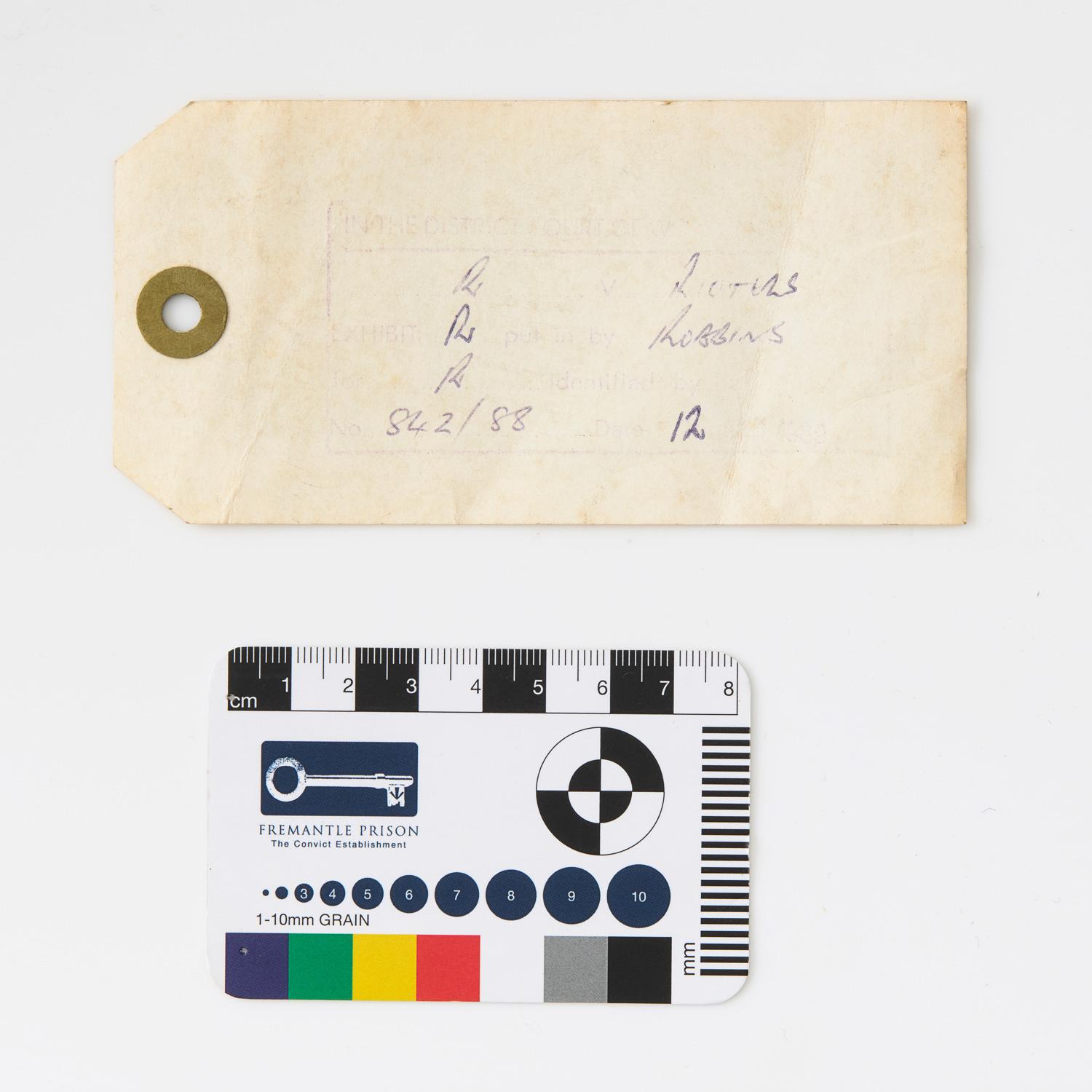
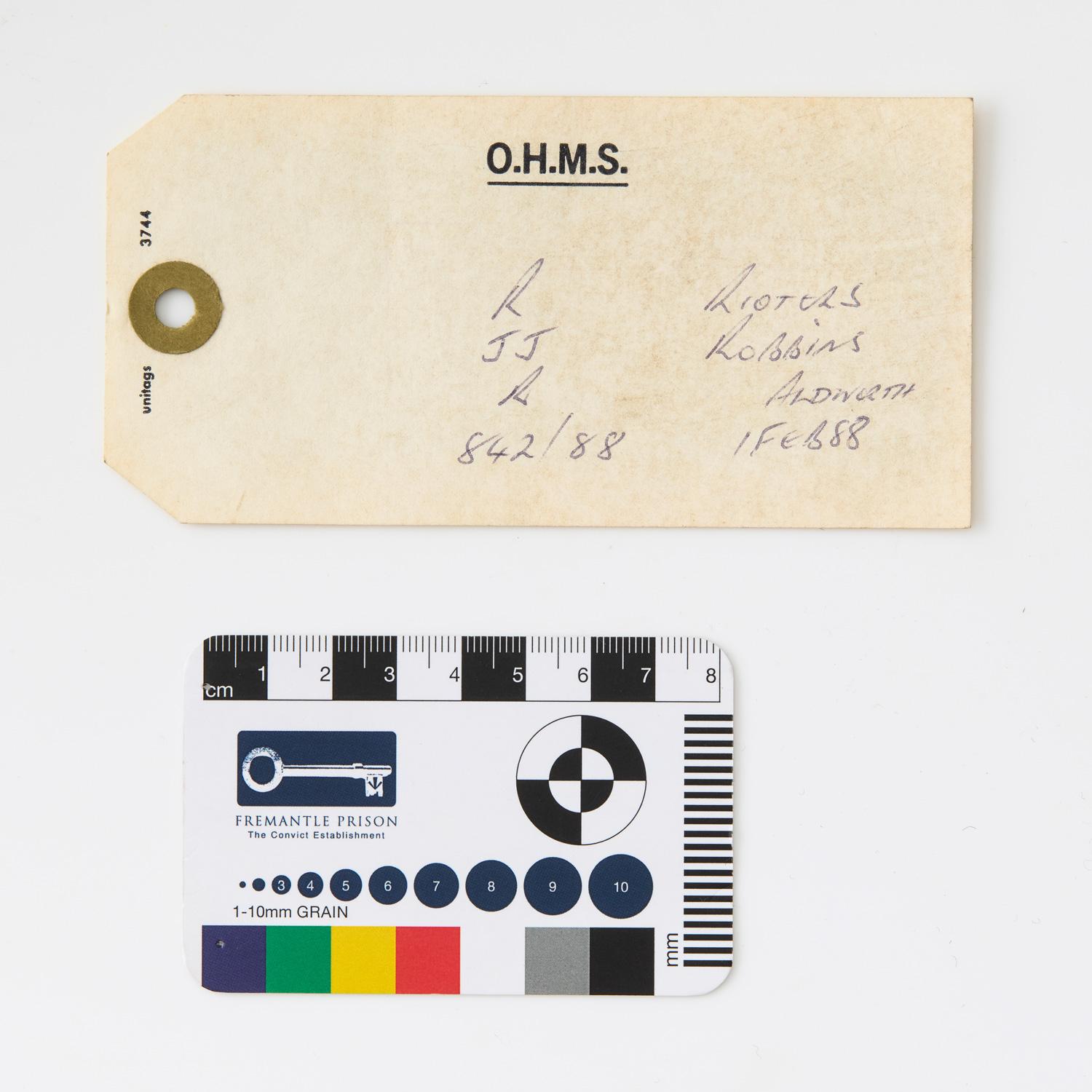
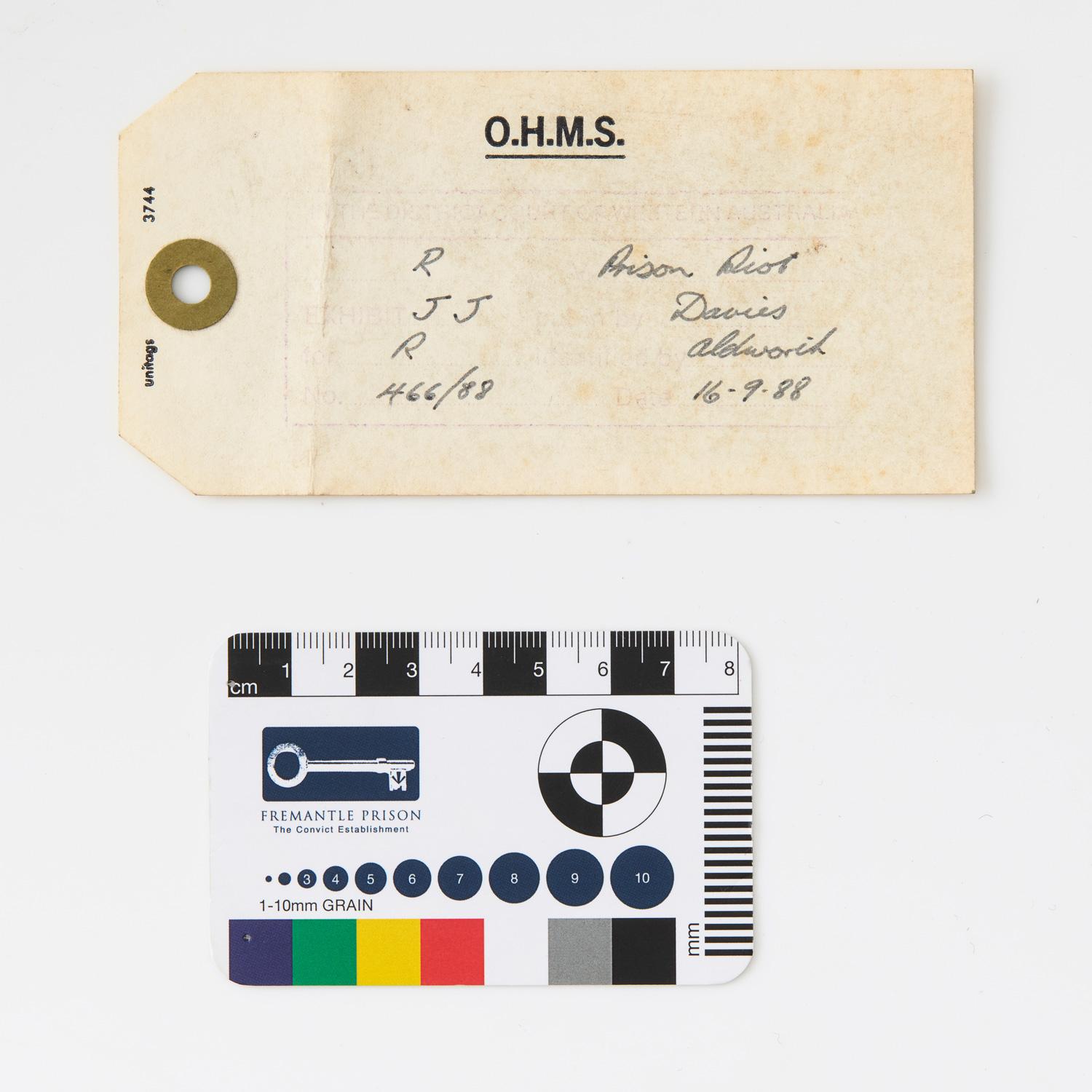
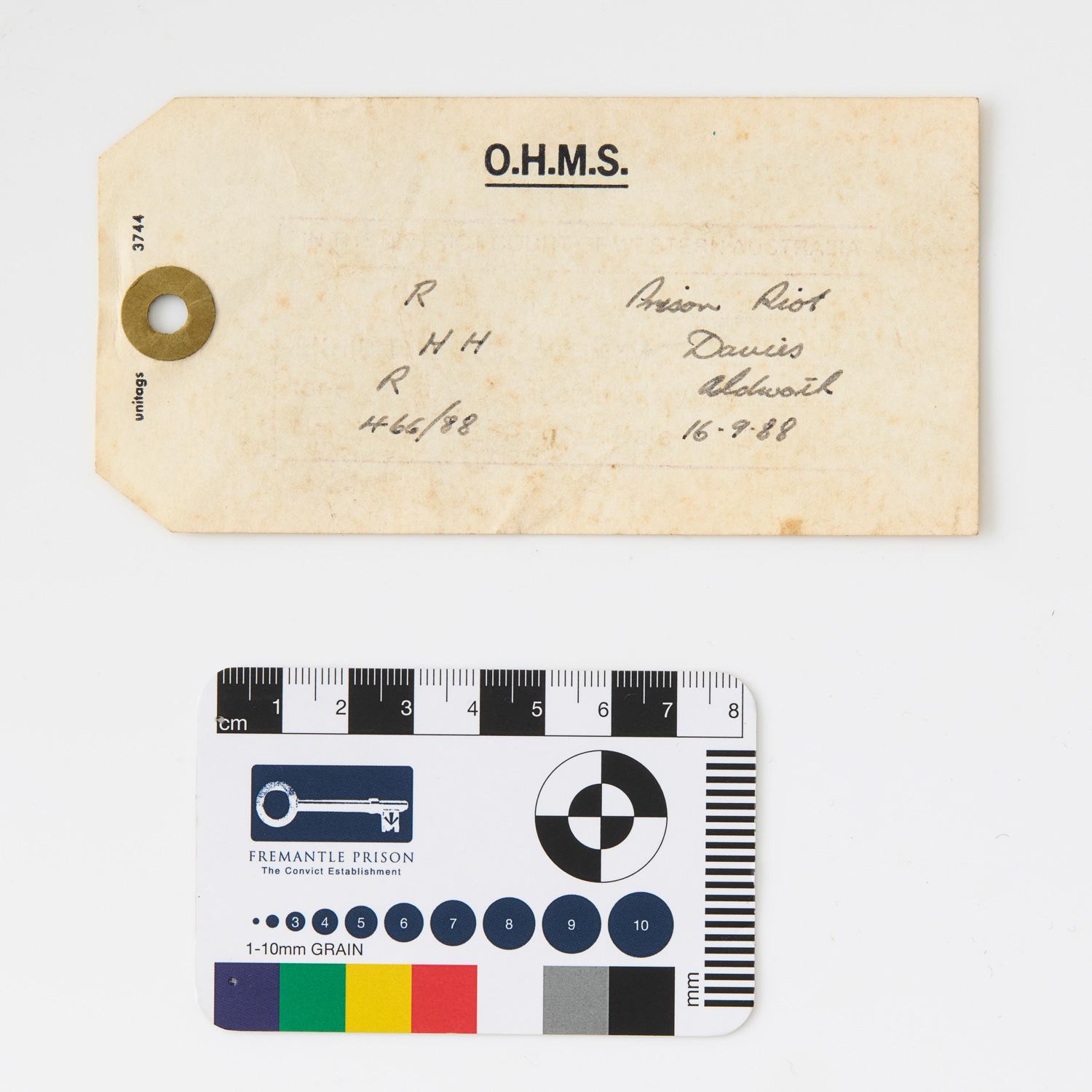
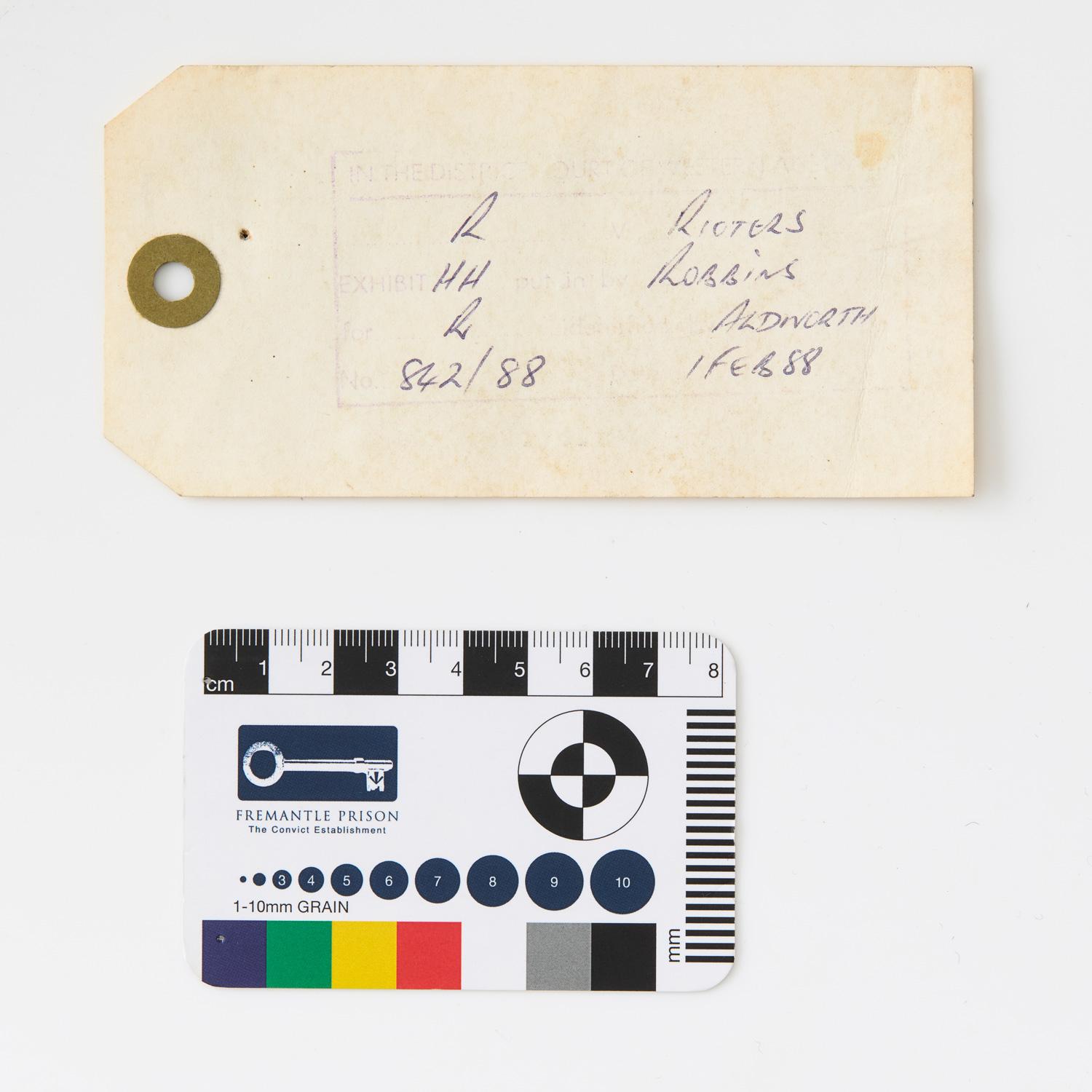
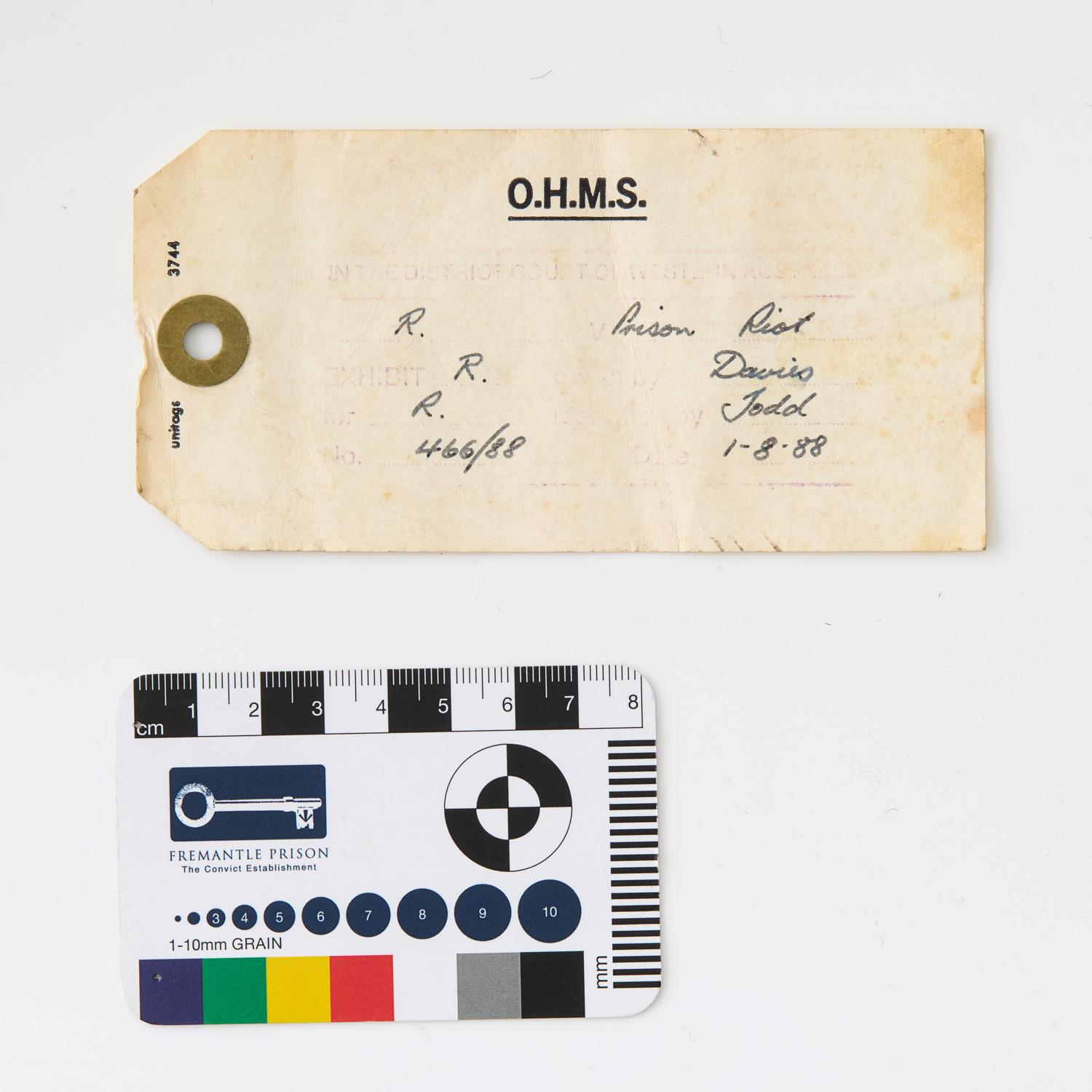
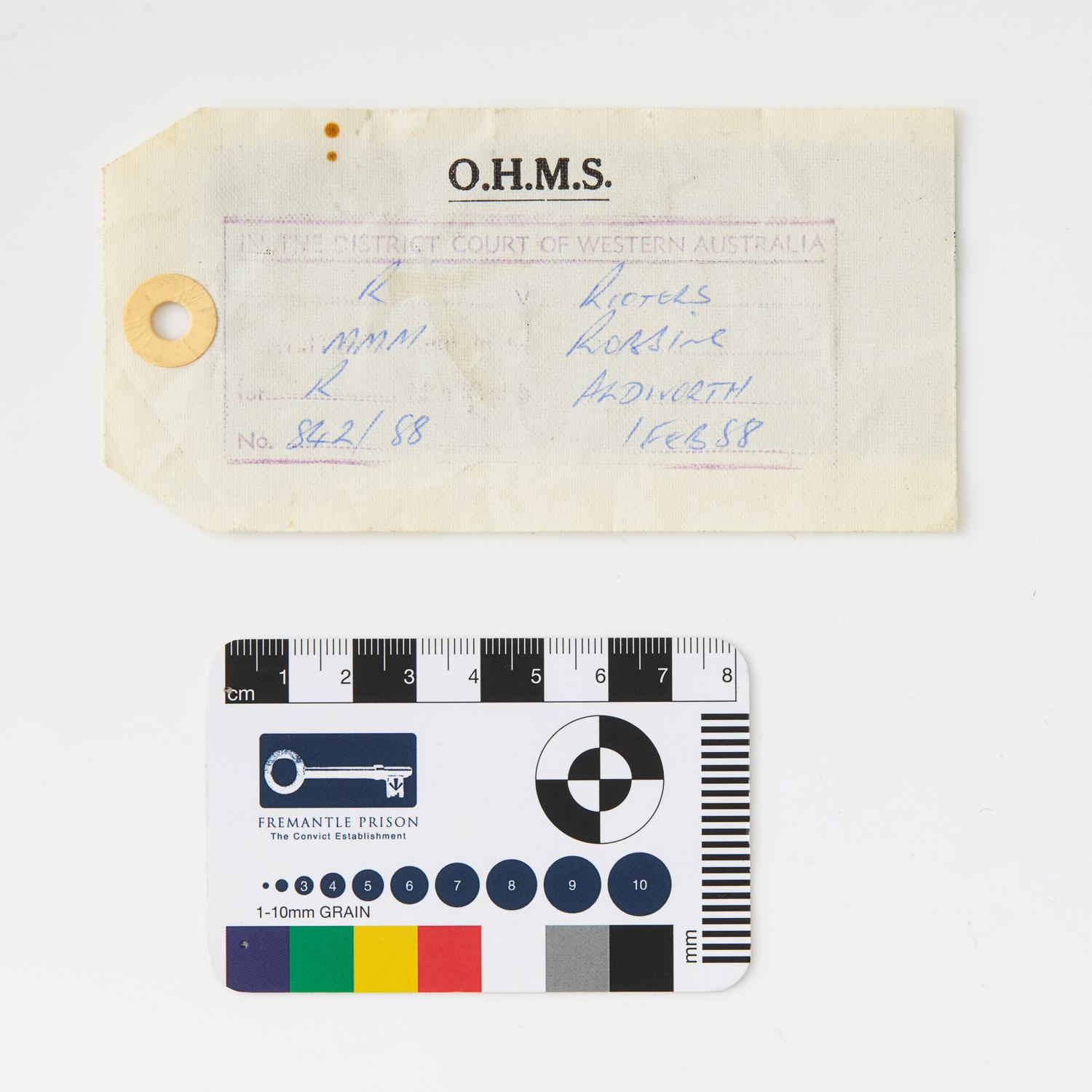
Each club carries with it a corresponding evidence tag. 1995.473.2 is a cream-coloured rectangular paper tag with punched hole along the short end. The reinforcing eyelet surrounding this hole is olive green. The two corners near the eyelet end of the tag are cut off. Stamped on front of tag is a District Court of Western Australia Stamp in purple, which is badly faded. It reads 'IN THE DISTRICT C[OURTOF WESTERN AUSTRALIA/R V RIOT[ERS]/Exhibit R Put in by ROBBINS/for R identified by/No 842/88/ Date 12'. The 12 is followed by indistinct purple lettering. The handwriting is in block capitals in black pen. On the back the maker's mark is stamped in black at the eyelet end. At the top of the tag 'O.H.M.S' is printed in bold black lettering
These makeshift weapons were gathered from scenes of the 1988 riot by the prosecution team and used as evidence against the ringleaders charged and brought to trial for instigating the riot and resulting fire. The clubs and evidence tags were returned to Fremantle Prison after the trial. The wood was probably torn from exercise yards furniture, fixtures and/or fittings.
Evidence tags were later found onsite along with metadata relating to the wooden clubs.
Details
Details
'IN THE DISTRICT C[OURTOF WESTERN AUSTRALIA/R V RIOT[ERS]/Exhibit R Put in by ROBBINS/for R identified by/No 842/88/ Date 12'.
Pieces of timber used by prisoners as clubs and weapons during the January 1988 riot at Fremantle Prison.
Known riots at the prison occurred in the late 1890s, 1902, 1930, 1943, 1966 and 1972; a common theme for the instigation of these riots being poor food quality and overall conditions. In 1982 prisoners again protested over the conditions of Fremantle Prison, prompting a Royal Commission, which recommended closure. In 1985 there was a revolt in the exercise yard, during which prisoners attempted to set fire to the Prison.
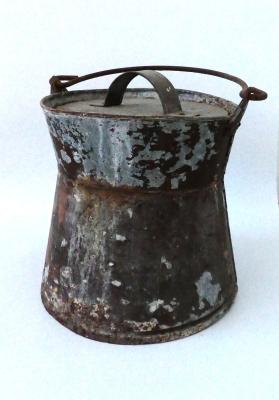
Whilst riots occurred before 1988; the 4th January 1988 riot and ensuing hostage situation were a pivotal event that had long lasting impacts on the future use of the prison and set the scene for its eventual closure in 1991. At 3:30pm on 4 January 1988, a group of rioters rushed the grill gate and stormed the Division attacking officers with any item which came to hand, hot water, plates, foodstuffs, buckets and makeshift weapons. The improvised weapons were used throughout the riot, crucially at the beginning during the diversion and during, to maintain the hostage situation. The prisoners lit fires, using newspapers, cell furniture and stockpiled fuel. The flames reached the roof, which eventually collapsed in 4 Division.
Five officers were taken hostage and fifteen officers were injured in the ensuing violence. Hostages were released after 18 hours. Whilst there were serious injuries, no one was killed. The estimated damage bill to the Prison was between $1.5 and $2 million. The instigators of the riot were separated from the prison population in the newly established Special Handling Unit.
Two weeks later, prisoners at Fremantle went on hunger strike, calling for a public inquiry into the conditions at the Prison and to protest the withdrawal of their privileges. An inquiry was held in February and was highly critical of the Prison’s outdated facilities. The government began plans for a new prison, and Fremantle finally closed in November 1991, 80 years after its closure was recommended in the 1911 Royal Commission. It was superseded by the new maximum-security prison at Casuarina.
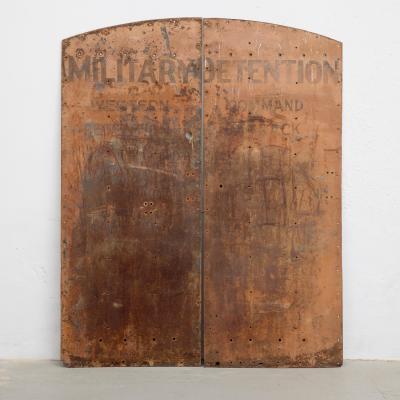
These objects illustrate prisoner disobedience towards institutionalised authority. The use of everyday objects as weapons used to incite unrest and take control of the prison along with other means such as boiling water and setting fire to stockpiled fuel; speaks to the lengths prisoners took to undertake the riot. Along with evidence tags and riot banners, these object illustrate a pivotal moment in the prison’s history and are of historical significance.