

gate panels military
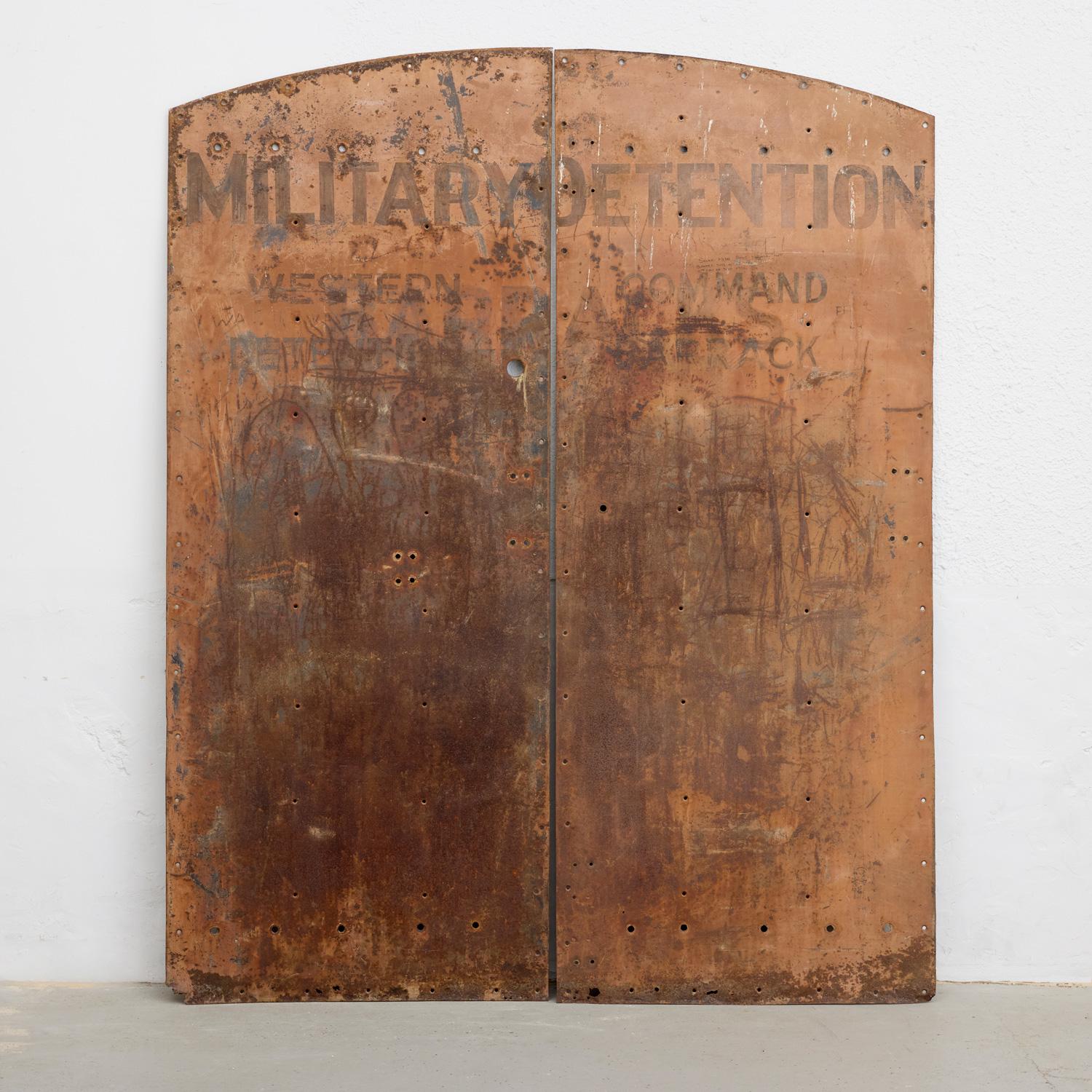
1940Two 3mm thick plate metal door panels. Each panel is domed slightly at the top and edged by vertical and horizontal rows of 200mm bolt holes originally used to secure each door to the wooden gate frame. Each panel measures 2280 mm in height by 915 mm wide and 3mm in depth. The paint is abraded and corroded from exposure to outdoor conditions, however the words MILITARY DETENTION BARRACKS, WESTERN AUSTRALIA, and, 'WESTERN COMMAND/ DETENTION BARRACK' are visible in faded sienna paint. Various inscriptions and etchings are visible in the paint work. The gates were subject to conservation treatment in 2025 and can be considered to be in fair condition with corrosion stabilised.
This pair of rectangular metal gates were installed on the Knutsford Street perimeter wall of the prison by the Australian Army in 1940. Post World War Two, the gateway was bricked up on the inside of the prison, but still insitu and visible from the outside. The gates were rediscovered during the Business Centre renovations of New Division in 1995.
Details
Details
'MILITARY DETENTION BARRACKS, WESTERN AUSTRALIA', 'WESTERN COMMAND/ DETENTION BARRACK' .
The gates relate primarily to Fremantle prison’s past use by the military, including the experience of those incarcerated as ‘enemy aliens’ and prisoners of war. During WWII, the Australian Army occupied sections of Fremantle Prison. Between 1940-46, a portion of the prison was used as an internment centre for enemy alien civilians, while New Division served as detention barracks for military personnel, called the Western Command Detention Barracks. Civilian prisoners in the Main Cell Block remained largely separate from the military detainees.
Tensions between the management of the State-operated Prison and the Commonwealth-administered Detention Barrack existed during operations, with Defence pressing for access to the entire Prison site, arguing that ‘the psychological effect of entry through the Civil Prison gateway and incarceration in portion of the Civil Gaol premises is not calculated to have an inspiring or healing effect on the personnel concerned.’
The Army Detention Barracks at Fremantle Prison had several names throughout the war. First named the Western Command Detention Barrack, before the Western Australian Line of Communications Area Detention Barracks and lastly the 11th Australian Detention Barrack. Given the gates have 'WESTERN COMMAND' painted on them, it can be inferred that the gates were painted between March 1940 and April 1942 when the name was changed.
Military prisoners were defined as either SNLR (Services No Longer Required) or SUD (Soldiers Under Detention). SNLR men were discharged from the military prior to serving their sentences. SUDs were still considered members of the Australian Military Forces. SUD and SNLR were kept separate, with SNLR housed in New Division, and SUD in 3 and 4 Divisions.
There are relatively few items in the collection which encapsulate the theme of the prison’s military occupation so symbolically. items in the collection that illustrate use of the prison by the military- those that are included thusfar are 2000.101 11TH Australian Detention staff 1944 slide and 2018.3 baton.
Other items by Australian Army
-
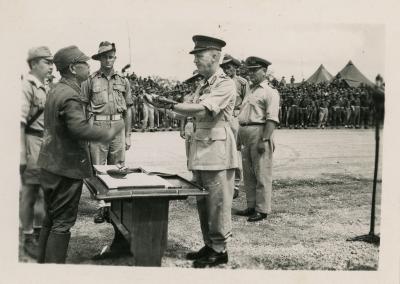
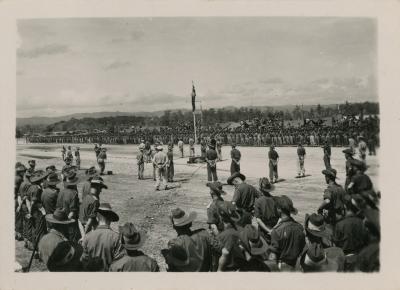
Black and white photograph of the Japanese surrender to Australia 1945
-
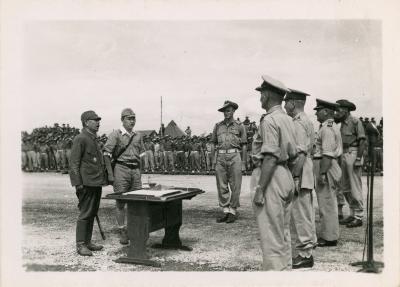
Black and white photograph of the Japanese surrender to Australian Forces 1945.
-
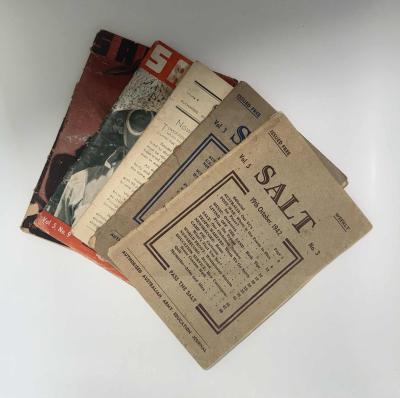
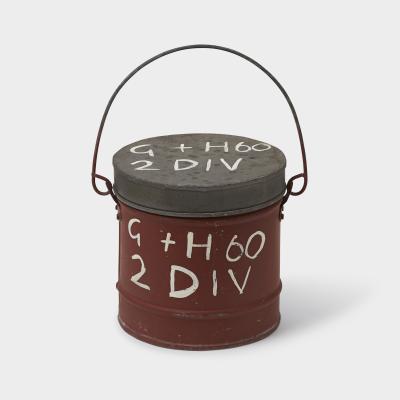
Australian Army Salt Magazines
-
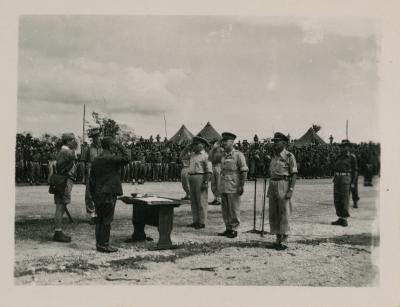
Black and white photograph of the Japanese surrender to Australia 1945
-
Photograph of the Japanese surrender to Australia 1945
-
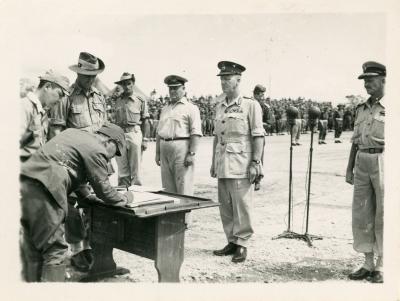
Black and white photograph of the Japanese surrender to Australian Forces 1945.
Scan this QR code to open this page on your phone ->
