
WW1 Medals - issued to F B Davies
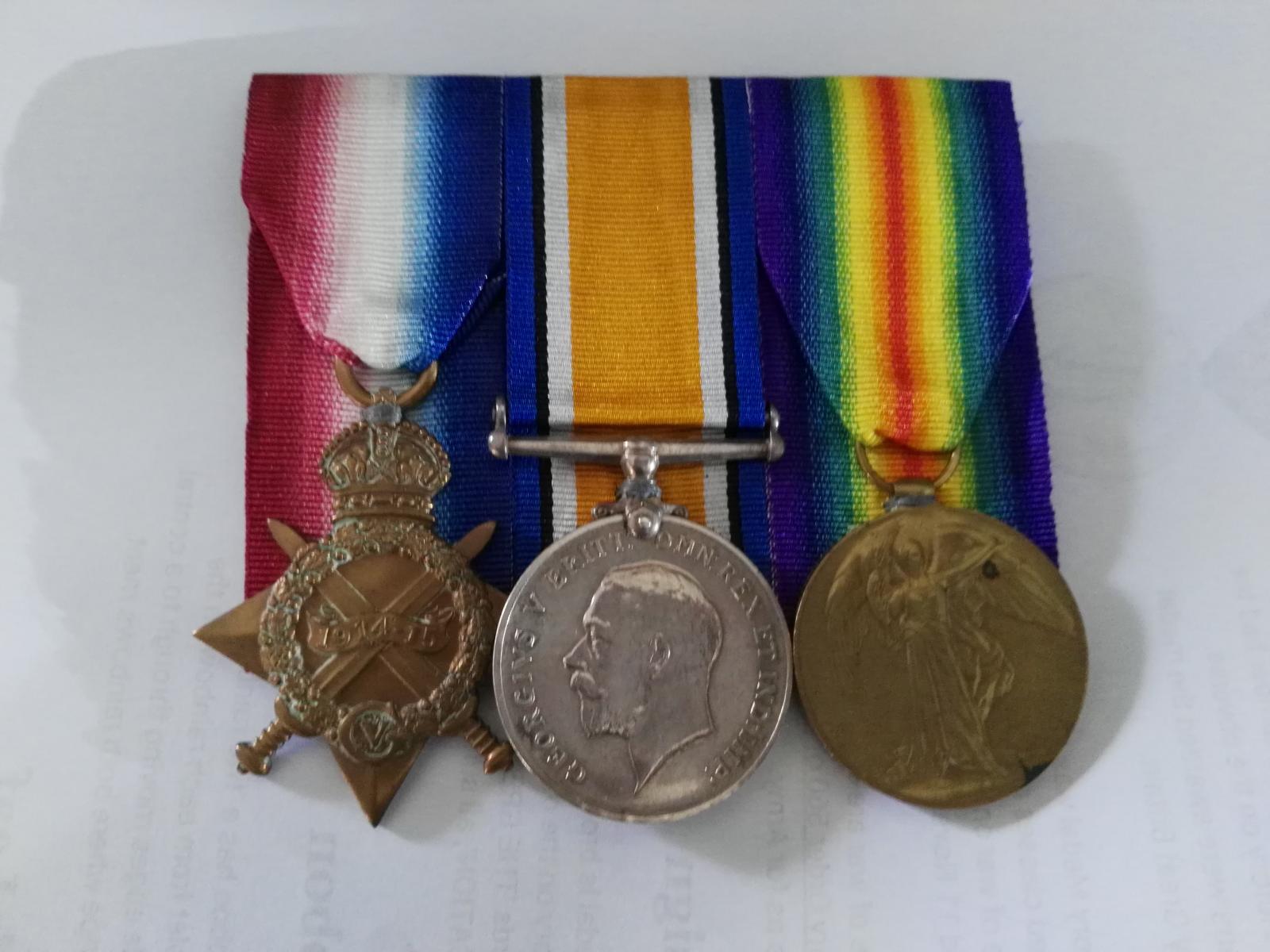
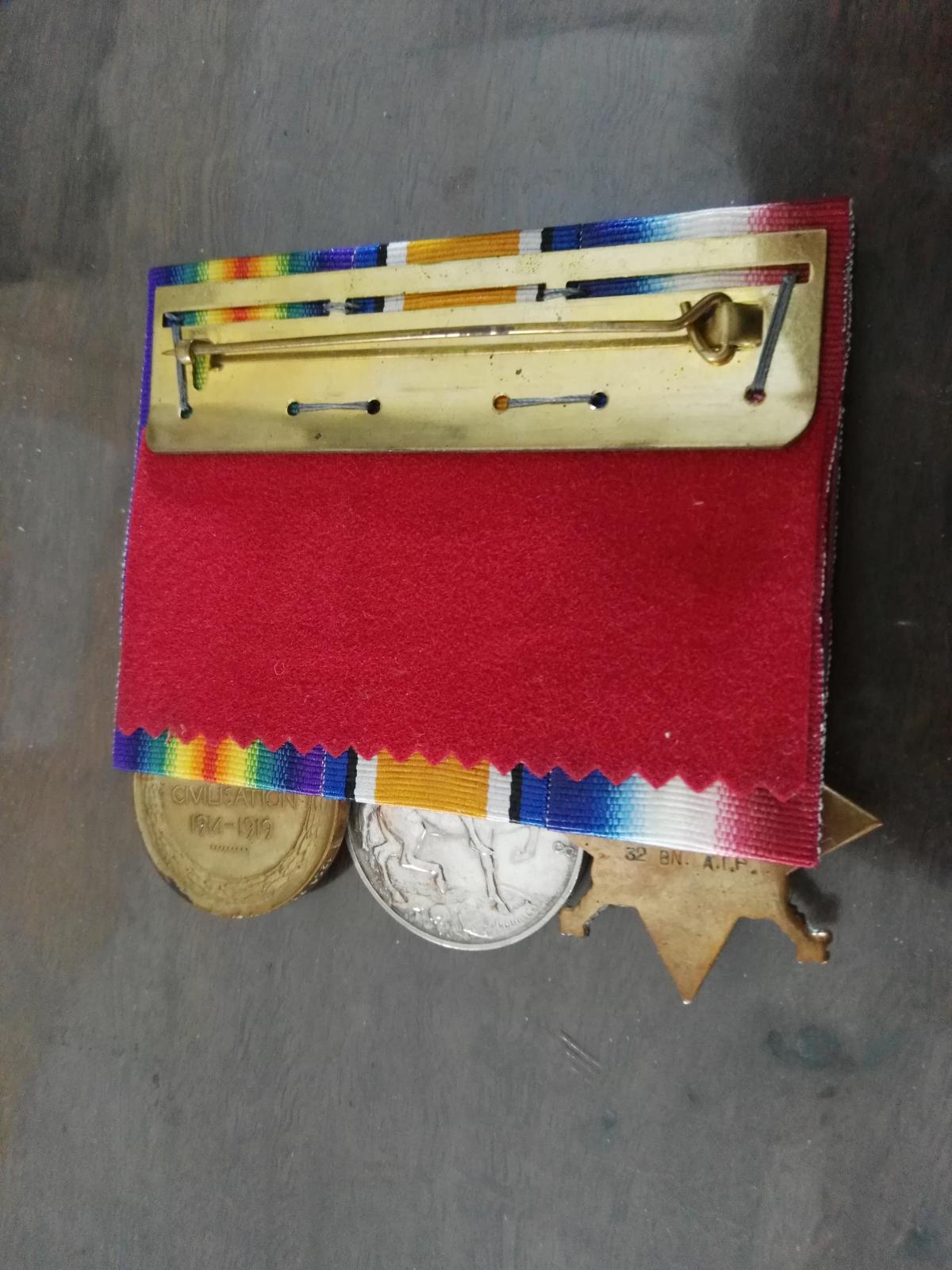
Three WW1 medals on individual ribbons and joined at the back with a wide band and pin attached with thread that were awarded to Private FB Davies. Details of these medals are as follows:
Item 1 - STAR SERVICE MEDAL 1914-1915 is a four-pointed star, bronze, ensigned with crown. A metal ring to attach ribbon, which has the red, white and blue colours of the Empire, in shaded and watered stripes.
Front of medal: The uppermost point of the star is replaced by a royal crown. The center features two crossed Gladius Roman swords with blades pointing upward. The swords are overlaid with a wreath of oak leaves. A central scroll is placed horizontally across the crossed blades.
Item 2 - BRITISH WAR MEDAL 1914-1920 is silver and round with large clip attached on the top of the ribbon with the colours of blue, orange, white, and black.
Front of medal: a bareheaded effigy of King George V.
Back of medal: a naked St George is depicted riding a horse, advancing to the right, holding a short sword. The horse is shown trampling over the Prussian eagle shield, along with the emblems of death (a skull and cross-bones). Above the scene is the risen sun of victory.
Item 3 - VICTORY MEDAL 1914-1918 is bronze and round with ring to attach ribbon of yellow, red, green, blue, and violet. The ribbon has a 'two rainbow ' design, with the violet from each rainbow on the outside edges moving through to a central red stipe where both rainbows meet.
Front of medal: A winged, draped figure of Victory. Her left arm is extended outwards, and her right hand holds a palm branch. She stands with her feet together, looking directly forward, with a stark, plain background.
Back of medal: The entire inscription is surrounded by a laurel wreath, which is a traditional symbol of victory.
"THE STAR" medal was authorised in 1918 and was awarded for service in specified theatres of war between 5th August 1914 and 31st December 1915.
"THE BRITISH WAR" medal is a campaign medal of the United Kingdom, which was awarded to officers and men of Britain and the Imperial forces for service in WW1.
"THE VICTORY" medal was authorised in 1919 to commemorate the victory of the Allied forces over the Central powers. Each Nation used the standard ribbon but used different designs on the medal to reflect national identity and custom. The Victory Medal was awarded to prescribe classes of persons who entered a theatre of war on duty between 5th August 1914 and 11th November 1918. Australians were awarded the medal issued by Great Britain.
The band adjoining the ribbons was issued to personnel as a means to display their medals on the chests.
Details
Details
Medal 1 ("Star")
Front: '1914-15. GV'
Back: 'Pte F B Davies. 32 BN AIF'
Medal 2 ("British War")
Front: 'GEORGIVIS.V.BRIT.OMN:REX ET IND:IMP:'
Back: "1914-1918"
Edge: "1250. Pte F B Davies. 32 BN AIF"
Medal 3 ("Victory")
Front: (no inscription)
Back: 'The Great War for Civilisation 1914-1918'
Edge: "1250. Pte F B Davies. 32 BN AIF"
Full Name: Ferrand Bushfield Davies
Service Number: 1250
Rank: Private
Unit: 32nd Infantry Battalion, Australian Imperial Force (AIF)
Born: 28 February 1893
Birthplace: Busselton, Western Australia
Died: 16 January 1971
World War I medals, often awarded as a "Trio" (Star, British War Medal, Victory Medal), recognized service, campaigns, and bravery for Imperial forces, including Australians:
(A) Star Medal (1914–1915): Awarded to personnel who served in a theatre of war between August 5, 1914, and December 31, 1915.
(B) British War Medal (1914–1920): A silver medal awarded for service, featuring St. George on horseback.
(C) Victory Medal (1914–1919): An Allied medal with a rainbow ribbon symbolizing the "Great War for Civilisation".
Historic: the collection of medals reflects the level of commitment by Ted Davies and others from country towns who travelled overseas to fight for Australia as a volunteer in WW1.
Provenance: The War Medals have a provenance to E F Davies and his father, F B Davies.
Aesthetic: War medals have strong aesthetic appeal with their intact ribbons.
Social: War medals have a strong significance - they are an example of the commitment made by Australians during the 'call for arms'.
More items like this
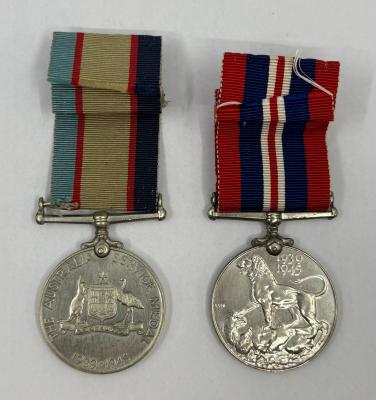
Other items from Busselton Historical Society
-
17 National Service Battalion cloth patch
-
Perfume Bottle
-
Pressed Glass Decanter
-
Souvenir - Caves House coffee cup
-
Rocking Horse (green stand) - Roebuck & Sons
-
Souvenir Plate - The Baths Busselton
-
Souvenir Jug - The Avenue Busselton
-
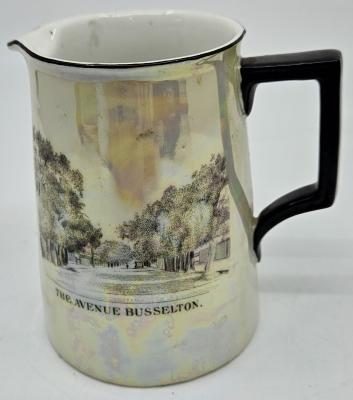
Souvenir Jug - The Avenue Busselton
-
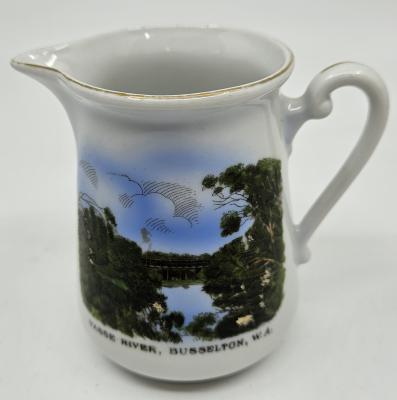
Souvenir - Vasse River Busselton
-
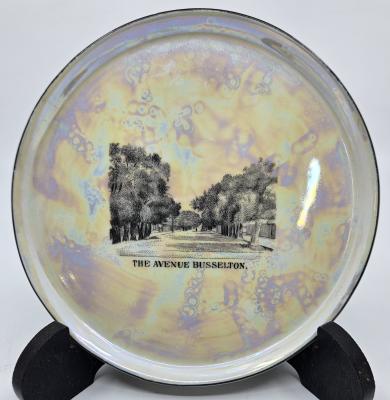
Souvenir Plate - The Avenue Busselton
-
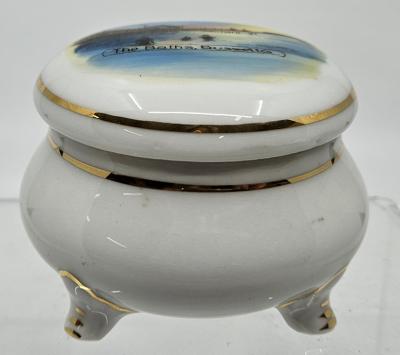
Souvenir Pot - The Baths Busselton
-
Souvenir Pot - Avenue, Queen Street Busselton
Scan this QR code to open this page on your phone ->