

CLOCK, WALL - MADE IN WURTTEMBURG
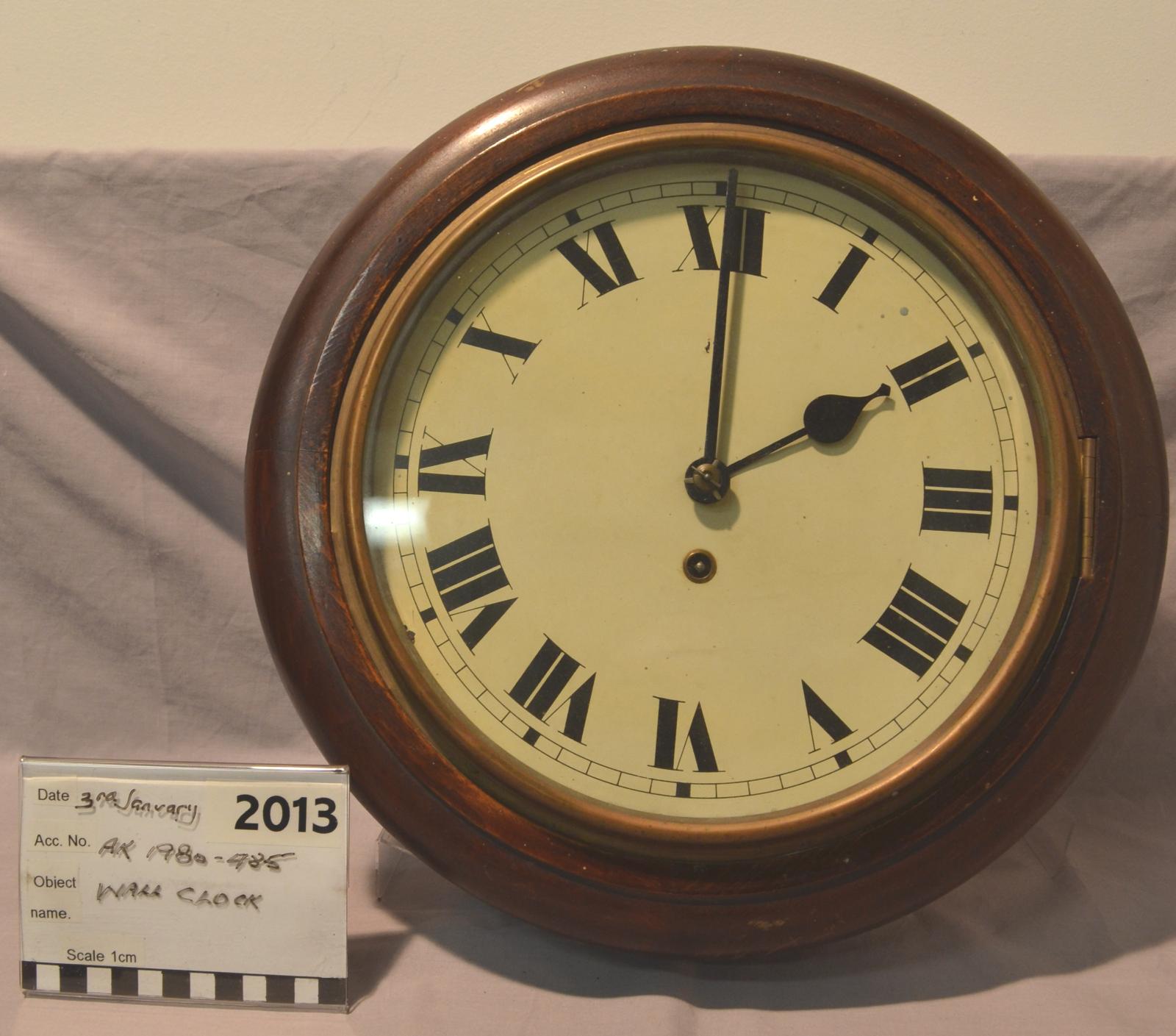
1891 - 1980Cloak dial is Off white with black Roman numerals. Hands are also black with the hour hand short with a spade shape at the end The glass is mounted in a brass ring and is hinged to the left. The front is wood and slightly larger than the glass.
The mechanism is housed in a rectangular case on the rear of the clock and has a trapdoor at the base to allow access to the pendulum.
This clock was used in the Armadale St John's Ambulance Hall, on the corner of Hobbs Drive and Coombe Avenye, between 1961 and 1980. The St John Ambulance Hall was built in 1961 and used as the local base for the Armadale Sub-Branch of the St John Ambulance Association where they kept the ambulances and conducted their administration, training, resting and did public training in first aid. . In 2017, a new $3.5 million facility opened in Kelmscott, marking a new chapter for local emergency care. The original hall was demolished in 2021.
Several incidents of injured people waiting hours for an ambulance from Perth prompted the formation of the Armadale Sub-Branch of the St John Ambulance Association in 1951. Established to serve the growing Armadale-Kelmscott and Serpentine-Jarrahdale districts, the service allowed local residents to subscribe for free ambulance transport to Perth or nearby hospitals.
In its first year, the sub-branch purchased a second-hand Chevrolet ambulance, which responded to 109 calls and travelled over 9,600 km in just nine months. By 1953, it had handled 240 calls, covering nearly 19,000 km. A new ambulance was purchased in 1954, thanks to the efforts of dedicated fundraisers.
Beyond emergency transport, the sub-branch also offered first aid and home nursing courses. These were initially taught by Frank Snowling and later by Dr. Noel Colyer. Operated entirely by volunteers until 1967, the service didn’t employ full-time staff until 1981.
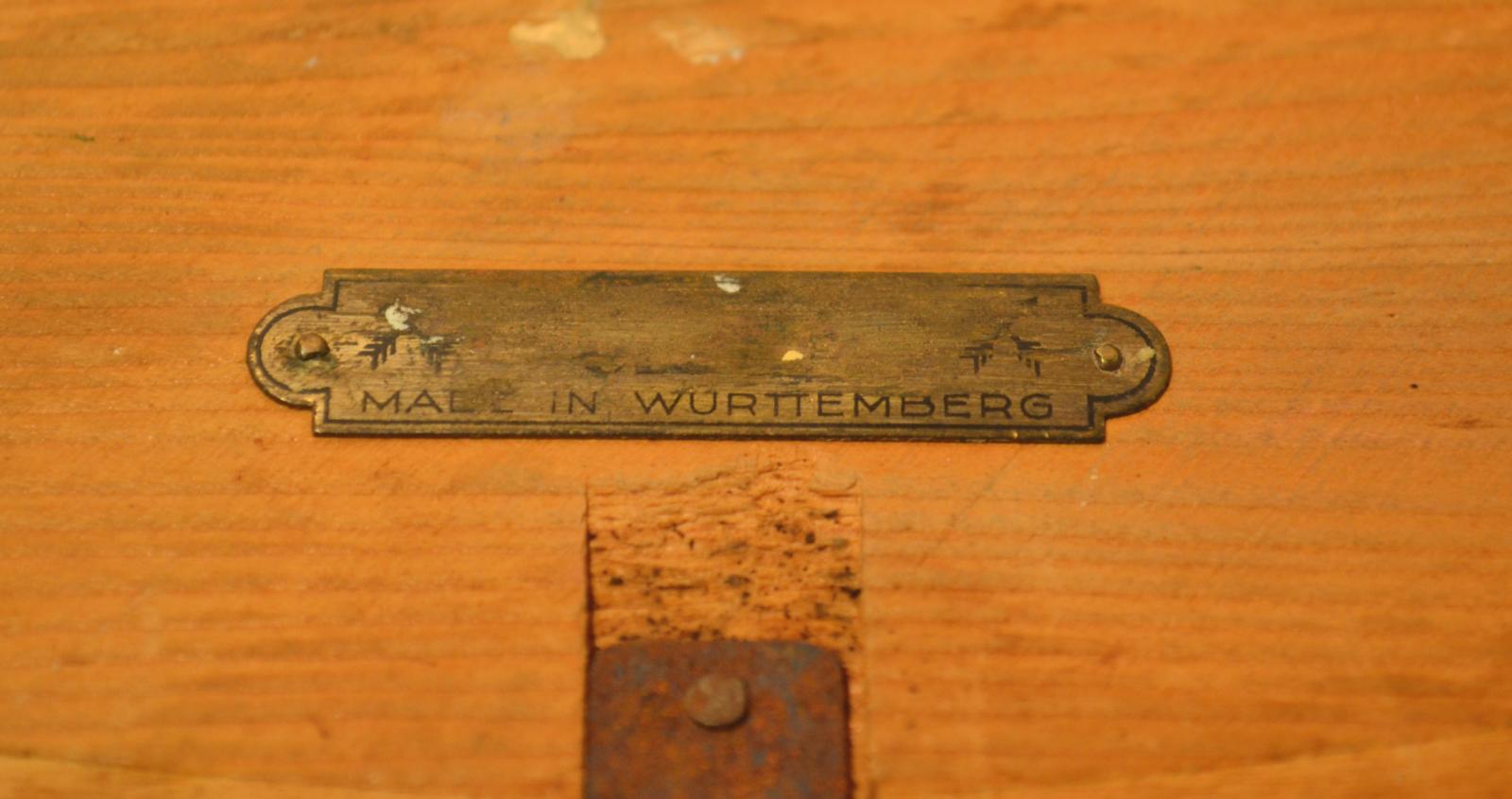
The plaque on the back of this clock is worn, with the manufacturers name totally obliterated, however a logo of two crossed arrows is visible on either side of the plaque. The crossed arrows with three feathers on each side is the trademark of Hamburg-Amerikanishe Uhrenfabrik (HAC), a German clock manufacturer based in Schramberg, Wurttemberg.
Hamburg-Amerikanische Uhrenfabrik (HAC), also known as the Hamburg American Clock Company, was founded in 1873 by Paul Landenberger in Schramberg, in the Kingdom of Württemberg, Germany. The company quickly gained a reputation for producing high-quality yet affordable clocks, becoming a major player in both domestic and export markets. By the late 19th century, HAC was exporting clocks globally, especially to Britain, North America, and Australia. In circa 1891, HAC adopted its famous crossed arrows trademark, which remained in use for decades and helped distinguish its products internationally.
HAC manufactured a wide range of timepieces, including wall clocks, bracket clocks, mantel clocks, and alarm clocks, many with ornate wooden cases and precise mechanical movements. The company embraced modern mass-production techniques while maintaining high craftsmanship standards.
In the late 1920s, HAC was absorbed by Junghans, another major German clock manufacturer, though some HAC-branded clocks continued to be produced into the 1930s.
This clock dates to between 1891 and 1918, when the German state of Wurttemberg existed under that name and began marking exports accordingly. The phrase “Made in Wurttemberg” was used prior to “Germany” becoming the more dominant export marking post-WW1.
The clock was donated to the museum by the Brixley family. Alfred Thomas Brixey was a founding member of the Armadale Sub-Branch of the St John Ambulance association and was a active member up to the mid to late 1960s . He was born in 1906 in Havant, Hampshire, England. Trained as a butcher, he emigrated to Australia at the age of 20, arriving in Fremantle, Western Australia aboard the SS Ormuz in November 1926. Settling in Armadale, he worked as a farmer through the 1930s and 1940s. In 1934, he married Nancy May Westlake.
During World War II, Brixey enlisted in the Australian Army on 29 March 1942, serving in D Company of the 2nd (Fremantle) VDC Battalion until his discharge on 15 October 1945. That same year, he was elected to the Armadale-Kelmscott Road Board, where he served until around 1950.
Brixey continued farming at his property "Glencoe" on Eighth Road, Armadale until at least the mid-1960s. He later retired to Rockingham, Western Australia, living at 13 George Street from at least 1968. He passed away in Rockingham on 24 March 1995.
Details
Details
MADE IN WURTTEMBURG
This wall clock, dating between 1891 and 1918, was manufactured by Hamburg-Amerikanische Uhrenfabrik (HAC), a prominent German clockmaker based in Schramberg, Württemberg. Despite the manufacturer’s name being worn away, the clock is identifiable by HAC’s distinctive crossed arrows trademark. Known for producing reliable and affordable timepieces for international markets, HAC exported widely to Britain and Australia. This example, with its round wooden bezel and Roman numeral dial, reflects the schoolroom or railway-style clocks common in the early 20th century.
Open in Google Maps
Nearest geotagged records:
City of Armadale - History House
City of Armadale - History House
Other items from City of Armadale - History House

Scan this QR code to open this page on your phone ->
