

BEEHIVE SMOKER WITH INSERT
c. 1915 - 1950a) Smoker - Metal cylinder attached to a metal and rubber rectangular bellows. The walls of the bellows are timber which is heavily stained and splattered with white (either paint or lead). Metal edges seal the rubber to the timber and are nailed in place. The cylinder is attached to the bellow by two brackets which are welded to the cylinder and bolted to the bellows.
To the right of the brackets and between them vertically, a small circular vent has been drilled into the timber and is surrounded by a raised washer.
A curved sheet of metal is nailed to the RHS of the cylinder at only one edge so it sticks out away from the cylinder.
A lid is attached by a thin piece of metal bolted to the front of the cylinder and attached by a hinge. The lid sits down over the cylinder and has a spout that faces forward with one large opening. There are two smaller holes drilled into the lid towards the back.
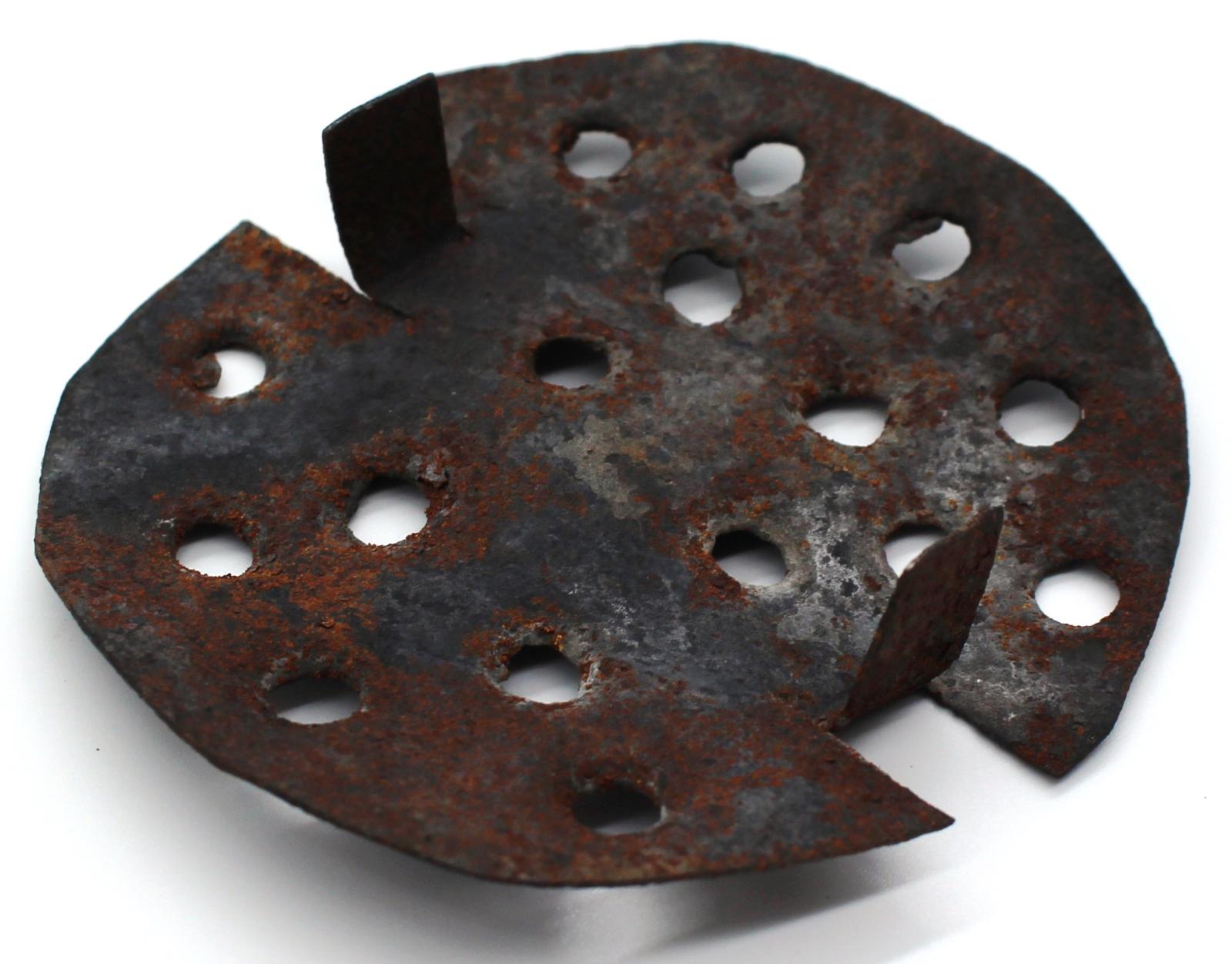
b) Insert - Within the cylinder (smoker) is a single circle of metal the same diameter as the cylinder. It has 16 holes drilled or punched through it. Two 1cm incisions have been made on either edge of the disc, opposite each other, and the tab of metal between the incisions folded up at 90 degrees to the body of the metal. Blackened heavily on one side and quite rusty.
The rectangular wood frame, heavy-duty metal tacks holding the bellows fabric, and the specific shape of the cylindrical chamber are highly characteristic of commercial smokers produced between World War I and the post-WWII era.
This model design is similar to a beehive smoker in the Powerhouse Museum collection which was made by Pender Brothers, New South Wales in 1931.
Details
Details
A small fire would be made in the cylinder, often using pine needles or similar dried vegetation. The bellows were pumped to force smoke out the nozzle on top. Smoke is puffed onto the hives and frames when the comb is being removed to sedate the bees.
A cool smoke has to be used because hot smoke aggravates the bees.
Beehive smoker, Powerhouse Collection, New South Wales


Scan this QR code to open this page on your phone ->
