

PRINT, LORD'S PRAYER AND TEN COMMANDMENTS - FRAMED
1883 - 1996Framed colour print with pane glass cover. The print has a cream background with an oval image. The image has a floral decoration around the edge are eight circular religious colour illustrations, two on each side middle and two at the top and two at the bottom, and two dome shaped colour religious illustrations, one at the top middle and one at the bottom middle. The two dome shaped illustrations are flanked by two of the circular illustrations. Under, over and in the top two circular illustrations with in the boarder are banner with text. The text is one of the 10 Commandments. Each of the illustrations is an interpretation of the Commandment it is associated with.
In the middle is text, the authorized or King James 1611 version of The Lords Prayer, broken up into segments with each segment in a different colour, different fonts and with a variety of decorations. In the centre of the print is a colour illustration of a garden or possibly an interpretation of the Garden of Eden with the word [Earth] made up of tree branches and trunks at the bottom and in the sky [HEAVEN]. The text is [OUR FATHER / WHICH ARE IN / HEAVEN / Hollowed / BE THY NAME THY KINGDOM COME / Thy Will be done in Earth as it is in Heaven / Give us this day our daily BREAD / and forgive is our DEBTS AS WE forgive our debtors / and lead us not into / and deliver us from / Temptations Evil / for thine is the KINGDOM and the power / AND THE GLORY FOR EVER / AMEN].
The prayer text without design alterations:
Our Father which art in heaven,
Hallowed be thy name.
Thy kingdom come,
Thy will be done in earth,
as it is in heaven.
Give us this day our daily bread.
And forgive us our debts,
as we forgive our debtors.
And lead us not into temptation,
but deliver us from evil:
For thine is the kingdom,
and the power, and the glory,
for ever. Amen.
The print was first produced in 1883. This framed print was purchased at an auction by the Lemmey family in the 1930s. It was displayed in their home at 13 Third Road, Armadale for around 30 years before being donated to the museum in 1996. The print uses a 1611 King James version of the Lords Prayer associated with the Church of England.
Lorna Rose Beazley was born on 16 October 1921 in Northam, Western Australia, to Ivan Lance and Ivy Mary Anne Beazley. Growing up in regional Western Australia during the interwar years, her life, like that of her generation, was shaped by the Second World War.
On 15 March 1942, at age 20, Lorna enlisted in the Australian Women’s Army Service (AWAS) in Perth (Service No. W45393). As a Private, she joined the pioneering corps of women whose contributions supported the military and home front during a time of national uncertainty. During the war, she met Mervyn John Lemmey, born in 1919, who had enlisted in the Australian Military Forces in April 1941 (Service No. WX34036). Their shared experiences led to marriage and a life together in Western Australia.
Following the war, Lorna and Mervyn focused on family and community life. Electoral records trace their postwar movements: Mundaring Weir in 1949, Dowerin and Mundaring in 1954, and settled in Mundaring by 1958, where Lorna undertook home duties. From the late 1960s, they moved to 38 Prospect Road, Armadale, living there for over two decades.
Mervyn passed away on 16 September 1994 and was buried at Mundaring Cemetery. Lorna lived another 16 years, passing on 7 March 2010, and was laid to rest beside him.
Lorna’s life reflects service, resilience, and quiet contribution—from her wartime enlistment to decades as a homemaker and community member. Her story, and her burial alongside Mervyn, marks a life deeply rooted in Western Australia, emblematic of her generation’s experiences.
This framed piece is a Victorian-era decorative print of the Lord’s Prayer (Matthew 6:9–13, King James Bible) featuring ornate lettering and vivid chromolithograph floral borders. Surrounding the central text are small circular vignettes illustrating biblical scenes or symbolic imagery corresponding to the prayer, including Jesus as the Good Shepherd at the top and depictions of teaching, forgiveness, and temptation along the sides and bottom. Likely produced in the late 19th century, such prints were common in Christian homes, serving both devotional and decorative purposes as moral reminders. If original, the piece holds historical and collectible value, appealing to enthusiasts of Victorian religious art and ephemera. Its combination of artistry, spiritual significance, and period style exemplifies the era’s approach to religious decoration, making it both a visually striking and culturally meaningful artifact.
Details
Details
This framed decorative mass produced print of the Lord’s Prayer, produced in 1883, is an example of Victorian-era religious art, combining devotional purpose with ornamental design. The central text, rendered in ornate lettering, reproduces the King James Bible version of Matthew 6:9–13, while surrounding vignettes depict biblical scenes and symbolic imagery, including Jesus as the Good Shepherd. Floral borders and chromolithograph techniques reflect the aesthetic conventions of late 19th-century Christian households, where such prints served both as moral reminders and decorative objects.
City of Armadale - History House
City of Armadale - History House
Other items from City of Armadale - History House
-
GLASS GLOBE, LAMP - KEROSENE
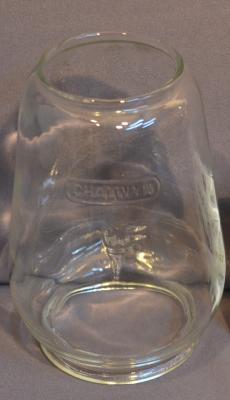
-
GLOBE, LAMP (GLASS) - KEROSENE LAMP
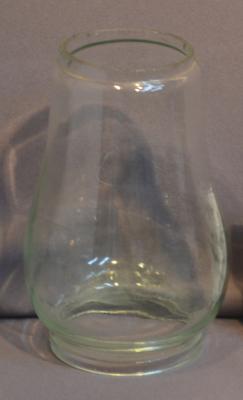
-
GLOBE, LAMP (GLASS) - KEROSENE LAMP
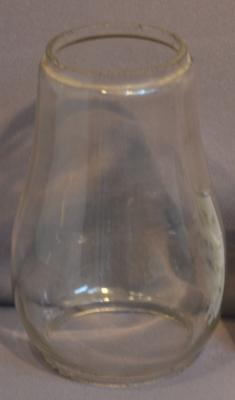
-
GLOBE, LAMP (GLASS) - KEROSENE LAMP
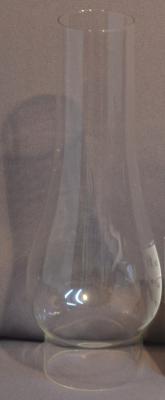
-
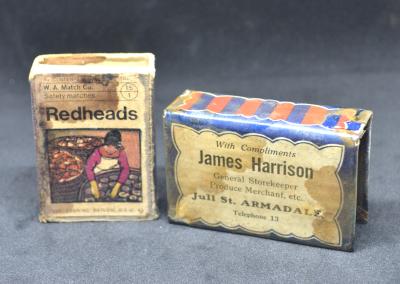
MATCH BOX HOLDER
-
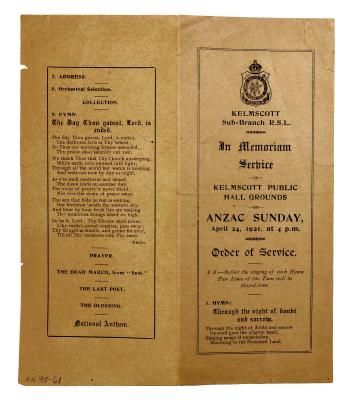
PROGRAMME, ANZAC DAY MEMORIAL SERVICE 1921
-
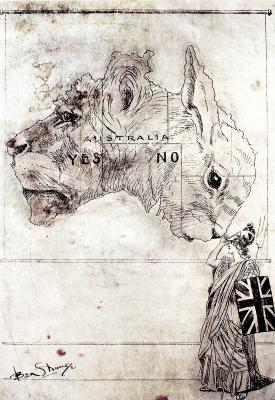
CARTOON - EAST IS EAST AND WEST IS WEST
-
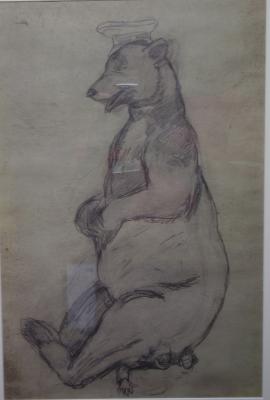
CARTOON - BEAR WITH CAP SITTING ON MAN
-
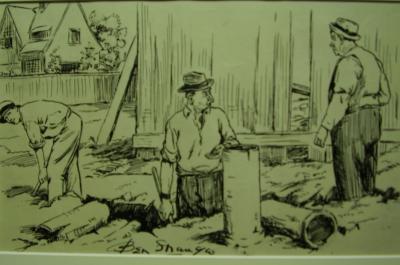
CARTOON - REPAIRING HOUSE
-
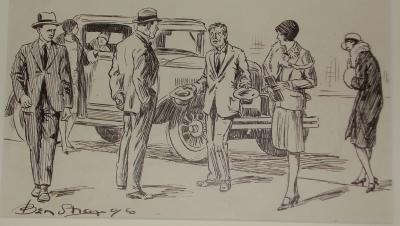
CARTOON - CROWD AROUND CAR
-
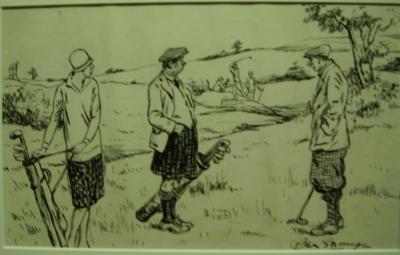
CARTOON - THREE GOLFERS ON A GOLF COURSE
-
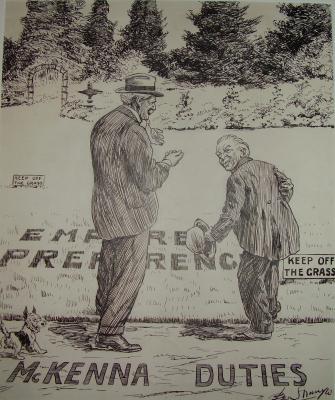
CARTOON - EMPIRE PREFERENCE
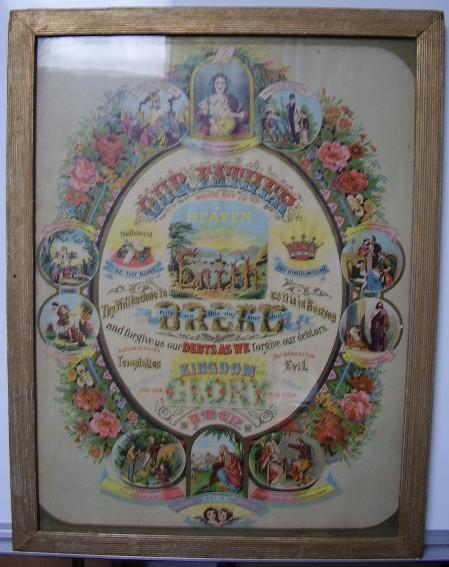
In the middle is text, the authorized or King James 1611 version of The Lords Prayer, broken up into segments with each segment in a different colour, different fonts and with a variety of decorations. In the centre of the print is a colour illustration of a garden or possibly an interpretation of the Garden of Eden with the word [Earth] made up of tree branches and trunks at the bottom and in the sky [HEAVEN]. The text is [OUR FATHER / WHICH ARE IN / HEAVEN / Hollowed / BE THY NAME THY KINGDOM COME / Thy Will be done in Earth as it is in Heaven / Give us this day our daily BREAD / and forgive is our DEBTS AS WE forgive our debtors / and lead us not into / and deliver us from / Temptations Evil / for thine is the KINGDOM and the power / AND THE GLORY FOR EVER / AMEN].
The prayer text without design alterations:
Our Father which art in heaven,
Hallowed be thy name.
Thy kingdom come,
Thy will be done in earth,
as it is in heaven.
Give us this day our daily bread.
And forgive us our debts,
as we forgive our debtors.
And lead us not into temptation,
but deliver us from evil:
For thine is the kingdom,
and the power, and the glory,
for ever. Amen.
Scan this QR code to open this page on your phone ->
