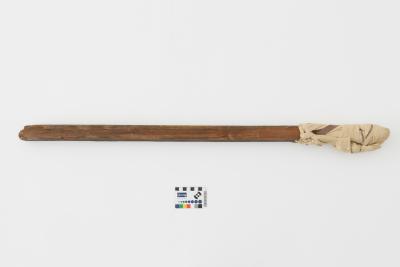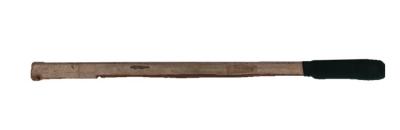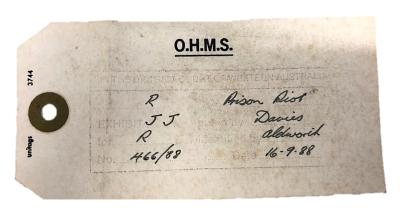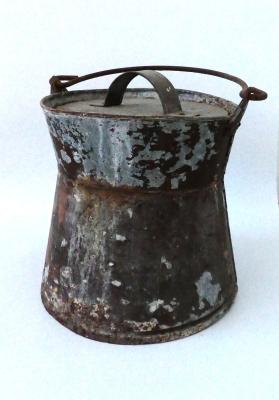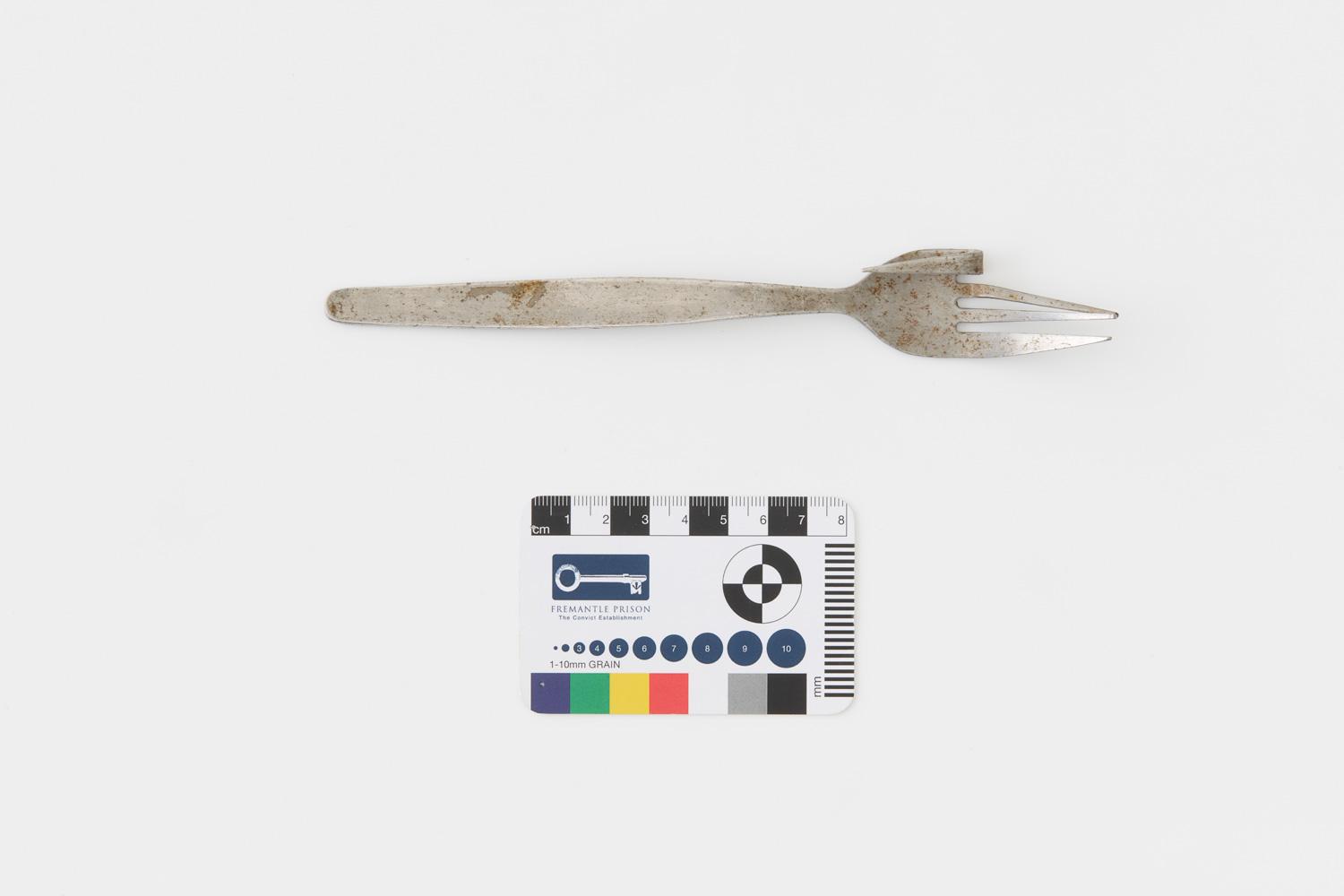
Table fork shiv and evidence tag
1988Long, thin, stainless steel, four tine table fork, modified shiv. Long, thin, stainless steel table fork, with a long, thin, flat handle, with a rounded end. Stamped into the surface on the back of the handle is, 'STAINLESS STEEL JAPAN'. At the opposite end the fork widens out into a wide, flat, concave surface, with four, thin, pointed tines protruding outwards. The far left tine is bent down on itself, towards the handle. The central two tines are bent slightly inwards at the top, creating a point.
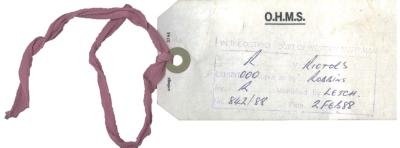
This shiv was found in 3 Division Yard on 21st April 1988, during the Prosecution team's visit to Fremantle Prison after the January 1988 riot. The accompanying evidence tag (1994.155.2) states, 'In the District Court of Western Australia. R vs Rioters Exhibit 000 put in by Robbins for R. Identified by Letch No 842/88 Date 2 Feb 88'.
The evidence tag (1994.155.2) was located by volunteer Laura Connell in the ORS files in the Research Library along with the printed data sheet for this shiv. The tag had previously been accessioned, however it had not been entered into Mosaic. This shiv was located in Refractory and renumbered correctly with the series part along with the evidence tag (from 94.155 to 1994.155.1).
Details
Details
STAINLESS STEEL JAPAN
Known riots occurred in the late 1890s, 1902, 1930, 1943, 1966 and 1972; a common theme for the instigation of these riots being poor food quality and overall conditions. In 1982 prisoners again protested over the conditions of Fremantle Prison, prompting a Royal Commission, which recommended closure. In 1985 there was a revolt in the exercise yard, during which prisoners attempted to set fire to the Prison.
Whilst riots occurred before 1988; the 4th January 1988 riot and ensuing hostage situation were a pivotal event that had long lasting impacts on the future use of the prison and set the scene for its eventual closure in 1991. At 3:30pm on 4 January 1988, a group of rioters rushed the grill gate and stormed the Division attacking officers with any item which came to hand, hot water, plates, foodstuffs, buckets and makeshift weapons. The improvised weapons were used throughout the riot, crucially at the beginning during the diversion and during, to maintain the hostage situation. The prisoners lit fires, using newspapers, cell furniture and stockpiled fuel. The flames reached the roof, which eventually collapsed in 4 Division.
The riot lasted into the next day, when the hostages were released after 18 hours. Whilst there were some serious injuries, no one was killed. The estimated damage bill to the Prison was between $1.5 and $2 million. The instigators of the riot were separated from the prison population in the newly established Special Handling Unit.
Two weeks later, prisoners at Fremantle went on hunger strike, calling for a public inquiry into the conditions at the Prison and to protest the withdrawal of their privileges. An inquiry was held in February and was highly critical of the Prison’s outdated facilities. The government began plans for a new prison, and Fremantle finally closed in November 1991, 80 years after its closure was recommended in the 1911 Royal Commission. It was superseded by the new maximum-security prison at Casuarina.
The object illustrates prisoner disobedience towards institutionalised authority. The use of everyday objects as weapons used to incite unrest and take control of the prison along with other means such as boiling water and setting fire to stockpiled fuel; speaks to the lengths prisoners took to undertake the riot. Along with evidence tags and riot banners, this object illustrates a pivotal moment in the prison’s history and is of historical significance.