

Souvenir felt naval pennant - HMNZS Achilles
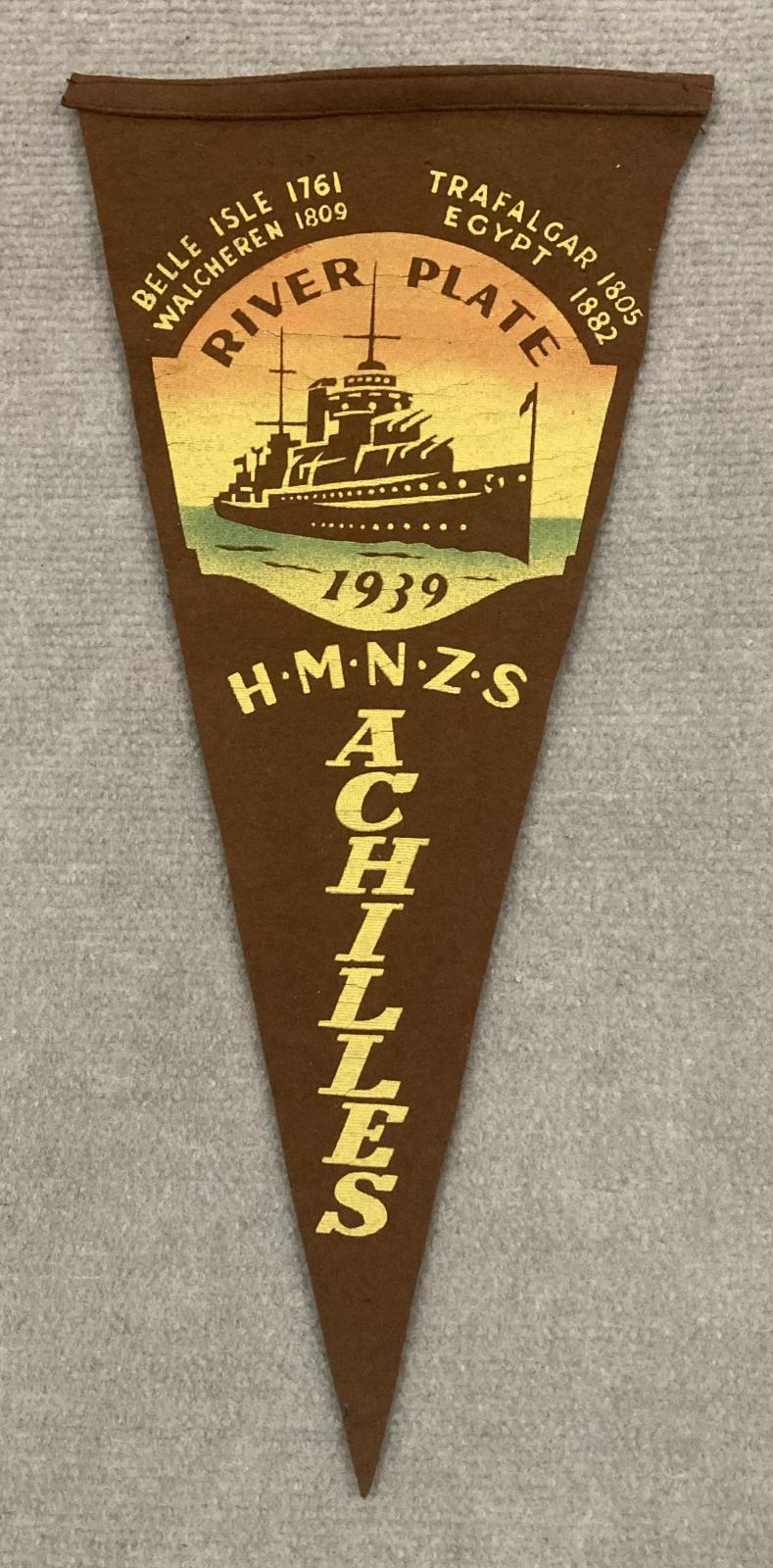
1939World War Two era triangular souvenir naval pennant in vertical orientation made from a brown felt base with printed yellow, cream, and orange detailing.
The graphics and text on the pennant are screen-printed using oil-based paint or thick lacquer ink
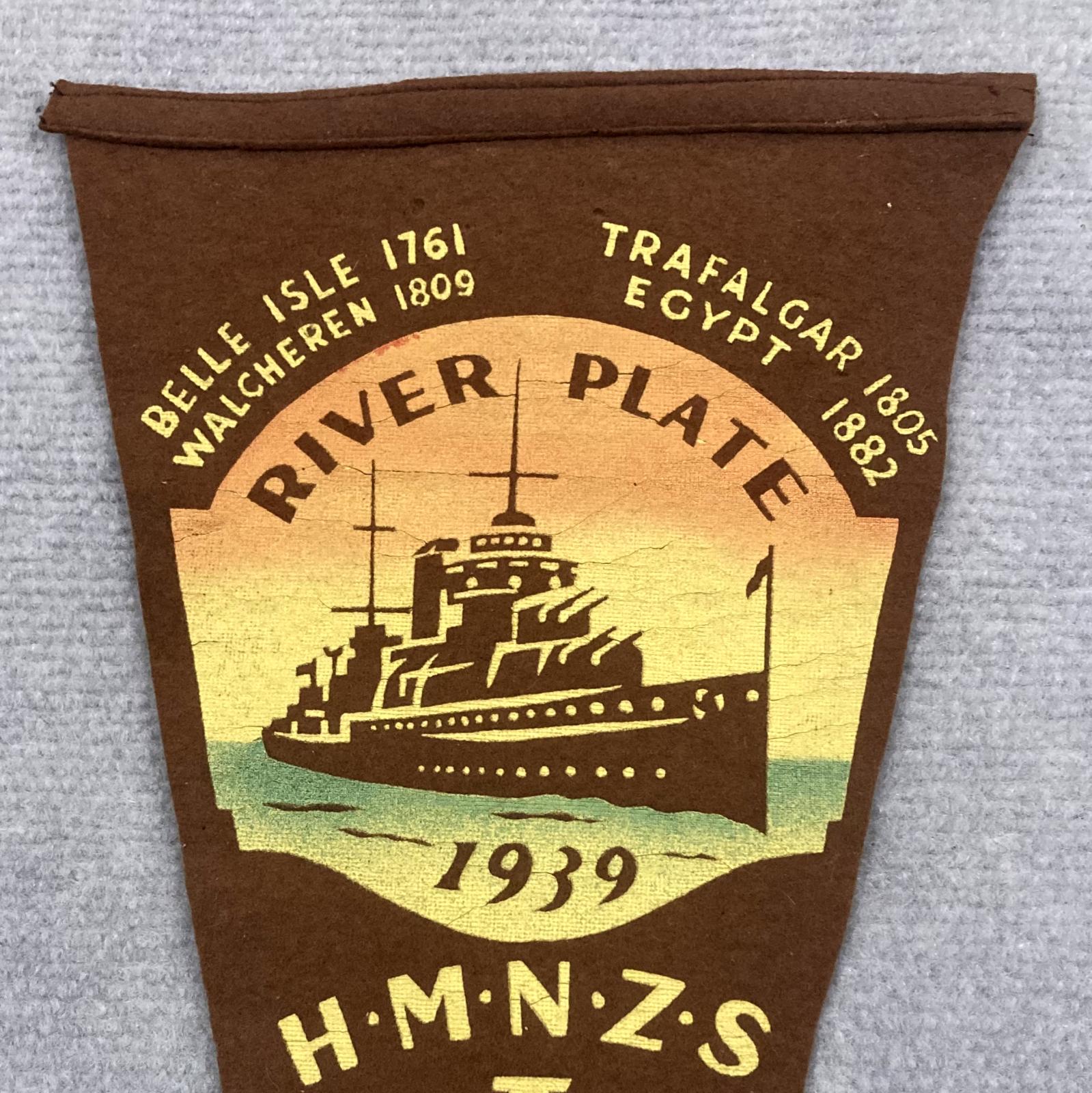
The central illustration depicts a naval light cruiser at sea with the sun setting behind. Above the ship is the printed text 'RIVER PLATE' and below it, '1939'.
The historical battle honours associated with earlier Royal Navy vessels named 'Achilles' are listed in two arcs above the curved top of the central illustration - 'BELLE ISLE 1761, WALCHEREN 1809, TRAFALGAR 1805, EGYPT 1882'.
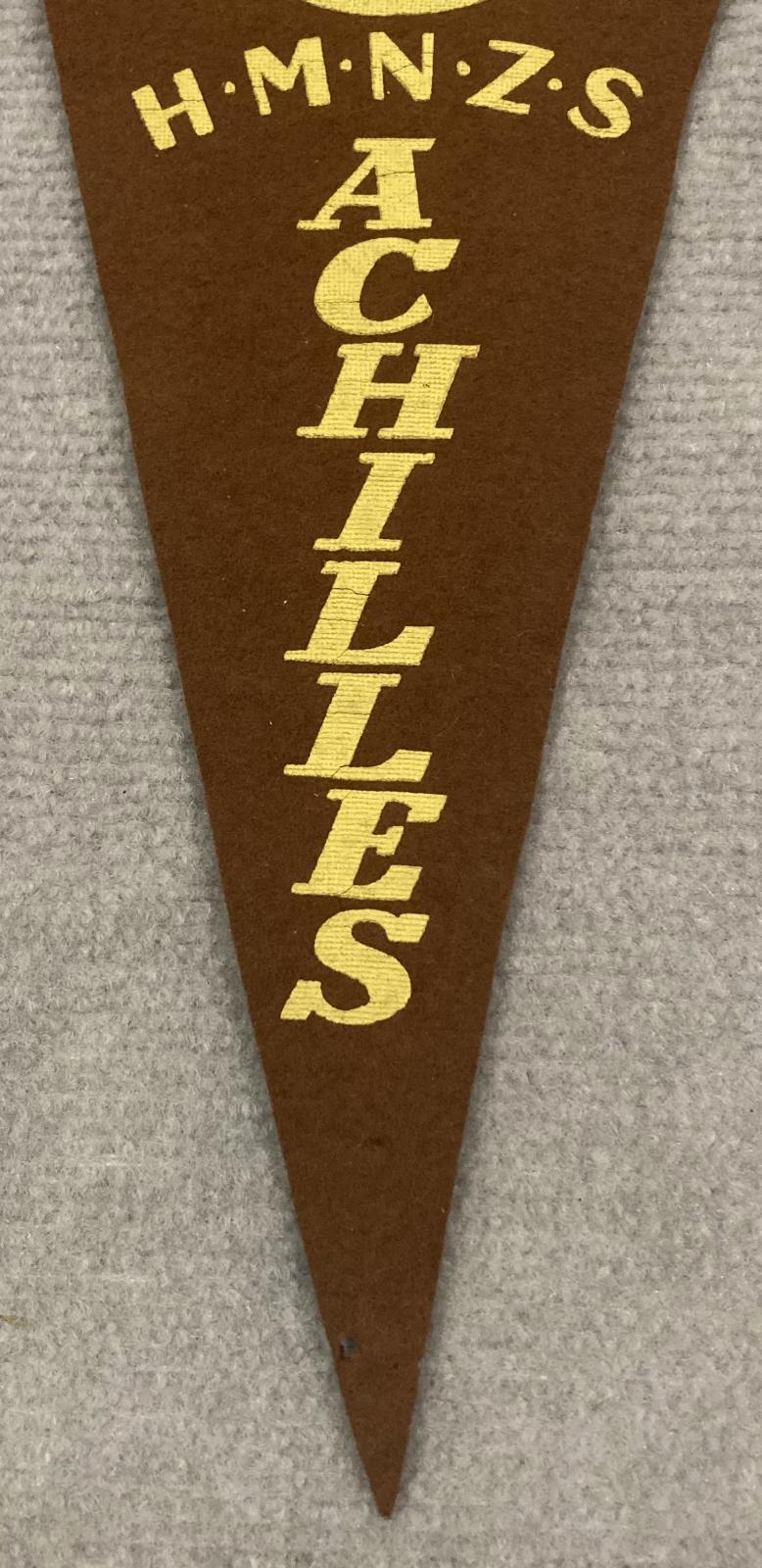
Stencilled vertically down the tapered end of the pennant is the name of the ship, 'H·M·N·Z·S ACHILLES'.
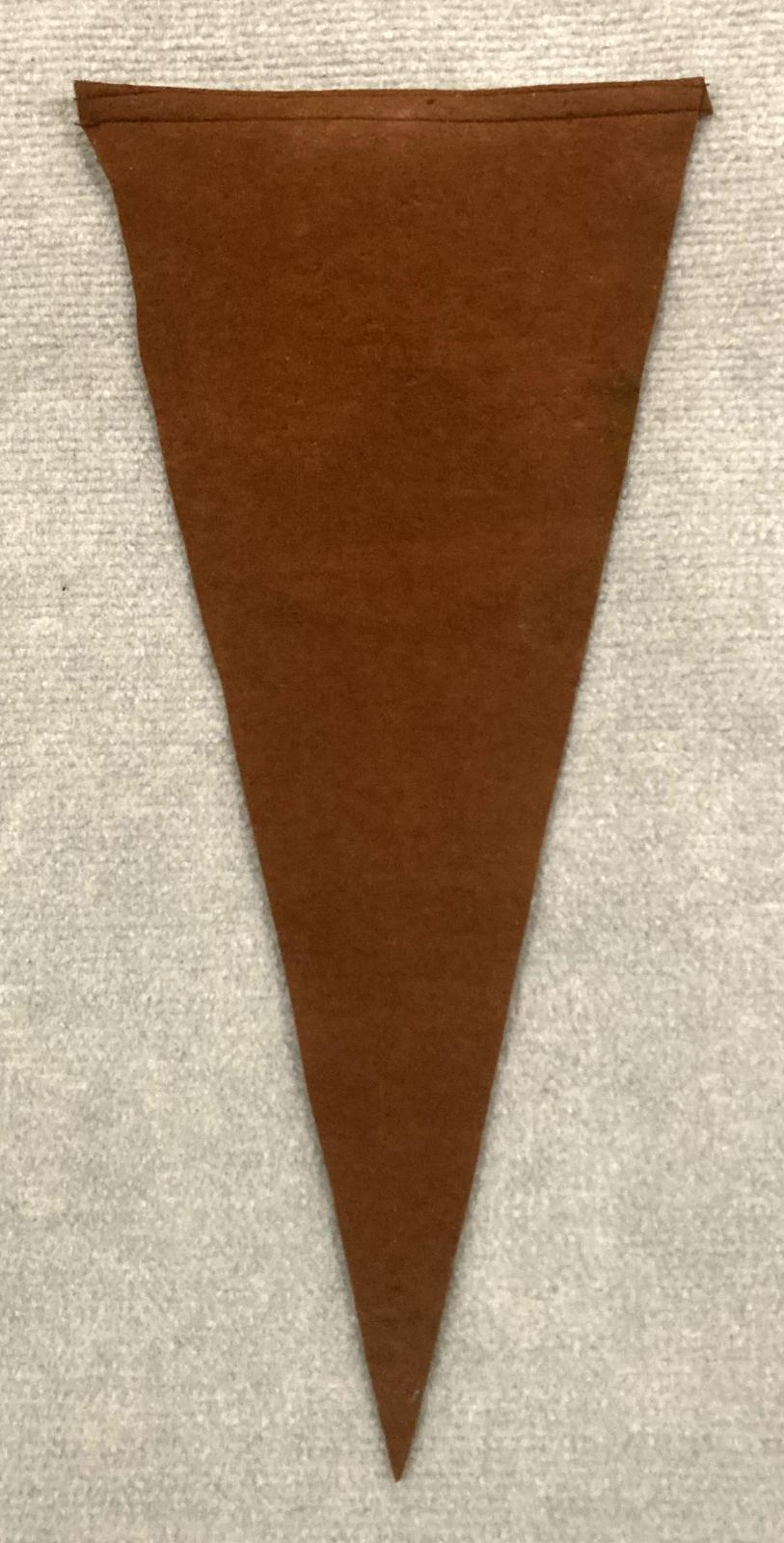
The reverse is plain and there is no maker's tag.
The HMNZS Achilles was built by Cammell Laird in Birkenhead, England. It was laid down in June 1931 and commissioned into the British Royal Navy as HMS Achilles on October 10, 1933.
In March 1936, the ship was refitted and loaned to the Royal Navy's New Zealand Division to replace older, obsolete cruisers.
The HMNZS Achilles was a Leander-class light cruiser that became one of the most famous warships in New Zealand's naval history. From high-stakes engagements in the South Atlantic to brutal air battles in the Pacific, its career spanned multiple navies and geopolitical eras.
At the outbreak of World War Two in September 1939, the Achilles was dispatched to patrol the west coast of South America to guard against German commerce raiders.
On December 13, 1939, Achilles, alongside the cruisers HMS Ajax and HMS Exeter, intercepted the heavily armed German pocket battleship Admiral Graf Spee off the coast of Uruguay. In the ensuing Battle of the River Plate, Achilles fired more than 1,200 rounds from its 6-inch guns. Despite taking minor splinter damage that killed four crew members and wounded its Captain, the cruiser helped corner the Graf Spee into Montevideo, where the German commander subsequently scuttled his own ship.
When the ship returned to Auckland in February 1940, it was greeted by an estimated 100,000 people—a massive heroes' welcome that boosted national morale.
Felt naval pennants were highly popular wartime souvenirs throughout the British Commonwealth—most notably across New Zealand and Australia - during and post WWII.
They were frequently purchased by service members, merchant mariners, or civilians as patriotic keepsakes, homefront memorabilia, or gifts for family members to commemorate maritime service.
This specific pennant was manufactured following the December 1939 Battle of the River Plate. It served as a wave of high-impact propaganda and national pride for a historic naval victory early in the war.
Details
Details
From top to bottom:
"BELLE ISLE 1761
WALCHEREN 1809
TRAFALGAR 1805
EGYPT 1882"
"RIVER PLATE
1939"
"H·M·N·Z·S ACHILLES"
Related Objects
Related Objects
Other items from Recollections of War
-
Souvenir felt naval pennant with attached badges - Merchant Navy
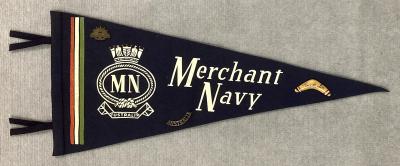
-
Souvenir felt naval pennant - The Missions to Seamen
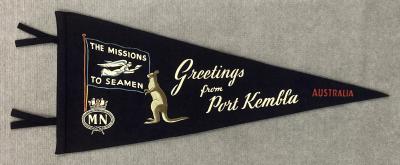
-
Souvenir felt pennant - TSMV Manunda
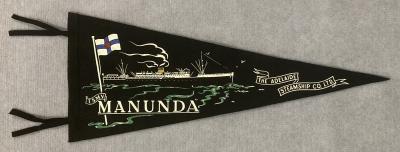
-
Souvenir felt pennant - TSMV Manoora
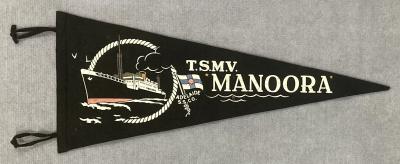
-
Souvenir felt naval pennant - HMAS Nirimba
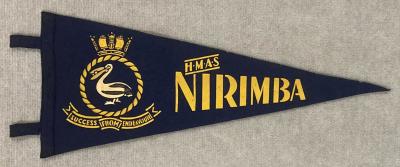
-
Commemorative naval plaque and crest - HMAS Nirimba
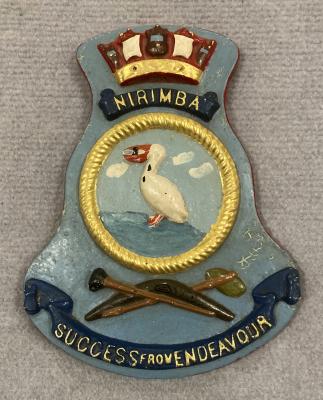
-
Souvenir felt naval pennant - HMAS Melbourne
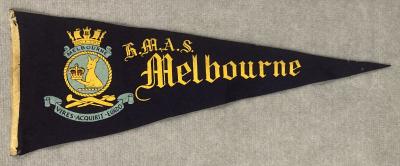
-
Souvenir felt naval pennant - Royal Australian Navy (RAN)
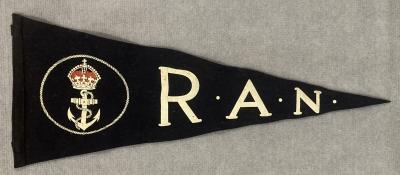
-
Souvenir felt naval pennant - HMAS Cerberus - 1
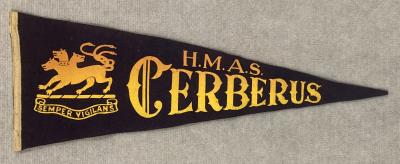
-
Souvenir felt naval pennant - HMAS Cerberus - 2
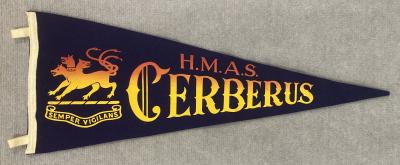
-
Souvenir felt naval pennant - HMAT Duntroon
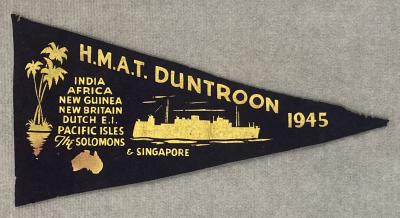
-
Souvenir felt naval pennant - HMAS Parramatta
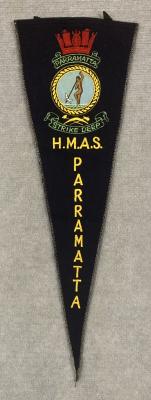
Scan this QR code to open this page on your phone ->
