
BOWL, WASH - EARTHENWARE WASHSTAND SET
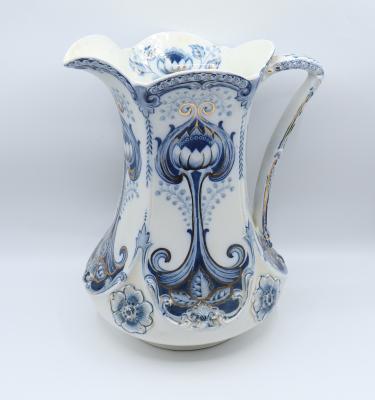
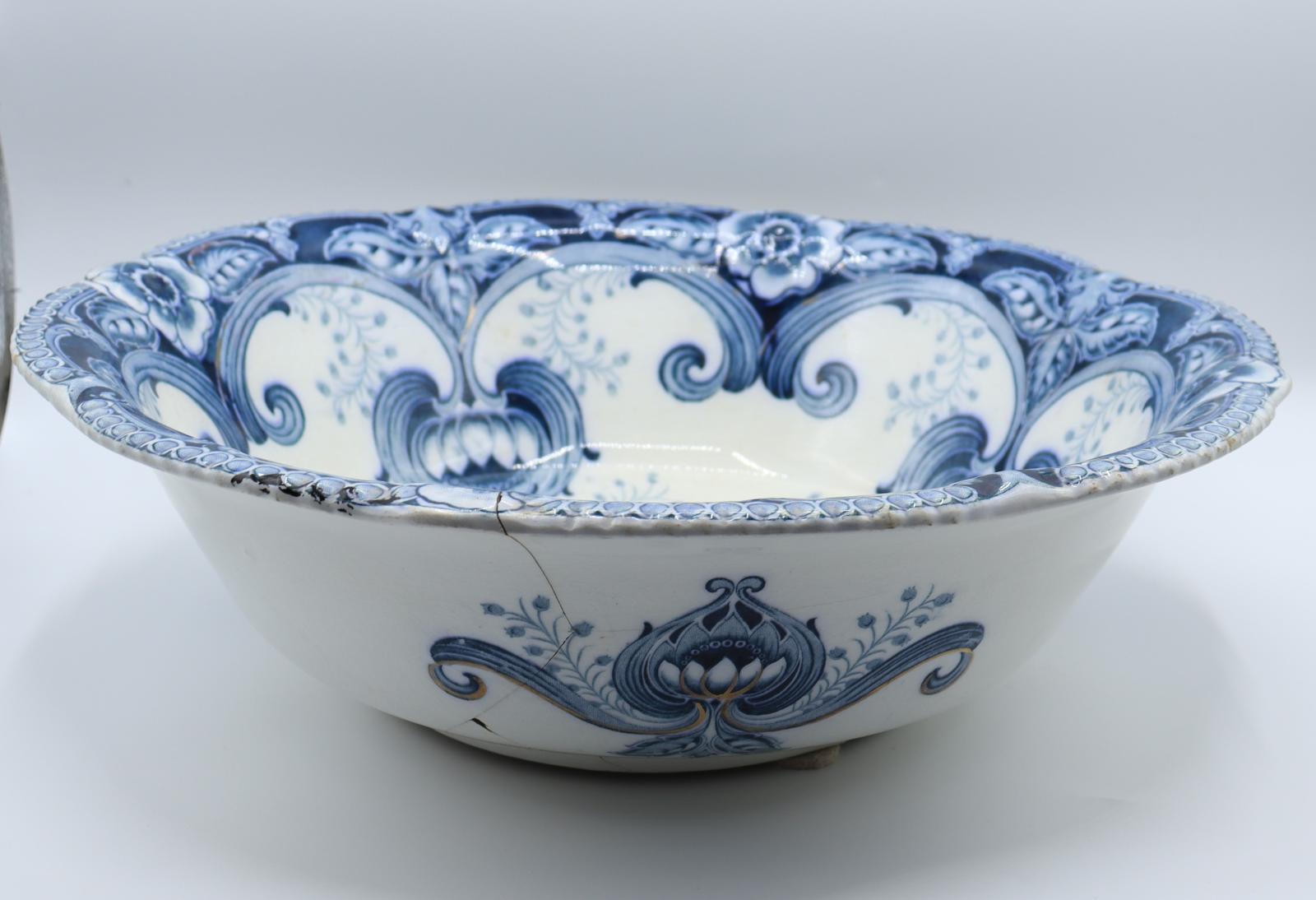
1910 - 1937A white, ceramic, earthenware bowl / wash basin. The outside of the bowl is white and has painted flowers and leaves in three places. Some cracks run from the outside edge to bottom of the bowl. The inside of the bowl is similarly painted and the edge is scalloped. It has a small, black mark on one of the edges. It is written [TRIPOLI], [J&G MEAKIN/ HANLY ENGLAND] and marked a crown symbol on the bottom.
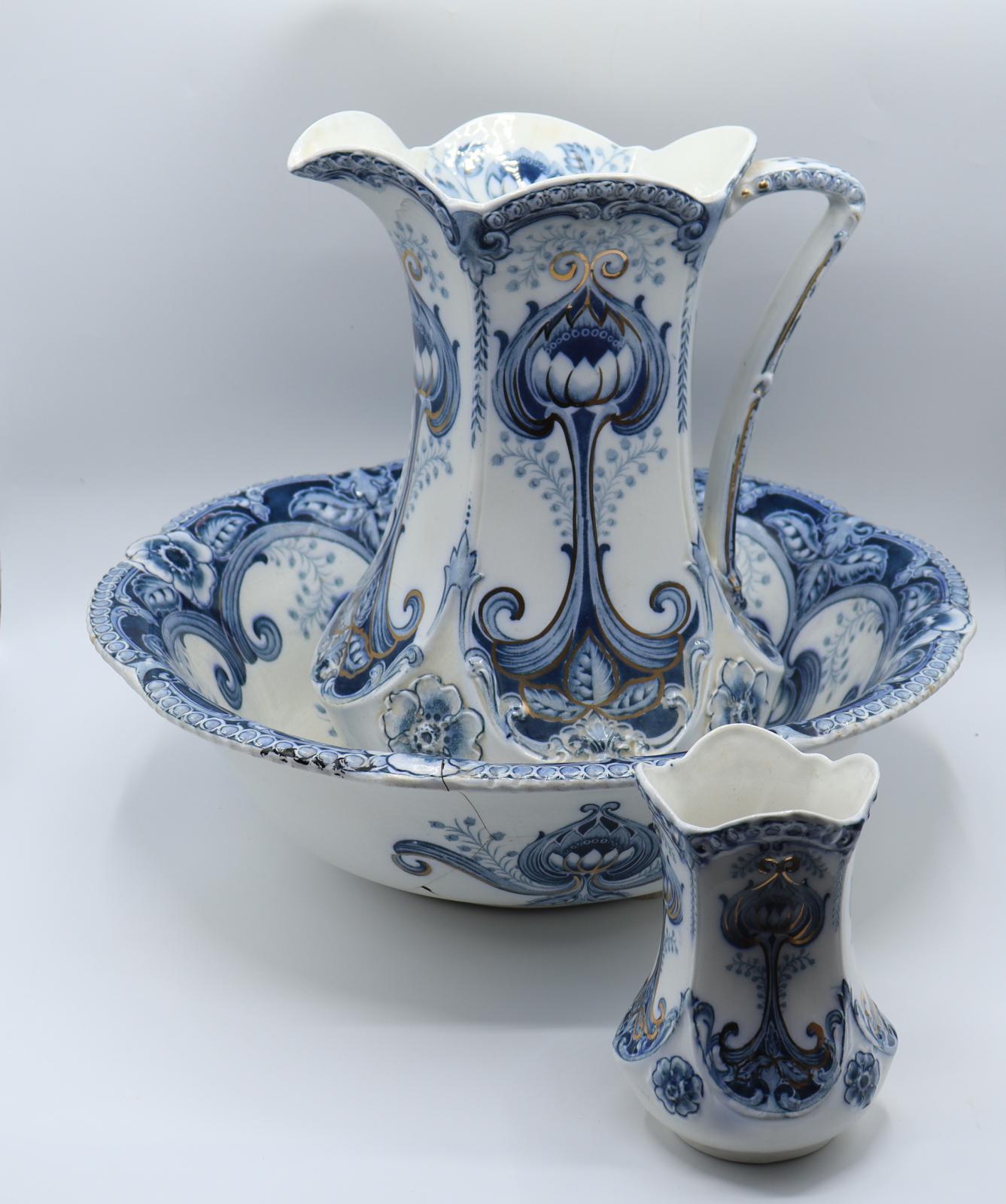
J & G Meakin ironstone China wash stand set featuring a jug, bowl and toothbrush holder. The set was owned by Ellie and Gordon Devereux and their daughter Joan and son Ricky in the 1920s. It is through the set was possibly purchased in England before the family migrated to Australia in 1920. In 1926 the family built a home on the corner of Third Road and Church Avenue. The new home included a proper bathroom with a shower, bath, wash basin and a wood chip heater for hot water. The need for the washstand set diminished and it was instead used a decorative item in the family home before being passed onto Joan's daughter Jan who displayed it at her home until 2025 when it was donated to the museum.
J&G Meakin were a British pottery manufacturing company based in Hanley, Stoke-on-Trent in Staffordshire from 1851 to 1970 when they were taken over by the Wedgwood Group. The company was well known for mass producing affordable ironstone China goods for the domestic market and for export primarily to Australia, Canada, New Zealand and the United States of America. The set is in the firms Tripoli style and the makers mark was used from c1912 to 1937.
Gordon was born in Suffolk England in 1890 and migrated to Western Australia, age 21, with his half-brother Ted Waterton and Ted's mother May. On arrival the brothers moved to Harvey.
In august 1915 he enlisted with the Australian Imperial Force, first joining the 28th Battalion before being transferred to the 51st Battalion on his arrival in Egypt. In 1916 the 51st spent three months in a defensive position along the Suez Canal before being redeployed to Europe. Gordon saw active service in Belgium, including attacks on Mouquet Farm near Pozieres in August 1916. During this time Gordon suffered a hernia and spent over a year in Britain undergoing various training courses including signals training. During this time he met and married Ellie Maud Young.
In 1918 he rejoined the 51st Battalion in France. In August 1918 Gordon was part of the 51st attacks on German positions near Erinehem. He was tasked with running messages between units and received a Military Medal for his efforts during heavy German shelling of allied positions. On 18 August Gordon was caught in a gas attack and was hospitalised and eventually evacuated to England for treatment. He soon recovered and was granted leave to spend time in England learning business skills and to await the birth of Joan, Gordon and Ellie's first child.
Gordon, Ellie and Joan returned to Western Australia in 1920. The family soon settled in Armadale where Gordon joined the local branch of the RSL. Gordon would go on to play a very active role in the local community. Not only did he serve on the RSL committee for many years he was the President of the Armadale Soccer Club, founding member of the Armadale Bowls Club, Chairman of the Unemployment Relief Fund during the depression, President of the Armadale-Kelmscott Memorial Hospital Committee and served on the Armadale-Kelmscott Co-Op Committee for 20 years. in 1926/27 Gordon ran a film business showing silent movies at the Armadale Hall. Ellie would play the piano during the films.
Tragedy struck the family in 1941 when Gordon and Ellies's son Eric was killed in action while serving as a sailor aboard HMAS Sydney which was sunk off the WA coast by the German raiding ship the Kormoran.
Gordon died in 1970 age 80. Ellie passed away in 1986 age 92.
Details
Details
[TRIPOLI] / [J&G MEAKIN/ HANLY ENGLAND]
This wash stand set is significant for its strong historical and social associations with the Devereux family and for its ability to illustrate patterns of migration, domestic life, and community building in early twentieth-century Western Australia. Probably purchased in England before Ellie and Gordon Devereux migrated to Australia in 1920, the set accompanied the family on their journey and was used during their early years in Armadale.
City of Armadale - History House
City of Armadale - History House
Other items from City of Armadale - History House
-
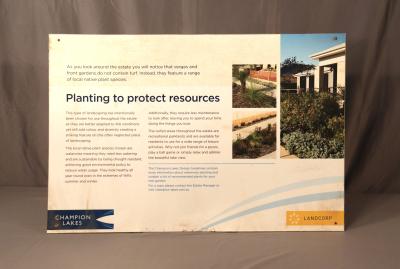
SIGN, "PLANTING TO PROTECT RESOURCES" GUIDELINES - CHAMPION LAKES
-
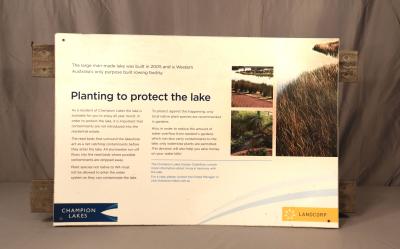
SIGN, "PLANTING TO PROTECT THE LAKE" GUIDELINES - CHAMPION LAKES
-
MAGNET, ADVERTORIAL - ALWAYS ELECTRICAL

-
MAGNET, ADVERTORIAL - ONES4TECH

-
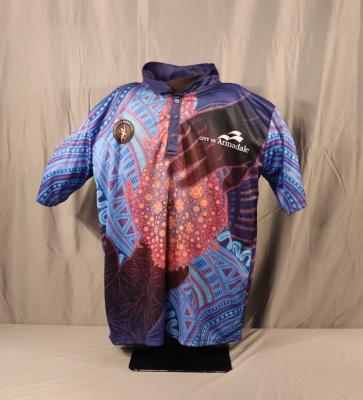
SHIRT, POLO - CITY OF ARMADALE, CELEBRATING NAIDOC WEEK
-
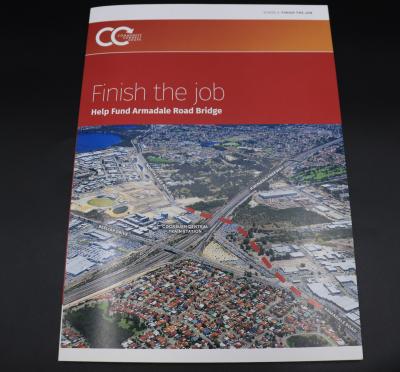
BROCHURE - "FINISH THE JOB / HELP FUND ARMADALE ROAD BRIDGE"
-
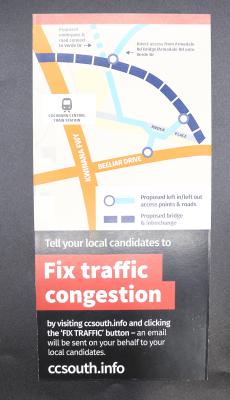
FLYER - FIX TRAFFIC CONGESTION-BUILD ARMADALE ROAD BRIDGE

-
FLYER - FIX TRAFFIC CONGESTION - BUILD ARMADALE ROAD BRIDGE

-
FLYER-FIX TRAFFIC CONGESTION-COCKBURN CENTRAL
Scan this QR code to open this page on your phone ->
