World War 2, Western Australia, Exmouth Gulf, Potshot, 1943
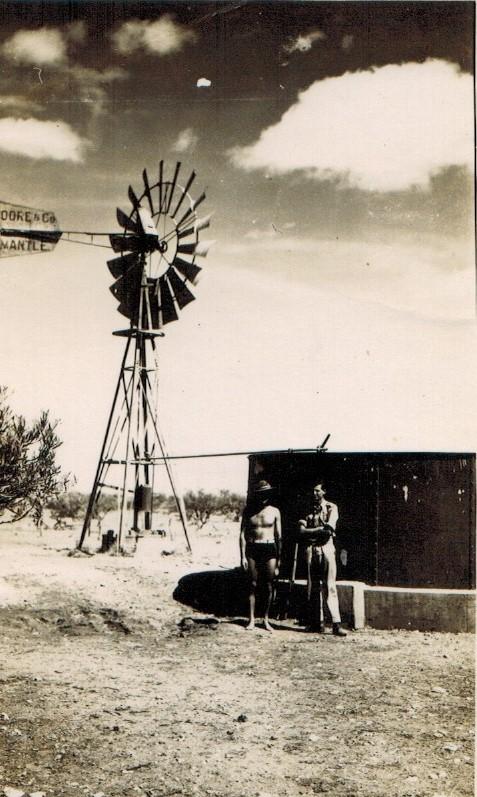
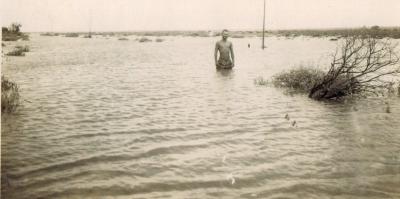
1943Camp water supply, Potshot, 1943
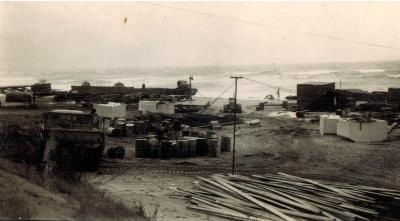
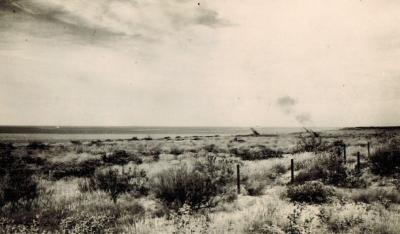
The location was first used as a military base in World War II. After the retreat from Java in March 1942, Allied naval forces required a forward base for replenishing submarines, then the sole form of offensive warfare against the Japanese. Both Darwin, and Broome, were too exposed to air attack, so a unmotorized lighter was placed as a refueling barge near the mouth of Exmouth Gulf, where the Allies were already maintaining a seaplane tender.
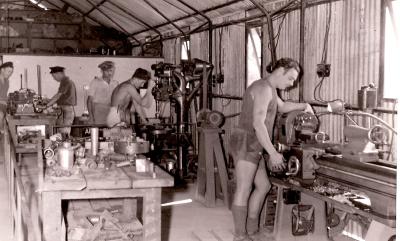
Code-named "Potshot", the spartan base was also developed as a submarine advanced base and rest camp using the tender USS Pelias. An airfield (now RAAF Learmonth) was constructed to provide fighter defense for the base. The base was maintained by maintained by No. 76 Operational Base Unit. Z Special Unit used Potshot as a staging base for Operation Jaywick, a raid on Japanese shipping in Singapore Harbour, in September 1943.
Starting in June 1944, Qantas used Learmonth as an intermediate stop for two converted Consolidated Liberator bombers that flew a segment of the vital England–Australia air route, supplementing modified Consolidated PBY Catalinas flying The Double Sunrise route to Ceylon. The Liberators flew a shorter 4,952 km over-water route from Learmonth to an airfield northeast of Colombo, and could make the journey in 17 hours with 2,500 kg of payload, whereas the Catalinas usually required at least 27 hours and had to carry so much auxiliary fuel that their payload was limited to only 450 kg. The route was named Kangaroo Service and marked the first time that Qantas's now-famous Kangaroo logo was used; passengers received a certificate proclaiming them as members of The Order of the Longest Hop.
In the 1950s the landing field was further developed as a military base and named RAAF Learmonth in honour of Wing Commander Charles Learmonth DFC and Bar, who, while leading No. 14 Squadron, was killed in a flying accident off Rottnest Island, Western Australia on 6 January 1944.
Details
Details
AMWA66053
Australian Army Museum of Western Australia
Australian Army Museum of Western Australia
More items like this
-
World War 2, Australia, Western Australia, Exmouth Gulf, Potshot, 1942
-
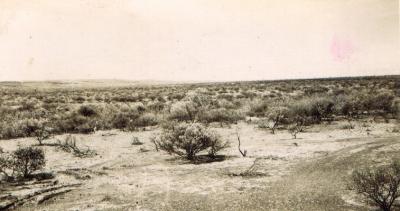
World War 2, Australia, Western Australia, Exmouth Gulf, Potshot, 1943
-
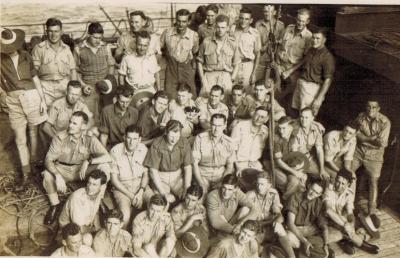
World War 2, Australia, Western Australia, Exmouth Gulf, Potshot, 1943
-
World War 2, Western Australia, Exmouth Gulf, Potshot, 1943
-
World War 2, Western Australia, Exmouth Gulf, Potshot, 1943
-
World War 2, Australia, Western Australia, Exmouth Gulf, Potshot, 1942
Other items from Australian Army Museum of Western Australia
-
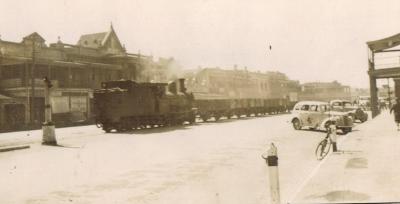
World War 2, South Australia, Port Pirie
-
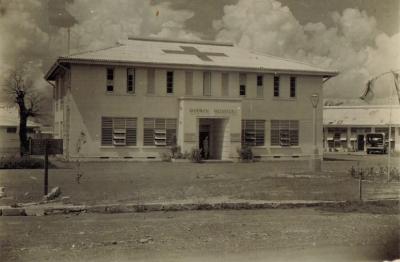
World War 2, Australia, Northern Territory, Darwin Hospital
-
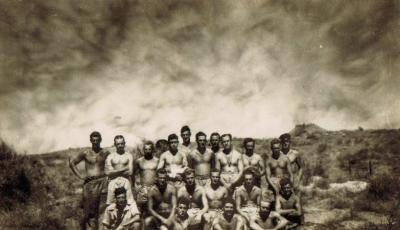
World War 2, Western Australia, Exmouth Gulf, Potshot, 1943
-
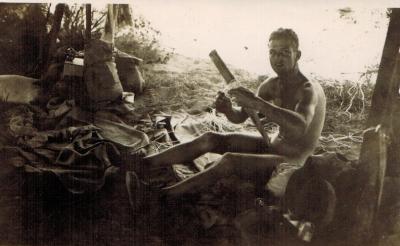
World War 2, Western Australia, Exmouth Gulf. Potshot, WX35868 FRENCH, 1943
-
World War 2, Western Australia, Exmouth Gulf, Potshot, WX31053 FRY
-
World War 2, Australia, Northern Territory, Radar
-
World War 2, South West Pacific Theatre, Ambon Island, 1945
-
World War 1, France, 5 Division, Australian Imperial Force, Bessell-Browne, 1918
-
World War 2, South West Pacific Theatre, Australian Military Forces Operation Ration 02

-
Medical Evacuation Chain - World War 1 - Hospital Ship Kanowna
-
Former Garrison Entrance Sign - 13 Brigade
-
Medical Evacuation Chain - World War 1 - Hospital Ship Karoola