

Prints by Aboriginal Artist
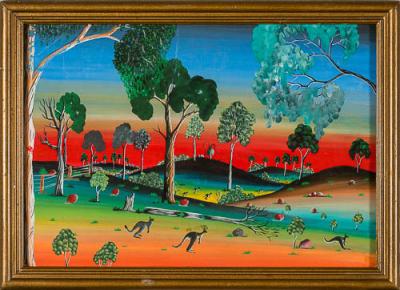
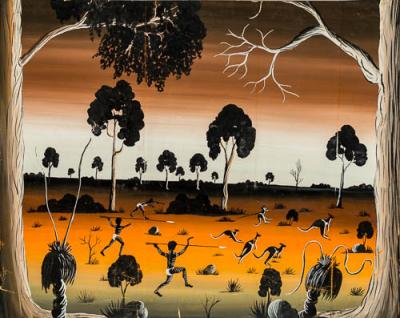
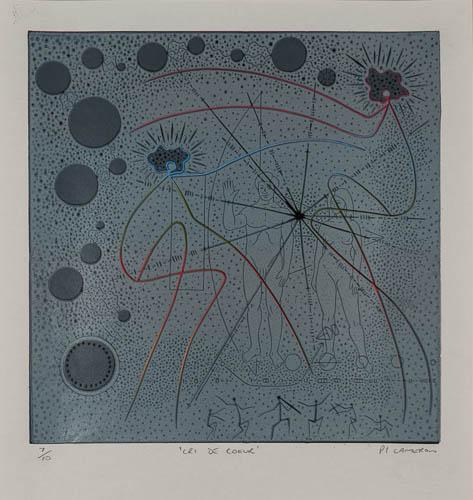
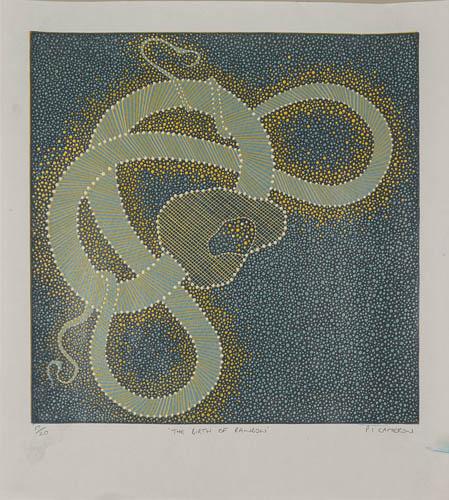
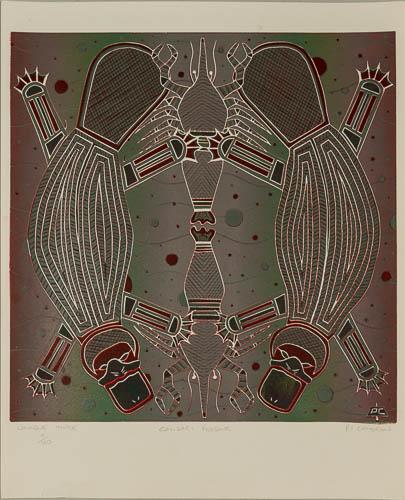
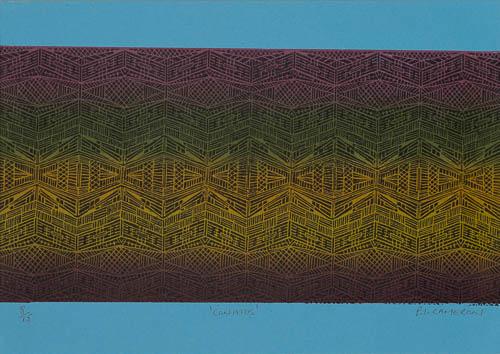
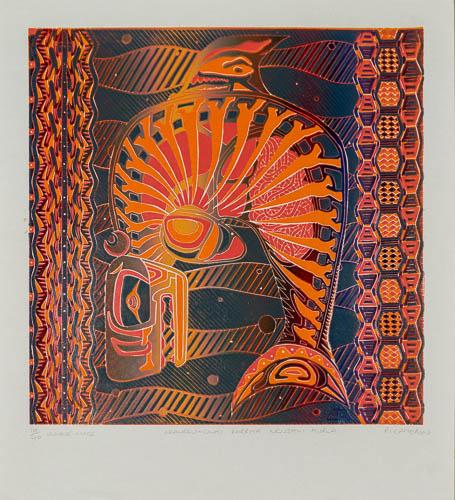
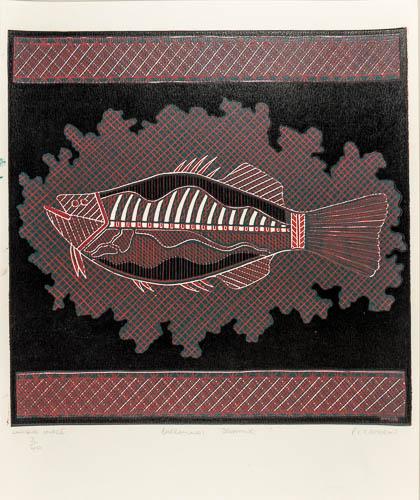
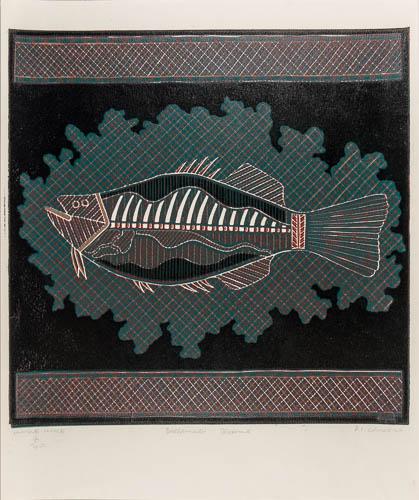
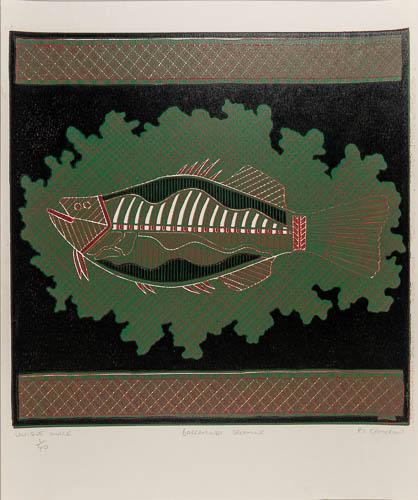
1988 - 1997This item consists of 11 separate artworks produced by an unnamed Indigenous former prisoner who was incarcerated at Fremantle prison in the 1980s. The 11 artworks consist of various linocut prints in acrylic paper or ink on paper. The subject matter variously consists of abstract and figurative works; a number of different Aboriginal art styles are present, including Arnhem Land X ray style, dot painting and rainbow serpent motifs. Western, Indigenous and International first nations art styles are also variously used. All works are titled, signed and feature traditional print editioning in the bottom right hand corner.
This collection of 11 pieces were found in 2018 amongst donations to St Paul's Church in Canberra. The convenor of the White Elephant stall at the St Paul’s 2018 fete identified the prints whilst sorting through donations. It is unknown how or why the prints resurfaced in Canberra. In each instance there is only a singular edition of each print in the collection and it is unknown where the other copies of each edition are located or if they are still extant. Prints no. 9, 10 and 11 are dated “September 1992”, by then, the unnamed artist was incarcerated in Casuarina Prison so these particular linocut prints have been completed after his time at Fremantle Prison. It is unknown whether the linocut prints (1 – 8) were completed during his incarceration Fremantle Prison, or later.
Details
Details
Art has been present onsite at Fremantle Prison since the convict era in the form of graffiti cartoons. Art became a more formalised aspect of prisoner life in the latter half of the 20th century, as the humanising benefits of art as a form of therapy responding to incarceration and trauma became better understood. Arts and Crafts were added to the general prisoner education program in 1957. In 1972 an Art Teacher was delivering art classes for prisoners one day a week. By the late 70s art classes under Steve Culley became so popular up to sixty men were attending classes a week. Art continues to be an important part of prisoner education today.
The artist's artwork was created in response to his incarceration and lived experience as an Aboriginal man in prison for most of his adult life. As such, his artwork speaks strongly to the themes of Aboriginal male identity and the lived experience of an Aboriginal man in the prison system in the late 20th century. His work illustrates the individual experience of a marginalised, minority group in the wider Western Australian community, that are overrepresented in the prison community. The works is of aesthetic significance due to its use of abstract and figurative motifs in the printmaking medium that juxtapose a number of different Aboriginal artistic styles with those from Western traditions
Scan this QR code to open this page on your phone ->
