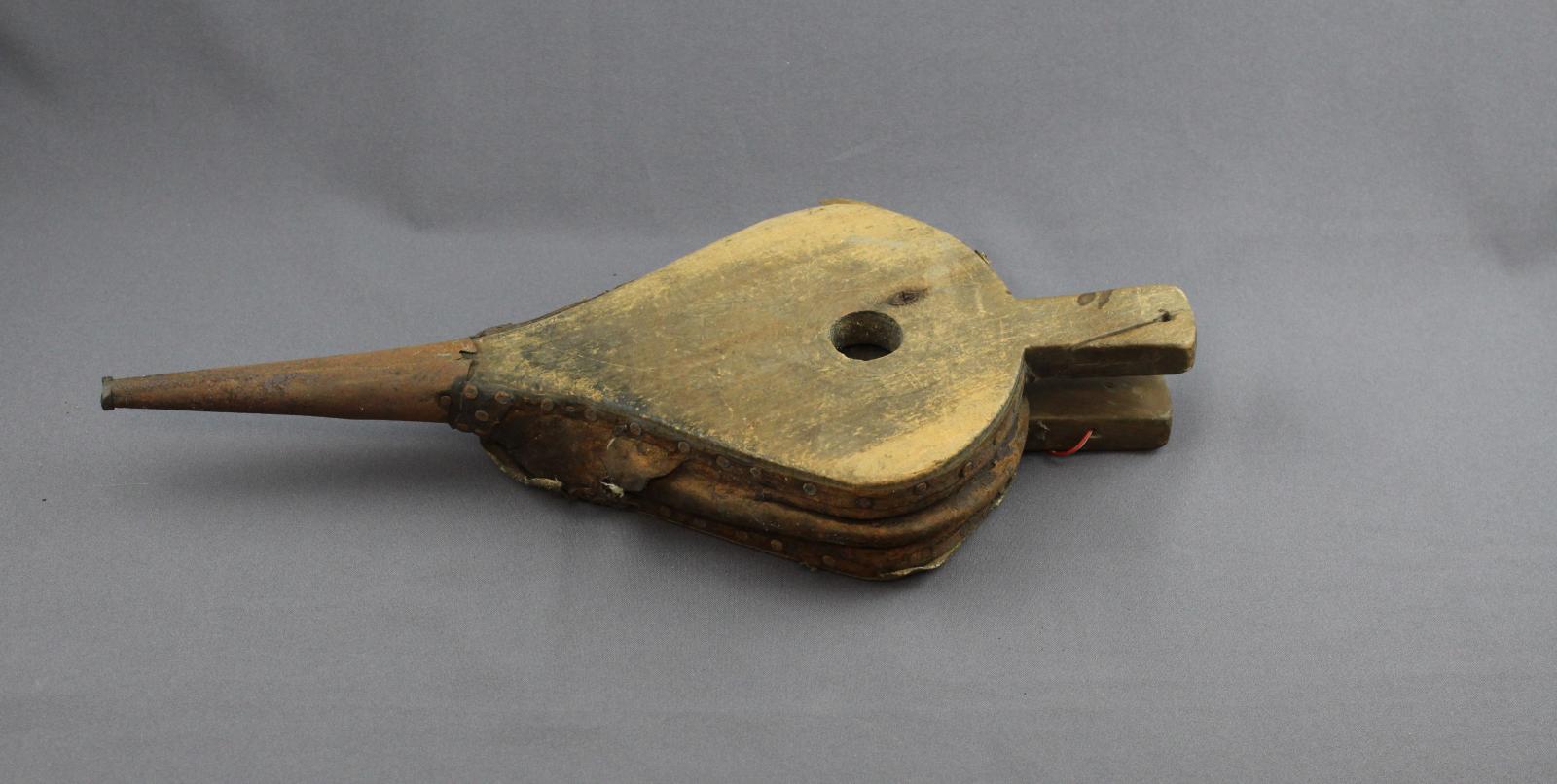
BELLOWS, BEE SMOKER
c. 1930 - 1980A set of small hand bellows. The body is constructed of two flat wooden paddles which extend to form handles. The body of the paddles taper down towards the nose of the bellows. The sides of the bellows are formed by a piece of leather which is attached to the edges of the paddles with metal tacks. A piece of cloth tape runs along the line of tacks between them and the leather. The leather and the wooden paddles together form the body of the bellows. A piece of leather forms a link between the body of the bellows and a cone shaped metal spout. The leather is attached to the narrow end bottom paddle and drawn up over the leather sides and across the narrow end of the top paddle. It is held in place with metal tacks which are nailed into the metal cone and the paddles. Two pieces of plastic covered copper wire, one red, one grey are threaded through a hole in the handle of the top paddle and twined together to form a loop.
Used by Linc Harrison when collecting honey from his bee hives located in the hills above Kelmscott.
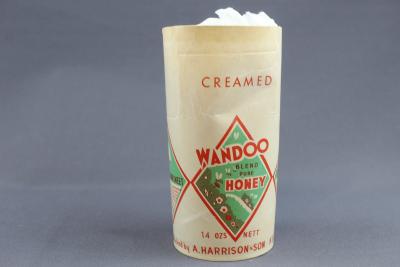
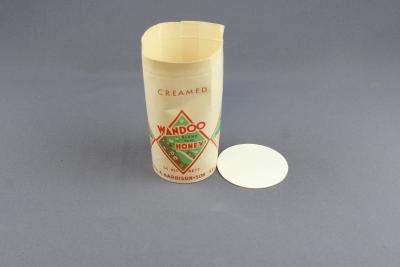
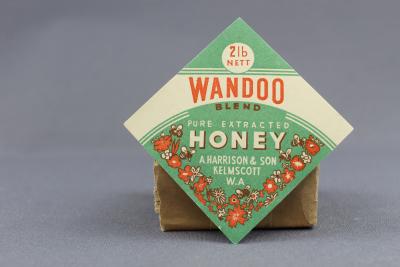
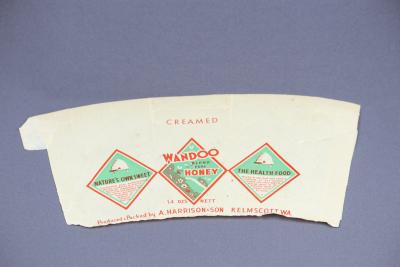
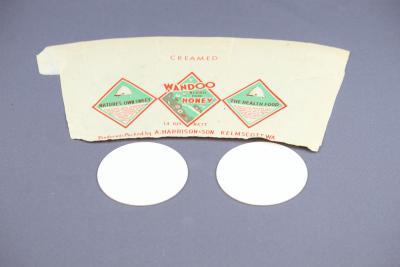
Albert Harrison and his family moved to Kelmscott in the 1920s where he started an apiarist business, placing bee hives throughout the nearby hills. When old enough his sons Albert Lincoln ‘Linc’ and Frank joined the business. Linc continued to run A. Harrison & Sons following his father’s death in 1944. They named the honey after the native Wandoo (Eucalyptus wandoo) trees found in the nearby hills.
Albert, age 57, died following an accident on 12 March. Albert was cutting a piece of wood with a circular saw when it was suddenly thrown backwards, striking Albert in the head. Albert was rushed to hospital but died the following morning. Albert was buried at the Methodist section of the Karrakatta Cemetery on 14 March 1944.
Albert and his family lived at Third Avenue where they also had their honey processing plant. Though not an active member of the community, Albert did financially support a variety of local community groups. The family was also known for their integrity and for being very industrious and hospitable. The Harrison's would regularly exhibit their honey at the Kelmscott show winning numerous prizes.
Details
Details
This object is part of a collection that represents the commercial history of the City of Armadale. It represents the many different businesses that have operated in the local area and how those businesses have evolved over time. Businesses play an important role within a community, they provide wanted and needed goods and services, employment, income and opportunities to the local community. They can also operate as important social connectors, places where people gathered and engaged with other members of the community.