

Floor Mat
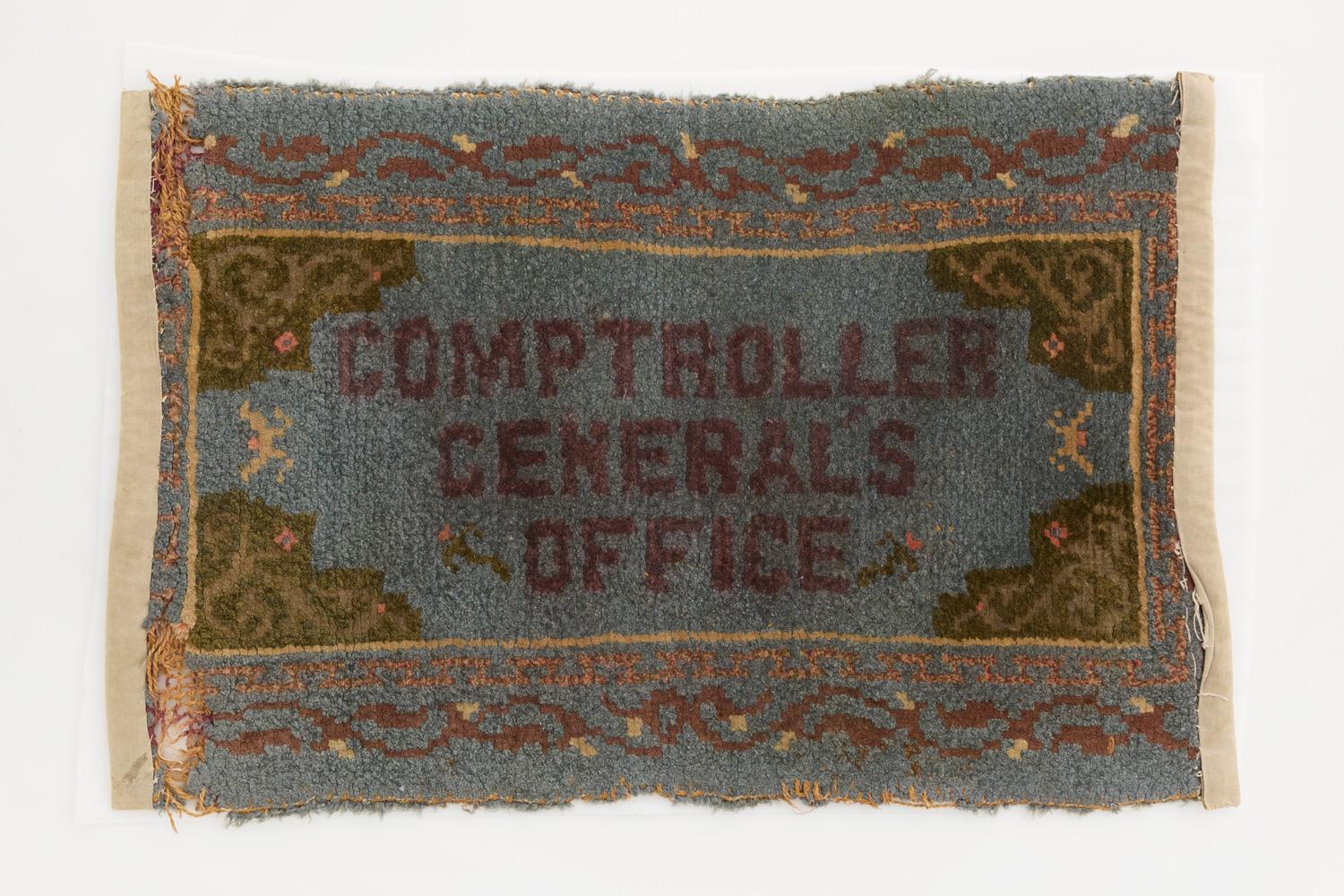
1902 - 1903The mat consists of multicoloured woollen pile and measures 950 by 1460 millimetres. The yarn is worked on a bast fibre, with a jute grid foundation. The left and right sides are bound with cotton duck canvas. Woven into the centre of the mat are the words ‘COMPTROLLER GENERAL’S OFFICE’. When reidentified onsite at the prison the mat was in average condition, with wear exposing the base foundation of the mat in places, with heavy soiling from dust, dirt and pest damage present. Conservation efforts in 2024 have led to stabilisation.
This mat was found on the floor of a cell in the Refractory area of Fremantle Prison main cell block in 2012. It is unique in the Fremantle Prison Collection as the only surviving example of a mat produced in the Fremantle Prison Mat Shop. Research indicates it is most likely one of the first samples made in the workshop, likely a gift for Octavius Burt, the Comptroller General of Prisons (1901-1912), with a creation date sometime between 1902 and 1903. A timeline drawn from documentation available details the ordering, planning and creation of the mat in the time period immediately preceding this.
Details
Details
‘COMPTROLLER GENERAL’S OFFICE’.
It was Comptroller-General of Fremantle Prison, Octavius Burt, otherwise known as the Superintendent, who encouraged the development of industries in the Prison. Under his tenure, in 1900 new workshops were constructed. By 1902, funds had been made available for the purchase of equipment. Mat-making was one of the trades taught to prisoners so that they could learn new skills and make productive use of their time. It was also a way for them to earn a small amount of money. The other workshops at Fremantle Prison over the years included printing, stone-working, bookbinding, painting, blacksmithing, and tinsmithing.
In September 1903 Andrew Foster arrived at the Prison to be Warden Instructor of Mat Making. At this time, the only other manufacturer in Western Australia was the Institute for the Blind. Selling mats during 1905 provided the prison with an income of £140.18.6 – less than what was made from tailoring, boot making and printing industries; but above some other smaller industries onsite.
The mat relates to the progression of approaches to incarceration from punishment to reform at Fremantle Prison. Via mat making, inmates had the opportunity to learn skills, which marked a progression towards the idea of the prison as a place of reform and rehabilitation. The mat is a tangible example of the way prison industries served to offer inmates avenues to reform though learning a skill, giving a sense of accomplishment, and an avenue to employment post prison.
Scan this QR code to open this page on your phone ->
