

The History of Wanneroo's Most Unique Business
Wanneroo Community History - Hanna Kinshela
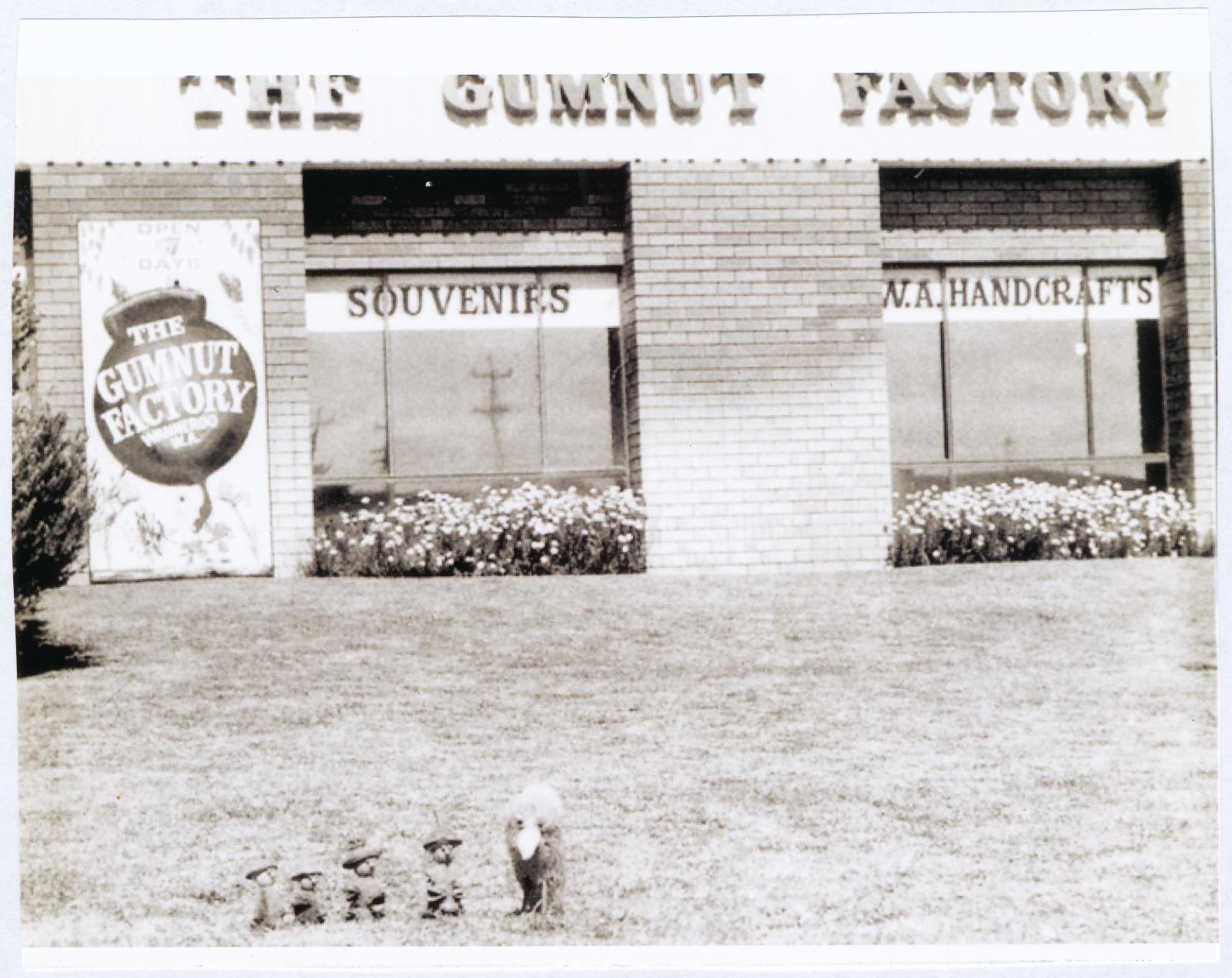
Brief History
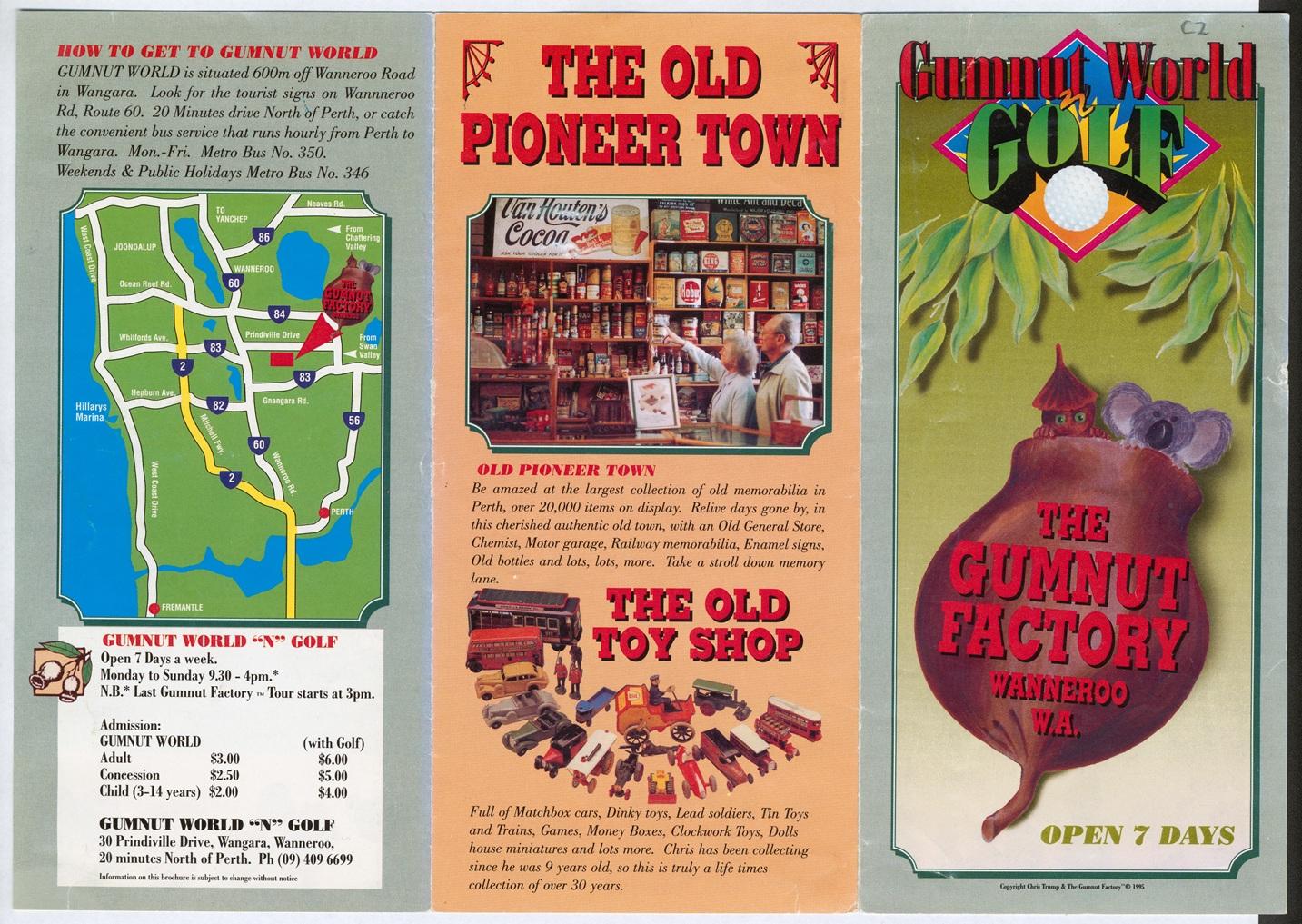
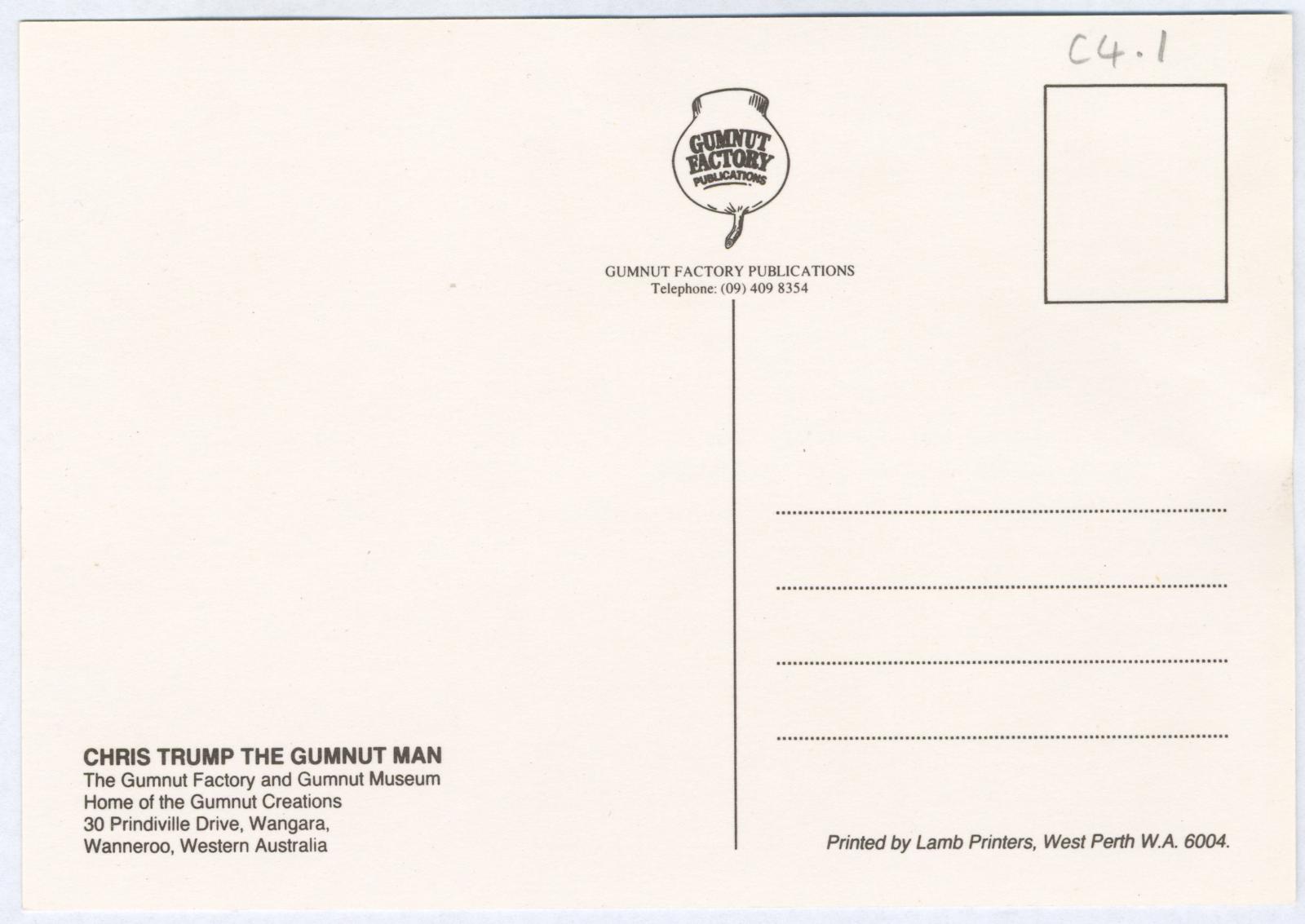
Chris Trump established the Gumnut Factory in 1979. After some time selling his bushcraft at the Wanneroo markets, made in his garden shed, Chris outgrew this location and relocated to a factory unit, creating the Gumnut Factory. The Gumnut Factory made various kinds of craft from the Western Australian bush. These souvenirs were purely Western Australian. Throughout the 80s, it rose in popularity, in fashion with the City of Wanneroo’s many tourist attractions, however unlike the other sites, remained in business for over 25 years. The business remained in Wanneroo for 21 years.
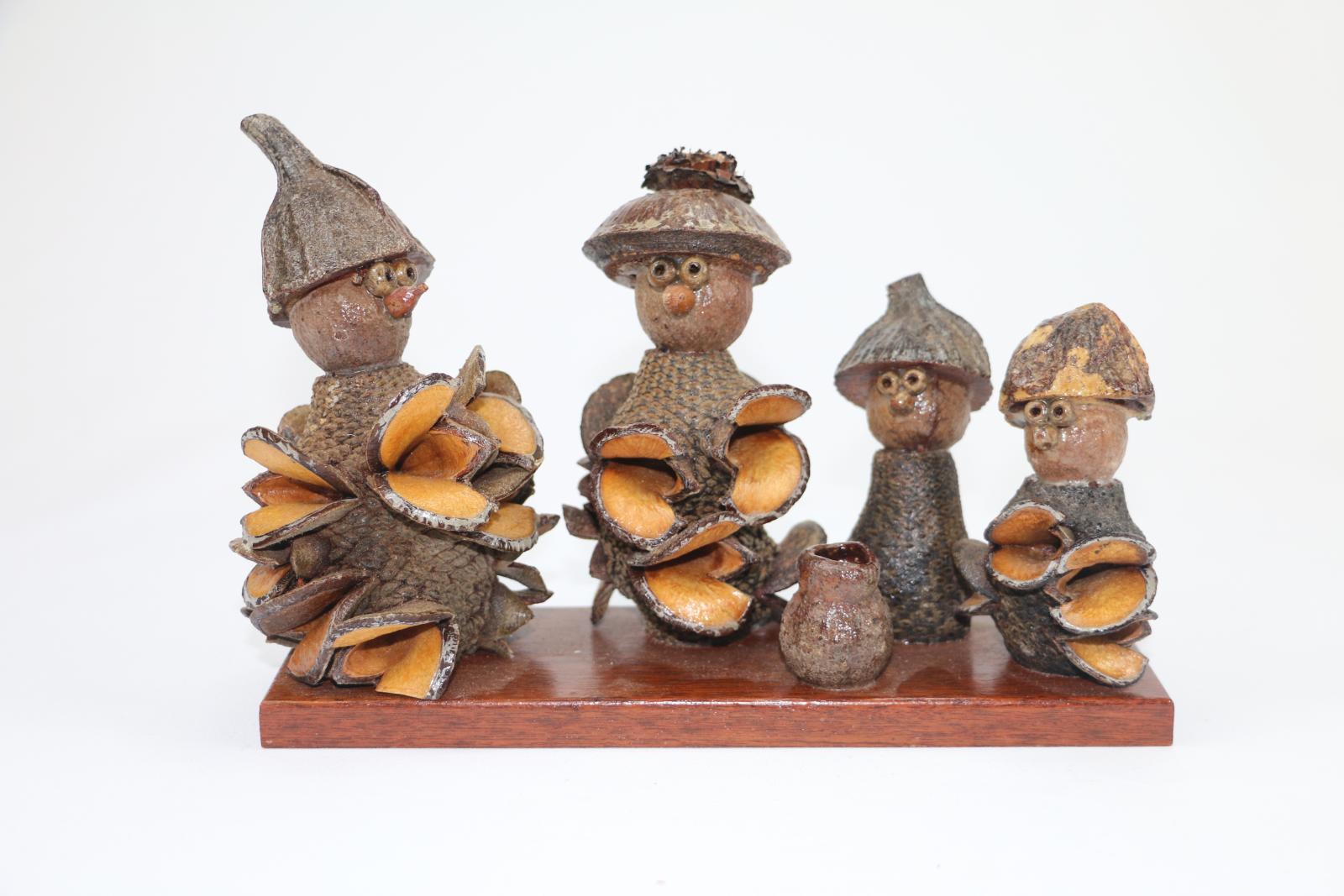
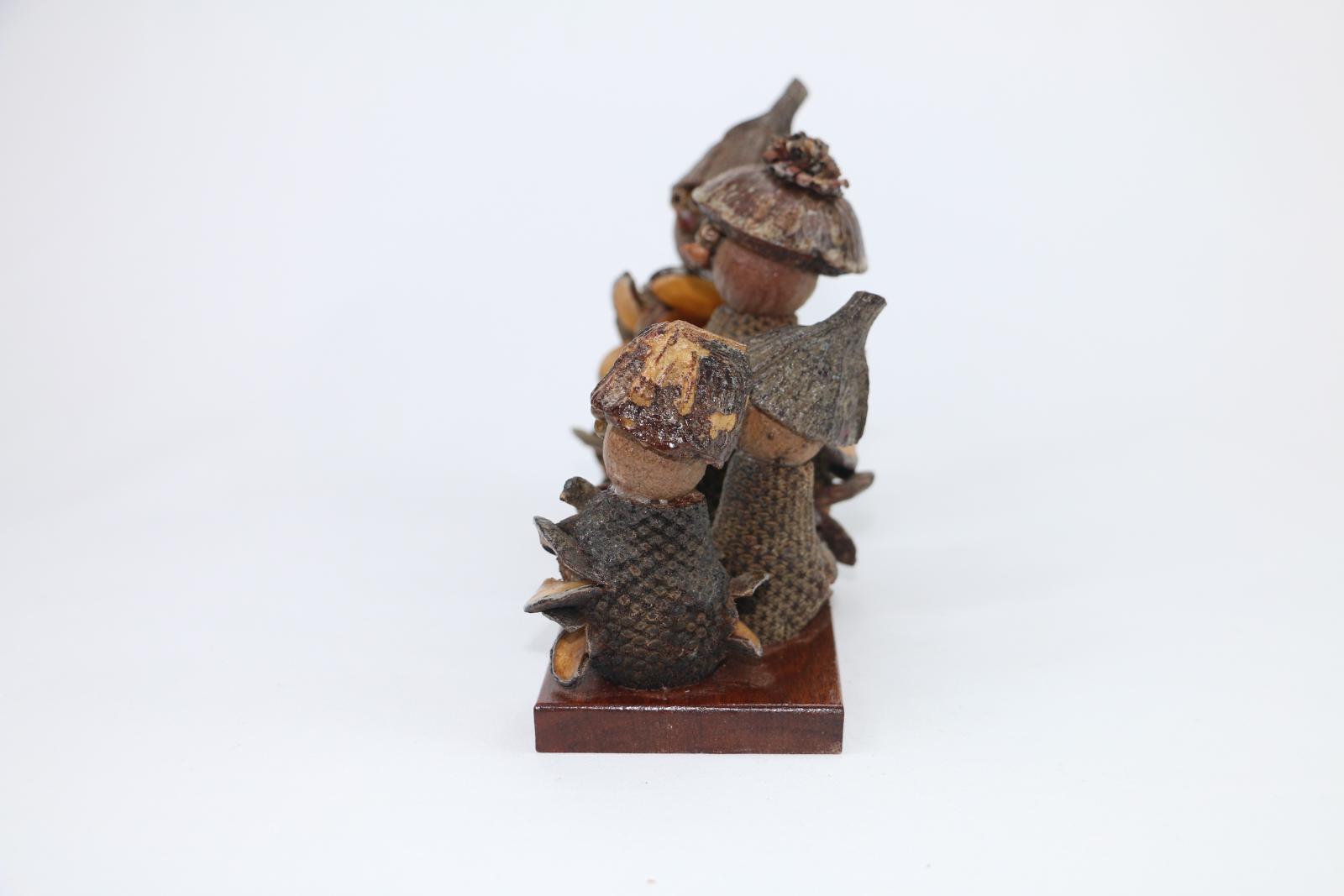
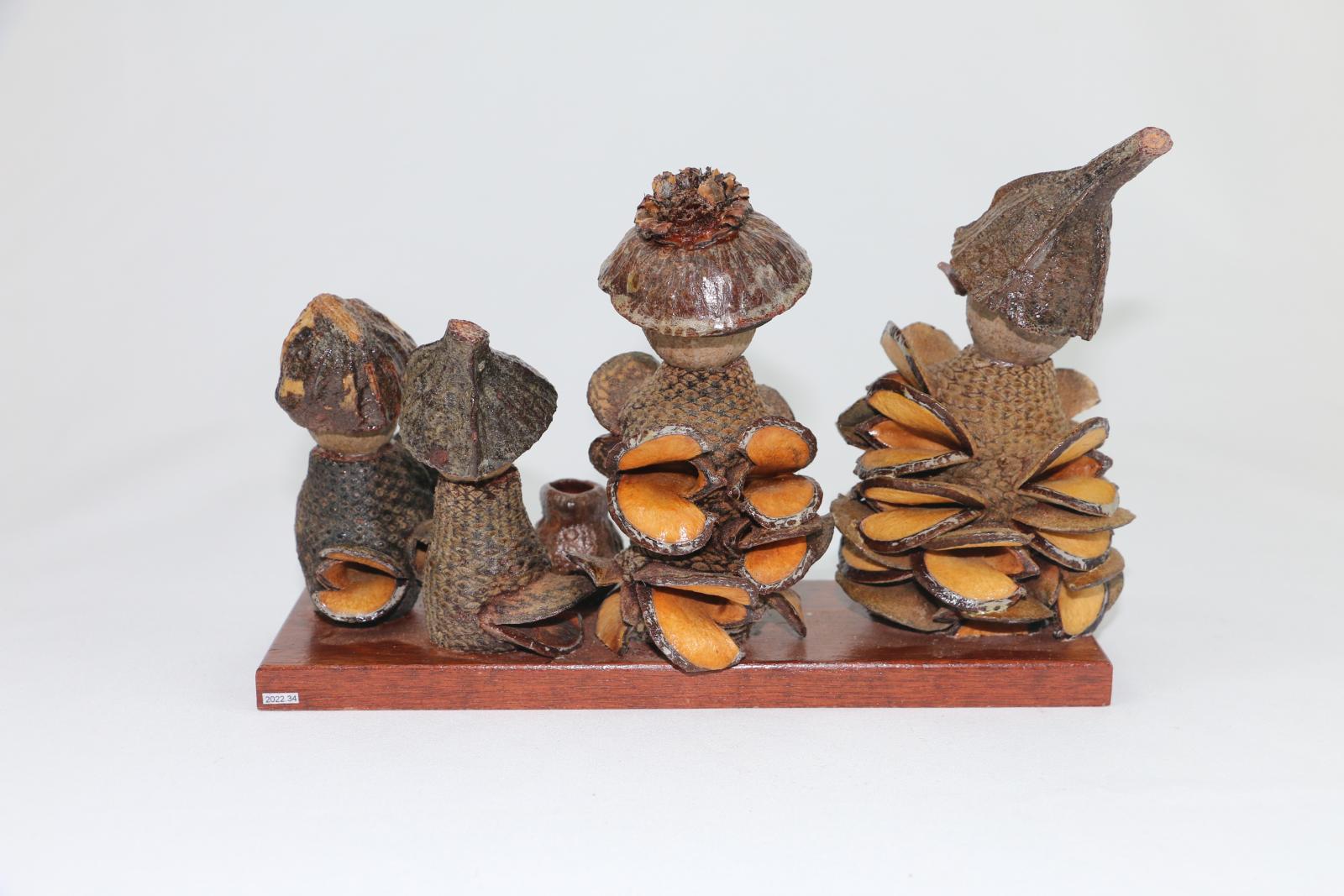
A Day at the Gumnut Factory.
Initially starting under a different name and undergoing several name changes before becoming the Gumnut Factory, like its variety of names, the factory vastly transformed throughout the times.
Visiting the factory in 1979, you would arrive at Buckingham Drive in Wangara, to a place named Wanneroo Arts & Crafts Centre, where Chris’s creations were displayed secondary to other crafts.
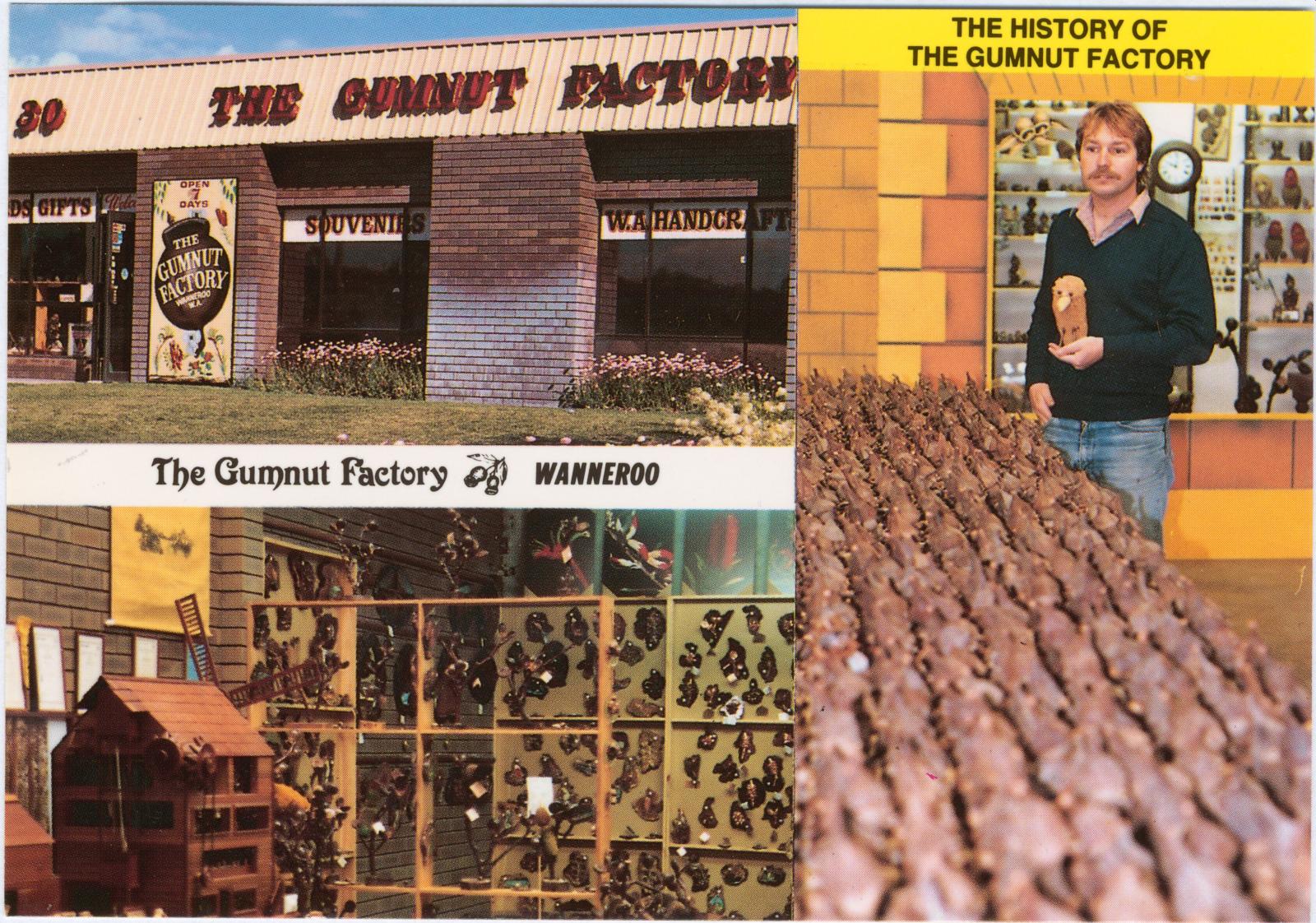
Early 1980, you would arrive just up the road at 30 Prindiville Drive. This location consisted of two factory units and one showroom. The name would also become Chris’s Creative Souvenirs as Chris’s crafts became the main display.
In 1983, after Chris’s appearance on Ask the Leyland Brothers, the store was known as ‘The Gumnut Factory’, where Chris’s gumnut figures were the main display. The shop had extended, production was pushed back, and the showroom saw various alternative uses such as being utilised for extra storage and office work. Busloads of international tourists would surround you as the factory had been a tour bus destination, people would receive guided tours, and as Chris recalls, they “went crazy”.
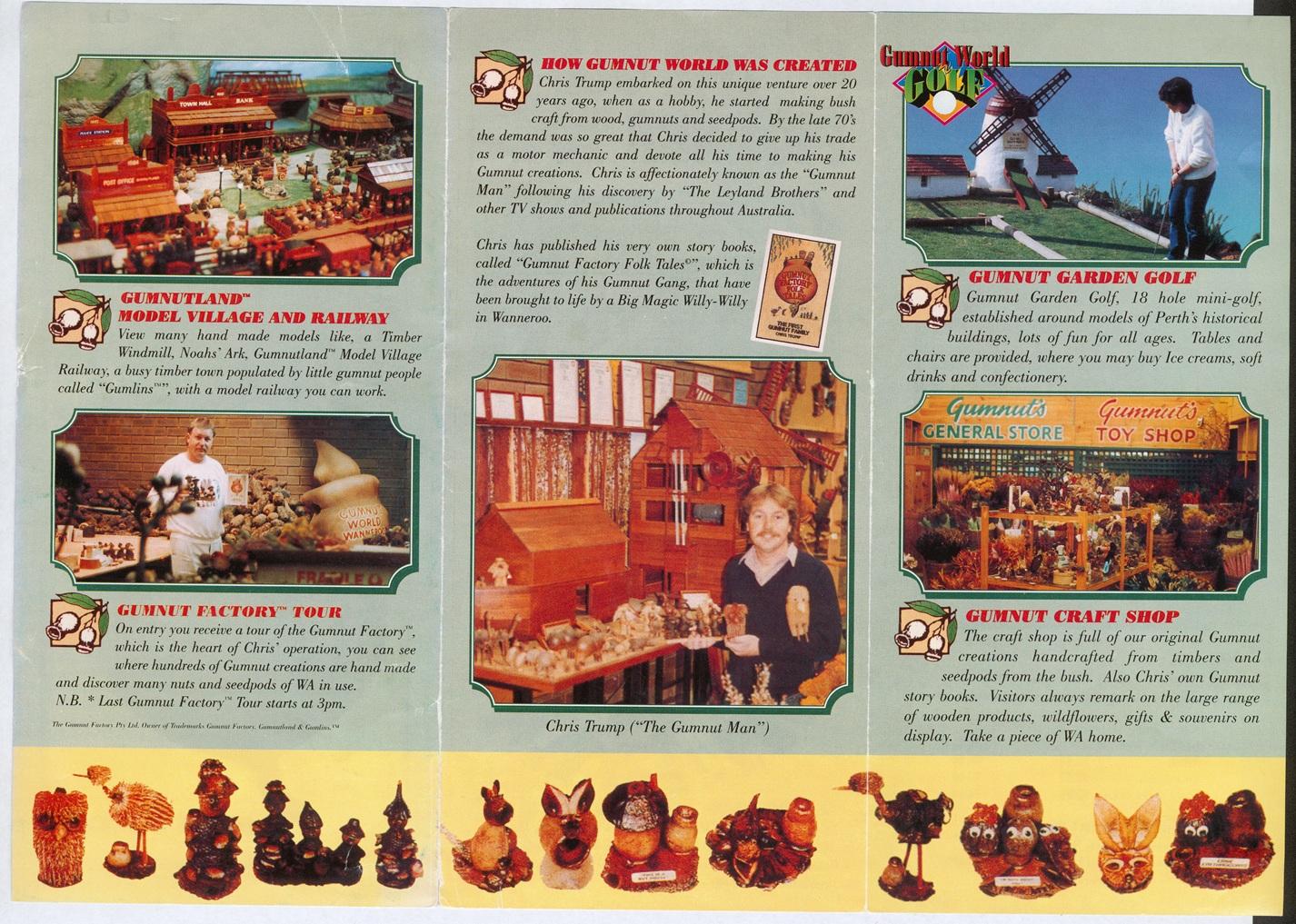
After Wanneroo markets reopening in 1987 which was across the road from the factory, Chris and his woodworker Mark Noble made Gumnutland. It consisted of the Gumnutland Village, which featured 35 different kinds of buildings like a school, church, and chemist. It also featured a model train and museum. Four years later, Gumnutland was extended on, where they added some mountains and tunnels to the village, and a second model railway.
A visit in the later 90s meant you could play a 19-hole minigolf as of 1995, where the different stations were different iconic Western Australian landmarks. In1996, you could enjoy a tea or coffee in the tearooms.
After relocating to the Swan Valley in 2002, under new ownership, the Gumnut Factory had been stripped back to essentials with no golf or tearooms. With this new location, you were taken out of the industrial area and surrounded by fresh air, nature, and places like wineries.
The Story Behind the Gumnut Factory
Chris Trump- Early Life
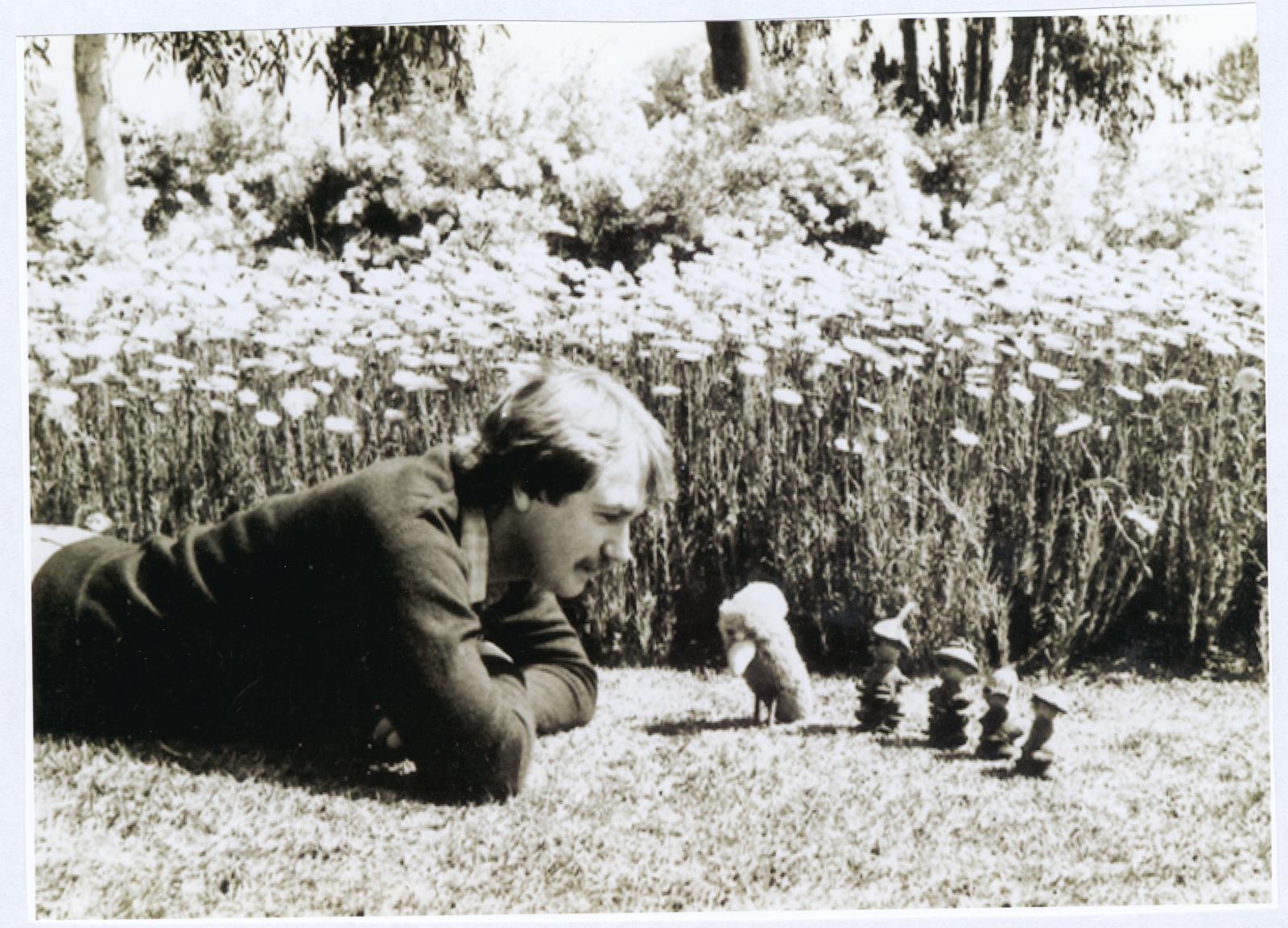
Chris Trump, full name Christopher Trump, was born in 1955 in London. At age 2, he and his mother, father, and brother moved to England’s south coast. Chris was always good with his hands as he loved to craft and make art, from woodwork to drawings. When he was 15, he started a motor mechanic apprenticeship and completed 3 years before moving to Western Australia at 19, in 1974.
When Chris and his family arrived in WA, they were situated at a unit in Scarborough before moving to Kallaroo. He found work at Leyland motors working on English cars, similar to the ones he worked on back in England. His brother Brian had found a job at a wildflower nursery. Until Brian was 17, Chris would help with his transportation to and from work.
Chris immediately was taken with the Australia flora and fauna. He hired a campervan and went around Western Australia for four weeks. He had hoped to find a souvenir suited for his travels, however, was disappointed when he discovered all the souvenir shops were using offshore production. This sparked the idea of creating Western Australian souvenirs made in Western Australia, although initially his focus would be on seashells.
Becoming the 'Gumnut Man’.
Chris’s idea of seashell crafts had been rejected by wholesalers and shops, as they could get similar items from overseas for very cheap. His focus turned to Gumnuts, and other native plants, stating in an interview with Carol Pearson in the year 2000, that helping his brother with transport to and from work all those years in the wildflower nursery had subconsciously planted the idea of working with native plants in his head.
Chris made the first of his gumnut creations shortly after. His family were friends with the Parkers who were also involved in the craftsmanship industry. Their wholesaler agreed to try and sell Chris’s crafts, although months later nothing sold and he claimed that there was no interest. Chris suspected that the figures that he supplied the wholesaler were never even shown to potential retailers. He took it upon himself to find someone who might sell them, and on his first try, the shopkeeper was highly engaged with Chris and his creations. This was confusing to Chris as he couldn’t understand why he received such a positive reaction, being told prior that there was no interest.
He decided to sell his gumnut figures at the Wanneroo market. On his first day, sales were looking low, and he had begun to pack up in the early afternoon. Another vendor asked him what he was doing packing up so early, explaining once the buses come back from Yanchep National Park, people stop by the market for vegetables, so he stayed and the end of that market he had made over six times the amount he would have initially left with.
Chris’s creations were so popular that he decided to quit his job as a motor mechanic and move back in with his parents in Kallaroo, using their garden shed to make his crafts. In 1979, he outgrew the shed and relocated to a factory unit on Buckingham Drive in Wangara and thus created the Gumnut Factory. Only 10 months later, the factory relocated again to 30 Prindiville Drive Wangara as Buckingham drive had proved to be too small. Around this time, the Gumnut Factory had the workshop, showroom, and gift store.
In 1983 in the appearance of the business on the ‘Leyland Brothers’ show, Chris takes the film crew through a day creating a gumnut man, describing the process in which the materials are gathered. He and a team of six other licensed pickers go out and collect materials for the gumnuts, only once, for the entire year. During this episode, the factory was referred to as ‘The Gumnut Factory’ or just ‘Gumnut Factory’. The nickname of the ‘Gumnut Man’ was also given to Chris and used throughout the episode. When this episode went to air, things would change for the factory for the better.
Success and Resilience of The Gumnut Factory.
Being a smart businessman, Chris changed the name to The Gumnut Factory after the appearance on television, and knew that to sustain this business long-term, he had to appeal to tourists. Before 1983, the site was successful in bringing in locals for a tour of the factory, but the gift shops sales were low. Chris understood that once locals had already been on the tour, they would not have a need to come back. During this time, prior to his television appearance, he phoned bus companies that brought groups of tourists to Yanchep National Park and Atlantis Marine Park to try and add Gumnut Factory as a stop since it was on the route of the tour but was unsuccessful.
In 1983, after the factory’s Ask the Leyland Brothers appearance, the same bus companies he had phoned a few years ago were contacting him, finally interested in what he had previously pitched. The Gumnut Factory even featured on international tourism itineraries. Suddenly the shop was filled with busloads of tourists coming in and out of the factory. Several other television appearances also helped increase the popularity of the business throughout the years, such as being on channel 7 with ‘Fatcat”.
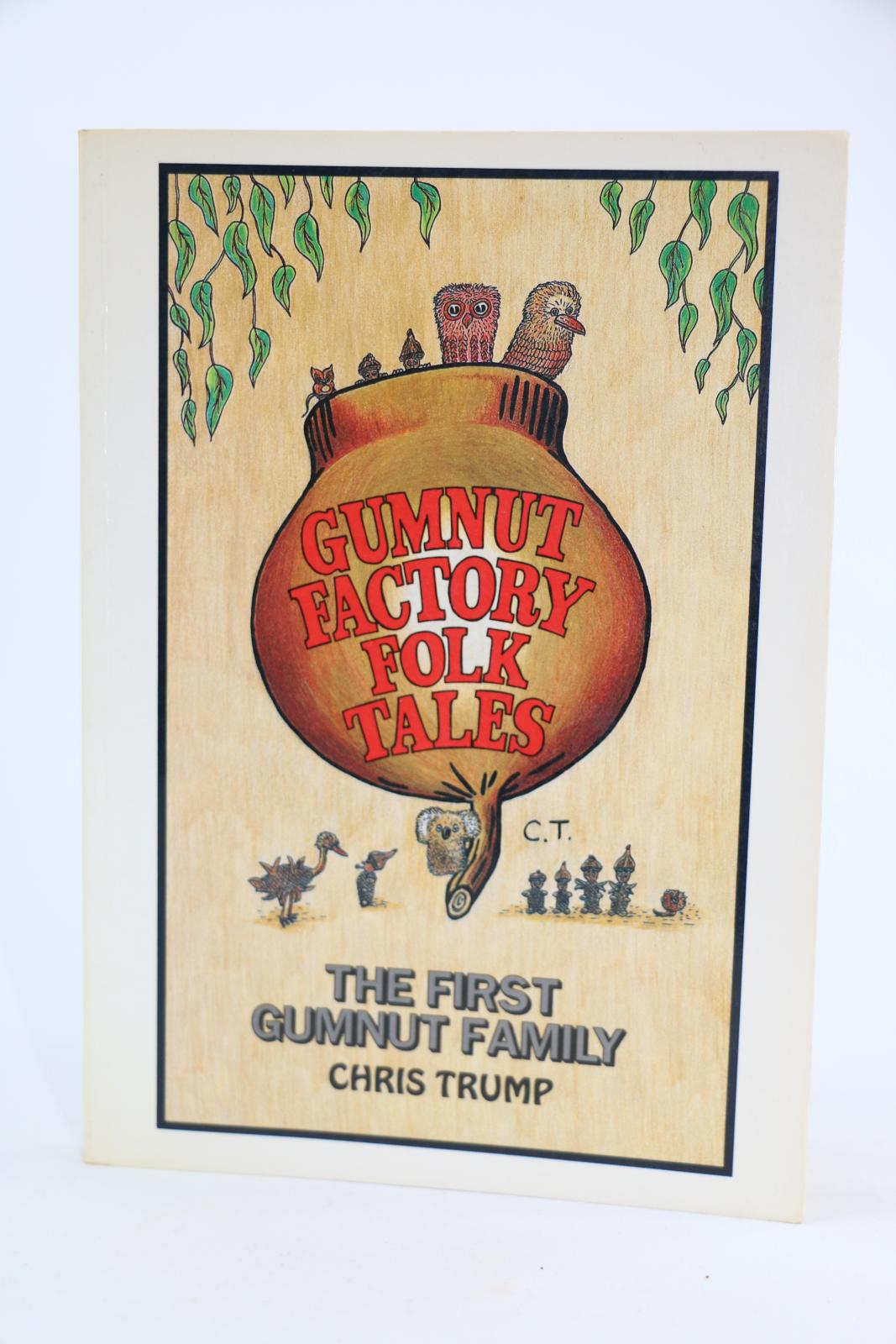
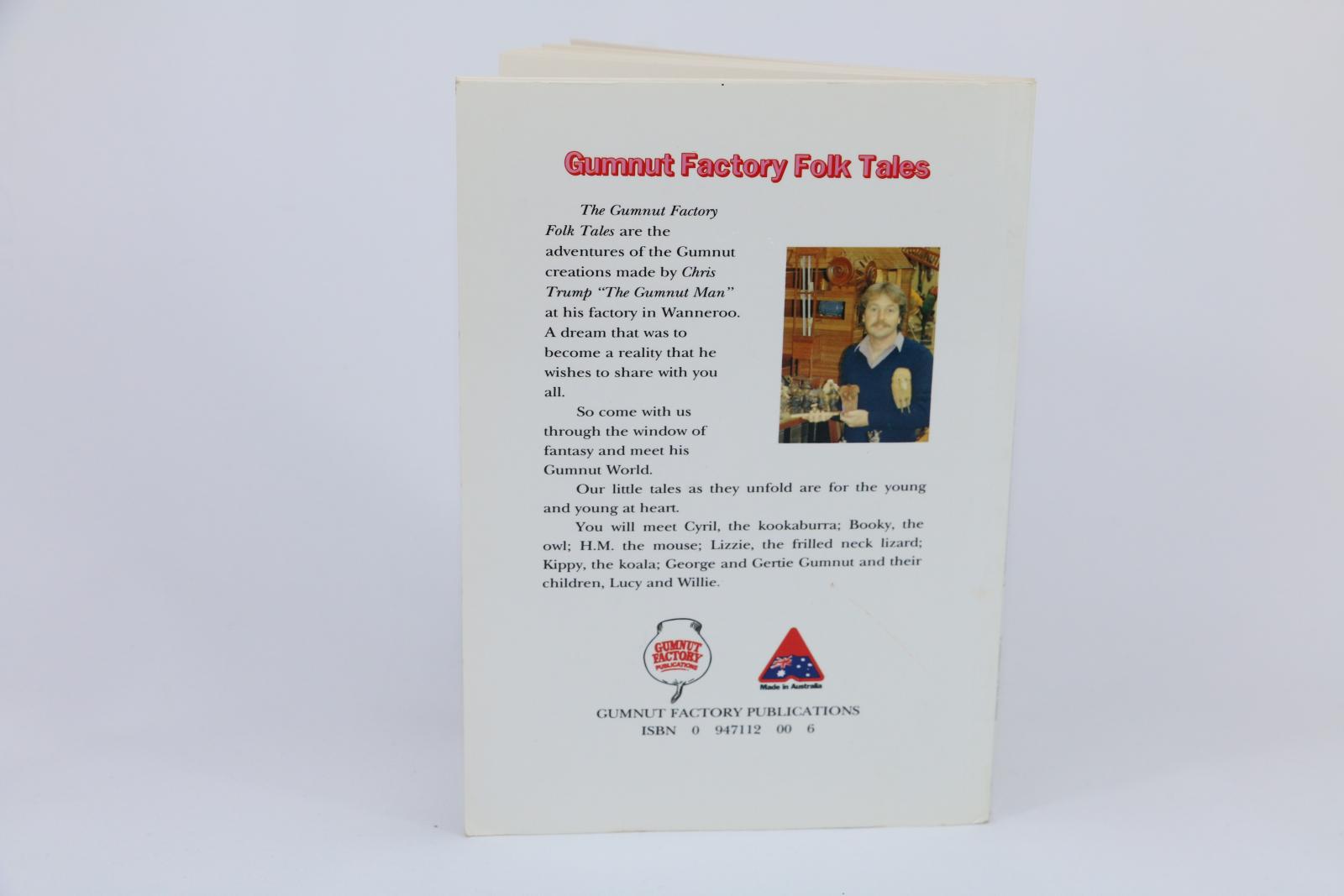
Gumnut Factory Folktales: The First Gumnut Family, published in 1986, sold all 10,000 copies made. This book brought Chris’s creations to life, extending on the pre-existing personalities the characters already had in his mind. Chris describes the idea for the book as initially a “means to an end”, as with the increasing popularity of his business, he wanted to protect it from being copied and was advised the best way to copyright his gumnut creations was to put them in a book. Author Betty Collins, unpublished at the time, sought to write for Chris. He gave her the characters names and personalities, she wrote the first few pages of the book, and Chris believed if he were any better at English, it would have been exactly what he wrote. All the illustrations were done by Chris. To protect his work, realised he would have to publish the book himself, under Gumnut Factory Publications, so that he was protected by copyright and that there was no way he could give the rights away. Chris claims people still ask him for copies “to this day”, in his Carol Pearson interview. Chris also mentions in the interview a librarian told him that his book would have been the first self-published book in Wanneroo.
The Gumnut Factory survived the pilot strike in 1989 which slowed down tourism, the continued decline of tourism in response to the Gulf War, and a huge recession in the late 80s. Chris had also worked on projects in Fremantle in the 90s, stepping back from Wanneroo for two years, in which the business survived without him.
Evolving the business with the times was a successful play for Chris. The golf course and tearooms added in the 90s, gave the factory something new to offer. Chris states during Chinese New Year in either 1998 or 1999, the amount of tour buses he saw coming in and out of the factory was like a “conveyor belt”.
The Final Chapter
In 2001, due to life challenges entangling with finances, Chris had to sell the business, which he was sad to do, but lucky to have found a couple who shared the same interest and vision for the business as he did. Primarily run by Anita Caesar, her and her husband Richard Caesar kept the business going for a few more years. It was important to Chris that whoever would take over shared the same idea for the factory. Anita who was a “born and bred Western Australian from Lansdale,” remained consistent with the image that it was built on. Anita kept Mark Noble, who had been working there since he was 17, and production remained local.
Overtime, Wangara had become an industrial area, and the rent was increasing, so in 2002, the business relocated to the Swan Valley which offered scenes of the picturesque nature that Chris had originally fallen in love with and was surrounded by other leisurely businesses. The Caesars remained in business for 5 years, closing the shop in 2006 and stopping production in March 2007.
References
Archive 9: Gumnut Factory. Papers. Community History Centre, Wanneroo.
“Interview with Chris Trump: the gumnut factory” by Carol Pearson, City of Wanneroo library catalogue. March, 1, 2000. https://wanneroo.spydus.com/cgi-bin/spydus.exe/FULL/OPAC/BIBWRKENQ/2024…. Accessed 13/7/2026.
Donation Form: Anita Caesar (2012), Internal Documentation. Community History Centre, Wanneroo
View the full collection here!