

John Curtin Prime Ministerial Library
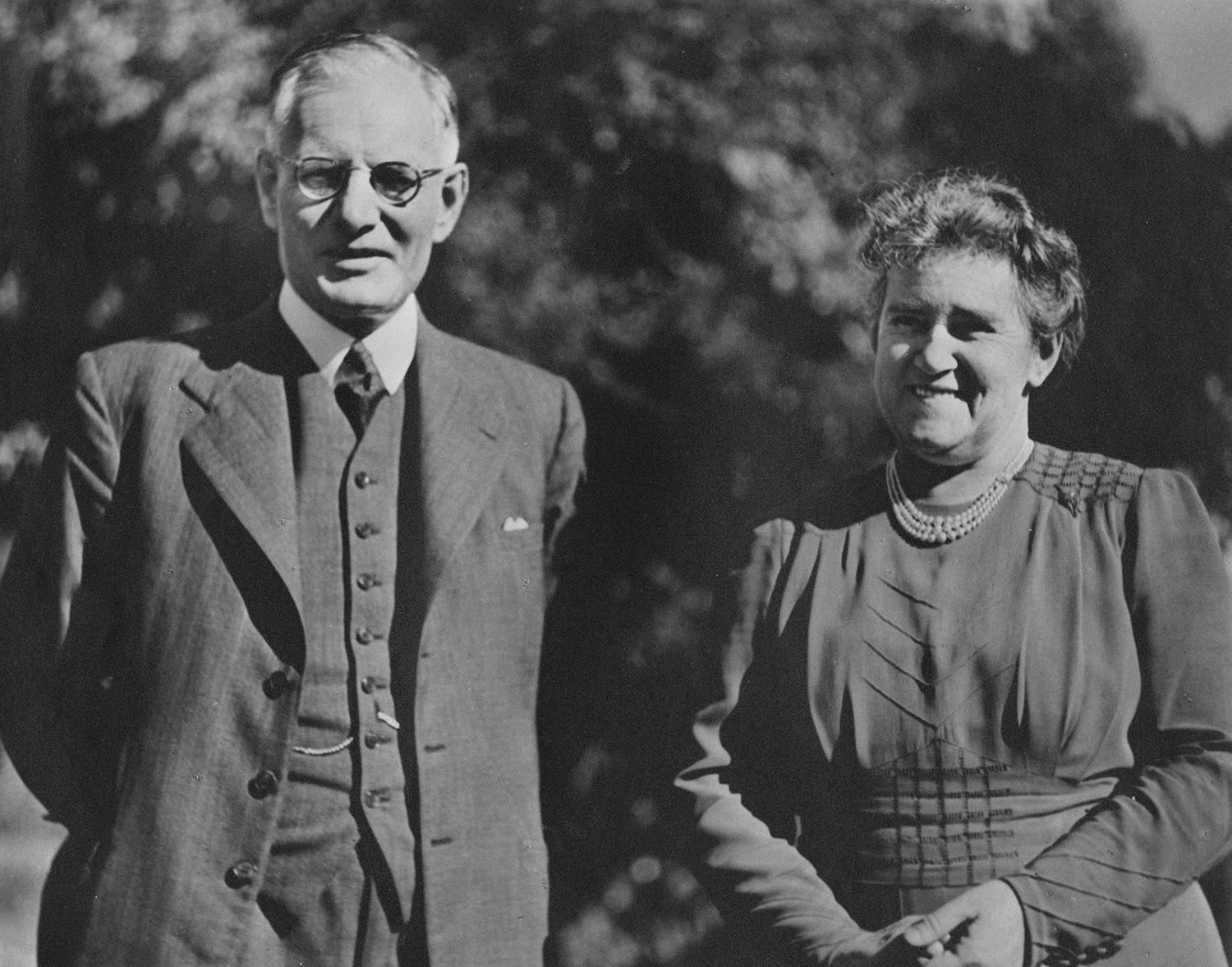
The death of Prime Minister John Curtin came at a significant time at the end of the Second World War, between the Victory in Europe and Victory in the Pacific. The John Curtin Prime Ministerial Library commemorated this period in a 2025 exhibition ‘1945: The Price of Peace’, with some of the items now featured on Collections WA.
Curtin had led Australia through the Second World War from October 1941. On 28 February 1945, he declared in parliament:
There is a price the world must pay for peace … I shall not attempt to specify the price, but it does mean less nationalism, less selfishness, less race ambition.

Curtin was in poor health when he made this speech, suffering from heart disease, and his condition worsened at the end of April. He was in hospital on Victory in Europe Day, 8 May, when Prime Minister Winston Churchill (UK) announced the unconditional surrender of Germany. Later that month, Curtin returned to the prime minister's residence, the Lodge, where he was confined to bed. This touching letter from the leader of the opposition, Robert Menzies, urged him to take a ‘real holiday’. However, Curtin's condition didn't improve and he died on 5 July 1945. The war ended just six weeks later with the surrender of Japan. Frank Forde, who served as the new prime minister for eight days, memorably said in parliament, 'The captain has been stricken in sight of the shore'.
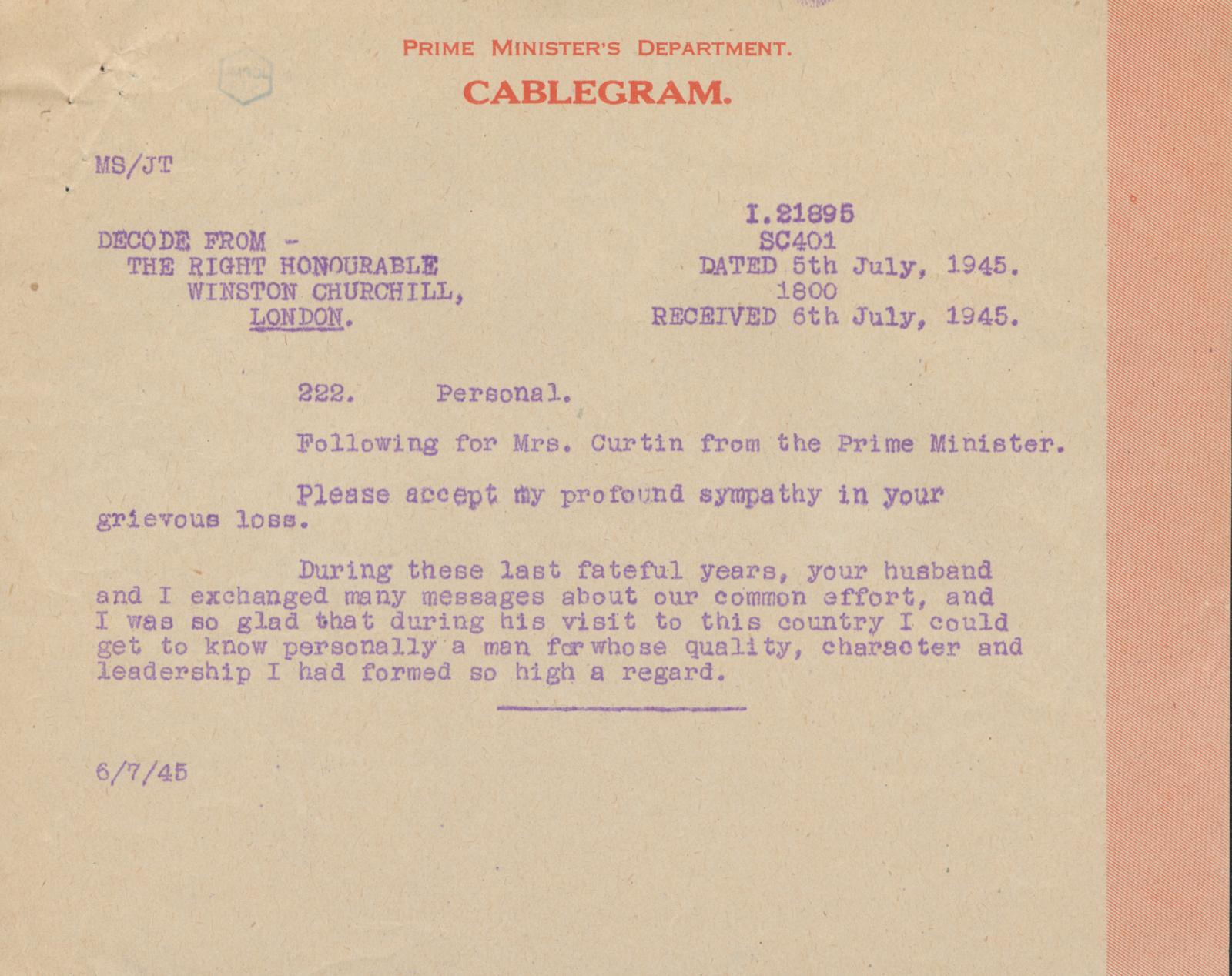
Winston Churchill sent Curtin's widow, Elsie, this condolence cablegram on the day he faced a general election which saw him lose government. Despite tensions between the two leaders at crucial points of the war, Churchill's sincere respect for Curtin is evident.
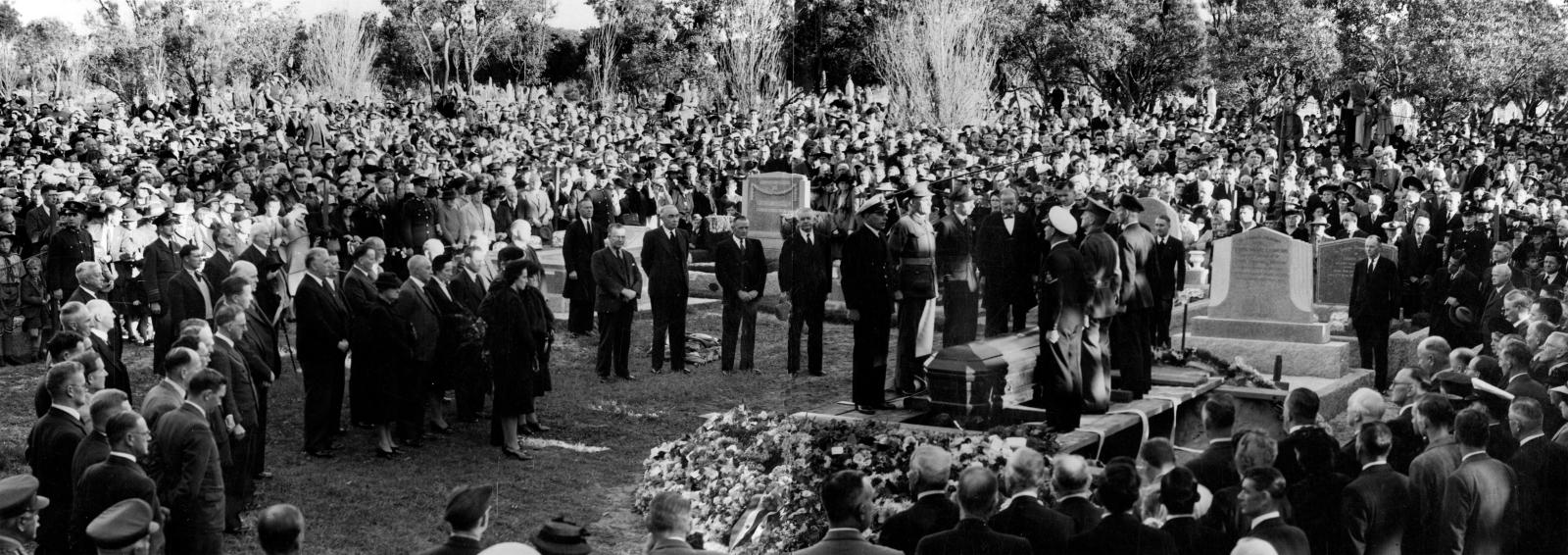
After a memorial service in Canberra, Curtin’s body was flown to Perth for his funeral on Sunday 8 July 1945. Many people lined Stirling Highway to watch the procession from Cottesloe to Karrakatta Cemetery. This panorama shows some of the 20,000 people gathered for the graveside service conducted by Curtin’s friend, the Reverend Hector Harrison. Harrison spoke of ‘the anguish of a man of peace who loathed war with all his heart and soul, of one who spent his life in an attempt to promote human understanding, and yet who by a strange irony of fate was chosen by destiny to lead the nation in her hour of direst peril’ (JCPML00020/1).
Typical of reactions to Curtin’s death, the Melbourne Herald newspaper editorial declared, ‘He died as a war casualty, having chosen the risk of burdens beyond his strength … The Prime Minister saw his work as a mission that demanded everything of him.’ (5 July 1945, p. 4) Curtin had been a popular prime minister and was remembered for the way he rallied a nation in its greatest crisis. Behind the scenes, he held together his own party and cabinet in the face of conflict, while standing up for Australia’s interests internationally. Looking ahead to building a fairer Australia after the war, his government introduced widows’ pensions, maternity allowances, and unemployment and sickness benefits. Personally, he was celebrated for his authenticity and lack of pretension - he led by example, living simply, working long hours and spending sleepless nights worrying about the fate of Australian soldiers. John Curtin’s reputation endures to the present day; a major survey of historians and political scientists conducted by Monash University in 2010 and 2021 saw him ranked Australia’s best prime minister both times. Since 1987, his name also lives on in Western Australia's largest university, Curtin University.
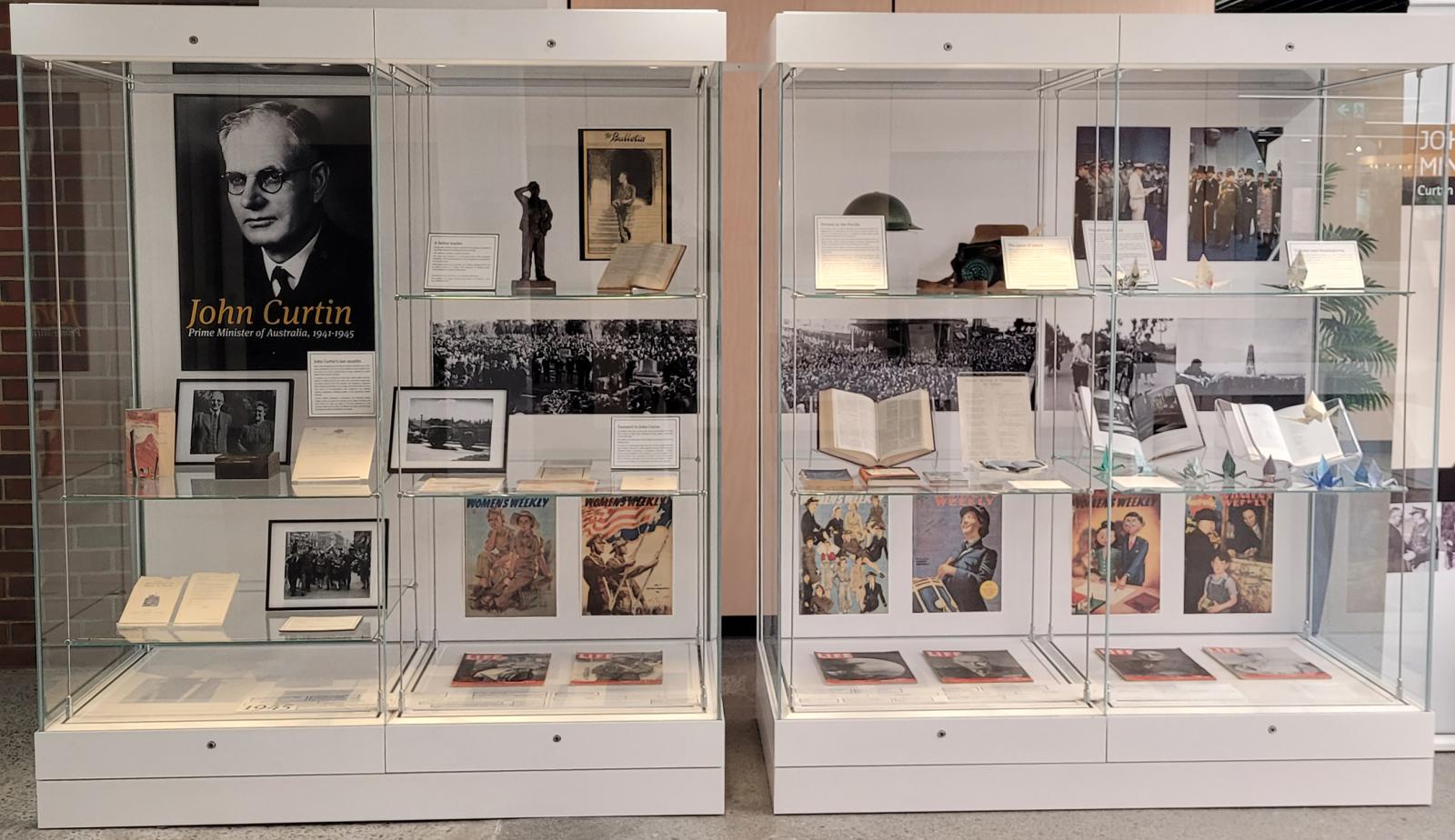
1945: The Price of Peace exhibition in the Robertson Library, 2025.