

Endures 72 hours in water and three years in POW camp
RPH Museum
SISTER IOLE HARPER (BURKITT)
A strong swimmer, Perth Hospital trained war nurse Sister Iole Harper spent 72 hours in the water and clinging to trees in a crocodile-infested mangrove swamp during her struggle to reach land after the bombing of her ship during WWII.
Ordered to evacuate from Singapore, she had been travelling on the small coastal steamer SS Vyner Brooke, sunk in Berhala Straits north of Bangka Island (Indonesia) by Japanese bombers on February 14, 1942.
Twelve nurses drowned after the attack. A group of 22 nurses, who came together on Radji Beach (Bangka Island) and surrendered to the Japanese, were forced to walk into the sea and were shot from behind. One nurse, Sister Vivian Bullwinkel, survived the massacre by feigning death.
Having earlier left the overcrowded lifeboat to those who could not swim, Sister Iole Harper had swum ashore, undetected, at a different location – accompanied by Sister Betty Jeffrey. After being hidden by locals, the pair eventually gave themsleves up and were sent to a POW camp in Sumatra, where they were joined by Sister Vivian Bullwinkel.
Of the original group of 65 Australian Army Nursing Service nurses who left Singapore on that ship, only 24 returned home to Australia. Some weighed less than 35kg when they were freed from their POW camp.
SISTER IOLE HARPER - her story in her words.
Reported in The West Australian - Tue 25 Sept 1945 / Page 6
W.A. NURSE'S ORDEAL by Athole Stewart
Story brought to Perth from Singapore by Major A. E. Saggers, of the 2/4th Machine Gun Btn, who was a passenger on the Duke of Gloucester's plane, which arrived at Guildford, WA.
"I had been in the water for a few minutes and I remember thinking: ‘This is funny. This sort of thing happens in books.’ I didn't think it could happen to me.
"Then I got onto a raft. That made 16 of us, including two Malays. The raft was overloaded and partially submerged. We realised we couldn't go as we were. But land was just a distant blur.
“Most of the girls couldn't swim and as I was a strong swimmer I got off the raft with another sister - the one in the next bed - and, after a lot of persuading, the two Malay sailors got off too. I felt a bit sorry about them as we never saw them again.
"My friend and I swam steadily towards the land and the current helped us. It was ages before we made it. I don't remember how long. When we did reach the shore, we found ourselves among man- groves. They were too thick to struggle through and as the tide was going out and threatening to sweep us out to sea again, we decided to climb into the tree tops for the night.
"People asked us later if we were not worried about crocodiles. They told us the coast was infested with them. Well, we tried not to think about them. And when we did see 'logs' in the water below us, we told ourselves that they were logs.
"When daylight came, we took to the water again and moved along the coast looking for a place to go ashore. We spent another night in the mangrove tops before we did find a place thin enough to break through into the jungle. Thankfully we struggled onto land and away from the sea.
"We found our way eventually to a native village where the Malays hid and fed us. The Japanese were not yet in possession of the whole of the island. Those Malays were very good to us and offered to keep us in hiding and supplied with food and said that they would help us to escape. We thought that a pretty forlorn hope. We could not speak Malay and thought we could never get through Sumatra or down to Java without being caught. So we decided to give ourselves up now instead of later.”
SISTER IOLE HARPER Return to Perth 1945
Reported by - The Australian Women's Weekly - Sat 3 Nov 1945 / Page 19
EMOTIONAL WELCOME AS GALLANT WOMEN RETURN By Win Marshall
“When the hospital ship Manunda moved into its berth at Fremantle, cheering crowds on the wharf were suddenly hushed. They stared, quiet with emotion at the boat-deck. There stood 24 women in grey Army tunics and slacks.
“It was a tense moment, and somehow cheering did not seem enough to express admiration for these nurses who survived the years in Sumatra. As each girl put her foot on Australian soil she turned and waved to the crowd, with tears suspiciously near the edge, but a huge smile of thankfulness and joy on her face. There never was such a display of flowers and fruit as greeted them.
“But when the conversation turned to atrocities, their eyelids flickered slightly and the subject was changed.
“Western Australian Iole Harper put her arm through her mother's and would not let go.
“The girls told how they had earned money for food by doing washing and cooking for wealthy Dutch internees in the camp.
“They told of planting potatoes, working in the fields, cutting and carrying wood, all between frequent face slappings and standing in the searing sun, as the whim seized their guards.
“When the nurses spent the night at Hollywood Military Hospital, in Perth, the reception-rooms were banked with flowers.”
Sources:
Virtual war memorial
Wm.awm.gov.au
Australian War Memorial
Trove.nla.gov.au
SISTER IOLE HARPER (BURKITT)
Born - East Guildford, Western Australia, 15 March 1911
Parents - Harcourt Robert Harper & Daisy Florence (nee Miller) Harper
Schooling - Perth College, WA
Trained - Nursing at Perth Hospital 1935 - 1939
Enlisted - 4 August 1941, Perth, WA, Service number - WX11172, (W16367)
Last Unit – 2nd/13th Australian General Hospital, Australian Army Nursing Service. Last rank - Lieutenant Colonel
Imprisoned - prisoner of the Japanese, 1942-1945, POW camp in Sumatra and Bangka Island.
Married - Dr Arthur Robert Burkitt in 1947
Died - Natural causes, Guildford, Western Australia, 4 September 1998, aged 87 years
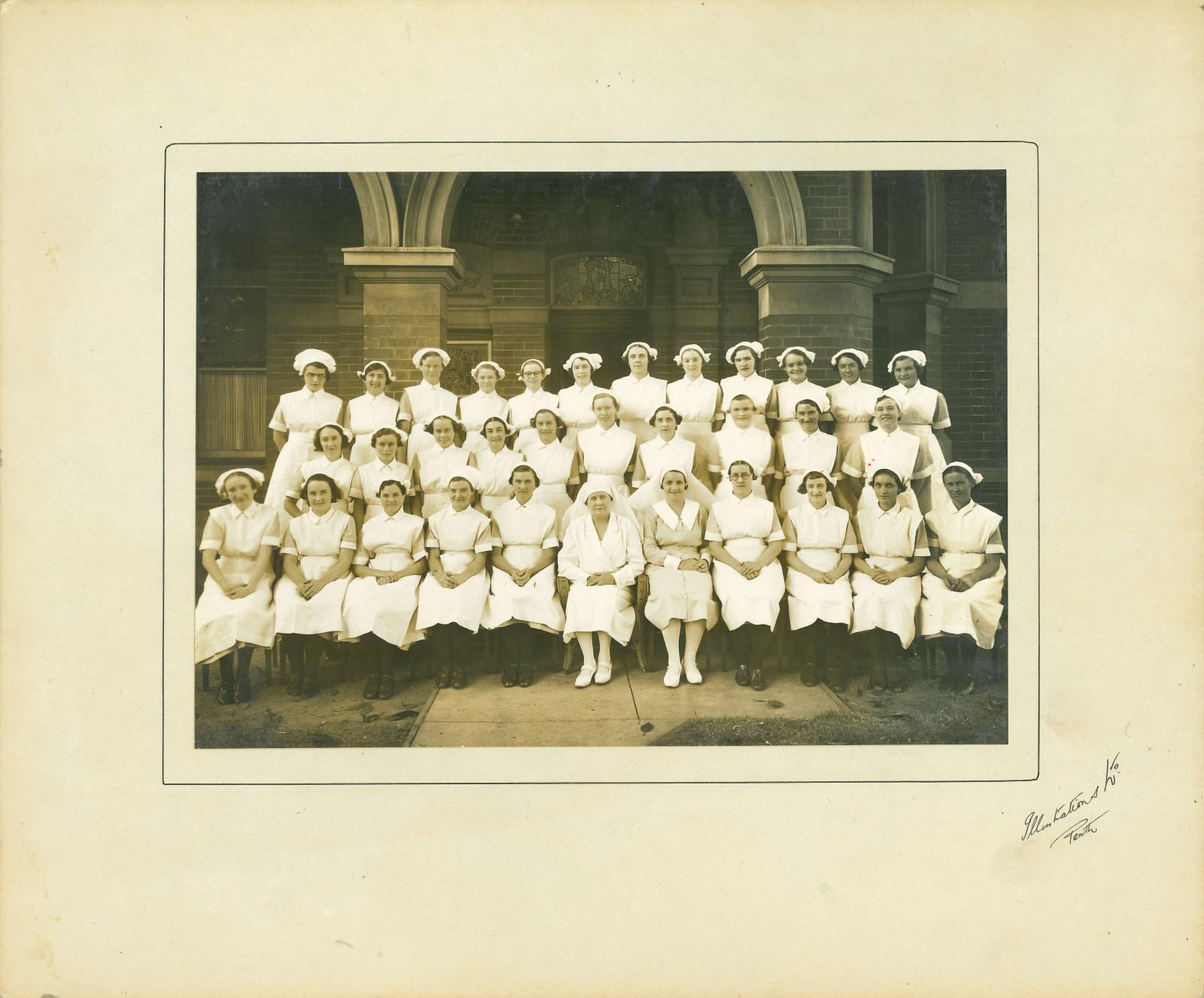
PH 2024.14 Group of nurses, Kirkman House, Perth Hospital c1937
Sister Iole Harper is centre row, first on left
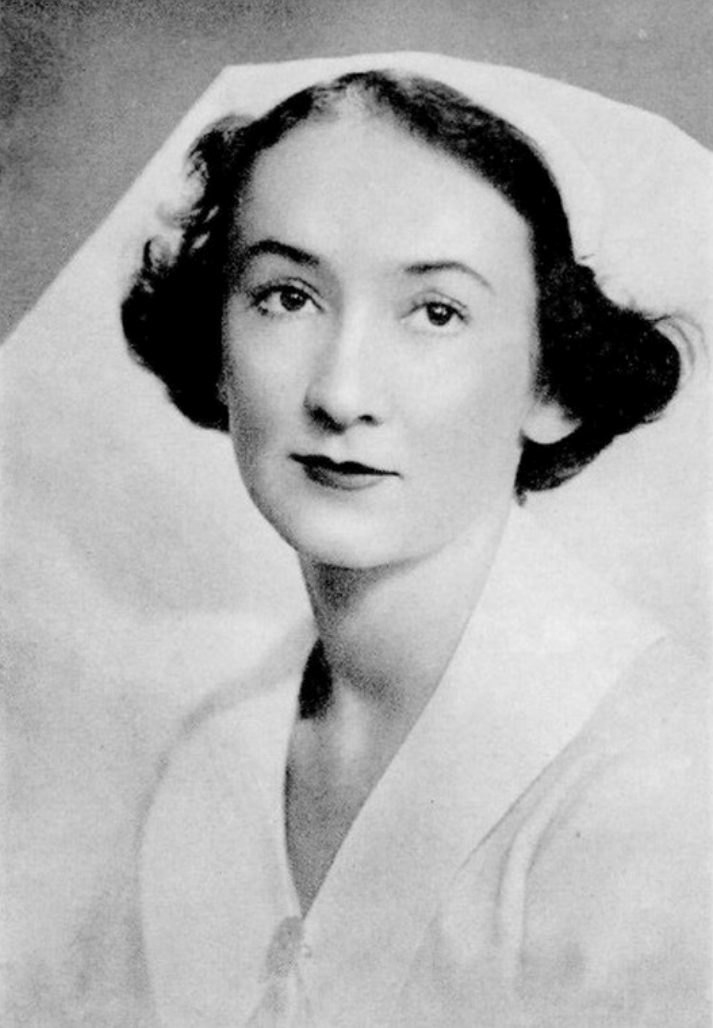
Portrait of Ile Harper, Source Perth College FB