
15 Pounder Field Gun 1898
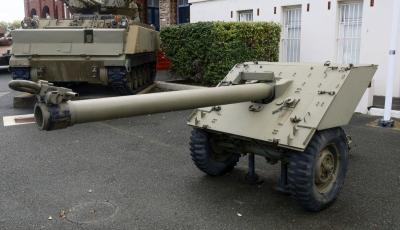
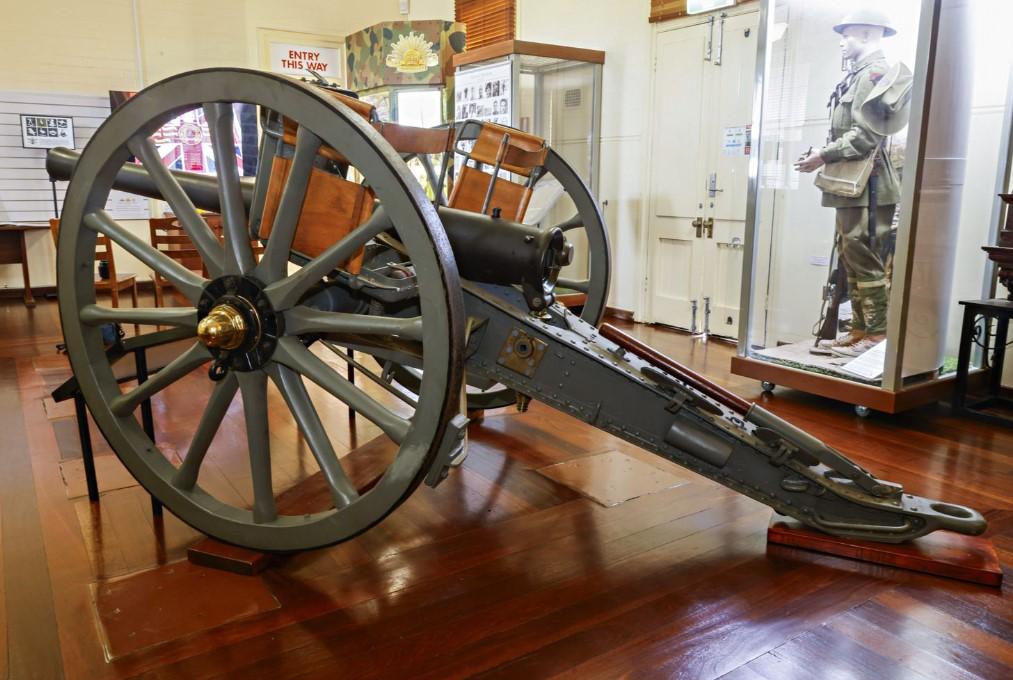
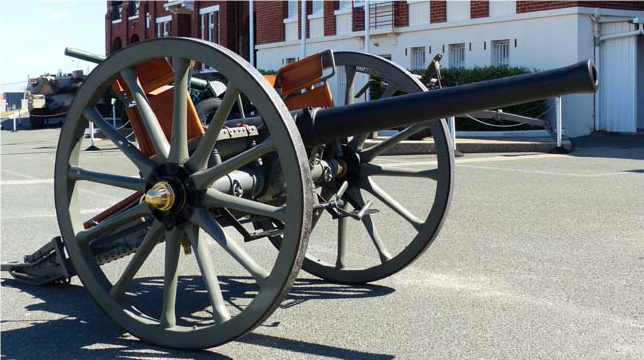
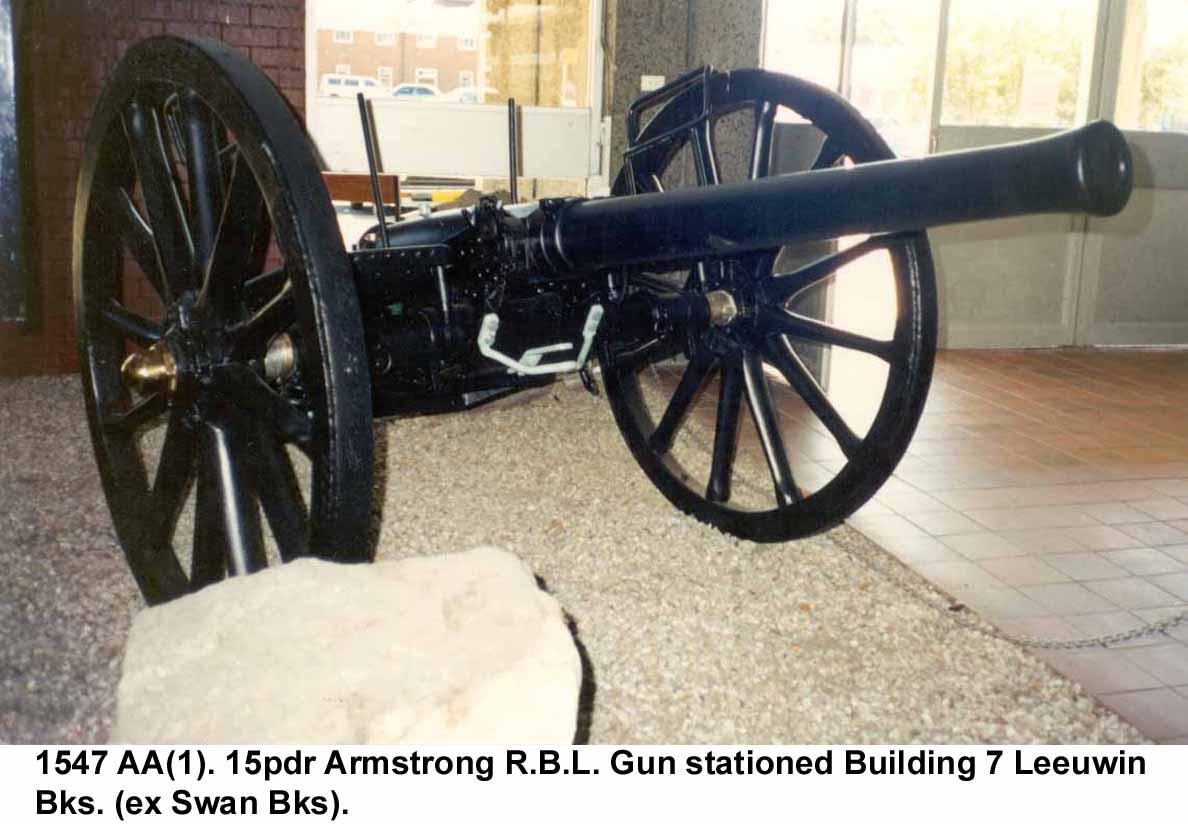
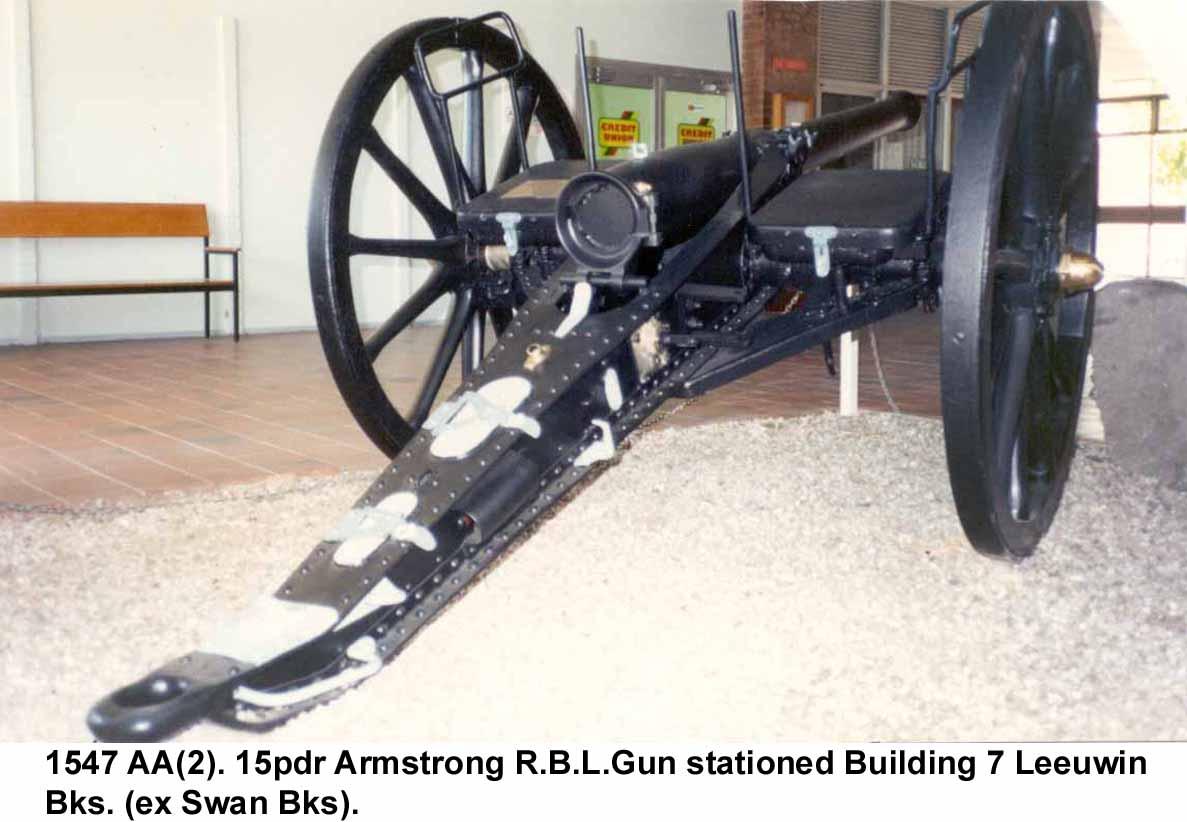
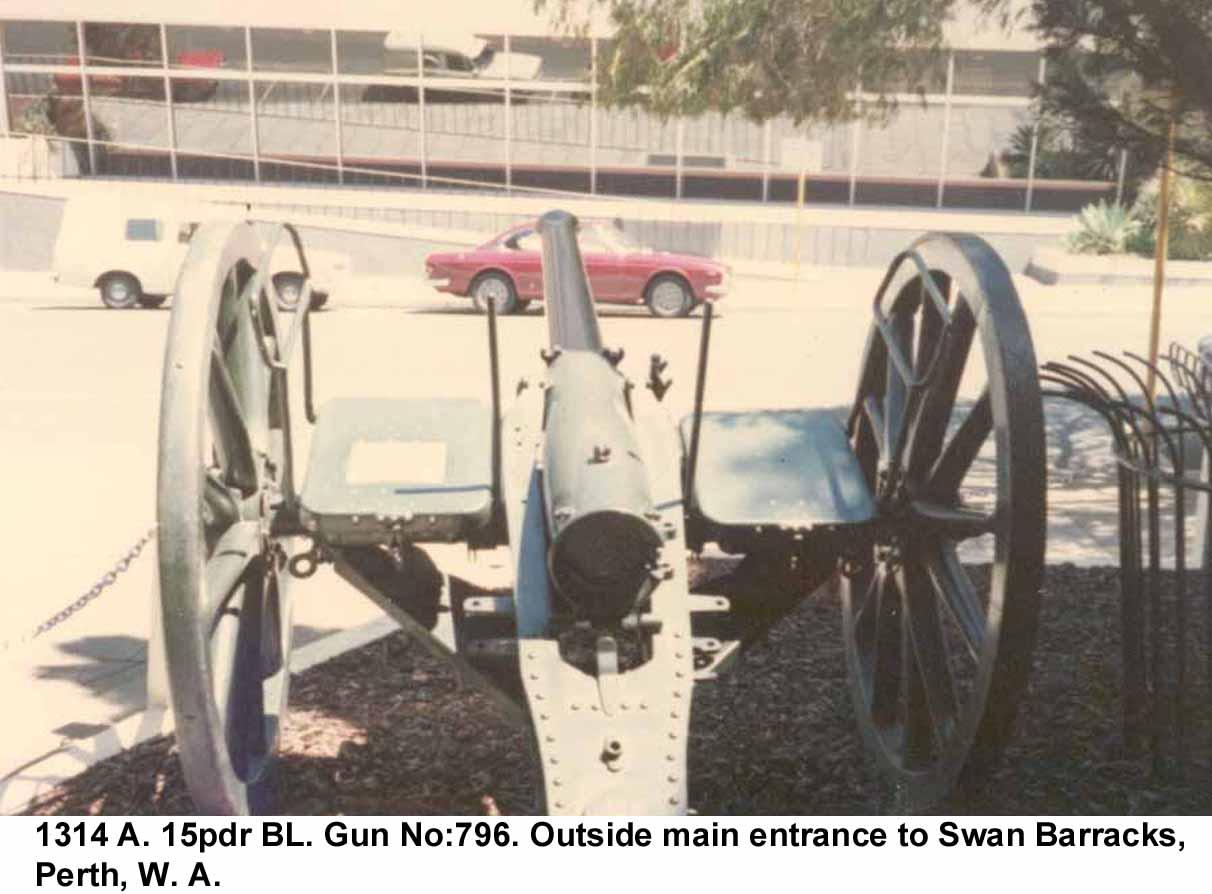
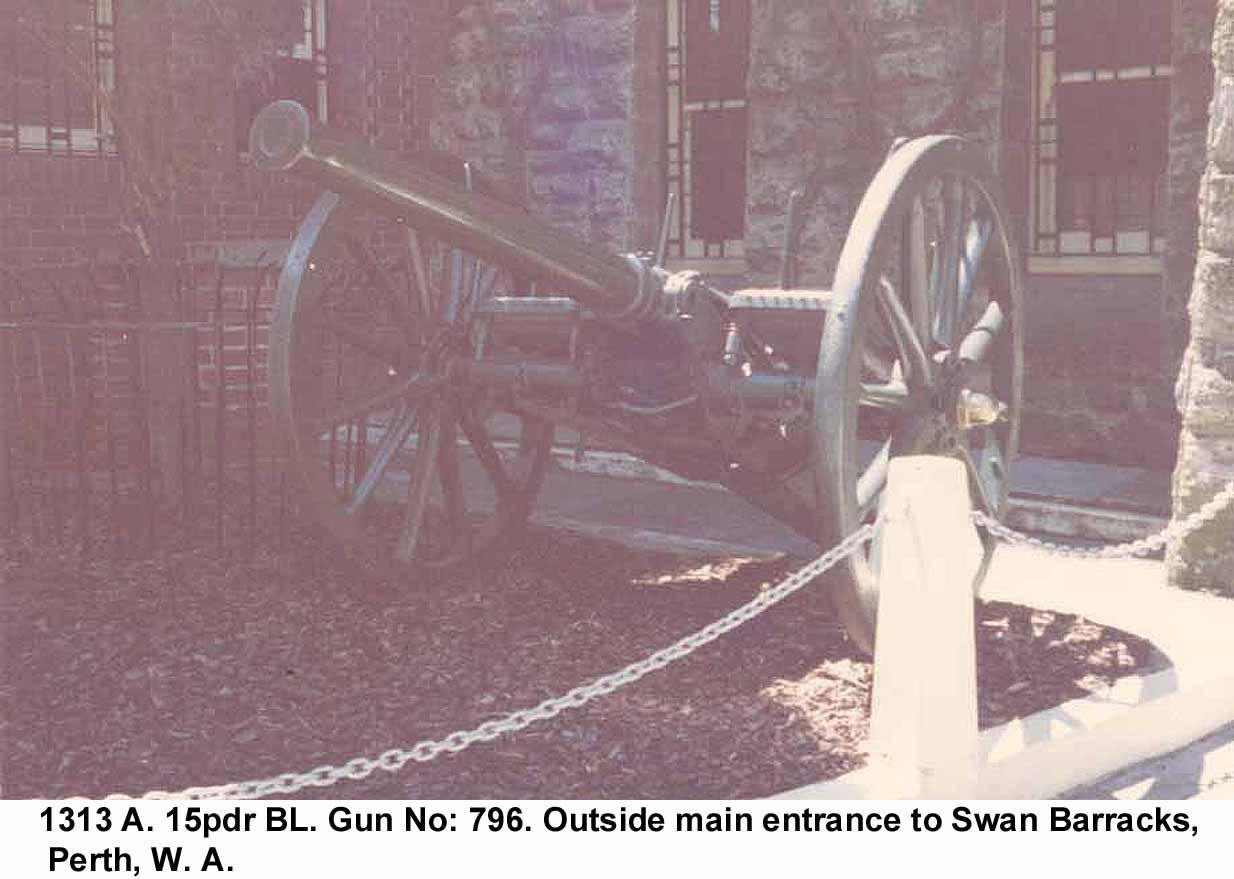
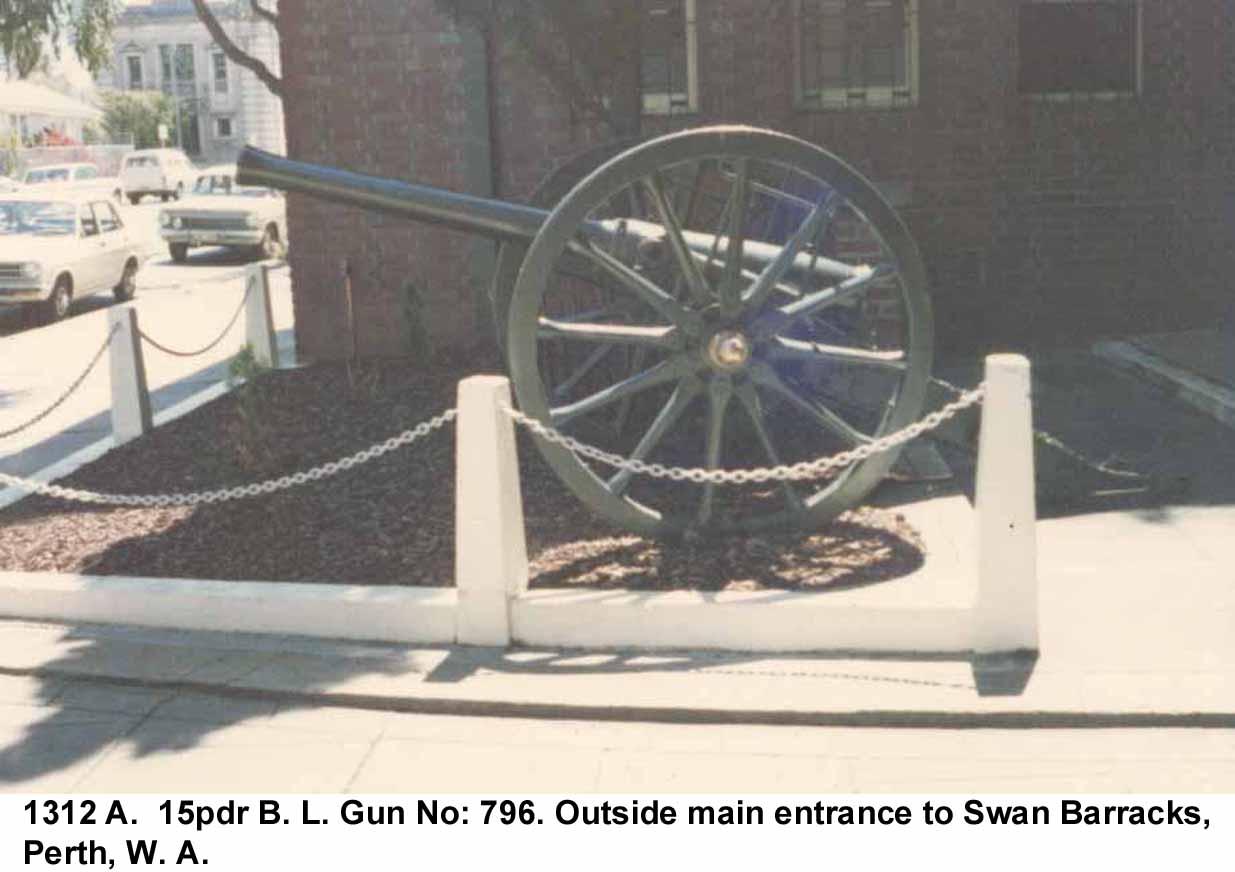
1898Ordnance BL 15-pounder, otherwise known as the 15-pounder 7 cwt, was the British Army's field gun in the Second Boer War. It fired a shell of 3-inch diameter with a maximum weight of 15 pounds (6.8 kg), [production shell weight was actually 14 pounds] hence its name which differentiated it from its predecessor '12-pounder' 3-inch gun which fired shells weighing only 12.5 pounds (5.7 kg). Prior to the Boer War, two Mk 1 versions of the gun were delivered to Western Australia. In the next decade, the rapid evolution of Quick Fire (QF) artillery technology saw the15 pounder was replaced by the 18-pounder. This gun was subsequently on outdoor display at the main entrance of Swan Barracks, Perth for many years. The gun was restored by the Royal Australian Artillery Historical Society of WA in 2001 and later transferred to the Army Museum for public display.
The Ordnance BL 15 pounder, (15 pounder 7 cwt) was a modified version of the previous BL 12 pounder 7 cwt gun of 1883. When the modern smokeless propellant cordite replaced gunpowder in 1892 it was decided that the 12 pounder was capable of firing a heavier shell up to 15 lb (6.8 kg). A 14 pound shell was adopted and the gun was renamed a 15 pounder. The switch to smokeless powder considerably reduced “the fog of war” on the battlefield.
In 1897, eight 15 pounder barrels were sent to Australia where carriages were manufactured to Ordnance Board specifications. Six completed guns were assigned to New South Wales and two to Western Australia. As Western Australia provided primarily mounted infantry contingents to the Boer War, this gun saw no operational service.
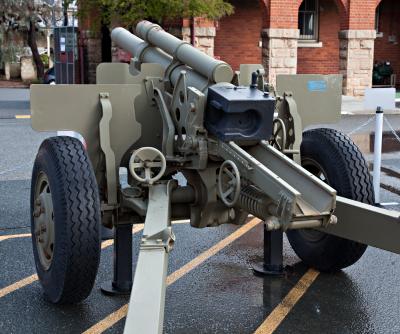
The Mk I carriage recoil, as present on this gun, was controlled by drag-shoes. These were placed under the wheels and were connected by chains and cables to the wheel hubs and the trail. Later versions had a rudimentary recoil system consisting of a "spade" beneath the axle which dug in when the gun recoiled, connected by a steel wire to a spring in a cylinder on the trail. Although the whole gun jumped and moved backwards on firing, the spring returned it to firing position increasing the rate of fire compared to the old model without any recoil mechanism. "It is said that it checked it [recoil] so well that the gun usually recoiled 1 foot and jumped forward 2 feet".
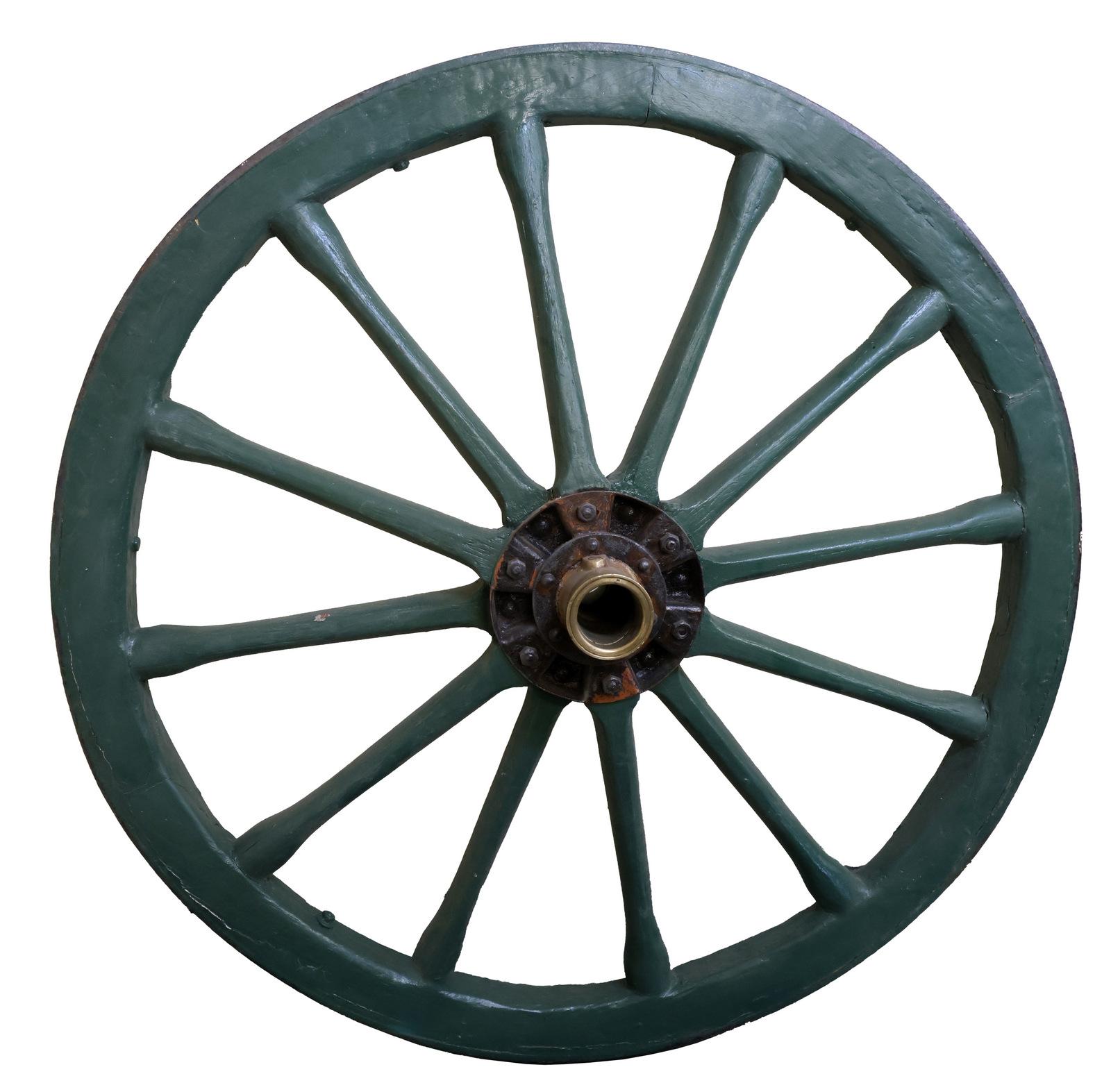
Outdoor display at Swan Barracks resulted in considerable deterioration. Conservation works undertaken by the Royal Australian Artillery Historical Society of Western Australia included fabrication of the missing breech and brakes/recoil system and re-fabrication of the gun wheels.
Details
Details
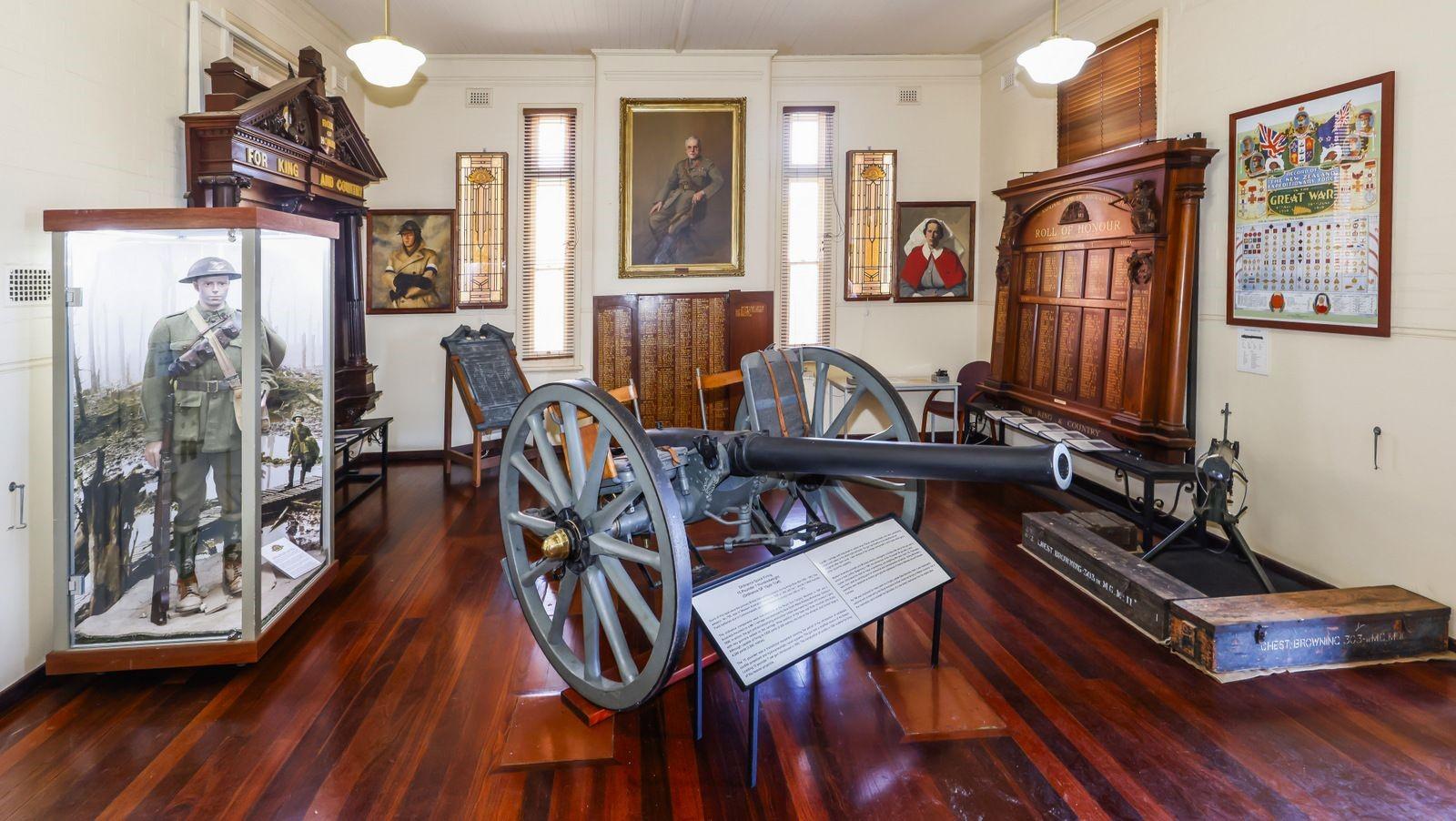
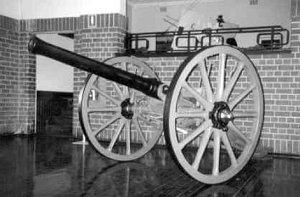
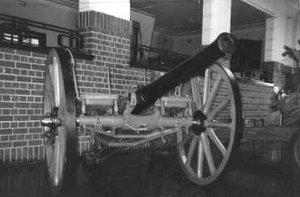
The 15 Pounder is displayed in the Entrance Gallery at the Australian Army Museum of Western Australia together with a supporting technical exhibition of its ammunition and operational use. Included in this series of images are views of the gun in previous display locations at Swan Barracks, HMAS Leeuwin. and Hobbs Artillery Park (Irwin Barracks)
Open in Google Maps
Nearest geotagged records:
- Inter War, Australia Western Australia, 1929 (0.01km away)
- World War 1, Honour Board, Municipality of North Fremantle. (0.01km away)
- World War 1, Western Australia. Roll of Honour - Blackboy Hill Officers' Mess (0.01km away)
- Canadian Military Pattern Ambulance (0.01km away)
- Funeral Ensemble Truck and (0.01km away)
- ANZAC House Colored Glass Windows (0.01km away)
- World War 1, Western Australia, Perth, "Big Bertha" 70 Ton Press from Sheridan's Badges , 1914 - 2014 (0.01km away)
- Universal (Bren Gun) Carrier (0.01km away)
- Starting Cannon - America's Cup Defence, Fremantle,1986/87 (0.02km away)
- General Gordon Bennett's office desk, Perth College, 1942 (0.02km away)
Nearby places: View all geotagged records »
Australian Army Museum of Western Australia
Australian Army Museum of Western Australia
Other items from Australian Army Museum of Western Australia
Scan this QR code to open this page on your phone ->