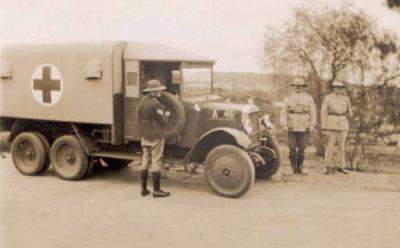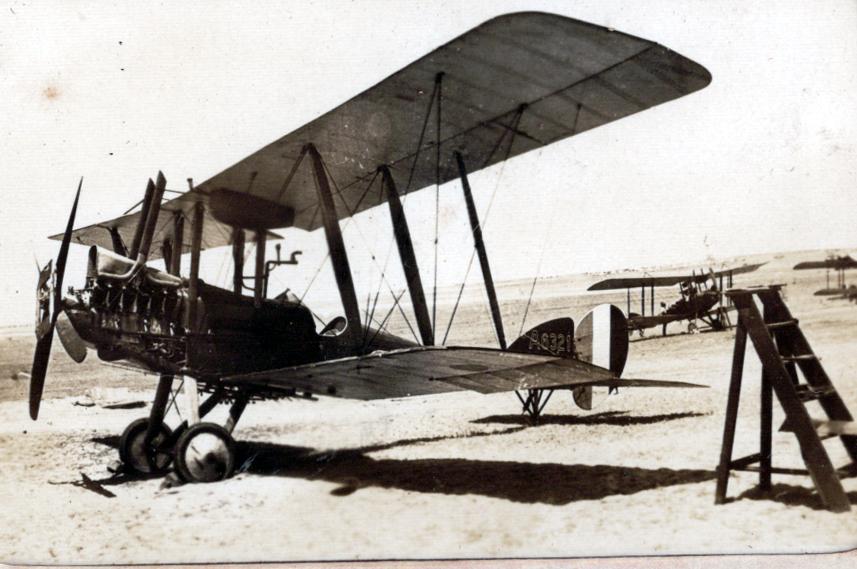
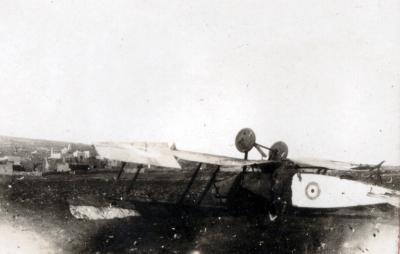
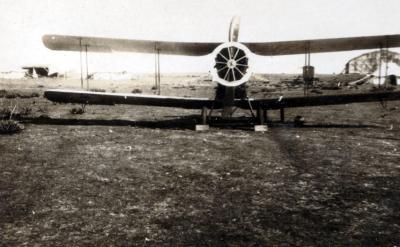
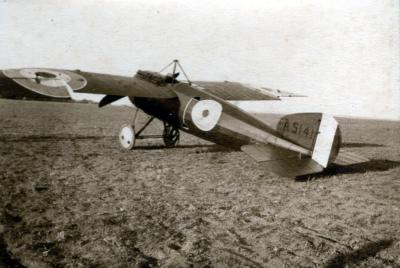
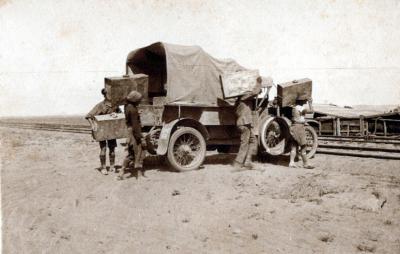
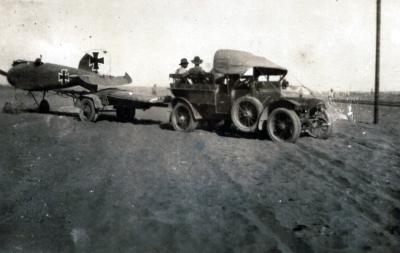
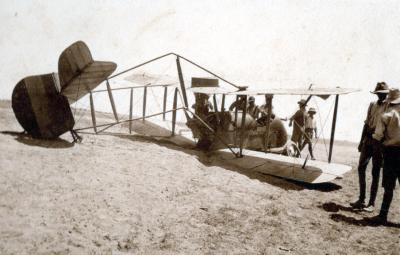
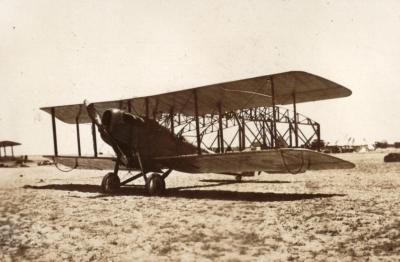
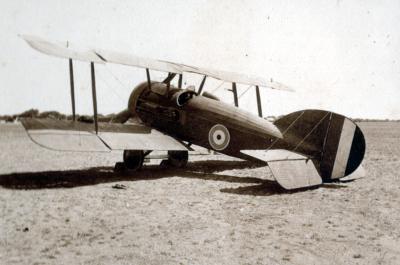
World War 1, South West Asia, Gaza / Palestine, Deir El Belah, 1 Squadron Australian, Flying Corps, STEWART, 1917
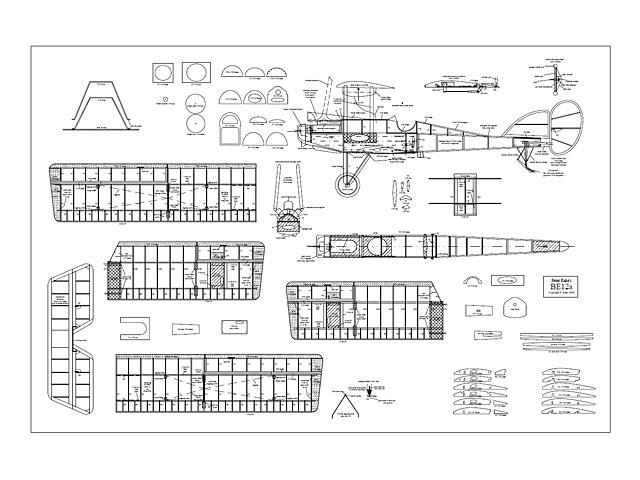
1917The BE.12 type is readily identified by the central fuel tank on the underside of the upper wing. The Royal Aircraft Factory B.E.12 was a single-seat British biplane used during World War I. Originally intended as a long-range bomber and reconnaissance plane, it was later pressed into service as a fighter. It was essentially a single-seat version of the highly stable B.E.2.
Walter Stewart was born in Onslow, Western Australia 1896 and was working as a farm hand at Pallinup (via Broome) when he enlisted in the Australia Imperial Force on 4 March 1916. Enrolled as 2427A in the 16th Reinforcements of 10 Light Horse, he embarked from Fremantle on HMAT A52 Surada on 16 May 1916. Although subsequently receiving machinegun training, he was transferred to 67 Australian Flying Squadron, Royal Flying Corps as a Motor Transport Driver. By the end of the War he was an Air Mechanic 1st Class with No 1 Squadron Australian Flying Corps. He embarked from Kantara Egypt for return to Australia on 5 March 1919.
Details
Details
No original BE12s are known to exist but The Vintage Aviator Ltd in New Zealand has built an airworthy reproduction which is flown from the firm's Hood Aerodrome, Masterton base.
Walter Stewart purchased a small “Windmill” album manufactured in London inscribed Best Wishes from Walter for his sister and next of kin Nellie, living in Pallinup and a “Souvenir” album from Devel Printing in Cairo. The albums contain a variety of tourist and operational flying scenes, in all 116 images.
Australian Army Museum of Western Australia
Australian Army Museum of Western Australia
Other items from Australian Army Museum of Western Australia
-
World War 1, South West Asia, Gaza / Palestine, Deir El Belah, 1 Squadron Australian, Flying Corps, STEWART, 1917
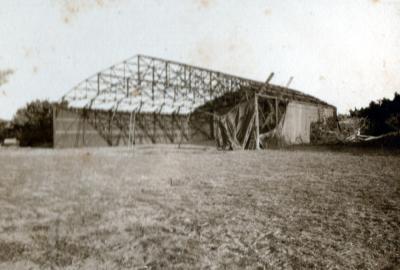
-
World War 1, South West Asia, Gaza / Palestine, Deir El Belah, 1 Squadron Australian, Flying Corps, STEWART, 1917
-
World War 1, South West Asia, Gaza / Palestine, Deir El Belah, 1 Squadron Australian, Flying Corps, STEWART, 1917
-
World War 1, South West Asia, Gaza / Palestine, Deir El Belah, 1 Squadron Australian, Flying Corps, STEWART, 1917
-
World War 1, South West Asia, Gaza / Palestine, Deir El Belah, 1 Squadron Australian, Flying Corps, STEWART, 1917
-
World War 1, South West Asia, Gaza / Palestine, Deir El Belah, 1 Squadron Australian, Flying Corps, STEWART, 1917
-
World War 1, South West Asia, Gaza / Palestine, Deir El Belah, 1 Squadron Australian, Flying Corps, STEWART, 1917
-
World War 1, South West Asia, Gaza / Palestine, Deir El Belah, 1 Squadron Australian, Flying Corps, STEWART, 1917
-
World War 1, South West Asia, Gaza / Palestine, Deir El Belah, 1 Squadron Australian, Flying Corps, STEWART, 1917
-
World War 1, South West Asia, Gaza / Palestine, Deir El Belah, 1 Squadron Australian, Flying Corps, STEWART, 1917
-
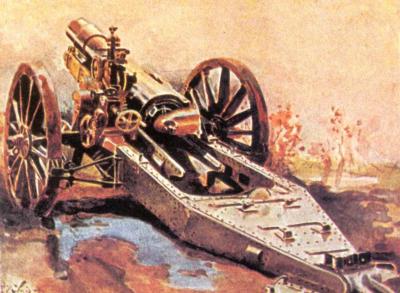
World War 1, Western Front, France, 6inch BL Howitzer
-
Inter War, Western Australia, Rockingham, 3 Field Artillery Brigade, 1938