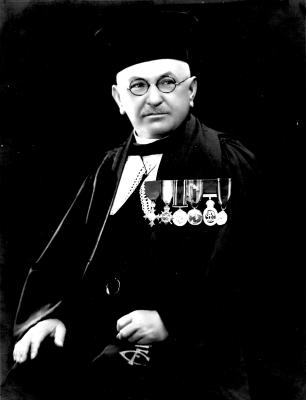
Medal Group - Archbishop RILEY., Chaplain General World War 1
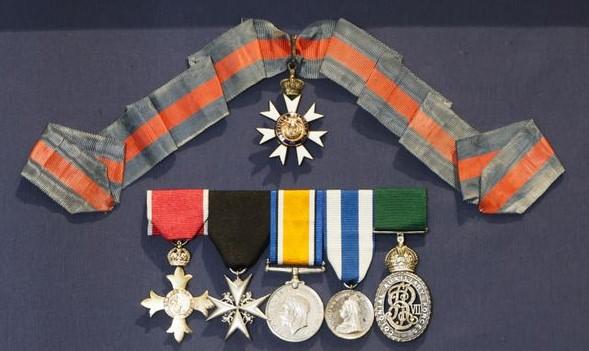
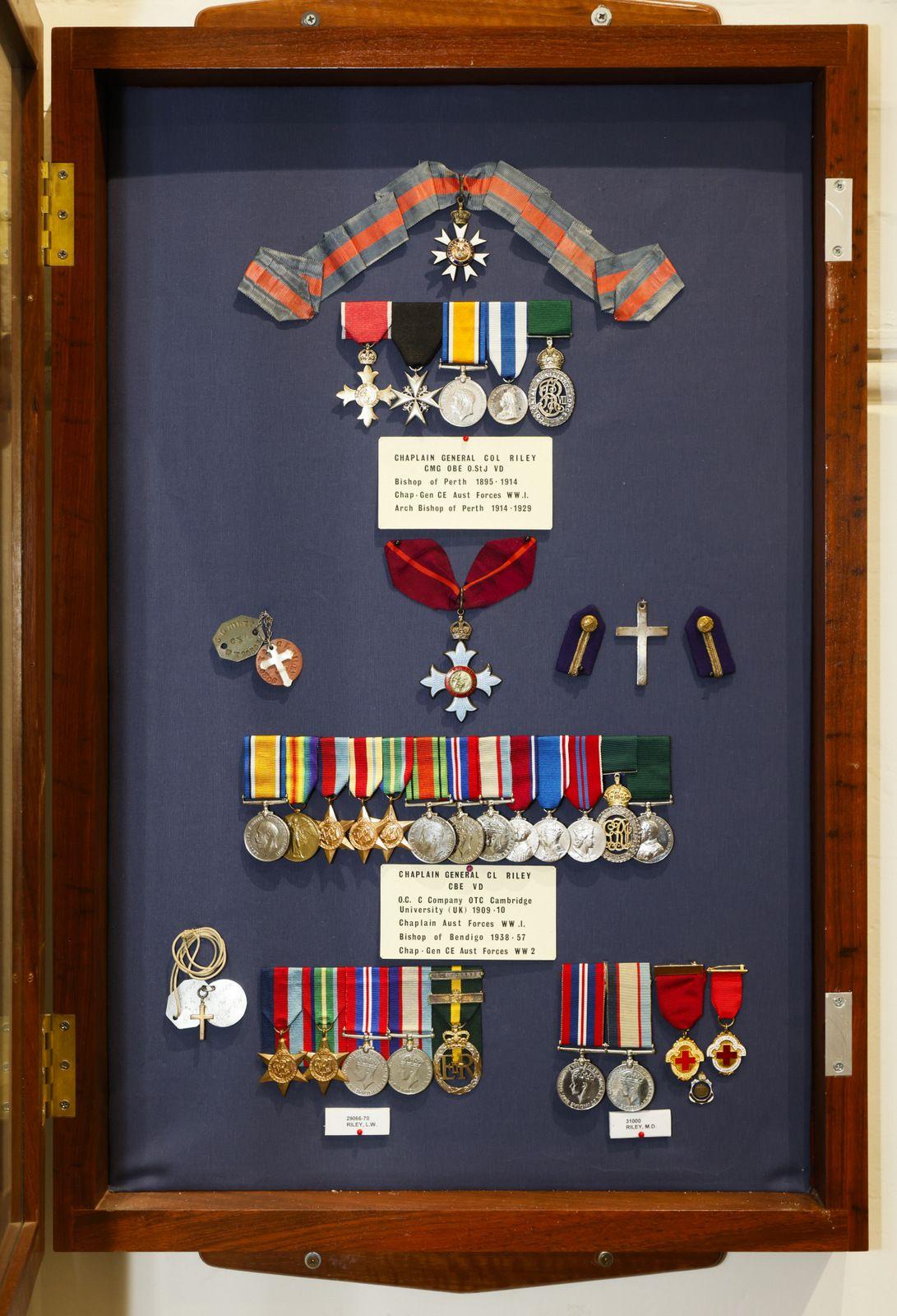
Medal Group of 6 medals of the Most Reverend Charles Owen Leaver Riley, Archbishop of Perth.
In 1894 Riley was appointed Bishop of Perth, then the largest Anglican diocese in the world, with an area of 1,000,000 square miles (2,600,000 km2) and a scattered population of about 100,000. He was consecrated by the Archbishop of Canterbury at Westminster Abbey on 18 October 1894. In 1916 Archbishop Riley was appointed Anglican chaplain general of the Australian Imperial Force, having been senior chaplain to the Western Australian Defence Force from 1895. He sought to expand the Anglican chaplaincy corps, but his plan for one chaplain to every troopship failed. Riley toured the UK, France & Egypt for 3½ months in late 1916 early 1917 enquiring into the administration of each theatre's Chaplain's Dept, returning to Australia in February 1917On the return voyage his troopship Ivernia was torpedoed amidships in the Mediterranean, resulting in 130 deaths. Riley lost everything but the clothes he wore ferrying a lifeboat of fifty survivors to a trawler. The tour resulted in the appointment of fifteen more chaplains. It also strengthened his view of conscription, which he supported publicly on the eve of the plebiscites in 1916 and 1917. After the war, though offered the presidency, he became patron of the State branch of the Returned Sailors' and Soldiers' Imperial League of Australia. He frequently appeared with Lietenant General Talbot Hobbs and Rabbi Freedman, RSL State President, at the dedication of community memorials to the Australian imperial Force.
Details
Details
The Group consists of the Commander of the order of St Michael and St George (CMG), Commander of the Order of the British Empire (CBE), British War Medal, Queen Victoria Golden Jubilee medal and Volunteer Officers Decoration.
he Royal Australian Army Chaplains' Department (RAAChD) is an all-officer corps of the Australian Army that provides ordained clergy to minister to the personnel of the Australian Army. The role of Defence Chaplaincy is to provide spiritual and pastoral support to Army’s people by bringing honour to the dead, comfort to the sick, hope to those in distress, and support to all. The Royal Australian Army Chaplains Department has provided support to Army for 110 years. It is comprised of Australian Army officers representing Buddhist, Christian, Hindu, Islam and Jewish faith groups. Army Chaplains provide religious ministry, spiritual guidance, pastoral care, and a range of other support to Army members and their families.
Army Chaplains maintain an operational focus and are posted to Army units throughout Australia. They are members of the Commander's personnel support team, operating as a key staff advisers. Numbers fluctuate but there are over 60 serving regular chaplains (commonly known as 'padres') in the full-time Australian Army and over 80 chaplains in the Australian Army Reserve.
The Department was granted the privilege of the prefix 'Royal' by King George VI along with a number of other Australian Army corps in December 1948 in recognition of their service during World War 2. The Royal Australian Army Chaplains' Department has two cap badges, one for its Christian chaplains that features a Maltese cross, and another for Jewish chaplains that features a Star of David. Chaplains are permitted to wear their assigned unit's beret if one is worn, but with the RAAChD cap badge.
Christian chaplains wear a cross on the shirt collars and lapels of their uniforms; Jewish chaplains wear a Star of David instead. Principal Chaplains wear gorget patches (of a Brigadier or Colonel respectively) in purple (instead of red) RAAChD chaplains wear a purple lanyard over their right shoulder instead of their assigned unit's lanyard.[3]
Army chaplains, although they are all commissioned officers of the Australian Army and wear uniform, do not carry arms. They are the only officers not to carry swords on parade. Chaplains are permitted to wear a clerical collar and black stock under the service, utility or mess jackets, At services on formal occasions, chaplains wear their medals and decorations on their clerical robes.
Australian Army Museum of Western Australia
Australian Army Museum of Western Australia
More items like this
Other items from Australian Army Museum of Western Australia
-
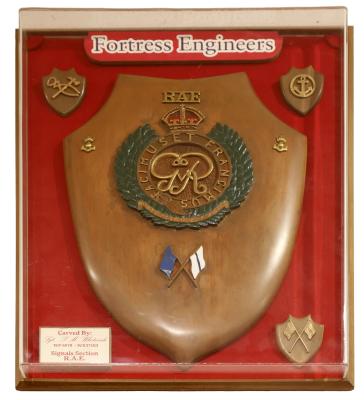
Pre 1914 - WP6070 WHITESIDE, Fortress Engineers Signals Carved Unit Plaque, 1912
-
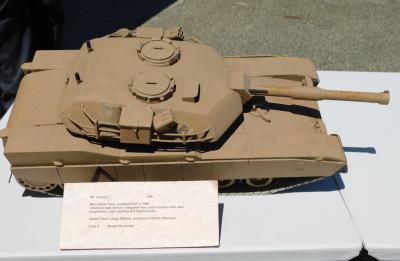
Technology Model - M1 Abrams Main Battle Tank
-
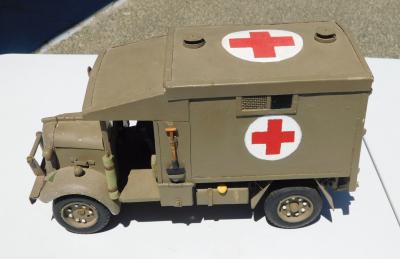
Technology Model - UK Military Pattern Ambulance 1942
-
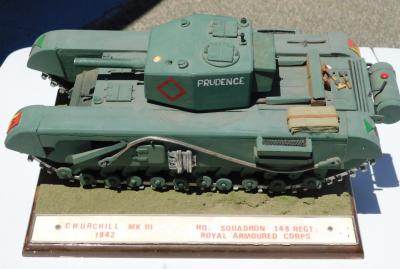
Technology Model - Churchill Tank Mk 3 1942
-
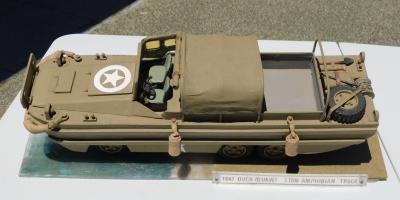
Technology Model - 3 Ton Amphibian Truck (DUKW) 1942
-
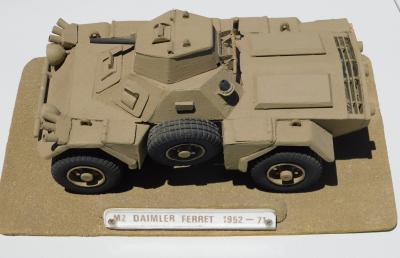
Technology Model - Daimler Ferret 1952 -71 in Australian service
-
Technology Model - M3 Grant MediumTank 1942

-
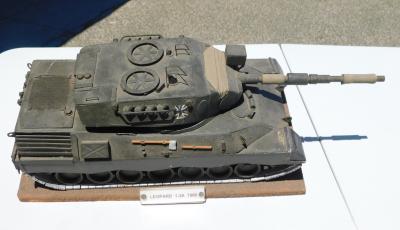
Technology Model- Leopard 1 A3, 1988
-
Technology Model - M2A2 105mm Howitzer

-
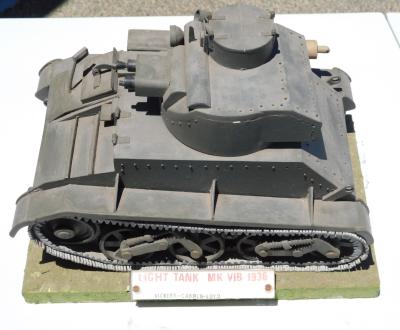
Technology Model - Vickers Light Tank Mk VI 1936
-
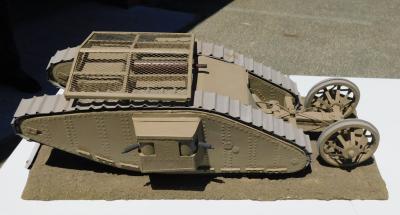
Technology Model - Mk 1 Female Tank 1916
-
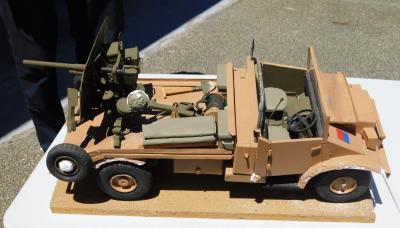
Technology Model - 2 Pounder Anti-Tank Gun Portee, 1941