

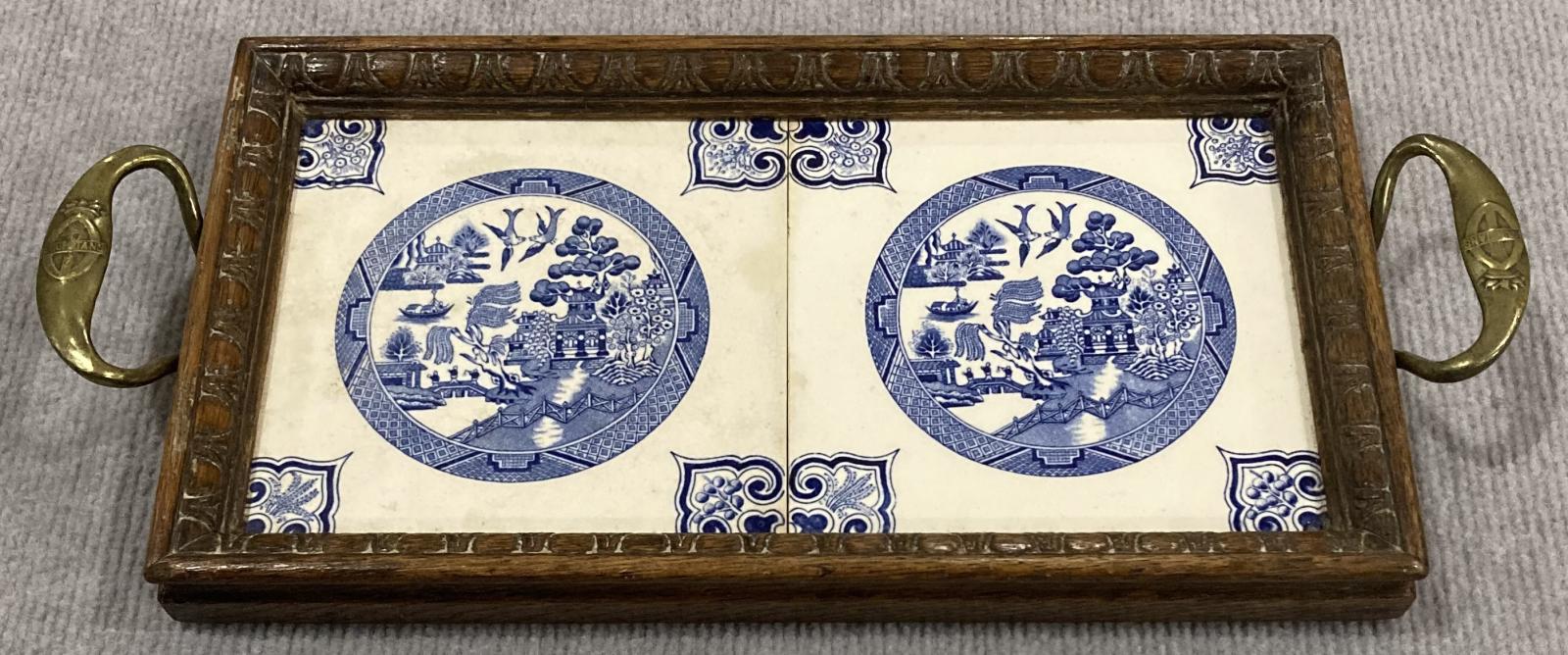
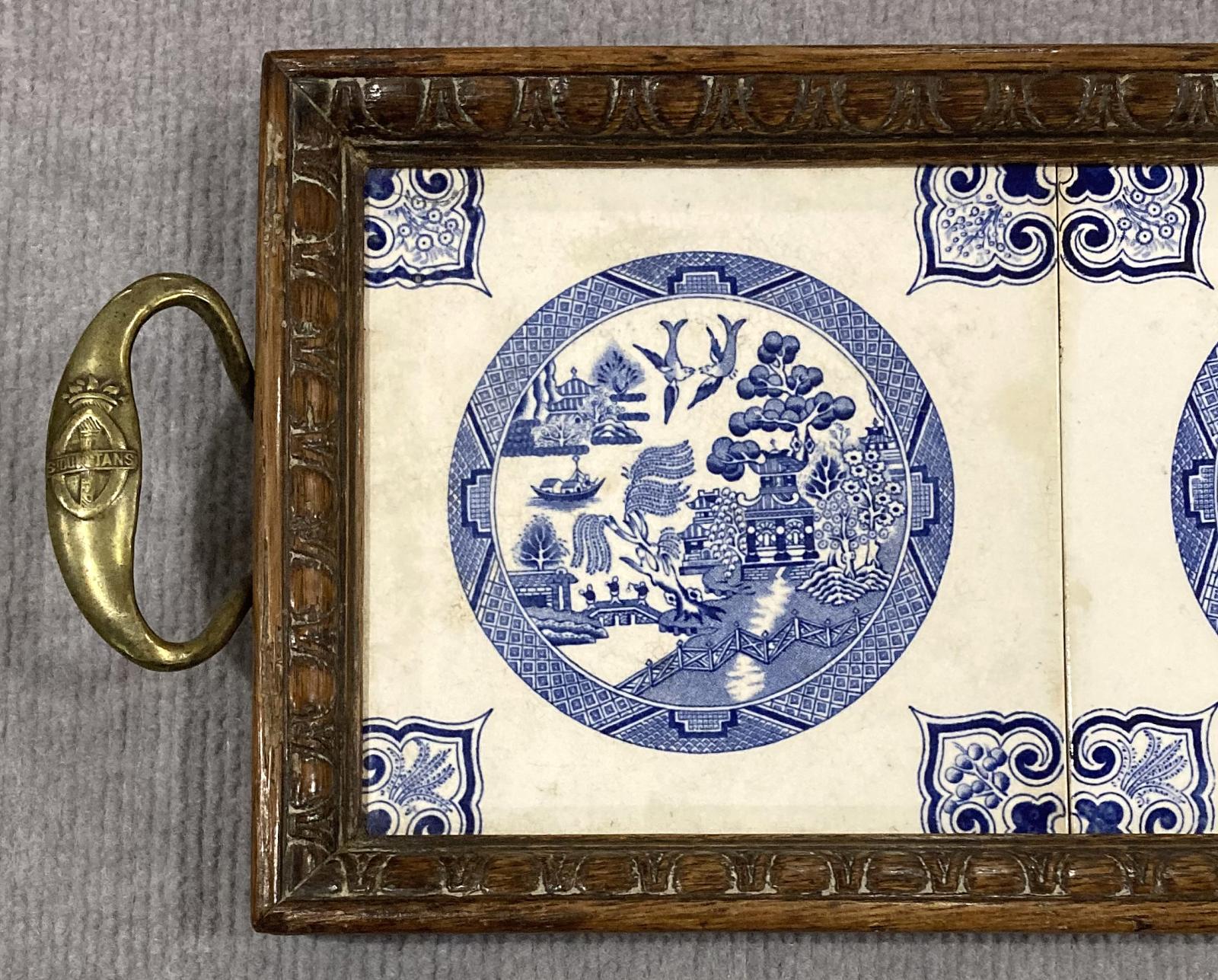
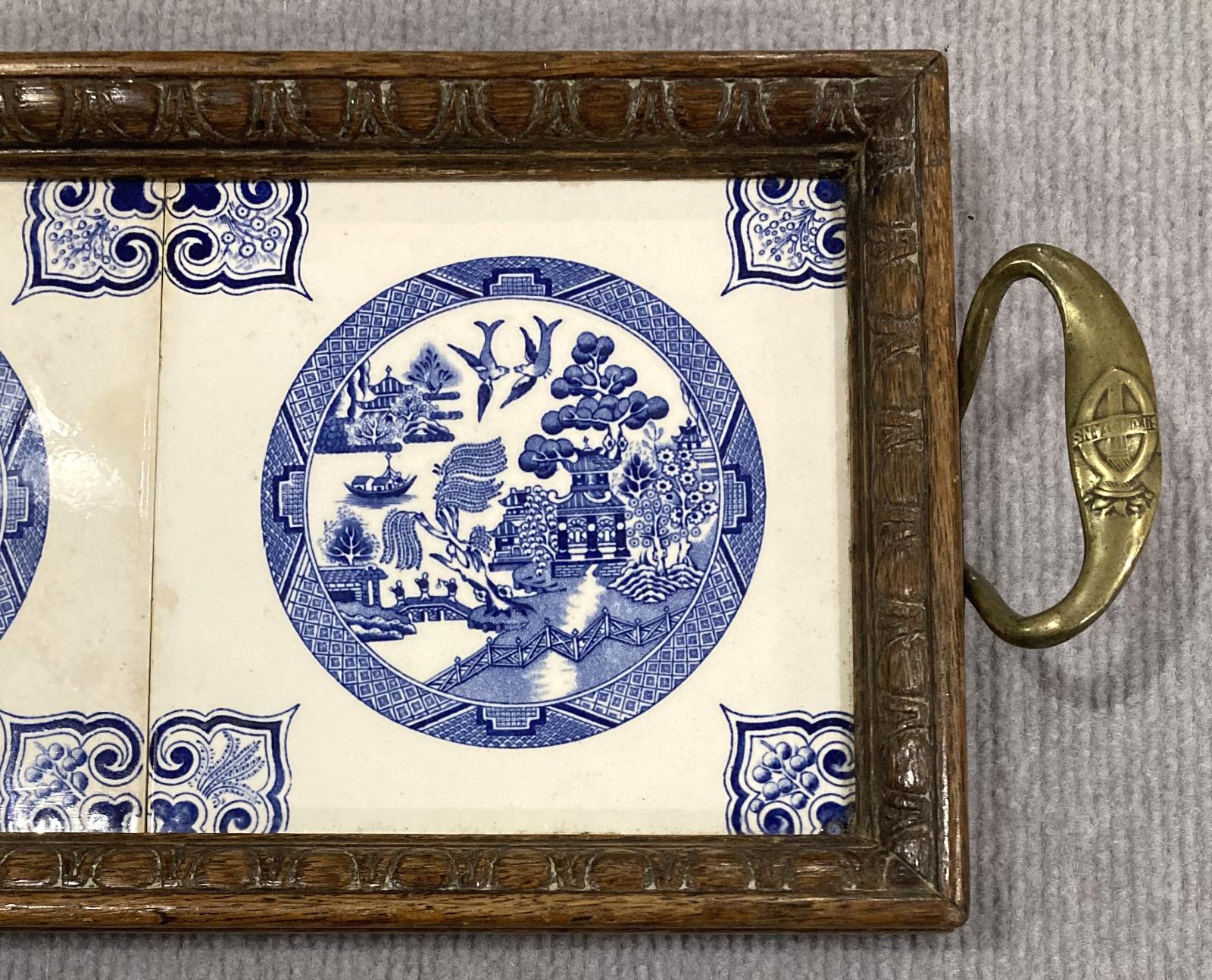
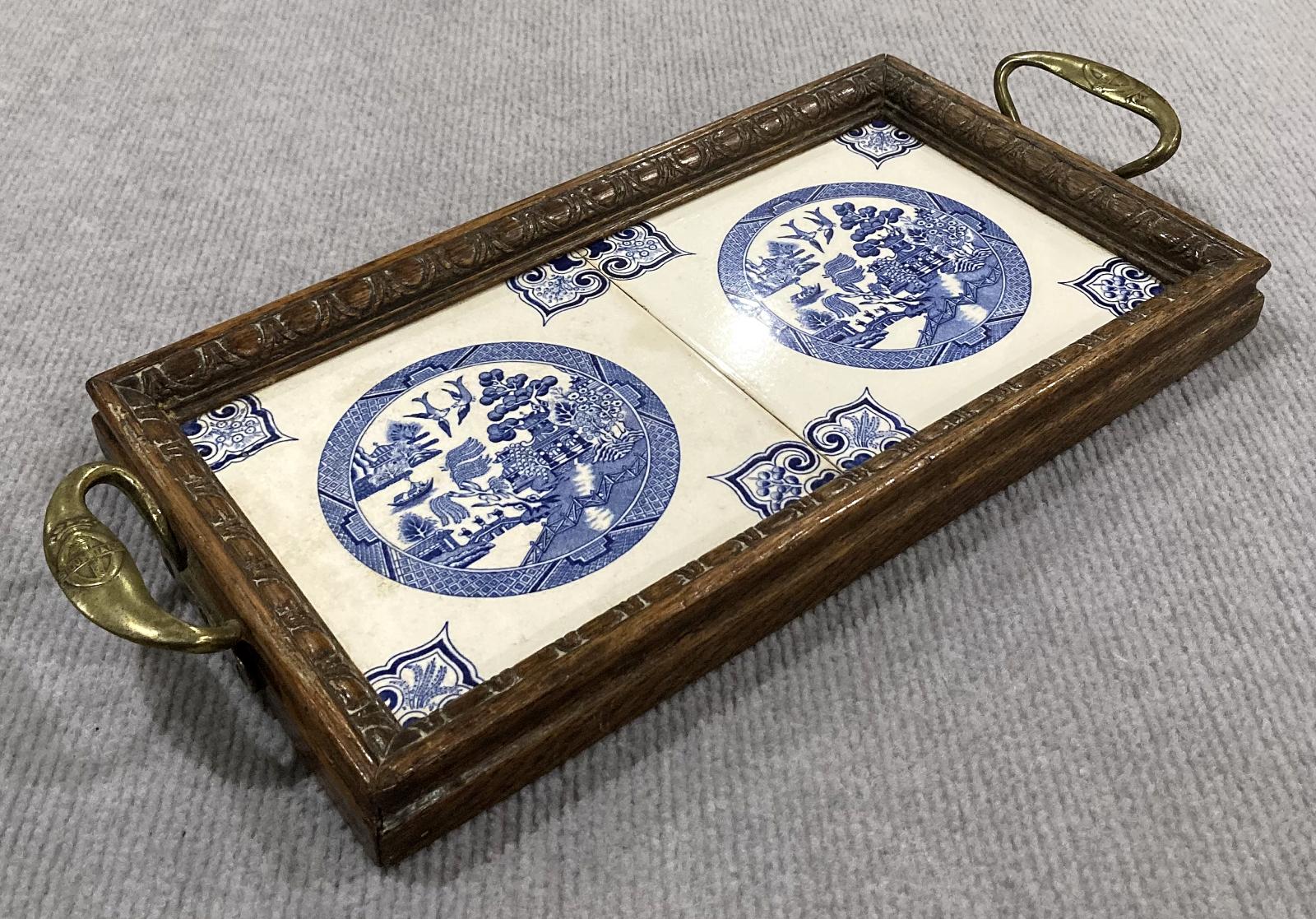
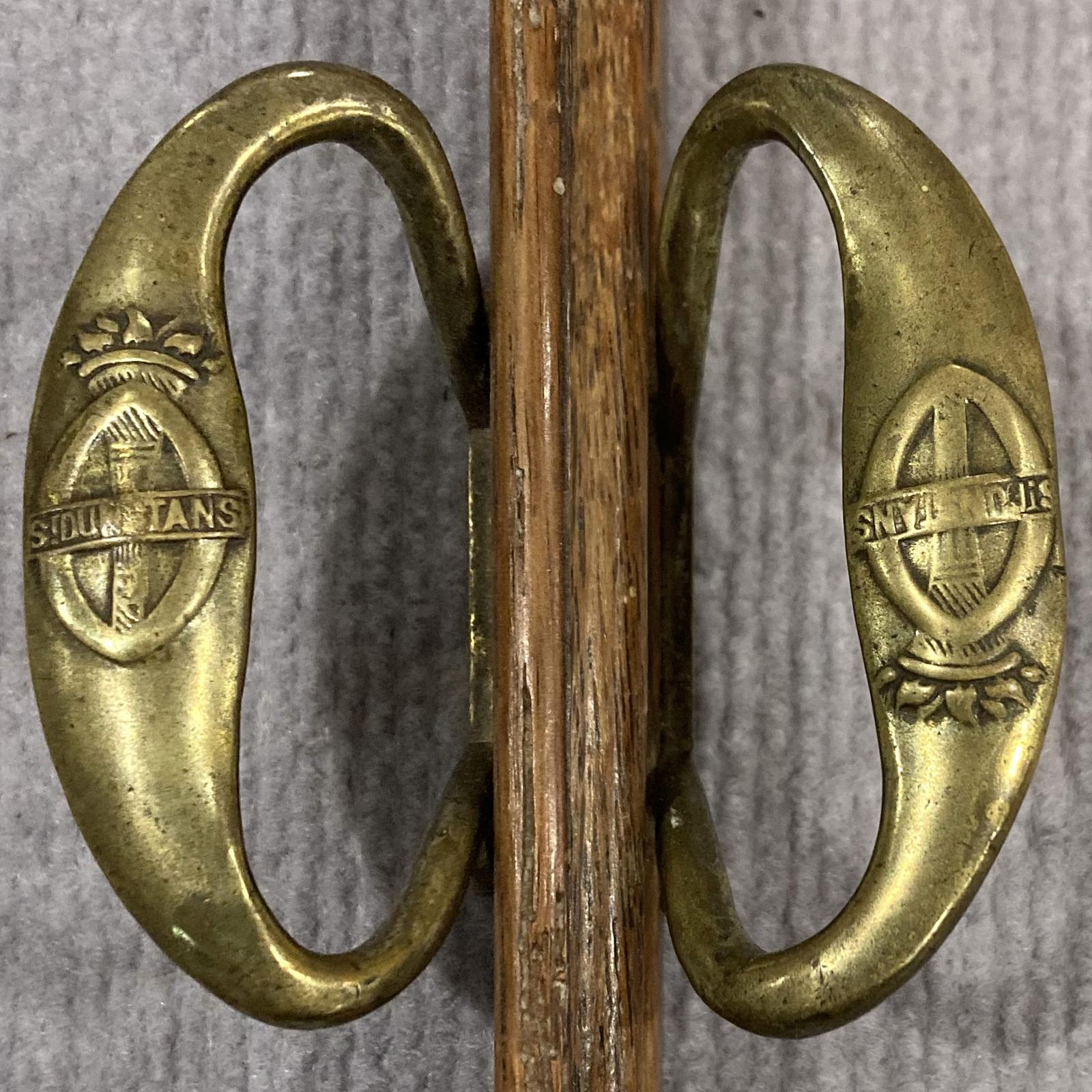
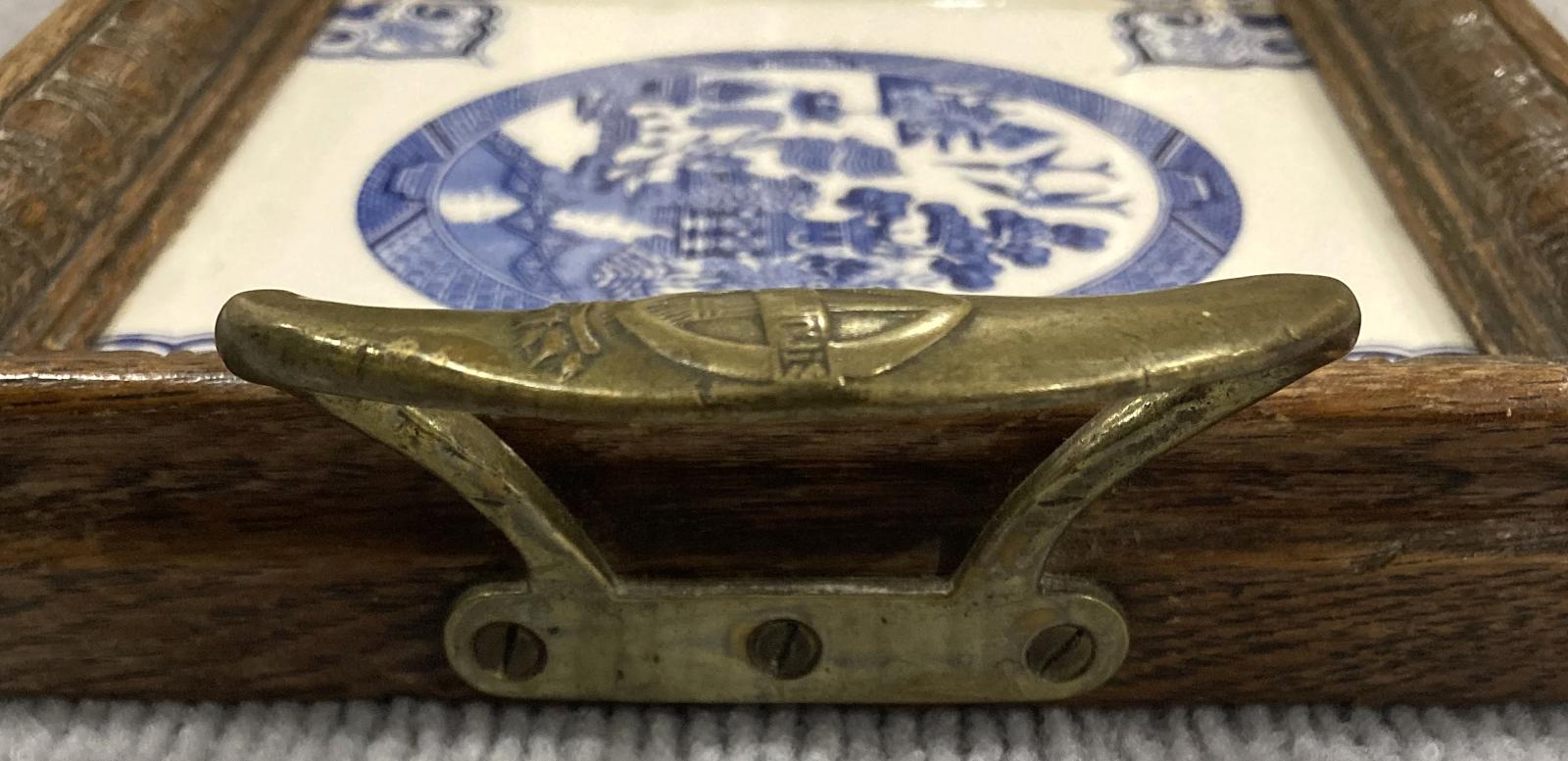
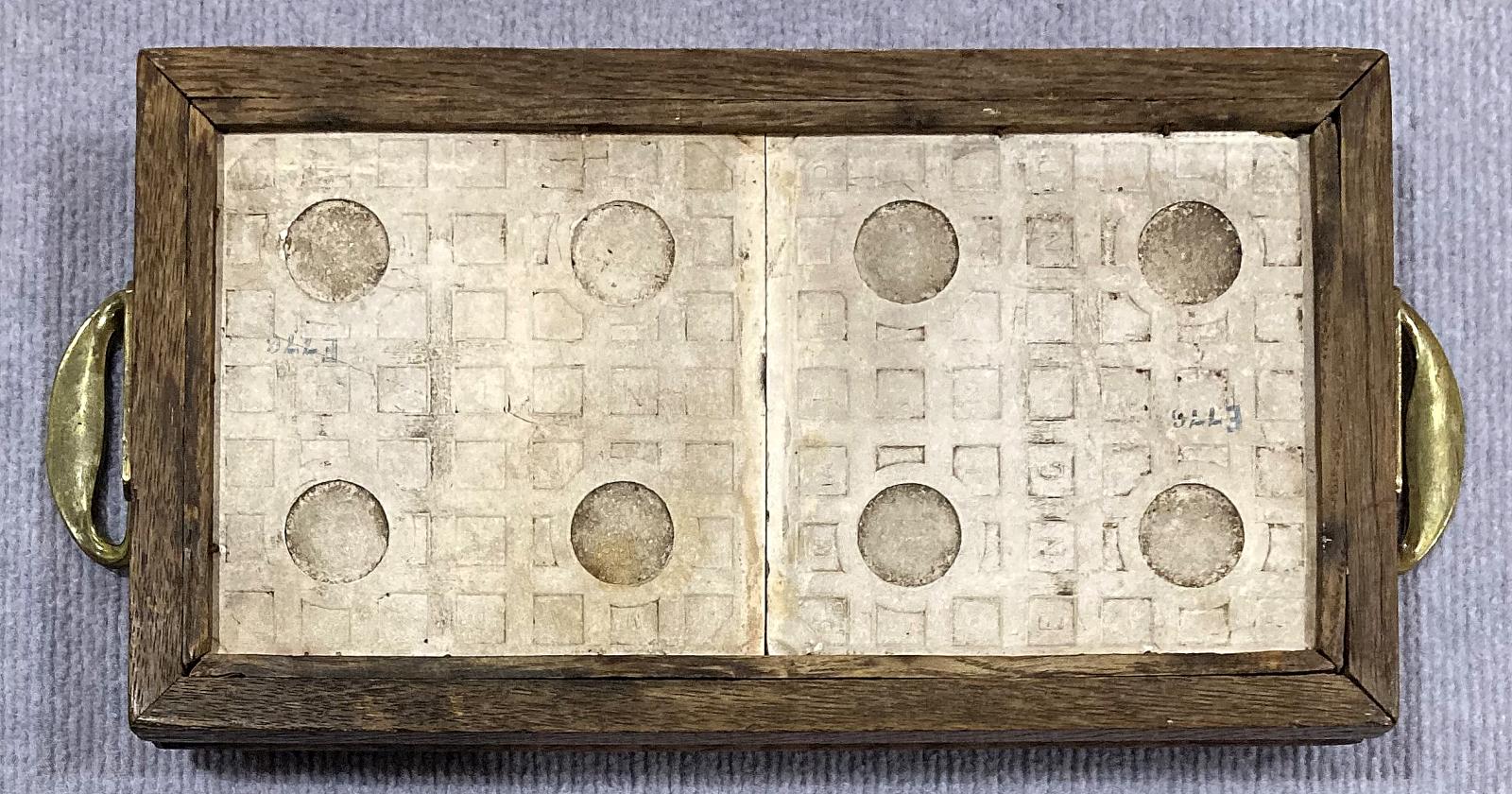
Wooden framed tiled tray made by blinded soldiers at St. Dunstan's
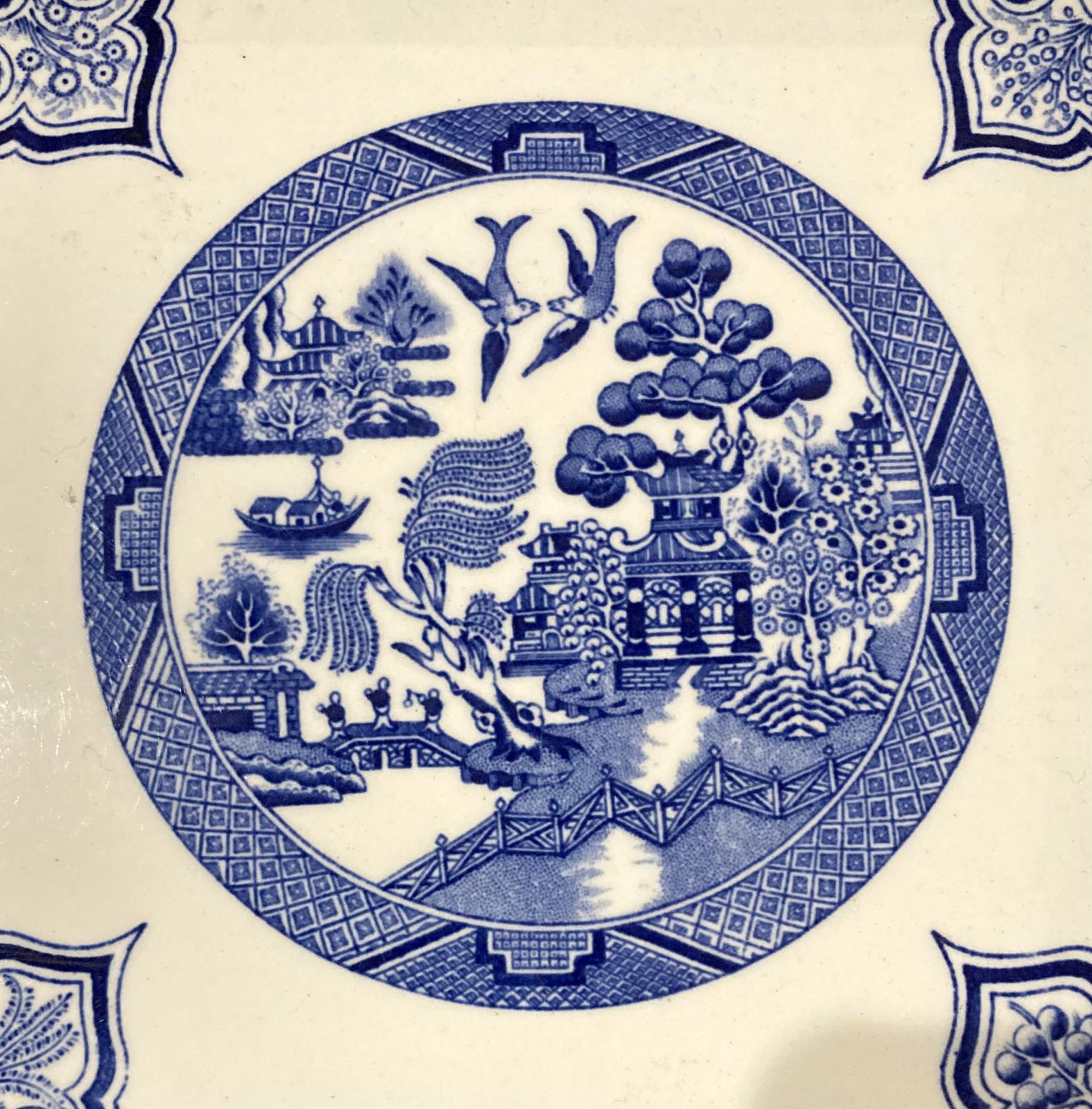
The two Pilkington's Willow Pattern tiles feature a centralised, circular medallion enclosing the core Chinese landscape scene.
The space outside the central circle is adorned with intricate Art Nouveau or traditional quarter-circle scrollwork flourishes on the four corners.
Sir Arthur Pearson founded Blinded Soldiers’ and Sailors’ Care Committee in 1915 as a place to help service personnel who had lost their vision in World War One and in his words to ‘learn to be blind.’ Pearson himself had lost his sight because of glaucoma.
Several World War One veterans returned to help and train people with sight loss or visual impairment from their service in the World War Two. The charity increased its scope to any veteran with sight loss, no matter how and when their visual impairment or sight loss occurred, and in 2012 the organisation changed their name to Blind Veterans UK.
People who stayed at St Dunstan’s Hostel for Blinded Soldiers and Sailors were taught a trade as part of their occupational therapy. This varied from typing, telephony, cobbling, poultry farming, basket weaving, and woodwork.
This object is an example of the ornate trays that men and later women were taught to make in the hope that they could sell them and live independently.
The Hostel opened in 1915, during World War One, with space for 14 residents but soon needed more space as demand for spaces grew. A year after the institution opened it moved from Bayswater Road to Regent’s Park to a building named St. Dunstan’s, which the charity took their name from after 1923. The facility was so over-subscribed that in 1921, three years after the war ended, there were still 57 men waiting to be admitted. When veterans returned home, the charity also had an after-care team to give life-long support.
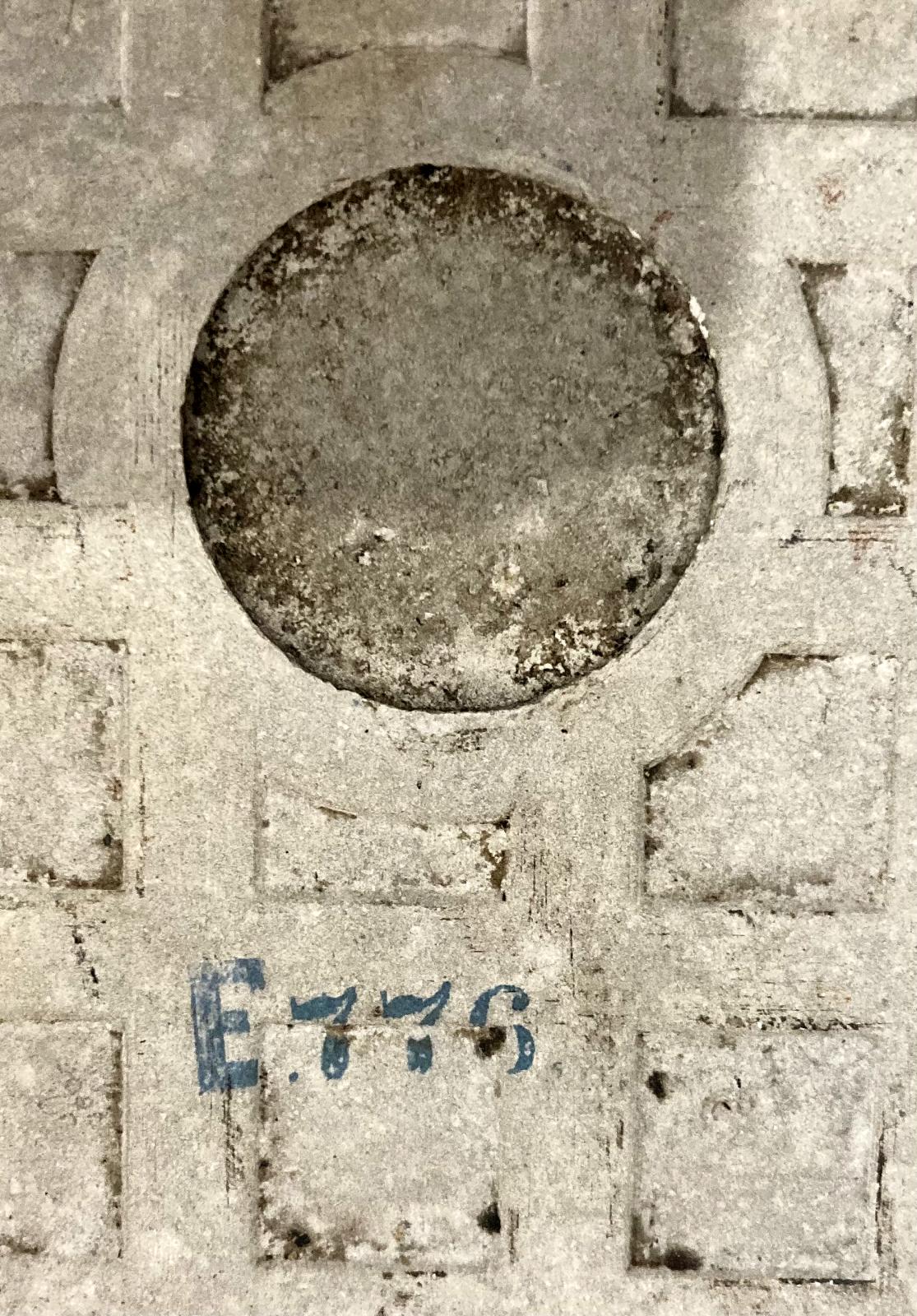
The 'Willow Pattern' tiles with number E776 used in this tray were made by Pilkington's Tile and Pottery Company whose main production factory was at Clifton Junction, near Manchester, England.
Details
Details
Other items from Recollections of War
-
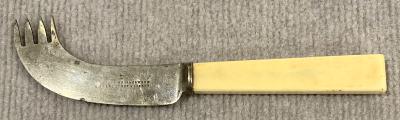
Victorian era one-handed combination utensil (Nelson knife)
-
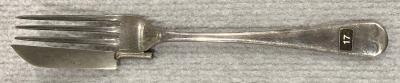
One-handed combination utensil (Nelson fork)
-
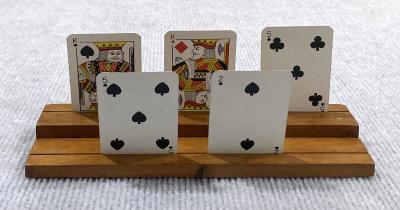
'The Lone Arm Card Holder' designed for a one-handed player
-
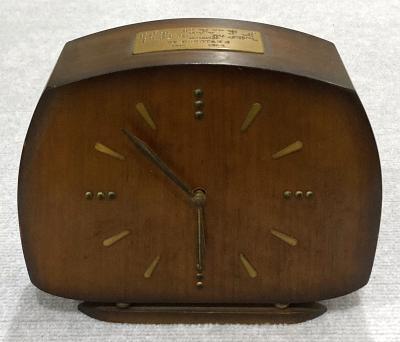
Wooden clock with Braille plaque celebrating 50 years of St. Dunstan's - 1915-1965
-
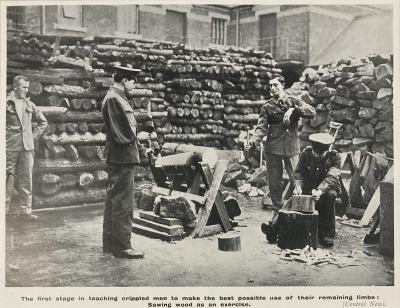
Image from 'Central News' showing amputees sawing wood as an exercise - 1918
Scan this QR code to open this page on your phone ->
